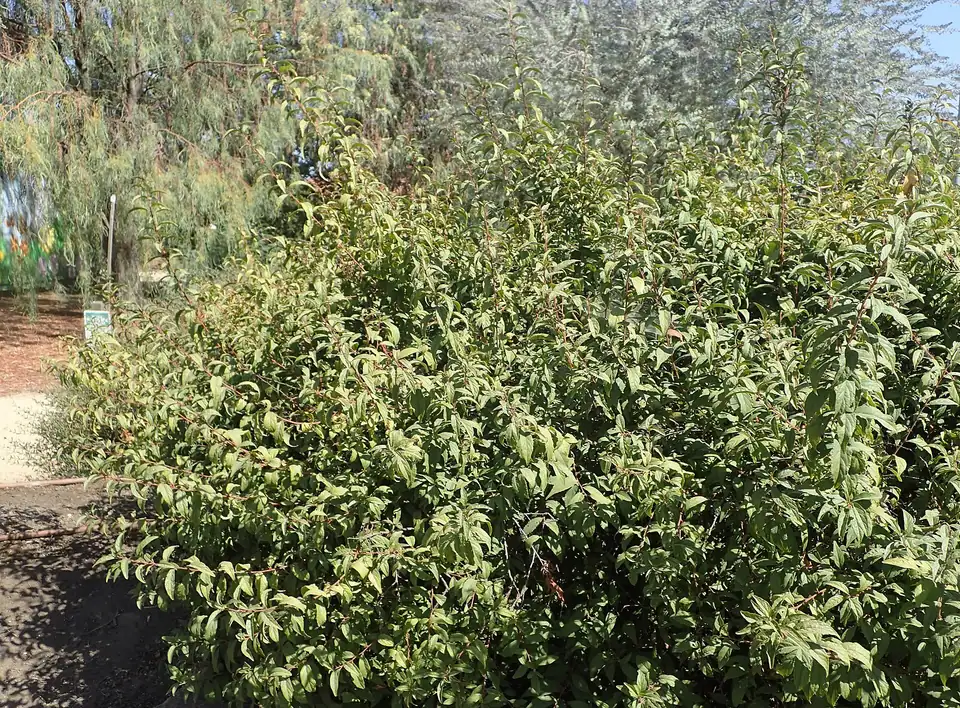

How to Grow and Care for Afghan Cherry
Prunus jacquemontii
Written by Emilio Marruso · last checked
Toxic to: Cats, Dogs, Horses, People · Why
At a glance
This sun-loving plant grows up to 12 feet tall but only 2–5 feet wide, so it fits even where space is tight. Once settled in, it handles dry spells with ease and asks only for well-drained soil and a trim in late winter. Its juicy, pleasant-tasting fruit is a sweet reward, and birds love it too.
- Sun
Full sun: 6 or more hours a day
What the sources say (2)
Light: Full sun (6 or more hours of direct sunlight a day)
Plant in the full sun to maximize flowers and fruit.
— Prunus jacquemontii (Afghan Cherry, Afghan Dwarf Cherry, Bush Cherry, Dwarf Bush Cherry, Flowering Almond) | North Carolina Extension Gardener Plant Toolbox [1] Full sun (6 or more hours of direct sunlight a day)
— Prunus jacquemontii (Afghan Cherry, Afghan Dwarf Cherry, Bush Cherry, Dwarf Bush Cherry, Flowering Almond) | North Carolina Extension Gardener Plant Toolbox [1] - Water
Handles drought once it is established
What the sources say (1)
Watering: Drought tolerant once established
Once established, the shrub is drought tolerant.
— Prunus jacquemontii (Afghan Cherry, Afghan Dwarf Cherry, Bush Cherry, Dwarf Bush Cherry, Flowering Almond) | North Carolina Extension Gardener Plant Toolbox [1] - Cold
Survives winters down to −40 °F (−40 °C)
Very hardy · USDA 3a · RHS H7 · Z3
What the sources say (2)
Hardiness, coldest zone: 3a [winter low −40 to −37.2 °C (−40 to −35 °F)]
USDA Plant Hardiness Zone: 3a, 3b, 4a, 4b, 5a, 5b, 6a, 6b, 7a, 7b, 8a, 8b
— Prunus jacquemontii (Afghan Cherry, Afghan Dwarf Cherry, Bush Cherry, Dwarf Bush Cherry, Flowering Almond) | North Carolina Extension Gardener Plant Toolbox [1] Hardiness, warmest zone: 8b [winter low −9.4 to −6.7 °C (15 to 20 °F)]
USDA Plant Hardiness Zone: 3a, 3b, 4a, 4b, 5a, 5b, 6a, 6b, 7a, 7b, 8a, 8b
— Prunus jacquemontii (Afghan Cherry, Afghan Dwarf Cherry, Bush Cherry, Dwarf Bush Cherry, Flowering Almond) | North Carolina Extension Gardener Plant Toolbox [1] - Soil
Almost any soil, as long as it drains well; never leave it in standing water
What the sources say (1)
Watering notes: Tolerates a wide range of soil types as long as there is good drainage; does not tolerate standing water
Afghan Cherry tolerates a wide range of soil types as long as there is good drainage. It does not tolerate standing water.
— Prunus jacquemontii (Afghan Cherry, Afghan Dwarf Cherry, Bush Cherry, Dwarf Bush Cherry, Flowering Almond) | North Carolina Extension Gardener Plant Toolbox [1] - Pruning
Prune in late winter, once there is no risk of frost
What the sources say (1)
Pruning: Late winter, when there is no threat of frost
Prune it in late winter when there is no threat of frost.
— Prunus jacquemontii (Afghan Cherry, Afghan Dwarf Cherry, Bush Cherry, Dwarf Bush Cherry, Flowering Almond) | North Carolina Extension Gardener Plant Toolbox [1] - Harvest
Juicy, tasty fruit; never eat one that tastes bitter
- Watch out
Fallen fruit can make a mess on the ground
- Size
12 ft tall and 2–5 ft wide
What the sources say (2)
Mature height: 365.76 cm (12 ft)
At maturity, the shrub will reach a height of 12 feet.
— Prunus jacquemontii (Afghan Cherry, Afghan Dwarf Cherry, Bush Cherry, Dwarf Bush Cherry, Flowering Almond) | North Carolina Extension Gardener Plant Toolbox [1] Mature width: 60.96-152.4 cm (2-5 ft)
Height: 5 ft. 0 in. - 12 ft. 0 in. Width: 2 ft. 0 in. - 5 ft. 0 in.
— Prunus jacquemontii (Afghan Cherry, Afghan Dwarf Cherry, Bush Cherry, Dwarf Bush Cherry, Flowering Almond) | North Carolina Extension Gardener Plant Toolbox [1] - Propagation
From seed, stem cuttings or layering
What the sources say (1)
Propagation: Layering, seed, stem cutting
Recommended Propagation Strategy: Layering Seed Stem Cutting
— Prunus jacquemontii (Afghan Cherry, Afghan Dwarf Cherry, Bush Cherry, Dwarf Bush Cherry, Flowering Almond) | North Carolina Extension Gardener Plant Toolbox [1] - Safety
Mildly toxic to people and harmful to cats, dogs and horses
Overview
Afghan Cherry is a dwarf to medium-sized shrub in the rose family, reaching a height of 12 feet [3.7 m] at maturity. [1] It grows best in full sun with good drainage and is drought tolerant once established. [1] Stems, leaves and seeds contain cyanogenic glycosides. [1]
Afghan Cherry care
Measurements in square brackets are our conversion into the other unit system; the quoted text is unchanged.
How to water Afghan Cherry
Watering
Drought tolerant once established
What the sources say (1)
Once established, the shrub is drought tolerant.Watering notes
Tolerates a wide range of soil types as long as there is good drainage; does not tolerate standing water
What the sources say (1)
Afghan Cherry tolerates a wide range of soil types as long as there is good drainage. It does not tolerate standing water.How much light Afghan Cherry needs
Full sun (6 or more hours of direct sunlight a day)
What the sources say (2)
Plant in the full sun to maximize flowers and fruit.Full sun (6 or more hours of direct sunlight a day)How much cold Afghan Cherry can take
Hardiness, coldest zone
3a [winter low −40 to −37.2 °C (−40 to −35 °F)]
What the sources say (1)
USDA Plant Hardiness Zone:
3a, 3b, 4a, 4b, 5a, 5b, 6a, 6b, 7a, 7b, 8a, 8bHardiness, warmest zone
8b [winter low −9.4 to −6.7 °C (15 to 20 °F)]
What the sources say (1)
USDA Plant Hardiness Zone:
3a, 3b, 4a, 4b, 5a, 5b, 6a, 6b, 7a, 7b, 8a, 8bHow to propagate Afghan Cherry
Layering, seed, stem cutting
What the sources say (1)
Recommended Propagation Strategy:
Layering
Seed
Stem CuttingHow to grow Afghan Cherry
The plant
Family
Rosaceae
What the sources say (1)
Afghan Cherry is a dwarf to medium-sized shrub in the rose family native to Afghanistan, India, Pakistan, and TibetMature height
365.76 cm (12 ft)
What the sources say (1)
At maturity, the shrub will reach a height of 12 feet.Mature width
60.96-152.4 cm (2-5 ft)
What the sources say (1)
Height: 5 ft. 0 in. - 12 ft. 0 in.
Width: 2 ft. 0 in. - 5 ft. 0 in.Afghan Cherry pests and problems
Messy fruit
Symptom: Dropped fruits can be messy.
What the sources say (1)
No known diseases or insect pests. Resistant to several of the diseases common to cherries. Dropped fruits can be messy.
— Prunus jacquemontii (Afghan Cherry, Afghan Dwarf Cherry, Bush Cherry, Dwarf Bush Cherry, Flowering Almond) | North Carolina Extension Gardener Plant Toolbox [1]
Remedies
Each remedy shows what official sources say about it; traditional remedies without an official source are marked as such. Harmful ones are listed so you know to avoid them.
First aid
First aid: not a substitute for a doctor
plant ingestion
wiping and rinsing the mouth Official source, not independently tested
Do not induce vomiting and do not give them anything to drink.
— missouripoisoncenter.org [6] Call 911 if the person is unconscious, having seizures, or has trouble breathing.
— missouripoisoncenter.org [6] How: Wipe out the mouth with a damp cloth and or let the person rinse the mouth out with water.
Wipe out their mouth with a damp cloth and or let them rinse their mouth out with water.
— missouripoisoncenter.org [6]
Treating the plant
black knot
pruning out galls Official source, not independently tested
How: Prune and destroy galls, cutting several inches below the gall, especially during dormancy.
Prune and destroy galls, cutting several inches below the gall whenever they are found but especially during dormancy.
— extension.psu.edu [7]
canker
pruning cankered limbs Official source, not independently tested
How: Prune cankered limbs and promote tree vigor.
When tree growth slows or stops, the fungus continues invading. Prune cankered limbs and promote tree vigor.
— extension.psu.edu [7]
Is Afghan Cherry toxic to pets?
Reported by the source, quoted verbatim. This is not medical or veterinary advice: if a person or an animal may have eaten this plant, contact a poison control centre or a veterinarian.
Animals
#problem for cats #bird friendly #problem for dogs #problem for horses
[1]- Poisonous parts
Poison Part: Leaves Seeds Stems
[1]- Toxic principle
Poison Toxic Principle: Cyanogenic glycosides
[1]- Symptoms
Stems, leaves, seeds contain chemicals that breakdown in the body to cyanide. Cyanide can cause spasms, convulsions, coma and respiratory failure leading to death.
[1]- Severity
Poison Severity: Low
[1]
People
This plant has low severity poison characteristics.
[1]- Poisonous parts
Poison Part: Leaves Seeds Stems
[1]- Toxic principle
Poison Toxic Principle: Cyanogenic glycosides
[1]- Symptoms
Stems, leaves, seeds contain chemicals that breakdown in the body to cyanide. Cyanide can cause spasms, convulsions, coma and respiratory failure leading to death.
[1]- Severity
Poison Severity: Low
[1]
Calendar
Pruning
Late winter, when there is no threat of frost
What the sources say (1)
Prune it in late winter when there is no threat of frost.Months as given by the sources, which are mostly from the United States (northern hemisphere). In the southern hemisphere they shift by about six months.
Edibility
Reported by the source, quoted verbatim. Do not eat a plant on the basis of this page alone: identification mistakes can be dangerous.
Fruit is fleshy and juicy with a pleasant taste. Avoid any fruit from the genus Prunus if it has a bitter taste.
[1]
Similar plants
- American Plum Prunus americana
- Amur chokecherry Prunus maackii
- Apricot Prunus armeniaca
- Black Cherry Prunus serotina
- Carolina Cherry Laurel Prunus caroliniana
- Cherry Laurel Prunus laurocerasus
- Chickasaw Plum Prunus angustifolia
- Chinese Plum Prunus glandulosa
Sources
Every value above is quoted from these documents. Links lead to the original publisher.
- Prunus jacquemontii (Afghan Cherry, Afghan Dwarf Cherry, Bush Cherry, Dwarf Bush Cherry, Flowering Almond) | North Carolina Extension Gardener Plant Toolbox · plants.ces.ncsu.edu, consulted
- Afghan Dwarf Cherry - Prunus jacquemontii | North Carolina Extension Gardener Plant Toolbox · plants.ces.ncsu.edu, consulted
- Dwarf Bush Cherry - Prunus jacquemontii | North Carolina Extension Gardener Plant Toolbox · plants.ces.ncsu.edu, consulted
- Flowering Almond - Prunus jacquemontii | North Carolina Extension Gardener Plant Toolbox · plants.ces.ncsu.edu, consulted
- Prunus (Almond, Apricot, Cherries, Nectarines, peach, Plum, Stone Fruits) | North Carolina Extension Gardener Plant Toolbox · plants.ces.ncsu.edu, consulted
- missouripoisoncenter.org · missouripoisoncenter.org
- extension.psu.edu · extension.psu.edu
Written by Emilio Marruso · last checked