
How to Grow and Care for Aria edulis
Aria edulis
Written by Emilio Marruso · last checked
Toxic to: Dogs · Why
At a glance
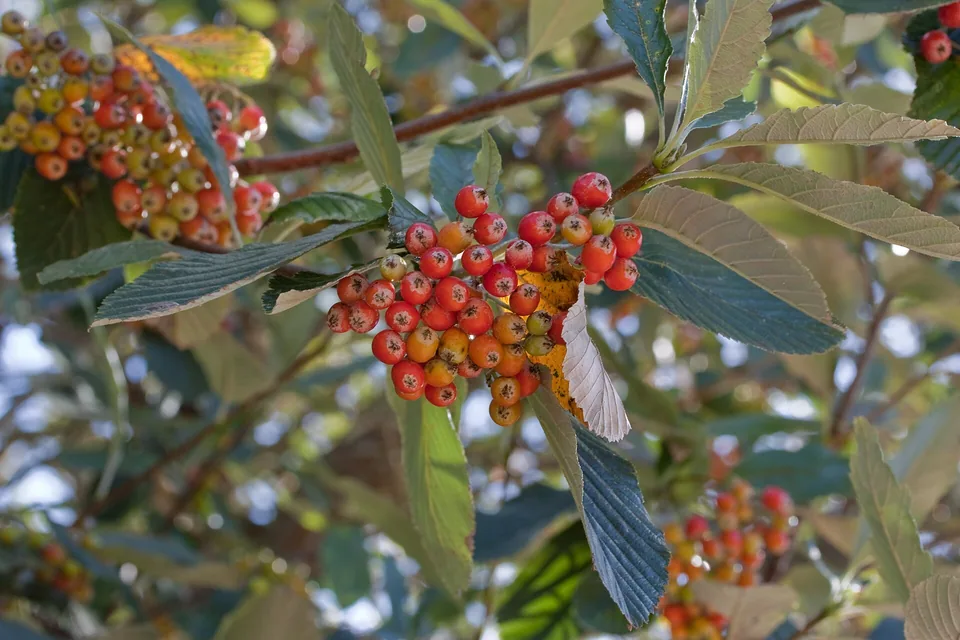
Whitebeam is an easygoing tree that grows happily in full sun or partial shade and needs little care. Water it during dry spells in its first full growing season, and after that it shrugs off drought. In time it can reach 16–49 ft, and its berries become edible once they turn overripe and soft.
- Sun
Full sun to partial shade
What the sources say (1)
Light: Full sun to partial shade
You can grow whitebeam in moist, but well-drained soil, including chalk, in partial shade or full sun.
— How to Grow and Care for a Whitebeam Tree | BBC Gardeners World Magazine [1] - Water
Water in dry spells during the first full season; after that it handles drought
What the sources say (2)
Watering: Drought-tolerant once established; little care needed
Once whitebeam trees are established, they're drought-tolerant, wind-resistant and require little care.
— How to Grow and Care for a Whitebeam Tree | BBC Gardeners World Magazine [1] Watering notes: Keep the tree watered during dry spells in the first full growing season
During the first full growing season, keep the tree watered during dry spells.
— How to Grow and Care for a Whitebeam Tree | BBC Gardeners World Magazine [1] - Planting
Bare-root trees November to March; potted trees any time, unless the soil is soggy or frozen
What the sources say (1)
Planting: Bare-root trees November to March; pot-grown trees at any time of year unless the soil is waterlogged or frozen
Plant bare-root trees between November and March, and pot-grown trees at any time of year unless the soil is waterlogged or frozen.
— How to Grow and Care for a Whitebeam Tree | BBC Gardeners World Magazine [1] - Pruning
In summer, and only to remove dead wood
What the sources say (1)
Pruning: Summer (dead wood only)
but pruning won’t help correct this. Cut back any deadwood in summer.
— How to Grow and Care for a Whitebeam Tree | BBC Gardeners World Magazine [1] - Harvest
Berries are edible once overripe and soft, or frozen or cooked, though not tasty
- Pests
Aphids, caterpillars and seed wasps; canker, fire blight and rust
What the sources say (4)
Pests: aphids (Aphis sorbi), caterpillars (Argyresthia conjugella), seed wasp (Megastigmus brevicaudus)
Roots may be attacked by aphids (Aphis sorbi) and leaves by caterpillars of e.g. Argyresthia conjugella, while the larvae of the wasp Megastigmus brevicaudus feed on seeds1, 10.
— Sorbus aria [4] Diseases: apple canker (Neonectria ditissima), fireblight (Erwinia amylovora), rust (Ochropsora ariae), Heterobasidion annosum
Infectious diseases may be apple canker (Neonectria ditissima), and fireblight (Erwinia amylovora).
— Sorbus aria [4] A common fungal pathogen is the rust Ochropsora ariae13, 14.
— Sorbus aria [4] the whitebeam is vulnerable to attack by Heterobasidion annosum, which is potentially subject to expansion in the European boreal and temperate continental ecological zones11, 12.
— Sorbus aria [4] - Size
16–49 ft tall, rarely up to 66 ft
What the sources say (1)
Mature height: 500-1500 cm (5-15 m), rarely up to 2000 cm (20 m)
slow-growing, small to medium sized deciduous tree or shrub that grows up to 5-15 m tall, rarely up to 20 m and 40 cm in diameter
— Sorbus aria [4] - Propagation
Grows from seed
- Safety
The berries are not reported to be toxic to dogs
Overview
Common whitebeam is a slow-growing deciduous tree or shrub, 5-15 m [16.4–49.2 ft] tall, that grows in semi-shade to full sun on well-drained, lime-rich soils. [4][1] Once established it is drought-tolerant and needs little care; it is propagated mainly by seed. [1][2]
This record is incomplete: the sources we read do not cover every field yet.
Not yet covered by our sources: Hardiness, coldest zone, Hardiness, warmest zone
Aria edulis care
Measurements in square brackets are our conversion into the other unit system; the quoted text is unchanged.
How to water Aria edulis
Watering
Drought-tolerant once established; little care needed
What the sources say (1)
Once whitebeam trees are established, they're drought-tolerant, wind-resistant and require little care.Watering notes
Keep the tree watered during dry spells in the first full growing season
What the sources say (1)
During the first full growing season, keep the tree watered during dry spells.How much light Aria edulis needs
Full sun to partial shade
What the sources say (1)
You can grow whitebeam in moist, but well-drained soil, including chalk, in partial shade or full sun.How much cold Aria edulis can take
Hardiness, coldest zone
Not stated in the sources we read.
Hardiness, warmest zone
Not stated in the sources we read.
How to propagate Aria edulis
How to grow Aria edulis
The plant
Family
Rosaceae
What the sources say (1)
Family: ROSACEAE Genus: Sorbus Catalan common name: Moixera. Pomera borda.Mature height
500-1500 cm (5-15 m), rarely up to 2000 cm (20 m)
What the sources say (1)
slow-growing, small to medium sized deciduous tree or shrub that grows up to 5-15 m tall, rarely up to 20 m and 40 cm in diameterPests and diseases
Pests
aphids (Aphis sorbi), caterpillars (Argyresthia conjugella), seed wasp (Megastigmus brevicaudus)
What the sources say (1)
Roots may be attacked by aphids (Aphis sorbi) and leaves by caterpillars of e.g. Argyresthia conjugella, while the larvae of the wasp Megastigmus brevicaudus feed on seeds1, 10.Diseases
apple canker (Neonectria ditissima), fireblight (Erwinia amylovora), rust (Ochropsora ariae), Heterobasidion annosum
What the sources say (3)
Infectious diseases may be apple canker (Neonectria ditissima), and fireblight (Erwinia amylovora).A common fungal pathogen is the rust Ochropsora ariae13, 14.the whitebeam is vulnerable to attack by Heterobasidion annosum, which is potentially subject to expansion in the European boreal and temperate continental ecological zones11, 12.Remedies
Each remedy shows what official sources say about it; traditional remedies without an official source are marked as such. Harmful ones are listed so you know to avoid them.
Treating the plant
fire blight
pruning out infected tissue in the dormant season Official source, not independently tested
Prune when the weather is dry, cutting at least 4 inches below the canker. Disinfest pruning tools between cuts.
— extension.psu.edu [7] How: Prune out blackened twigs, branches and flower parts during the dormant season, in dry weather.
During the dormant season, closely examine susceptible plants and prune out infected tissues. Look for blackened twigs, branches, and flower parts.
— extension.psu.edu [7] pruning infected tissue during the growing season Harmful
How: Not advised: the source says pruning infected tissue during the growing season spreads the disease.
During the growing season, do not prune infected tissues. Pruning during the growing season has been shown to result in the spread of disease, even with careful cleaning of pruning tools
— extension.psu.edu [7] What the evidence says During the growing season, do not prune infected tissues. Pruning during the growing season has been shown to result in the spread of disease, even with careful cleaning of pruning tools
— extension.psu.edu [7]
Is Aria edulis toxic to pets?
Reported by the source, quoted verbatim. This is not medical or veterinary advice: if a person or an animal may have eaten this plant, contact a poison control centre or a veterinarian.
The berries are not reported to be toxic to dogs.
[1]The source flags the risk for this animal but does not explain why.
Calendar
Planting
Bare-root trees November to March; pot-grown trees at any time of year unless the soil is waterlogged or frozen
What the sources say (1)
Plant bare-root trees between November and March, and pot-grown trees at any time of year unless the soil is waterlogged or frozen.Pruning
Summer (dead wood only)
What the sources say (1)
but pruning won’t help correct this. Cut back any deadwood in summer.Months as given by the sources, which are mostly from the United States (northern hemisphere). In the southern hemisphere they shift by about six months.
Edibility
Reported by the source, quoted verbatim. Do not eat a plant on the basis of this page alone: identification mistakes can be dangerous.
Similar plants
- Afghan Cherry Prunus jacquemontii
- Alabama Snow Wreath Neviusia alabamensis
- American Plum Prunus americana
- Amur chokecherry Prunus maackii
- Apple Rose Rosa villosa
- Apricot Prunus armeniaca
- Asian Pear Pyrus pyrifolia
- Barren Strawberry Waldsteinia fragarioides
Sources
Every value above is quoted from these documents. Links lead to the original publisher.
- How to Grow and Care for a Whitebeam Tree | BBC Gardeners World Magazine · gardenersworld.com, consulted
- Aria edulis - Trees and Shrubs Online · treesandshrubsonline.org, consulted
- Sorbus: how to grow sorbus, plus the best varieties | Gardens Illustrated · gardensillustrated.com, consulted
- Sorbus aria · forest.jrc.ec.europa.eu, consulted
-  · miteco.gob.es, consulted
- Sorbus aria (L.) Crantz - Herbari Virtual del Mediterrani Occidental · herbarivirtual.uib.cat, consulted
- extension.psu.edu · extension.psu.edu
Written by Emilio Marruso · last checked