
How to Grow and Care for Apple Rose
Rosa villosa
Written by Emilio Marruso · last checked
Toxic to: People · Why
At a glance
Rosa villosa is an easygoing rose: it grows in full sun or partial shade, copes with heavy clay and reaches 4–8 feet tall. Give it plenty of sun for more blossoms, moist soil that drains well and a single feeding in early spring. In return, its hips are often turned into a lovely rose hip jelly.
- Sun
Full sun to partial shade; more sun means more blossoms
What the sources say (2)
Light: Full sun to partial shade (full sun encourages more blossoms)
It can grow in semi-shade, but full sun encourages more blossoms.
— Rosa villosa (Apple Rose, Shaggy Rose) | North Carolina Extension Gardener Plant Toolbox [1] Light: Full sun (6 or more hours of direct sunlight a day) Partial Shade (Direct sunlight only part of the day, 2-6 hours)
— Rosa villosa (Apple Rose, Shaggy Rose) | North Carolina Extension Gardener Plant Toolbox [1] - Water
Likes soil that stays moist but drains well
What the sources say (1)
Watering notes: Prefers moist, well-drained soil; tolerates heavy clay soils
Apple rose will grow in sandy or loamy soils, tolerates heavy clay soils, but prefers moist, well-drained soil.
— Rosa villosa (Apple Rose, Shaggy Rose) | North Carolina Extension Gardener Plant Toolbox [1] - Cold
Survives winters down to −30 °F (−34.4 °C)
Very hardy · USDA 4a · RHS H7 · Z4
What the sources say (2)
Hardiness, coldest zone: 4a [winter low −34.4 to −31.7 °C (−30 to −25 °F)]
USDA Plant Hardiness Zone: 4a, 4b, 5a, 5b, 6a, 6b, 7a, 7b, 8a, 8b, 9a, 9b
— Rosa villosa (Apple Rose, Shaggy Rose) | North Carolina Extension Gardener Plant Toolbox [1] Hardiness, warmest zone: 9b [winter low −3.9 to −1.1 °C (25 to 30 °F)]
USDA Plant Hardiness Zone: 4a, 4b, 5a, 5b, 6a, 6b, 7a, 7b, 8a, 8b, 9a, 9b
— Rosa villosa (Apple Rose, Shaggy Rose) | North Carolina Extension Gardener Plant Toolbox [1] - Soil
Well-drained soil; it even tolerates heavy clay
What the sources say (1)
Watering notes: Prefers moist, well-drained soil; tolerates heavy clay soils
Apple rose will grow in sandy or loamy soils, tolerates heavy clay soils, but prefers moist, well-drained soil.
— Rosa villosa (Apple Rose, Shaggy Rose) | North Carolina Extension Gardener Plant Toolbox [1] - Feeding
Once a year in early spring: 1/2–1 cup of all-purpose fertilizer; no nitrogen in late summer
What the sources say (7)
When: Early spring, before growth starts
as an alternative, in fall: Roses can be fall fertilized after the plants have gone dormant. Applying fertilizer at this time will not encourage growth but will be available as the plants start to grow in the spring.
— [4] If you decide to fertilize, the best time to fertilize roses is in the early spring before growth starts to appear.
— [5] For species roses, a spring application of general-purpose fertilizer is usually adequate for the season.
— [4] How often: Once a year, in spring
For species roses, a spring application of general-purpose fertilizer is usually adequate for the season.
— [4] Mineral fertilizers: General-purpose fertilizer such as 10-10-10 or 12-12-12, 119 to 237 mL per plant
For species roses, a spring application of general-purpose fertilizer is usually adequate for the season. General-purpose fertilizers such as 10-10-10 or 12-12-12 are used at about one-half to one cup per plant.
— [4] Avoid: High-nitrogen fertilizer late in summer; stop fertilizing in late summer as the plants go dormant
Be careful not to fertilize your roses with high nitrogen formulas late in the summer (end of August/September).
— [5] You can fertilize every four to six weeks during the growing season, but stop fertilization in late summer (late August or early September) as the roses begin to go dormant.
— [6] - Harvest
The hips are often used to make rose hip jelly
- Pests
Aphids, Japanese beetles, black spot and powdery mildew; garlic planted nearby can help
What the sources say (2)
Pests: aphids, Japanese beetles, thrips, rose scale, rose leafhopper, rose slugs, leafcutting bees, caterpillars, grasshoppers
Insect pests include aphids, Japanese beetles, thrips, rose scale, rose leafhopper, rose slugs, leafcutting bees, caterpillars and grasshoppers.
— Rosa villosa (Apple Rose, Shaggy Rose) | North Carolina Extension Gardener Plant Toolbox [1] Diseases: honey fungus, black spot, powdery mildew, stem canker, dieback
This genus is notably susceptible to honey fungus, black spot, powdery mildew, stem canker and dieback.
— Rosa villosa (Apple Rose, Shaggy Rose) | North Carolina Extension Gardener Plant Toolbox [1] - Size
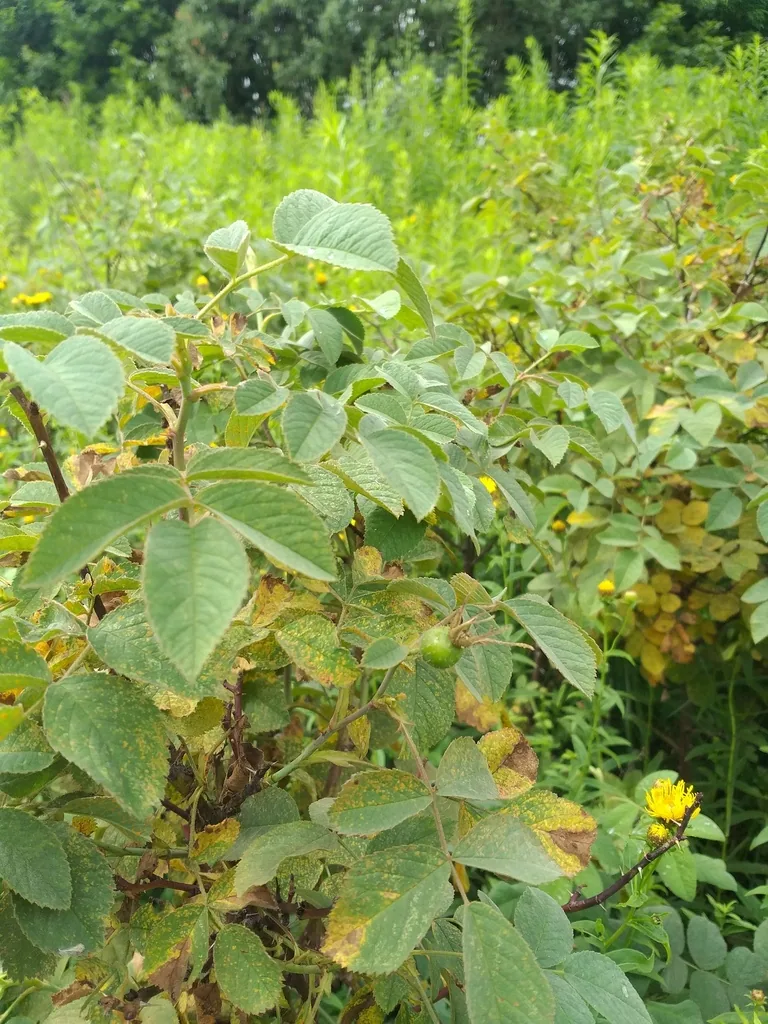
4–8 ft tall and 5–6 ft wide
What the sources say (2)
Mature height: 121.92-243.84 cm (4-8 ft)
Height: 4 ft. 0 in. - 8 ft. 0 in.
— Rosa villosa (Apple Rose, Shaggy Rose) | North Carolina Extension Gardener Plant Toolbox [1] Mature width: 152.4-182.88 cm (5-6 ft)
Width: 5 ft. 0 in. - 6 ft. 0 in.
— Rosa villosa (Apple Rose, Shaggy Rose) | North Carolina Extension Gardener Plant Toolbox [1] - Propagation
By seed, division, layering or cuttings
What the sources say (1)
Propagation: Seed, division, layering, cuttings
Plants can be propagated from seed, division, layering or cuttings.
— Rosa villosa (Apple Rose, Shaggy Rose) | North Carolina Extension Gardener Plant Toolbox [1] - Sowing
Be patient: seeds can take up to 2 years to sprout
What the sources say (1)
Days to germination: up to 730 (2 years)
Seeds can take up to 2 years to germinate.
— Rosa villosa (Apple Rose, Shaggy Rose) | North Carolina Extension Gardener Plant Toolbox [1] - Safety
The hairs around the seeds inside the hips irritate the mouth and gut if eaten
Overview
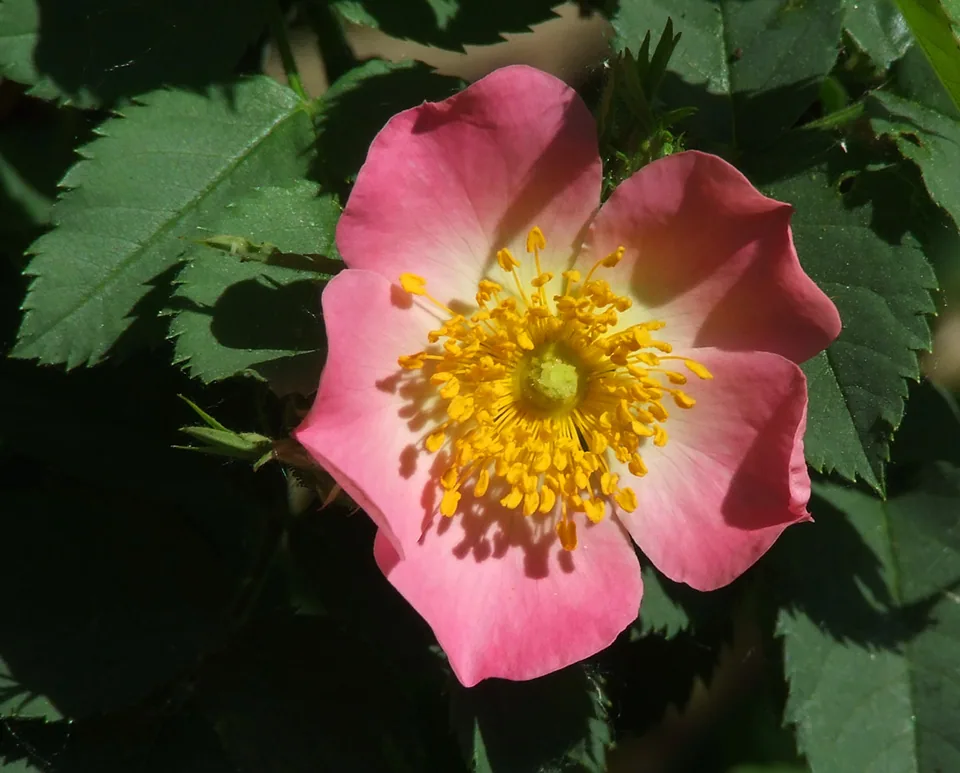
Apple rose is a deciduous flowering shrub native to Europe, with showy single pink flowers in summer. [1] It prefers moist, well-drained soil and full sun, and can be propagated from seed, division, layering or cuttings. [1] The fruit is used to make rose hip jelly, but the hairs around the seeds can irritate the mouth and digestive tract. [1]
This record is incomplete: the sources we read do not cover every field yet.
Not yet covered by our sources: Watering, Pruning
Apple Rose care
How to water Apple Rose
Watering
Not stated in the sources we read.
Watering notes
Prefers moist, well-drained soil; tolerates heavy clay soils
What the sources say (1)
Apple rose will grow in sandy or loamy soils, tolerates heavy clay soils, but prefers moist, well-drained soil.How much light Apple Rose needs
Full sun to partial shade (full sun encourages more blossoms)
What the sources say (2)
It can grow in semi-shade, but full sun encourages more blossoms.Light:
Full sun (6 or more hours of direct sunlight a day)
Partial Shade (Direct sunlight only part of the day, 2-6 hours)How much cold Apple Rose can take
Hardiness, coldest zone
4a [winter low −34.4 to −31.7 °C (−30 to −25 °F)]
What the sources say (1)
USDA Plant Hardiness Zone:
4a, 4b, 5a, 5b, 6a, 6b, 7a, 7b, 8a, 8b, 9a, 9bHardiness, warmest zone
9b [winter low −3.9 to −1.1 °C (25 to 30 °F)]
What the sources say (1)
USDA Plant Hardiness Zone:
4a, 4b, 5a, 5b, 6a, 6b, 7a, 7b, 8a, 8b, 9a, 9bHow to propagate Apple Rose
Seed, division, layering, cuttings
What the sources say (1)
Plants can be propagated from seed, division, layering or cuttings.How to grow Apple Rose
The plant
Life cycle
perennial
What the sources say (1)
Apple rose is a deciduous, flowering, perennial shrub in the rose family (Rosaceae), native to Europe from Scandinavia south to Spain and west to the Caucasus.Family
Rosaceae
What the sources say (1)
Apple rose is a deciduous, flowering, perennial shrub in the rose family (Rosaceae), native to Europe from Scandinavia south to Spain and west to the Caucasus.Mature height
121.92-243.84 cm (4-8 ft)
What the sources say (1)
Height: 4 ft. 0 in. - 8 ft. 0 in.Mature width
152.4-182.88 cm (5-6 ft)
What the sources say (1)
Width: 5 ft. 0 in. - 6 ft. 0 in.Sowing and growth
Days to germination
up to 730 (2 years)
What the sources say (1)
Seeds can take up to 2 years to germinate.Pests and diseases
Pests
aphids, Japanese beetles, thrips, rose scale, rose leafhopper, rose slugs, leafcutting bees, caterpillars, grasshoppers
What the sources say (1)
Insect pests include aphids, Japanese beetles, thrips, rose scale, rose leafhopper, rose slugs, leafcutting bees, caterpillars and grasshoppers.Diseases
honey fungus, black spot, powdery mildew, stem canker, dieback
What the sources say (1)
This genus is notably susceptible to honey fungus, black spot, powdery mildew, stem canker and dieback.Fertilizing
When
Early spring, before growth starts
What each source says
as an alternative, in fall: After the plants have gone dormant; the nutrients are available when growth resumes in spring
What the sources say (3)
as an alternative, in fall: Roses can be fall fertilized after the plants have gone dormant. Applying fertilizer at this time will not encourage growth but will be available as the plants start to grow in the spring.If you decide to fertilize, the best time to fertilize roses is in the early spring before growth starts to appear.For species roses, a spring application of general-purpose fertilizer is usually adequate for the season.How often
Once a year, in spring
What the sources say (1)
For species roses, a spring application of general-purpose fertilizer is usually adequate for the season.Mineral fertilizers
General-purpose fertilizer such as 10-10-10 or 12-12-12, 119 to 237 mL per plant
What the sources say (1)
For species roses, a spring application of general-purpose fertilizer is usually adequate for the season. General-purpose fertilizers such as 10-10-10 or 12-12-12 are used at about one-half to one cup per plant.Avoid
High-nitrogen fertilizer late in summer; stop fertilizing in late summer as the plants go dormant
What the sources say (2)
Be careful not to fertilize your roses with high nitrogen formulas late in the summer (end of August/September).You can fertilize every four to six weeks during the growing season, but stop fertilization in late summer (late August or early September) as the roses begin to go dormant.Apple Rose pests and problems
Fungal diseases
Symptom: Genus notably susceptible to honey fungus, black spot, powdery mildew, stem canker and dieback.
What the sources say (1)
This genus is notably susceptible to honey fungus, black spot, powdery mildew, stem canker and dieback.
— Rosa villosa (Apple Rose, Shaggy Rose) | North Carolina Extension Gardener Plant Toolbox [1] Insect pests
Symptom: Pests include aphids, Japanese beetles, thrips, rose scale, rose leafhopper, rose slugs, leafcutting bees, caterpillars and grasshoppers.
What to do: Garlic planted nearby can help protect the plant from disease and insects.
What the sources say (2)
Insect pests include aphids, Japanese beetles, thrips, rose scale, rose leafhopper, rose slugs, leafcutting bees, caterpillars and grasshoppers.
— Rosa villosa (Apple Rose, Shaggy Rose) | North Carolina Extension Gardener Plant Toolbox [1] Garlic planted nearby can help protect the plant from disease and insects.
— Rosa villosa (Apple Rose, Shaggy Rose) | North Carolina Extension Gardener Plant Toolbox [1]
Remedies
Each remedy shows what official sources say about it; traditional remedies without an official source are marked as such. Harmful ones are listed so you know to avoid them.
First aid
First aid: not a substitute for a doctor
mouth and digestive tract irritation from rose hip hairs
wipe out the mouth and offer food or milk Official source, not independently tested
If the symptoms are severe and/or prolonged, contact your child's physician.
— chop.edu [7] How: If a child eats one of these plants, wipe out the mouth and offer food or milk. If vomiting or diarrhea occurs, give plenty of clear liquids to prevent dehydration.
If your child eats one of these plants, wipe out the mouth and offer food or milk. If vomiting or diarrhea occurs, give plenty of clear liquids to prevent dehydration.
— chop.edu [7]
Treating the plant
aphids
strong water spray Works
How: Spray aphids on rose plants with a strong stream of water.
Spray aphids on rose plants with a strong stream of water.
— solvepestproblems.oregonstate.edu [8] What the evidence says Spray a strong stream of water at leaves, stems, and flowers of infected plants to remove feeding insects.
— solvepestproblems.oregonstate.edu [8] squashing aphids by hand Official source, not independently tested
How: Squash aphids living on the plant's leaves and stems, including the underside of leaves.
Squash aphids living on the plant's leaves and stems, including the underside of leaves.
— solvepestproblems.oregonstate.edu [8] homemade soap or oil spray Not proven
Check the effectiveness on a few leaves or plants before applying broadly.
— solvepestproblems.oregonstate.edu [8] How: Homemade mixtures with oil, soap, or other ingredients are not recommended for use as an insect killer.
Homemade mixtures with oil, soap, or other ingredients are not recommended for use as an insect killer (insecticide).
— solvepestproblems.oregonstate.edu [8] What the evidence says Homemade mixtures with oil, soap, or other ingredients are not recommended for use as an insect killer (insecticide).
— solvepestproblems.oregonstate.edu [8] tobacco spray Harmful
Warning: Risky ingredient
Recipes that use tobacco soaked in water and applied to plants are toxic to people. Don’t use them.
— solvepestproblems.oregonstate.edu [8] How: Recipes that use tobacco soaked in water and applied to plants.
Recipes that use tobacco soaked in water and applied to plants are toxic to people. Don’t use them.
— solvepestproblems.oregonstate.edu [8] What the evidence says Recipes that use tobacco soaked in water and applied to plants are toxic to people. Don’t use them.
— solvepestproblems.oregonstate.edu [8]
black spot
baking soda spray Partly works
If you repeatedly spray leaves with bicarbonate, though, it will eventually reach the soil below, where it can accumulate and lead to slower plant growth.
— depts.washington.edu [9] Stop applying bicarbonate sprays, however, at the first sign of plant damage or lower quality blooms.
— depts.washington.edu [9] always test on a small area of the plant first
— depts.washington.edu [9] How: Make a solution of 1 teaspoon baking soda in a quart of water, and spray the infected plants well.
Make a solution of 1 teaspoon baking soda in a quart of water, and spray the infected plants well.
— depts.washington.edu [9] What the evidence says She also states in an article in Master Gardener magazine (Spring 2009) that baking soda sprays may only be of limited efficacy in combatting black spot. Studies have shown that it works better when combined with horticultural oil.
— depts.washington.edu [9] baking soda and horticultural oil or insecticidal soap spray Works
Many of the products used are not developed for or tested on plants and may cause damage.
— melindamyers.com [10] How: Mix one tablespoon of baking soda and one teaspoon of horticulture oil or insecticidal soap in one gallon of water. Weekly applications.
Mix one tablespoon of baking soda and one teaspoon of horticulture oil (formulation labeled for use on actively growing plants) or insecticidal soap (these help the spray stick to the leaves) in one gallon of water.
— melindamyers.com [10] What the evidence says A combination of sodium bicarbonate or potassium bicarbonate plus horticultural oil (as discussed above under “Powdery mildew”) or neem oil has also been shown to be effective in reducing black spot.
— depts.washington.edu [9] milk spray Not proven
How: Some sources recommend milk sprays on black spot-affected leaves.
Some sources recommend using compost tea or milk sprays on black spot-affected leaves, but Washington State University Horticulture Professor Linda Chalker-Scott dismisses these methods as ineffective.
— depts.washington.edu [9] What the evidence says Some sources recommend using compost tea or milk sprays on black spot-affected leaves, but Washington State University Horticulture Professor Linda Chalker-Scott dismisses these methods as ineffective.
— depts.washington.edu [9] compost tea spray Not proven
How: Some sources recommend compost tea sprays on black spot-affected leaves.
Some sources recommend using compost tea or milk sprays on black spot-affected leaves, but Washington State University Horticulture Professor Linda Chalker-Scott dismisses these methods as ineffective.
— depts.washington.edu [9] What the evidence says Some sources recommend using compost tea or milk sprays on black spot-affected leaves, but Washington State University Horticulture Professor Linda Chalker-Scott dismisses these methods as ineffective.
— depts.washington.edu [9] burying banana peels Not proven
How: Placing banana peels in the planting hole was popular among rose growers in the 18th century.
Placing several banana peels in the planting hole was popular among rose growers in the 18th century, but they had no idea why the peels seemed to yield healthier roses.
— depts.washington.edu [9] What the evidence says suggests the peels might be a good fertilizer, but does not say they will control the fungal problem.
— depts.washington.edu [9] coarse wood chip mulch Works
How: Coarse organic mulch such as wood chips reduces incidence of black spot.
Prof. Chalker-Scott mentions that coarse organic mulch (such as wood chips) reduces incidence of black spot, so you may want to adopt this mulching practice.
— depts.washington.edu [9] What the evidence says Prof. Chalker-Scott mentions that coarse organic mulch (such as wood chips) reduces incidence of black spot, so you may want to adopt this mulching practice.
— depts.washington.edu [9]
Is Apple Rose poisonous?
Reported by the source, quoted verbatim. This is not medical or veterinary advice: if a person or an animal may have eaten this plant, contact a poison control centre or a veterinarian.
A layer of hairs surround the seeds under the flesh of the fruit that can irritate the mouth and digestive tract if ingested.
[1]
Calendar
Pruning
Not stated in the sources we read.
Months as given by the sources, which are mostly from the United States (northern hemisphere). In the southern hemisphere they shift by about six months.
Edibility
Reported by the source, quoted verbatim. Do not eat a plant on the basis of this page alone: identification mistakes can be dangerous.
The fruit is often used to make rose hip jelly.
[1]
Similar plants
- Burnet Rose Rosa spinosissima
- Carolina Rose Rosa carolina
- Cherokee Rose Rosa laevigata
- Climbing Prairie Rose Rosa setigera
- Dog rose Rosa canina
- Lady Banks Rosa banksiae
- Memorial Rose Rosa lucieae
- Musk rose Rosa moschata
Sources
Every value above is quoted from these documents. Links lead to the original publisher.
- Rosa villosa (Apple Rose, Shaggy Rose) | North Carolina Extension Gardener Plant Toolbox · plants.ces.ncsu.edu, consulted
- Apple Rose - Rosa villosa | North Carolina Extension Gardener Plant Toolbox · plants.ces.ncsu.edu, consulted
- Rosa (Rose, Roses) | North Carolina Extension Gardener Plant Toolbox · plants.ces.ncsu.edu, consulted
- extension.illinois.edu · extension.illinois.edu
- ask.extension.org · ask.extension.org
- extension.oregonstate.edu · extension.oregonstate.edu
- chop.edu · chop.edu
- solvepestproblems.oregonstate.edu · solvepestproblems.oregonstate.edu
- depts.washington.edu · depts.washington.edu
- melindamyers.com · melindamyers.com
Written by Emilio Marruso · last checked