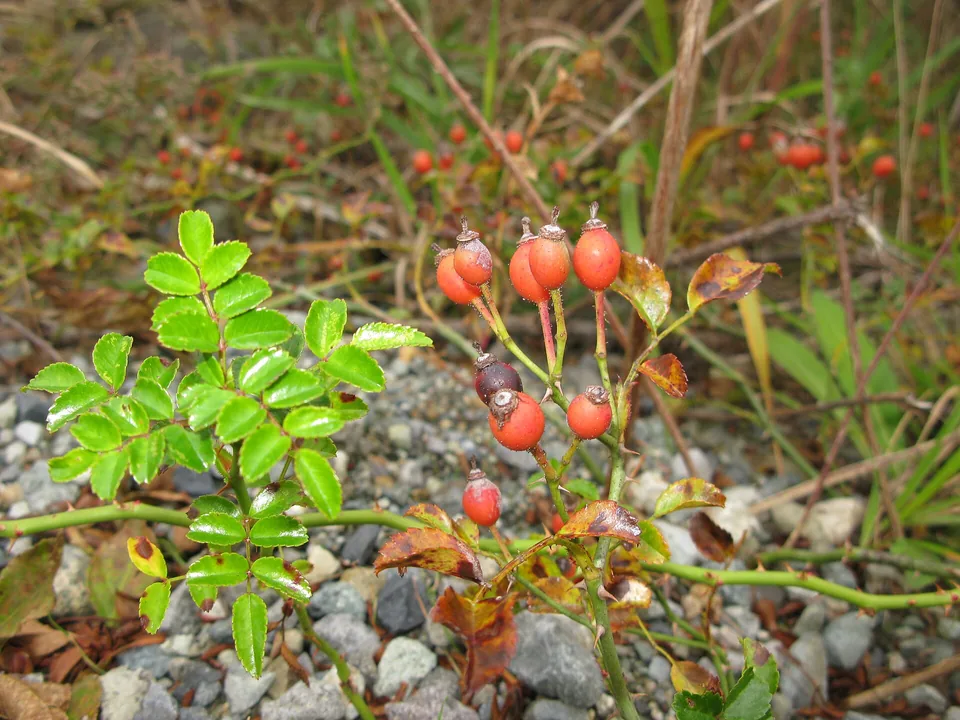


How to Grow and Care for Memorial Rose
Rosa lucieae
Written by Emilio Marruso · last checked
At a glance
This rose is a semi-evergreen shrub that can spread 6 to 15 feet wide, ready to fill a sunny corner of your garden. Give it full sun and moist, well-drained soil, because it doesn't like wet feet. One feeding a year in early spring is all it asks, so even a beginner can enjoy growing it.
- Sun
Full sun
What the sources say (1)
Light: Full sun
Plant memorial rose in full sun and in moist, well-drained soil.
— Rosa lucieae (Memorial Rose) | North Carolina Extension Gardener Plant Toolbox [1] - Water
Keep the soil moist, but never soggy
What the sources say (2)
Watering: Moist, well-drained soil; does not like wet feet
Plant memorial rose in full sun and in moist, well-drained soil.
— Rosa lucieae (Memorial Rose) | North Carolina Extension Gardener Plant Toolbox [1] It can withstand clay soil but does not like wet feet.
— Rosa lucieae (Memorial Rose) | North Carolina Extension Gardener Plant Toolbox [1] - Cold
Survives winters down to −20 °F (−28.9 °C)
Very hardy · USDA 5a · RHS H7 · Z5
What the sources say (2)
Hardiness, coldest zone: 5a [winter low −28.9 to −26.1 °C (−20 to −15 °F)]
USDA Plant Hardiness Zone: 5a, 5b, 6a, 6b, 7a, 7b, 8a, 8b
— Rosa lucieae (Memorial Rose) | North Carolina Extension Gardener Plant Toolbox [1] Hardiness, warmest zone: 8b [winter low −9.4 to −6.7 °C (15 to 20 °F)]
USDA Plant Hardiness Zone: 5a, 5b, 6a, 6b, 7a, 7b, 8a, 8b
— Rosa lucieae (Memorial Rose) | North Carolina Extension Gardener Plant Toolbox [1] - Soil
Well-drained soil: it doesn't like wet feet
What the sources say (2)
Watering: Moist, well-drained soil; does not like wet feet
Plant memorial rose in full sun and in moist, well-drained soil.
— Rosa lucieae (Memorial Rose) | North Carolina Extension Gardener Plant Toolbox [1] It can withstand clay soil but does not like wet feet.
— Rosa lucieae (Memorial Rose) | North Carolina Extension Gardener Plant Toolbox [1] - Feeding
Once a year in early spring, ½ to 1 cup of all-purpose fertilizer; don't feed in late summer
What the sources say (7)
When: Early spring, before growth starts
as an alternative, in fall: Roses can be fall fertilized after the plants have gone dormant. Applying fertilizer at this time will not encourage growth but will be available as the plants start to grow in the spring.
— [4] If you decide to fertilize, the best time to fertilize roses is in the early spring before growth starts to appear.
— [5] For species roses, a spring application of general-purpose fertilizer is usually adequate for the season.
— [4] How often: Once a year, in spring
For species roses, a spring application of general-purpose fertilizer is usually adequate for the season.
— [4] Mineral fertilizers: General-purpose fertilizer such as 10-10-10 or 12-12-12, 119 to 237 mL per plant
For species roses, a spring application of general-purpose fertilizer is usually adequate for the season. General-purpose fertilizers such as 10-10-10 or 12-12-12 are used at about one-half to one cup per plant.
— [4] Avoid: High-nitrogen fertilizer late in summer; stop fertilizing in late summer as the plants go dormant
Be careful not to fertilize your roses with high nitrogen formulas late in the summer (end of August/September).
— [5] You can fertilize every four to six weeks during the growing season, but stop fertilization in late summer (late August or early September) as the roses begin to go dormant.
— [6] - Pests
Can be attacked by honey fungus
What the sources say (1)
Diseases: honey fungus
Insects, Diseases, and Other Plant Problems: Honey fungus is an occasional disease problem.
— Rosa lucieae (Memorial Rose) | North Carolina Extension Gardener Plant Toolbox [1] - Size
1 to 16 ft tall and 6 to 15 ft wide
What the sources say (2)
Mature height: 30.48-487.68 cm (1-16 ft)
Growing 1 to 16 feet tall and spreading 6 to 15 feet wide
— Rosa lucieae (Memorial Rose) | North Carolina Extension Gardener Plant Toolbox [1] Mature width: 182.88-457.2 cm (6-15 ft)
Growing 1 to 16 feet tall and spreading 6 to 15 feet wide, this rose does not produce a solid cover
— Rosa lucieae (Memorial Rose) | North Carolina Extension Gardener Plant Toolbox [1]
Overview
Memorial rose is a woody, vigorous, semi-evergreen scrambling vine, shrub or groundcover native to eastern Asia. [1] It is planted in full sun and moist, well-drained soil, and tolerates clay but not wet feet. [1] It is classified as a rambler rose and can form a barrier as it scrambles up vertical structures. [1]
This record is incomplete: the sources we read do not cover every field yet.
Not yet covered by our sources: Pruning, Propagation
Memorial Rose care
How to water Memorial Rose
Moist, well-drained soil; does not like wet feet
What the sources say (2)
Plant memorial rose in full sun and in moist, well-drained soil.It can withstand clay soil but does not like wet feet.How much light Memorial Rose needs
Full sun
What the sources say (1)
Plant memorial rose in full sun and in moist, well-drained soil.How much cold Memorial Rose can take
Hardiness, coldest zone
5a [winter low −28.9 to −26.1 °C (−20 to −15 °F)]
What the sources say (1)
USDA Plant Hardiness Zone:
5a, 5b, 6a, 6b, 7a, 7b, 8a, 8bHardiness, warmest zone
8b [winter low −9.4 to −6.7 °C (15 to 20 °F)]
What the sources say (1)
USDA Plant Hardiness Zone:
5a, 5b, 6a, 6b, 7a, 7b, 8a, 8bHow to propagate Memorial Rose
Not stated in the sources we read.
How to grow Memorial Rose
The plant
Life cycle
woody (semi-evergreen)
What the sources say (1)
Memorial rose is a woody, vigorous, semi-evergreen, scrambling vine, shrub, or groundcover in the rose family (Rosaceae)Family
Rosaceae
What the sources say (1)
Memorial rose is a woody, vigorous, semi-evergreen, scrambling vine, shrub, or groundcover in the rose family (Rosaceae)Mature height
30.48-487.68 cm (1-16 ft)
What the sources say (1)
Growing 1 to 16 feet tall and spreading 6 to 15 feet wideMature width
182.88-457.2 cm (6-15 ft)
What the sources say (1)
Growing 1 to 16 feet tall and spreading 6 to 15 feet wide, this rose does not produce a solid coverPests and diseases
Diseases
honey fungus
What the sources say (1)
Insects, Diseases, and Other Plant Problems: Honey fungus is an occasional disease problem.Fertilizing
When
Early spring, before growth starts
What each source says
as an alternative, in fall: After the plants have gone dormant; the nutrients are available when growth resumes in spring
What the sources say (3)
as an alternative, in fall: Roses can be fall fertilized after the plants have gone dormant. Applying fertilizer at this time will not encourage growth but will be available as the plants start to grow in the spring.If you decide to fertilize, the best time to fertilize roses is in the early spring before growth starts to appear.For species roses, a spring application of general-purpose fertilizer is usually adequate for the season.How often
Once a year, in spring
What the sources say (1)
For species roses, a spring application of general-purpose fertilizer is usually adequate for the season.Mineral fertilizers
General-purpose fertilizer such as 10-10-10 or 12-12-12, 119 to 237 mL per plant
What the sources say (1)
For species roses, a spring application of general-purpose fertilizer is usually adequate for the season. General-purpose fertilizers such as 10-10-10 or 12-12-12 are used at about one-half to one cup per plant.Avoid
High-nitrogen fertilizer late in summer; stop fertilizing in late summer as the plants go dormant
What the sources say (2)
Be careful not to fertilize your roses with high nitrogen formulas late in the summer (end of August/September).You can fertilize every four to six weeks during the growing season, but stop fertilization in late summer (late August or early September) as the roses begin to go dormant.Memorial Rose pests and problems
Honey fungus
What the sources say (1)
Honey fungus is an occasional disease problem. VIDEO
— Rosa lucieae (Memorial Rose) | North Carolina Extension Gardener Plant Toolbox [1]
Remedies
Each remedy shows what official sources say about it; traditional remedies without an official source are marked as such. Harmful ones are listed so you know to avoid them.
Treating the plant
aphids
strong water spray Works
How: Follow with a strong spray of water from a hose to wash remaining aphids to the ground.
Follow with a strong spray of water from a hose to wash remaining aphids to the ground.
— extension.oregonstate.edu [7] What the evidence says Follow with a strong spray of water from a hose to wash remaining aphids to the ground. “Aphids are poor climbers,” she said, “and are less likely to reestablish
— extension.oregonstate.edu [7] squishing aphids by hand Official source, not independently tested
How: Squish a few aphids with your fingers to release a chemical signal that attracts natural enemies.
Her first step is to squish a few aphids with her fingers to release a chemical signal that attracts natural enemies such as lacewings, ladybird beetles and parasitoid wasps.
— extension.oregonstate.edu [7]
black spot
baking soda spray Not verified
Traditional remedy, not verified by an official source.
Baking soda is alkaline and too much can be phytotoxic.
— hunker.com [8] Whatever method you use, try a test on a few leaves first, then wait a few days to make sure there are no adverse reactions.
— hunker.com [8] How: 1 heaping tablespoon of baking soda to 1 gallon of water; most horticulturists recommend adding some horticultural oil or soap which will help the mixture stick to the plant.
milk spray Not verified
Traditional remedy, not verified by an official source.
renowned gardening myth-buster Linda Chalker-Scott, horticulturist at Oregon State University, notes that there's no scientific evidence to support the claim that milk controls black spot on roses
— hunker.com [8] How: Combine 1 part milk and 2 parts water in a spray bottle; wet both the tops and bottoms of the leaves. Apply once per week or every other week.
Getting rid of it
wild rose thickets
repeated mowing Partly works
How: It would probably take 3-6 mowings a year for a couple years to fully kill it.
It would probably take 3-6 mowings a year for a couple years to fully kill it.
— ask.extension.org [9] What the evidence says Mowing would eventually work but because Woods rose, the most common native rose in Colorado, spreads by rhizomes (underground stems) it takes a long time for the plant to fully exhaust its underground energy reserves.
— ask.extension.org [9]
Calendar
Pruning
Not stated in the sources we read.
Months as given by the sources, which are mostly from the United States (northern hemisphere). In the southern hemisphere they shift by about six months.
Similar plants
- Apple Rose Rosa villosa
- Burnet Rose Rosa spinosissima
- Carolina Rose Rosa carolina
- Cherokee Rose Rosa laevigata
- Climbing Prairie Rose Rosa setigera
- Dog rose Rosa canina
- Lady Banks Rosa banksiae
- Musk rose Rosa moschata
Sources
Every value above is quoted from these documents. Links lead to the original publisher.
- Rosa lucieae (Memorial Rose) | North Carolina Extension Gardener Plant Toolbox · plants.ces.ncsu.edu, consulted
- Rose - Rosa | North Carolina Extension Gardener Plant Toolbox · plants.ces.ncsu.edu, consulted
- Rosa (Rose, Roses) | North Carolina Extension Gardener Plant Toolbox · plants.ces.ncsu.edu, consulted
- extension.illinois.edu · extension.illinois.edu
- ask.extension.org · ask.extension.org
- extension.oregonstate.edu · extension.oregonstate.edu
- extension.oregonstate.edu · extension.oregonstate.edu
- hunker.com · hunker.com
- ask.extension.org · ask.extension.org
Written by Emilio Marruso · last checked