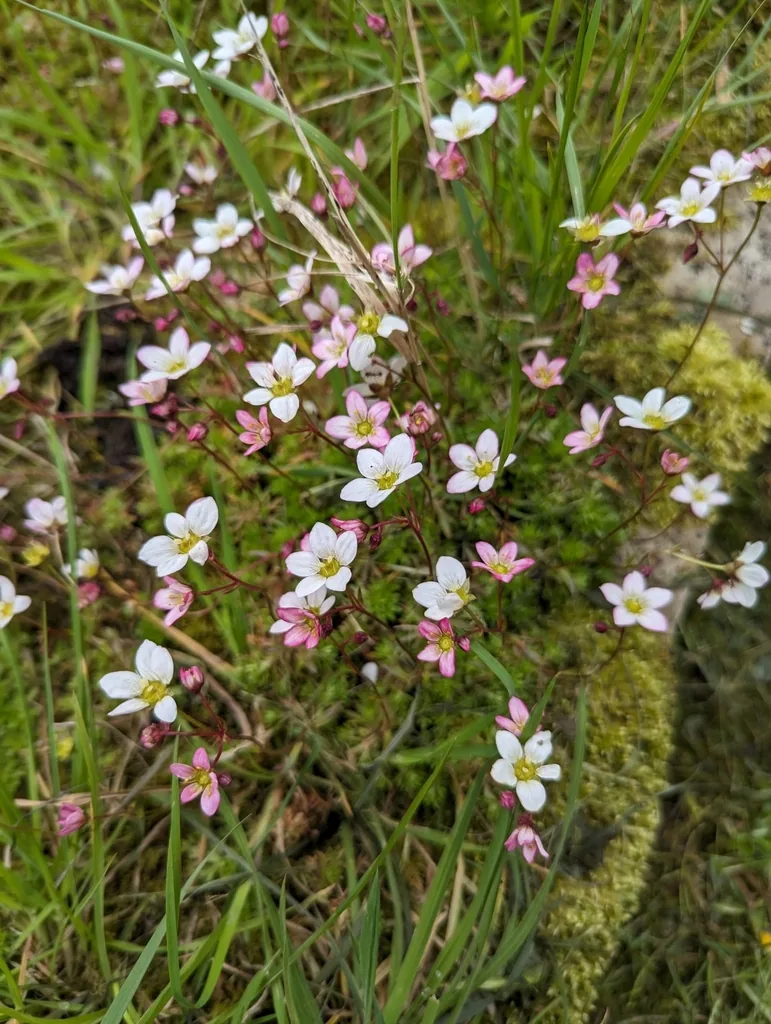
How to Grow and Care for Musk rose
Rosa moschata
Written by Emilio Marruso · last checked
Toxic to: People · Why
At a glance
The musk rose is a garden plant you can also taste: its petals flavor sorbets and sweets, and its young spring shoots and small fruits can be eaten raw or cooked. Give it full sun or light shade, moderate water and well-drained soil, and a single feeding in spring is enough for the whole season.
- Sun
Full sun to light shade
What the sources say (2)
- Water
Moderate water; it does not like drought
What the sources say (2)
- Cold
Survives winters down to −10 °F (−23.3 °C)
Very hardy · USDA 6 · RHS H7 · Z6
What the sources say (2)
Hardiness, coldest zone: 6 [winter low −23.3 to −17.8 °C (−10 to 0 °F)]
According to Practical Plants: Shade tolerance light shade Water moderate Hardiness Zone 6+
— Musk Rose (Rosa moschata) — Practical Plants [5] Shade tolerance light shade Water moderate Hardiness Zone 6+
— Musk Rose (Rosa moschata) — Practical Plants [5] - Soil
Well-drained soil; it dislikes waterlogged ground
What the sources say (1)
Watering notes: Needs well-drained soil; dislikes waterlogged soils
Succeeds in most soils [3] , preferring a circumneutral soil and a sunny position [10] . Grows well in heavy clay soils. Dislikes water-logged soils [10] .
— Musk Rose (Rosa moschata) — Practical Plants [5] - Planting
Plant in late spring; seedlings taller than 10 in can go in during summer
What the sources say (2)
Planting: Late spring (seedlings and rooted cuttings); summer for seedlings over 25 cm [9.8 in]
Plant out in the summer if the plants are more than 25cm tall, otherwise grow on in a cold frame for the winter and plant out in late spring.
— Musk Rose (Rosa moschata) — Practical Plants [5] Cuttings of half-ripe wood with a heel, July in a shaded frame. Overwinter the plants in the frame and plant out in late spring
— Musk Rose (Rosa moschata) — Practical Plants [5] - Feeding
Feed once a year in spring; never after mid-August
What the sources say (5)
How often: Once a year: a single spring application is enough for the season
roses in general: You can fertilize every four to six weeks during the growing season, but stop fertilization in late summer (late August or early September) as the roses begin to go dormant.
— [7] roses in general, low desert: It is better to apply small amounts of a slow-release fertilizer every six weeks during the growing season, rather than a heavy application once a year.
— [9] Fertilization schedules vary depending on the types of roses being grown. For species roses, a spring application of general-purpose fertilizer is usually adequate for the season.
— [8] Avoid: Fertilizing late in the season (after mid-August), which pushes soft growth easily damaged in winter
No fertilizer should be applied after August 15 so as not to encourage soft, succulent growth that could be easily winter-damaged.
— [8] Fertilizing late in the growing season may cause new succulent growth which is susceptible to winter injury.
— [10] - Harvest
Fruit, petals and young spring shoots are edible raw or cooked
- Propagation
Cuttings in July or early fall, suckers dug from the base, or layering
What the sources say (4)
Propagation: Seed; half-ripe wood cuttings with a heel (July); mature wood cuttings (early autumn); division of suckers; layering
Cuttings of half-ripe wood with a heel, July in a shaded frame.
— Musk Rose (Rosa moschata) — Practical Plants [5] Cuttings of mature wood of the current seasons growth. Select pencil thick shoots in early autumn that are about 20 - 25cm long
— Musk Rose (Rosa moschata) — Practical Plants [5] Division of suckers in the dormant season. Plant them out direct into their permanent positions.
— Musk Rose (Rosa moschata) — Practical Plants [5] Seed. Rose seed often takes two years to germinate. This is because it may need a warm spell of weather after a cold spell
— Rosa moschata - Useful Temperate Plants [2] - Sowing
Sow seeds as soon as ripe in a cold frame; stored seed early in the year
What the sources say (1)
Sowing: As soon as ripe in a cold frame; stored seed as early in the year as possible
Seed sown as soon as it is ripe in a cold frame sometimes germinates in spring though it may take 18 months. Stored seed can be sown as early in the year as possible
— Musk Rose (Rosa moschata) — Practical Plants [5] - Safety
Remove the hairs around the seeds: they irritate the mouth and stomach
Overview
Rosa moschata (musk rose) is a long-cultivated rose whose native range is given as southern Iran to Afghanistan; no truly wild specimens are known. [1][3] It is a prickly deciduous shrub with arching to climbing stems, valued for its musk-scented white flowers and long flowering season. [2][3] Fruits, young shoots and petals are recorded as edible, but hairs around the seeds can irritate the mouth and digestive tract. [5]
This record is incomplete: the sources we read do not cover every field yet.
Not yet covered by our sources: Hardiness, warmest zone, Pruning
Musk rose care
Measurements in square brackets are our conversion into the other unit system; the quoted text is unchanged.
How to water Musk rose
Watering
Moderate water; drought intolerant
Watering notes
Needs well-drained soil; dislikes waterlogged soils
What the sources say (1)
Succeeds in most soils [3] , preferring a circumneutral soil and a sunny position [10] . Grows well in heavy clay soils. Dislikes water-logged soils [10] .How much light Musk rose needs
Full sun to light shade
How much cold Musk rose can take
Hardiness, coldest zone
6 [winter low −23.3 to −17.8 °C (−10 to 0 °F)]
What each source says
According to Practical Plants: 6 [winter low −23.3 to −17.8 °C (−10 to 0 °F)]
Hardiness, warmest zone
Not stated in the sources we read.
How to propagate Musk rose
Seed; half-ripe wood cuttings with a heel (July); mature wood cuttings (early autumn); division of suckers; layering
What the sources say (4)
Cuttings of half-ripe wood with a heel, July in a shaded frame.Cuttings of mature wood of the current seasons growth. Select pencil thick shoots in early autumn that are about 20 - 25cm longDivision of suckers in the dormant season. Plant them out direct into their permanent positions.Seed. Rose seed often takes two years to germinate. This is because it may need a warm spell of weather after a cold spellHow to grow Musk rose
The plant
Family
Rosaceae
What the sources say (1)
ROSACEAE * Rosa moschata J. Herrmann. Common name: Musk Rose . Phenology: May-Jun.Fertilizing
When
In spring
What each source says
roses in general: Every 4 to 6 weeks during the growing season, stopping in late summer
What the sources say (2)
roses in general: You can fertilize every four to six weeks during the growing season, but stop fertilization in late summer (late August or early September) as the roses begin to go dormant.Fertilization schedules vary depending on the types of roses being grown. For species roses, a spring application of general-purpose fertilizer is usually adequate for the season.How often
Once a year: a single spring application is enough for the season
What each source says
roses in general: Every 4 to 6 weeks during the growing season
roses in general, low desert: Small amounts of slow-release fertilizer every 6 weeks during the growing season
What the sources say (3)
roses in general: You can fertilize every four to six weeks during the growing season, but stop fertilization in late summer (late August or early September) as the roses begin to go dormant.roses in general, low desert: It is better to apply small amounts of a slow-release fertilizer every six weeks during the growing season, rather than a heavy application once a year.Fertilization schedules vary depending on the types of roses being grown. For species roses, a spring application of general-purpose fertilizer is usually adequate for the season.Natural fertilizers
Compost or dried manure mixed into the bed before planting, 1 part to 2 parts garden soil
What the sources say (1)
Mix 1 part organic material such as peat moss, compost, or dried manure with 2 parts garden soil.Mineral fertilizers
General-purpose fertilizer such as 10-10-10 or 12-12-12, 118 to 237 mL per plant, spread in a band from 15 cm [5.9 in] to 46 cm [18 in] from the crown
What each source says
roses in general, once new growth is 15 cm long: Complete fertilizer (5-10-5, 4-8-4 or similar) at 146 g/m², or 1 heaping teaspoon per plant
What the sources say (2)
roses in general, once new growth is 15 cm long: After new growth is about 6 inches long, apply a complete fertilizer (5-10-5, 4-8-4 or similar analysis) at the rate of 3 pounds per 100 square feet or 1 heaping teaspoon per plant.General-purpose fertilizers such as 10-10-10 or 12-12-12 are used at about one-half to one cup per plant. Spread the fertilizer in a band starting six inches from the crown of the plant, going out to about 18 inches.Avoid
Fertilizing late in the season (after mid-August), which pushes soft growth easily damaged in winter
What the sources say (2)
No fertilizer should be applied after August 15 so as not to encourage soft, succulent growth that could be easily winter-damaged.Fertilizing late in the growing season may cause new succulent growth which is susceptible to winter injury.Signs of deficiency
Nitrogen deficiency: yellowing leaves; phosphorus deficiency: greyish-green leaves; potassium deficiency: browning leaf margins
What the sources say (1)
Plants deficient in nitrogen will produce yellowing leaves, phosphorus deficiency will produce greyish-green leaves, and lack of potassium can cause the leaf margins to brown.Propagation
Seed stratification
The sources give different values depending on region, zone or growing conditions.
What each source says
Species roses in general: Seed needs stratification; germination may take two seasons
What the sources say (1)
Species roses in general: species roses can be propagated by seed but need stratification and germination may take two seasonsCuttings
Softwood cuttings in early to mid spring or hardwood cuttings in late summer to autumn; also chip budding in summer.
What the sources say (1)
Propagate by softwood cuttings in early to mid spring, hardwood cuttings in late summer to autumn or by chip budding in summerPruning
Flowering wood
The sources give different values depending on region, zone or growing conditions.
What each source says
rose arbustive in generale: Flowers on new wood (this year's growth)
What the sources say (1)
rose arbustive in generale: Prune them in the winter or spring before new growth begins; these plants develop flowers on growth produced during the spring. Examples are shrub roses, beautyberry, abelia, and rose of Sharon.When to prune
The sources give different values depending on region, zone or growing conditions.
What each source says
rose arbustive in generale: Winter or spring, before new growth begins.
What the sources say (1)
rose arbustive in generale: Prune them in the winter or spring before new growth begins; these plants develop flowers on growth produced during the spring. Examples are shrub roses, beautyberry, abelia, and rose of Sharon.Remedies
Each remedy shows what official sources say about it; traditional remedies without an official source are marked as such. Harmful ones are listed so you know to avoid them.
Treating the plant
insect pests and diseases
garlic companion planting Not verified
Traditional remedy, not verified by an official source.
How: Garlic planted nearby can help protect the plant from disease and insect predation.
Is Musk rose poisonous?
Reported by the source, quoted verbatim. This is not medical or veterinary advice: if a person or an animal may have eaten this plant, contact a poison control centre or a veterinarian.
There is a layer of hairs around the seeds just beneath the flesh of the fruit. These hairs can cause irritation to the mouth and digestive tract if ingested.
[5]
Calendar
Sowing
As soon as ripe in a cold frame; stored seed as early in the year as possible
What the sources say (1)
Seed sown as soon as it is ripe in a cold frame sometimes germinates in spring though it may take 18 months. Stored seed can be sown as early in the year as possiblePlanting
Late spring (seedlings and rooted cuttings); summer for seedlings over 25 cm [9.8 in]
What the sources say (2)
Plant out in the summer if the plants are more than 25cm tall, otherwise grow on in a cold frame for the winter and plant out in late spring.Cuttings of half-ripe wood with a heel, July in a shaded frame. Overwinter the plants in the frame and plant out in late springPruning
Not stated in the sources we read.
Months as given by the sources, which are mostly from the United States (northern hemisphere). In the southern hemisphere they shift by about six months.
Edibility
Reported by the source, quoted verbatim. Do not eat a plant on the basis of this page alone: identification mistakes can be dangerous.
Fruit - raw or cooked [4] . The fruit is up to 15mm in diameter [10] , but there is only a thin layer of flesh surrounding the many seeds[K].
[5]Young leaves and stems - raw or cooked [2] [6] [8] . The young shoots as they emerge from the ground in spring are used.
[5]Petals - raw or cooked [8] . Used as a flavouring in sorbets, confections etc.
[5]The seed is a good source of vitamin E, it can be ground and mixed with flour or added to other foods as a supplement
[5]
Similar plants
- Apple Rose Rosa villosa
- Burnet Rose Rosa spinosissima
- Carolina Rose Rosa carolina
- Cherokee Rose Rosa laevigata
- Climbing Prairie Rose Rosa setigera
- Dog rose Rosa canina
- Lady Banks Rosa banksiae
- Memorial Rose Rosa lucieae
Sources
Every value above is quoted from these documents. Links lead to the original publisher.
- Rosa moschata Herrm. | Plants of the World Online | Kew Science · powo.science.kew.org, consulted
- Rosa moschata - Useful Temperate Plants · temperate.theferns.info, consulted
- Rosa moschata: Systematics, Etymology, Habitat, Cultivation ... · antropocene.it, consulted
- Rosa moschata Herrm. · asturnatura.com, consulted
- Musk Rose (Rosa moschata) — Practical Plants · practicalplants.org, consulted
- Rosa moschata (Musk Rose) - FSUS · fsus.ncbg.unc.edu, consulted
- extension.oregonstate.edu · extension.oregonstate.edu
- extension.illinois.edu · extension.illinois.edu
- extension.arizona.edu · extension.arizona.edu
- ag.purdue.edu · ag.purdue.edu
- rhs.org.uk · rhs.org.uk
- extension.umd.edu · extension.umd.edu
Written by Emilio Marruso · last checked