
How to Grow and Care for Star Jasmine
Trachelospermum jasminoides
Written by Emilio Marruso · last checked
Not toxic to cats and dogs, according to the sources · Sources
At a glance
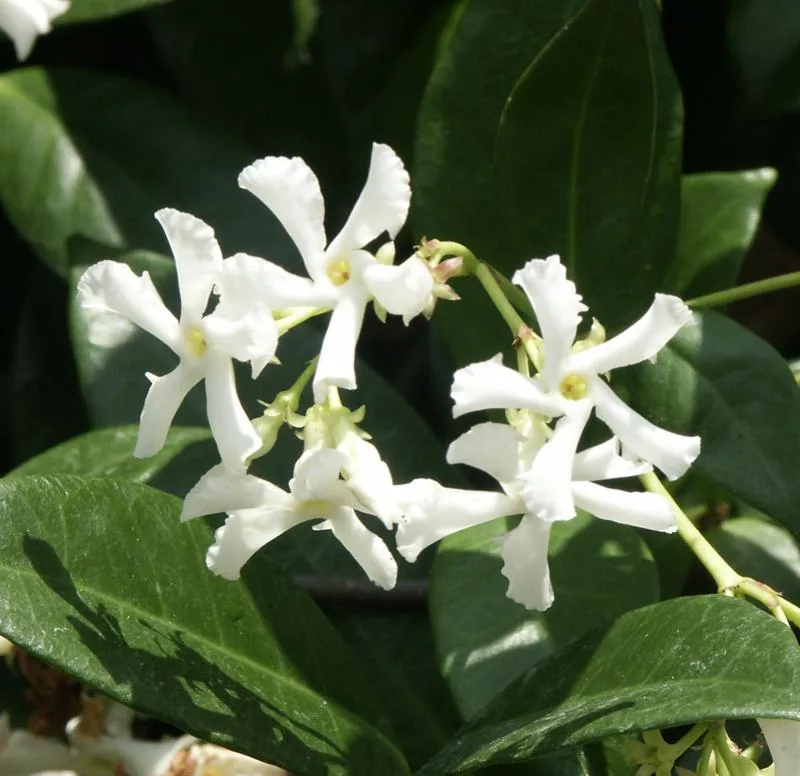
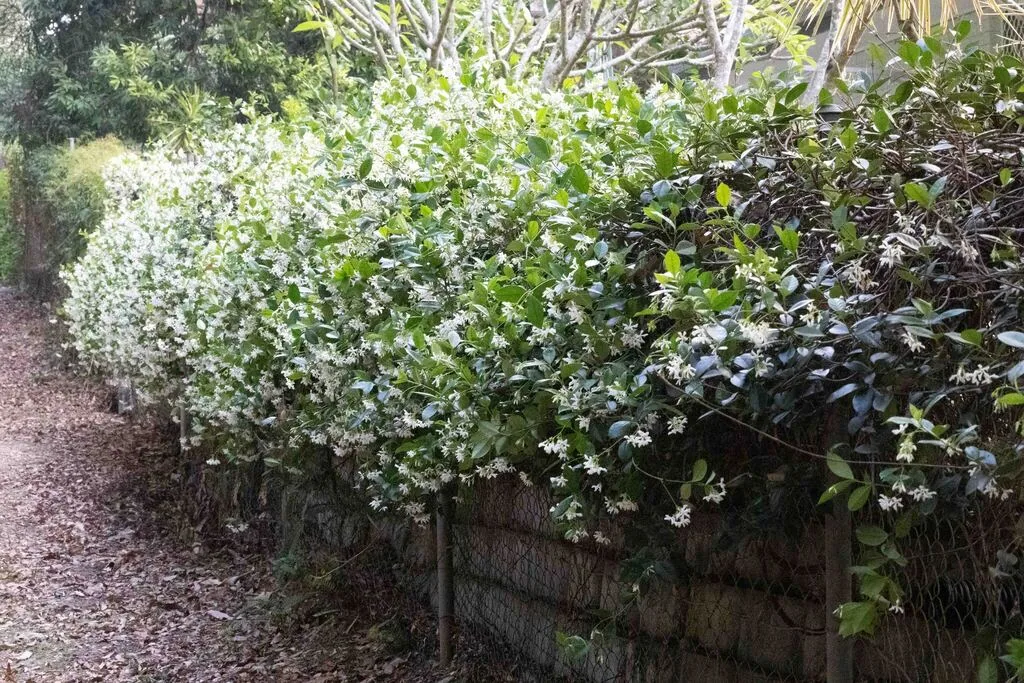
Star jasmine is a fast-growing plant that bees love, and it can reach 20 feet on an arbor. Give it a sunny, sheltered spot, and once it is established, it handles dry spells with ease. It also grows happily in containers or even indoors, and it is safe around cats, dogs and horses.
- Sun
A sunny spot, sheltered from the wind
What the sources say (1)
Light: Sunny, sheltered spot
For best flowers, grow in fertile, well-drained soil in a sheltered, sunny spot.
— Trachelospermum jasminoides (Confederate Jasmine, Star Jasmine) | North Carolina Extension Gardener Plant Toolbox [1] - Water
Handles dry spells once it is established
What the sources say (1)
Watering: Drought-tolerant once established
Star Jasmine has been awarded with the RHS Award of Garden Merit as a reliable plant to grow. Once established, it is drought-tolerant.
— Trachelospermum jasminoides (Confederate Jasmine, Star Jasmine) | North Carolina Extension Gardener Plant Toolbox [1] - Cold
Survives winters down to 10 °F (−12.2 °C)
Hardy in cold winters · USDA 8a · RHS H5 · Z8
What the sources say (2)
Hardiness, coldest zone: 8a [winter low −12.2 to −9.4 °C (10 to 15 °F)]
Piedmont USDA Plant Hardiness Zone: 8a, 8b, 9a, 9b, 10a, 10b
— Trachelospermum jasminoides (Confederate Jasmine, Star Jasmine) | North Carolina Extension Gardener Plant Toolbox [1] Hardiness, warmest zone: 10b [winter low 1.7 to 4.4 °C (35 to 40 °F)]
Piedmont USDA Plant Hardiness Zone: 8a, 8b, 9a, 9b, 10a, 10b
— Trachelospermum jasminoides (Confederate Jasmine, Star Jasmine) | North Carolina Extension Gardener Plant Toolbox [1] - Spacing
5 ft apart when used as a ground cover
What the sources say (2)
Spacing: 152.4 cm (5 ft), when planted as ground cover
when planted as ground cover: When planted as ground cover, set plants 5 feet apart.
— Star Jasmine / Home and Landscape / UC Statewide IPM Program (UC IPM) [3] When planted as ground cover, set plants 5 feet apart.
— Star Jasmine / Home and Landscape / UC Statewide IPM Program (UC IPM) [3] - Feeding
Feed twice a year: before spring growth starts and again after flowering
What the sources say (3)
When: Once before spring growth begins and again after flowering
Plants should be fertilized once before spring growth begins, and then again after flowers have bloomed.
— Star Jasmine / Home and Landscape / UC Statewide IPM Program (UC IPM) [3] As a vine, it can grow 20’ tall given a support structure for its twining stems. Apply a spring fertilizer if the soil is not fertile.
— Trachelospermum jasminoides (Confederate Jasmine, Star Jasmine) | North Carolina Extension Gardener Plant Toolbox [1] How often: Twice a year
Plants should be fertilized once before spring growth begins, and then again after flowers have bloomed.
— Star Jasmine / Home and Landscape / UC Statewide IPM Program (UC IPM) [3] - Pruning
Prune after flowering
What the sources say (1)
Pruning: After flowering
Prune after flowering to keep the plant within the available space.
— Trachelospermum jasminoides (Confederate Jasmine, Star Jasmine) | North Carolina Extension Gardener Plant Toolbox [1] - Pests
Watch for Japanese beetles, scale and spider mites; root rot can also strike
What the sources say (3)
Pests: Japanese beetles, scales, spider mites
There are no serious insect or disease problems but watch for Japanese Beetles
— Trachelospermum jasminoides (Confederate Jasmine, Star Jasmine) | North Carolina Extension Gardener Plant Toolbox [1] Scales Spider Mites
— Star Jasmine / Home and Landscape / UC Statewide IPM Program (UC IPM) [3] Diseases: Armillaria root rot, Phytophthora root and crown rot
Armillaria Root Rot Phytophthora Root and Crown Rot (Diseases)
— Star Jasmine / Home and Landscape / UC Statewide IPM Program (UC IPM) [3] - Size
3 to 20 ft tall and 3 to 4 ft wide
What the sources say (2)
Mature height: 91-610 cm (3-20 ft)
Height: 3 ft. 0 in. - 20 ft. 0 in.
— Trachelospermum jasminoides (Confederate Jasmine, Star Jasmine) | North Carolina Extension Gardener Plant Toolbox [1] Mature width: 91-122 cm (3-4 ft)
Width: 3 ft. 0 in. - 4 ft. 0 in.
— Trachelospermum jasminoides (Confederate Jasmine, Star Jasmine) | North Carolina Extension Gardener Plant Toolbox [1] - Propagation
Grow new plants from stem cuttings or by layering
What the sources say (1)
Propagation: Stem cuttings; layering
Clean tools after pruning from the sticky sap. Propagate by stem cuttings or layering.
— Trachelospermum jasminoides (Confederate Jasmine, Star Jasmine) | North Carolina Extension Gardener Plant Toolbox [1] - Containers
Grows well in containers and even indoors
What the sources say (2)
In containers: Yes
Plant it in a patio container or near a walkway to smell the scented flowers.
— Trachelospermum jasminoides (Confederate Jasmine, Star Jasmine) | North Carolina Extension Gardener Plant Toolbox [1] Indoors: Yes
Clip it to grow as a houseplant. Plant it in a patio container or near a walkway to smell the scented flowers.
— Trachelospermum jasminoides (Confederate Jasmine, Star Jasmine) | North Carolina Extension Gardener Plant Toolbox [1] - Safety
Not toxic to cats, dogs or horses
Overview
Star jasmine is an evergreen twining vine grown for fragrant white flowers, used on trellises or fences, as ground cover, or in containers. [1] It flowers best in fertile, well-drained soil in a sheltered, sunny spot and is drought-tolerant once established. [1] It is pruned after flowering and propagated by stem cuttings or layering. [1]
Star Jasmine care
How to water Star Jasmine
Drought-tolerant once established
What the sources say (1)
Star Jasmine has been awarded with the RHS Award of Garden Merit as a reliable plant to grow. Once established, it is drought-tolerant.How much light Star Jasmine needs
Sunny, sheltered spot
What the sources say (1)
For best flowers, grow in fertile, well-drained soil in a sheltered, sunny spot.How much cold Star Jasmine can take
Hardiness, coldest zone
8a [winter low −12.2 to −9.4 °C (10 to 15 °F)]
What the sources say (1)
Piedmont
USDA Plant Hardiness Zone:
8a, 8b, 9a, 9b, 10a, 10bHardiness, warmest zone
10b [winter low 1.7 to 4.4 °C (35 to 40 °F)]
What the sources say (1)
Piedmont
USDA Plant Hardiness Zone:
8a, 8b, 9a, 9b, 10a, 10bWhere to grow Star Jasmine
Indoors
Yes
What the sources say (1)
Clip it to grow as a houseplant. Plant it in a patio container or near a walkway to smell the scented flowers.In containers
Yes
What the sources say (1)
Plant it in a patio container or near a walkway to smell the scented flowers.Spacing
152.4 cm (5 ft), when planted as ground cover
What each source says
when planted as ground cover: 152.4 cm (5 ft)
What the sources say (2)
when planted as ground cover: When planted as ground cover, set plants 5 feet apart.When planted as ground cover, set plants 5 feet apart.How to propagate Star Jasmine
Stem cuttings; layering
What the sources say (1)
Clean tools after pruning from the sticky sap. Propagate by stem cuttings or layering.How to grow Star Jasmine
The plant
Life cycle
perennial
What the sources say (1)
Star Jasmine is an evergreen perennial vine in the dogbane family (Apocynaceae).Family
Apocynaceae
What the sources say (1)
Star Jasmine is an evergreen perennial vine in the dogbane family (Apocynaceae).Mature height
91-610 cm (3-20 ft)
What the sources say (1)
Height: 3 ft. 0 in. - 20 ft. 0 in.Mature width
91-122 cm (3-4 ft)
What the sources say (1)
Width: 3 ft. 0 in. - 4 ft. 0 in.Pests and diseases
Pests
Japanese beetles, scales, spider mites
What the sources say (2)
There are no serious insect or disease problems but watch for Japanese BeetlesScales Spider MitesDiseases
Armillaria root rot, Phytophthora root and crown rot
What the sources say (1)
Armillaria Root Rot Phytophthora Root and Crown Rot (Diseases)Fertilizing
When
Once before spring growth begins and again after flowering
What the sources say (2)
Plants should be fertilized once before spring growth begins, and then again after flowers have bloomed.As a vine, it can grow 20’ tall given a support structure for its twining stems. Apply a spring fertilizer if the soil is not fertile.How often
Twice a year
What the sources say (1)
Plants should be fertilized once before spring growth begins, and then again after flowers have bloomed.Star Jasmine pests and problems
Japanese beetles
Symptom: Beetle damage
What to do: Watch for Japanese Beetles; no serious insect or disease problems otherwise
What the sources say (1)
There are no serious insect or disease problems but watch for Japanese Beetles..
— Trachelospermum jasminoides (Confederate Jasmine, Star Jasmine) | North Carolina Extension Gardener Plant Toolbox [1] Scales, mites and root rots
Symptom: Listed pests and diseases: scales, spider mites, Armillaria root rot, Phytophthora root and crown rot
What to do: See UC IPM pest management guidance
What the sources say (1)
Scales Spider Mites ## Plant Diseases Armillaria Root Rot Phytophthora Root and Crown Rot (Diseases)
— Star Jasmine / Home and Landscape / UC Statewide IPM Program (UC IPM) [3]
Remedies
Each remedy shows what official sources say about it; traditional remedies without an official source are marked as such. Harmful ones are listed so you know to avoid them.
Treating the plant
mealybugs
cotton swab dipped in alcohol Not verified
Traditional remedy, not verified by an official source.
How: Use a cotton swab dipped in alcohol to remove the white, cottony masses.
sooty mold
clipping out affected leaves and branches Works
How: Prune affected leaves and branches to improve air circulation and cut out the worst sooty leaves.
Prune affected leaves and branches to improve air circulation and reduce humidity around the plant, which can help prevent the spread of fungal diseases.
— gardenninja.co.uk [4] What the evidence says Many insect and disease issues can be solved in the home garden by hand-picking insects or clipping and disposing of diseased plant parts.
— extension.unh.edu [5]
Is Star Jasmine poisonous?
Reported by the source, quoted verbatim. This is not medical or veterinary advice: if a person or an animal may have eaten this plant, contact a poison control centre or a veterinarian.
#fast growing #non-toxic for cats #non-toxic for horses #non-toxic for dogs #arbor #bee friendly #container plant
[1]The source flags the risk for this animal but does not explain why.
Calendar
Pruning
After flowering
What the sources say (1)
Prune after flowering to keep the plant within the available space.Months as given by the sources, which are mostly from the United States (northern hemisphere). In the southern hemisphere they shift by about six months.
Indicative values
Values from a secondary source, not checked word for word like the rest of this page. Use them as a starting point.
- Drought tolerant
- yesIndicative value, adapt it to your climate · Secondary source
- Soil pH
- 6-7.5Indicative value, adapt it to your climate · Secondary source
- Growth rate
- HighIndicative value, adapt it to your climate · Secondary source
Similar plants
- Asiatic Jasmine Trachelospermum asiaticum
- Allamanda Allamanda cathartica
- Bladderflower Araujia sericifera
- Blue Star Amsonia ciliata
- Blue Star Amsonia hubrichtii
- Bush allamanda Allamanda schottii
- Butterfly Weed Asclepias tuberosa
- Carolina Spinypod Matelea carolinensis
Sources
Every value above is quoted from these documents. Links lead to the original publisher.
- Trachelospermum jasminoides (Confederate Jasmine, Star Jasmine) | North Carolina Extension Gardener Plant Toolbox · plants.ces.ncsu.edu, consulted
- Confederate Jasmine - Trachelospermum jasminoides | North Carolina Extension Gardener Plant Toolbox · plants.ces.ncsu.edu, consulted
- Star Jasmine / Home and Landscape / UC Statewide IPM Program (UC IPM) · ipm.ucanr.edu, consulted
- gardenninja.co.uk · gardenninja.co.uk
- extension.unh.edu · extension.unh.edu
Written by Emilio Marruso · last checked