

How to Grow and Care for Allamanda
Allamanda cathartica
Written by Emilio Marruso · last checked
Toxic to: People · Why
At a glance
This sun-loving perennial grows happily in a pot, outdoors in warm weather and indoors when nights turn cool. Give it full sun, deep regular watering and a feeding every 2–3 weeks while it blooms heavily. In winter, let it rest a little drier, then trim it back in spring just before new growth starts.
- Sun
Full sun; indoors, at least 4 hours of direct sun a day
What the sources say (5)
Light: Full sun; indoors, at least 4 hours of direct sunlight daily
indoors: When grown indoors, provide at least 4 hours of direct sunlight daily.
— Golden Trumpet, Allamanda cathartica – Wisconsin Horticulture [2] According to Wisconsin Horticulture: Golden Trumpeet does best with full sun, in fertile, well-drained soil and plenty of
— Golden Trumpet, Allamanda cathartica – Wisconsin Horticulture [2] According to NC State Extension: Light: Full sun (6 or more hours of direct sunlight a day)
— Allamanda cathartica (Allamanda, Golden-Trumpet, Golden Trumpet Vine, Yellow Allamanda) | North Carolina Extension Gardener Plant Toolbox [1] Golden Trumpeet does best with full sun, in fertile, well-drained soil and plenty of moisture during the growing season.
— Golden Trumpet, Allamanda cathartica – Wisconsin Horticulture [2] When grown indoors, provide at least 4 hours of direct sunlight daily.
— Golden Trumpet, Allamanda cathartica – Wisconsin Horticulture [2] - Water
Water deeply; let the soil dry slightly, never completely; water less in winter
What the sources say (4)
Watering: Water regularly and deeply, allowing the soil to dry slightly between waterings (but not completely dry); requires ample moisture and good drainage
Water regularly and deeply, allowing the soil to dry slightly between waterings (but not completely dry, which will cause premature flower drop).
— Golden Trumpet, Allamanda cathartica – Wisconsin Horticulture [2] Whether indoors or out, the plant does require ample moisture and good drainage.
— Allamanda cathartica (Allamanda, Golden-Trumpet, Golden Trumpet Vine, Yellow Allamanda) | North Carolina Extension Gardener Plant Toolbox [1] Watering notes: Cut back watering when flowering ceases, keeping the plant on the dry side for the winter; susceptible to root rot when overwatered
Also cut back watering when flowering ceases, keeping the plant on the dry side for the winter.
— Golden Trumpet, Allamanda cathartica – Wisconsin Horticulture [2] This plant is susceptible to root rot when overwatered.
— Golden Trumpet, Allamanda cathartica – Wisconsin Horticulture [2] - Cold
Survives winters down to 30 °F (−1.1 °C)
Half hardy: mild winters or an unheated greenhouse · USDA 10a · RHS H3 · Z10
What the sources say (1)
Hardiness, coldest zone: 10a [winter low −1.1 to 1.7 °C (30 to 35 °F)]
This tender (zone 10a) evergreen plant, native to northern South America can be grown in a greenhouse in cool climates or as a summer annual
— Golden Trumpet, Allamanda cathartica – Wisconsin Horticulture [2] - Planting
Move the pot outside when it stays warm; bring it in when nights drop to 40 °F (4 °C)
What the sources say (2)
Planting: Potted plants can be moved outside when the weather is consistently warm; move inside when nights get down to 40 °F [4 °C]
Potted plants can be moved outside when the weather is consistently warm, but need to be gradually acclimated to higher light levels.
— Golden Trumpet, Allamanda cathartica – Wisconsin Horticulture [2] Move plants inside when nights get down to 40 °F.
— Golden Trumpet, Allamanda cathartica – Wisconsin Horticulture [2] - Feeding
Every 2–3 weeks from April; cut back in late August and stop in late September
What the sources say (4)
When: From April, as growth resumes, through the growing season; reduce in late August and stop in late September
Resume fertilization in April as the plant resumes growth
— Golden Trumpet, Allamanda cathartica – Wisconsin Horticulture [2] Reduce the frequency of feeding plants in late August and stop fertilization in late September.
— Golden Trumpet, Allamanda cathartica – Wisconsin Horticulture [2] How often: Every 2 to 3 weeks during the growing season, especially when blooming heavily
Fertilize regularly (every 2 to 3 weeks) during the growing season, especially when blooming heavily.
— Golden Trumpet, Allamanda cathartica – Wisconsin Horticulture [2] Avoid: Fertilizing during the winter rest: stop in late September
Allow the plant to rest during the winter months. Reduce the frequency of feeding plants in late August and stop fertilization in late September.
— Golden Trumpet, Allamanda cathartica – Wisconsin Horticulture [2] - Pruning
In spring, just before new growth, cut back to 1 or 2 leaf joints
What the sources say (1)
Pruning: Spring, just before growth resumes (cut back to 1 or 2 nodes)
Plants can be cut back to 1 or 2 nodes in the spring just before growth resumes to promote a more compact habit and flowering.
— Golden Trumpet, Allamanda cathartica – Wisconsin Horticulture [2] - Pests
Mealybugs, whiteflies, scale insects and spider mites; too much water rots the roots
What the sources say (2)
Watering notes: Cut back watering when flowering ceases, keeping the plant on the dry side for the winter; susceptible to root rot when overwatered
Also cut back watering when flowering ceases, keeping the plant on the dry side for the winter.
— Golden Trumpet, Allamanda cathartica – Wisconsin Horticulture [2] This plant is susceptible to root rot when overwatered.
— Golden Trumpet, Allamanda cathartica – Wisconsin Horticulture [2] - Watch out
In warm climates it can spread and become invasive
- Size
Reaches 15 ft tall
What the sources say (1)
Mature height: 457 cm (15 ft)
The plant is a vigorous, rambling woody climber that can reach 15 feet tall
— Golden Trumpet, Allamanda cathartica – Wisconsin Horticulture [2] - Propagation
Semi-ripe cuttings in late spring, kept warm from below and covered for humidity
What the sources say (2)
Propagation: Half-hardened cuttings taken in late spring, with bottom heat and enclosed for high humidity
Golden trumpet can easily be propagated by half-hardened cuttings taken in late spring .
— Golden Trumpet, Allamanda cathartica – Wisconsin Horticulture [2] Provide bottom heat and enclose the cuttings to provide high humidity.
— Golden Trumpet, Allamanda cathartica – Wisconsin Horticulture [2] - Containers
Grows well in pots, indoors too
What the sources say (2)
In containers: Yes
As a container plant it can be trained on a trellis to work as a screen, or it can be an accent or specimen plant on its own.
— Allamanda cathartica (Allamanda, Golden-Trumpet, Golden Trumpet Vine, Yellow Allamanda) | North Carolina Extension Gardener Plant Toolbox [1] Indoors: Yes
In temperate regions, they are grown as greenhouse plants or houseplants for their freely produced, brightly coloured, golden yellow flowers
— Allamanda cathartica (Allamanda, Golden-Trumpet, Golden Trumpet Vine, Yellow Allamanda) | North Carolina Extension Gardener Plant Toolbox [1] - Safety
All parts are poisonous if eaten; the milky sap can irritate skin and eyes
Overview
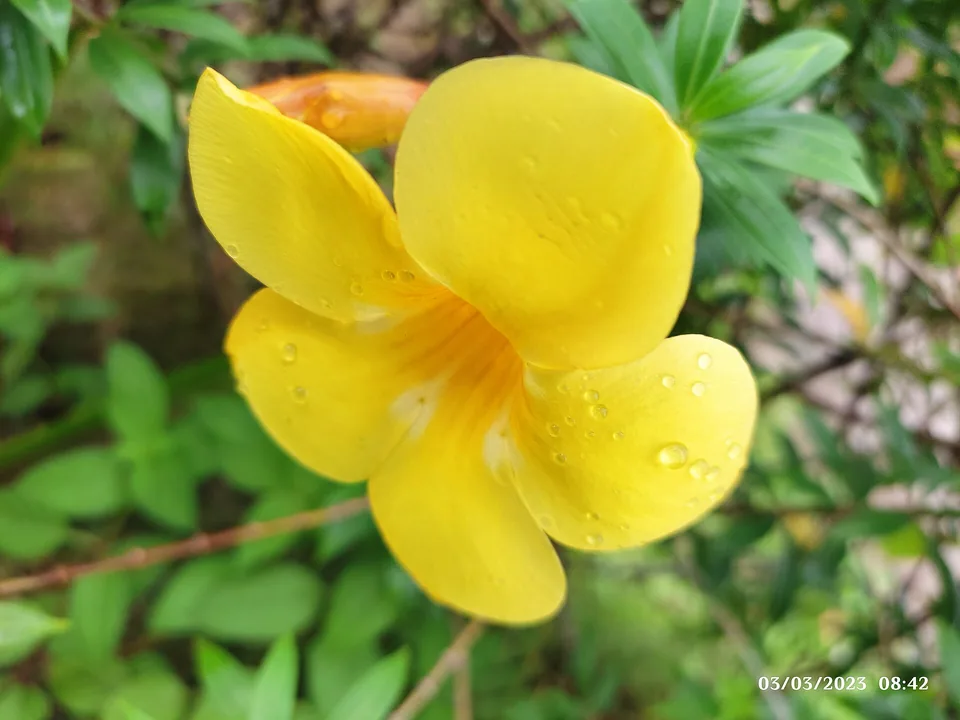
Allamanda is a tropical, evergreen, perennial vine grown for its golden yellow flowers. [1] It does best in full sun with fertile, well-drained soil and plenty of moisture during the growing season. [2] All parts of the plant are poisonous if ingested and the milky sap can irritate skin and eyes. [2]
This record is incomplete: the sources we read do not cover every field yet.
Not yet covered by our sources: Hardiness, warmest zone
Allamanda care
Measurements in square brackets are our conversion into the other unit system; the quoted text is unchanged.
How to water Allamanda
Watering
Water regularly and deeply, allowing the soil to dry slightly between waterings (but not completely dry); requires ample moisture and good drainage
What the sources say (2)
Water regularly and deeply, allowing the soil to dry slightly between waterings (but not completely dry, which will cause premature flower drop).Whether indoors or out, the plant does require ample moisture and good drainage.Watering notes
Cut back watering when flowering ceases, keeping the plant on the dry side for the winter; susceptible to root rot when overwatered
What the sources say (2)
Also cut back watering when flowering ceases, keeping the plant on the dry side for the winter.This plant is susceptible to root rot when overwatered.How much light Allamanda needs
Full sun; indoors, at least 4 hours of direct sunlight daily
What each source says
indoors: At least 4 hours of direct sunlight daily
According to Wisconsin Horticulture: Full sun
According to NC State Extension: Full sun
What the sources say (5)
indoors: When grown indoors, provide at least 4 hours of direct sunlight daily.According to Wisconsin Horticulture: Golden Trumpeet does best with full sun, in fertile, well-drained soil and plenty ofAccording to NC State Extension: Light:
Full sun (6 or more hours of direct sunlight a day)Golden Trumpeet does best with full sun, in fertile, well-drained soil and plenty of moisture during the growing season.When grown indoors, provide at least 4 hours of direct sunlight daily.How much cold Allamanda can take
Hardiness, coldest zone
10a [winter low −1.1 to 1.7 °C (30 to 35 °F)]
What the sources say (1)
This tender (zone 10a) evergreen plant, native to northern South America can be grown in a greenhouse in cool climates or as a summer annualHardiness, warmest zone
Not stated in the sources we read.
Where to grow Allamanda
Indoors
Yes
What the sources say (1)
In temperate regions, they are grown as greenhouse plants or houseplants for their freely produced, brightly coloured, golden yellow flowersIn containers
Yes
What the sources say (1)
As a container plant it can be trained on a trellis to work as a screen, or it can be an accent or specimen plant on its own.How to propagate Allamanda
Half-hardened cuttings taken in late spring, with bottom heat and enclosed for high humidity
What the sources say (2)
Golden trumpet can easily be propagated by half-hardened cuttings taken in late spring .Provide bottom heat and enclose the cuttings to provide high humidity.How to grow Allamanda
The plant
Life cycle
perennial
What the sources say (1)
Allamanda is a tropical, evergreen, perennial vine in the dogbane family (Apocynaceae).Family
Apocynaceae
What the sources say (1)
Allamanda is a tropical, evergreen, perennial vine in the dogbane family (Apocynaceae).Mature height
457 cm (15 ft)
What the sources say (1)
The plant is a vigorous, rambling woody climber that can reach 15 feet tallPests and diseases
Pests
The sources disagree:
Diseases, Insect Pests, and Other Plant Problems: No known diseases or insect pests.
[1]
Diseases
The sources disagree:
Diseases, Insect Pests, and Other Plant Problems: No known diseases or insect pests.
[1]
Fertilizing
When
From April, as growth resumes, through the growing season; reduce in late August and stop in late September
What the sources say (2)
Resume fertilization in April as the plant resumes growthReduce the frequency of feeding plants in late August and stop fertilization in late September.How often
Every 2 to 3 weeks during the growing season, especially when blooming heavily
What the sources say (1)
Fertilize regularly (every 2 to 3 weeks) during the growing season, especially when blooming heavily.Avoid
Fertilizing during the winter rest: stop in late September
What the sources say (1)
Allow the plant to rest during the winter months. Reduce the frequency of feeding plants in late August and stop fertilization in late September.Allamanda pests and problems
Root rot
Symptom: Rot when overwatered
What to do: Avoid overwatering; ensure good drainage
What the sources say (1)
This plant is susceptible to root rot when overwatered.
— Golden Trumpet, Allamanda cathartica – Wisconsin Horticulture [2] Insect pests
Symptom: Infestation by mealybugs, whiteflies, scales and spider mites
What to do: Not stated
What the sources say (1)
Insect pests include mealybugs , whiteflies , scales , and spider mites .
— Golden Trumpet, Allamanda cathartica – Wisconsin Horticulture [2] Premature flower drop
Symptom: Flowers drop early when the soil dries out completely
What to do: Let soil dry slightly but not completely between waterings
What the sources say (1)
Water regularly and deeply, allowing the soil to dry slightly between waterings (but not completely dry, which will cause premature flower drop).
— Golden Trumpet, Allamanda cathartica – Wisconsin Horticulture [2] Invasiveness in Florida
Symptom: Classified as High Invasion Risk by UF/IFAS
What to do: UF/IFAS does not recommend the plant
What the sources say (1)
the University of Florida classifies this native of South and Central America as a “High Invasion Risk” in all of Florida.
— Master Gardener Volunteers on... the all-too-troublesome allamanda - UF/IFAS Extension Sarasota County [3]
Remedies
Each remedy shows what official sources say about it; traditional remedies without an official source are marked as such. Harmful ones are listed so you know to avoid them.
Treating the plant
mealybugs
strong blast of water Not verified
Traditional remedy, not verified by an official source.
How: Hose the plant down with a strong blast of water from a garden hose.
rubbing alcohol on cotton swab Not verified
Traditional remedy, not verified by an official source.
Pretest: Before applying any remedy to the entire plant, test a small area to ensure it doesn't cause phytotoxicity.
— jardineriaon.com [5] How: Dip a cotton swab in rubbing alcohol and dab the clusters of mealybugs on foliage, stems and fruit.
dish soap spray Not proven
Pretest: Before applying any remedy to the entire plant, test a small area to ensure it doesn't cause phytotoxicity.
— jardineriaon.com [5] How: Mix 4 teaspoons of liquid dish soap with 1 quart of tap water and spritz directly onto the mealybugs.
Spritz the soapy insecticide directly onto mealybugs. The soap kills on contact. Coat all affected parts of your infected plants.
— hunker.com [6] What the evidence says Despite being made of common household materials like dish soap and vinegar and having seemingly fewer risks, these concoctions may have unforeseen consequences and cannot be relied upon to have the same effectiveness as a registered pesticide.
— extension.unh.edu [7] neem oil spray Partly works
Despite these being biological pesticides, it is important to read the directions on the label and wear safety equipment.
— extension.illinois.edu [8] How: Dilute 10 to 15 ml of neem oil in 1 liter of water, add a few drops of neutral liquid soap to improve the emulsion.
Extracted from the Azadirachta indica tree , neem oil acts as a systemic insecticide and is effective against aphids, mites, mealybugs, thrips, and fungi .
— jardineriaon.com [5] What the evidence says Neem oil is found in the seeds of the neem tree. The active component found in this biological pesticide reduces insect feeding, interferes with hormones -- making it hard to grow or lay eggs -- and acts as a repellent.
— extension.illinois.edu [8]
Getting rid of it
invasive allamanda
digging out Official source, not independently tested
If stems are cut, stump must be treated with suitable herbicide to prevent reshooting.
— business.qld.gov.au [9] How: Dig out large areas using a garden fork and mattock, making sure to remove all roots and stem fragments.
Dig out large areas using garden fork and mattock, making sure to remove all roots and stem fragments.
— business.qld.gov.au [9]
Is Allamanda poisonous?
Reported by the source, quoted verbatim. This is not medical or veterinary advice: if a person or an animal may have eaten this plant, contact a poison control centre or a veterinarian.
All parts of the plant are mildly toxic if ingested , and strong alkaloids in the milky latex sap can irritate the skin or eyes .
[2]TOXIC ONLY IF LARGE QUANTITIES EATEN; SKIN IRRITATION MINOR OR LASTING ONLY FOR A FEW MINUTES.
[1]- Poisonous parts
Poison Part: Bark Flowers Fruits Leaves Roots Seeds Stems Download Print-Friendly QR Code
[1]- Toxic principle
Poison Toxic Principle: Unknown Causes Contact Dermatitis: Yes Poison Part:
[1]- Symptoms
Symptoms may include fever, swollen lips, thirst, nausea, diarrhea; skin irritation upon contact with cell sap.
[1]- Severity
Poison Severity: Low Poison Symptoms: Poisonous through: Ingestion, dermatitis. Sap causes skin
[1]
And, like all allamandas, all parts of the plant are poisonous.
[3]- Poisonous parts
The milky sap is typical of all allamandas. And, like all allamandas, all parts of the
[3]
Calendar
Planting
Potted plants can be moved outside when the weather is consistently warm; move inside when nights get down to 40 °F [4 °C]
What the sources say (2)
Potted plants can be moved outside when the weather is consistently warm, but need to be gradually acclimated to higher light levels.Move plants inside when nights get down to 40 °F.Pruning
Spring, just before growth resumes (cut back to 1 or 2 nodes)
What the sources say (1)
Plants can be cut back to 1 or 2 nodes in the spring just before growth resumes to promote a more compact habit and flowering.Months as given by the sources, which are mostly from the United States (northern hemisphere). In the southern hemisphere they shift by about six months.
Similar plants
- Bush allamanda Allamanda schottii
- Asiatic Jasmine Trachelospermum asiaticum
- Bladderflower Araujia sericifera
- Blue Star Amsonia ciliata
- Blue Star Amsonia hubrichtii
- Butterfly Weed Asclepias tuberosa
- Clasping Milkweed Asclepias amplexicaulis
- Desert Rose Adenium obesum
Sources
Every value above is quoted from these documents. Links lead to the original publisher.
- Allamanda cathartica (Allamanda, Golden-Trumpet, Golden Trumpet Vine, Yellow Allamanda) | North Carolina Extension Gardener Plant Toolbox · plants.ces.ncsu.edu, consulted
- Golden Trumpet, Allamanda cathartica – Wisconsin Horticulture · hort.extension.wisc.edu, consulted
- Master Gardener Volunteers on... the all-too-troublesome allamanda - UF/IFAS Extension Sarasota County · blogs.ifas.ufl.edu, consulted
- The only allamanda you will ever need - UF/IFAS Extension Charlotte County · blogs.ifas.ufl.edu, consulted
- jardineriaon.com · jardineriaon.com
- hunker.com · hunker.com
- extension.unh.edu · extension.unh.edu
- extension.illinois.edu · extension.illinois.edu
- business.qld.gov.au · business.qld.gov.au
Written by Emilio Marruso · last checked