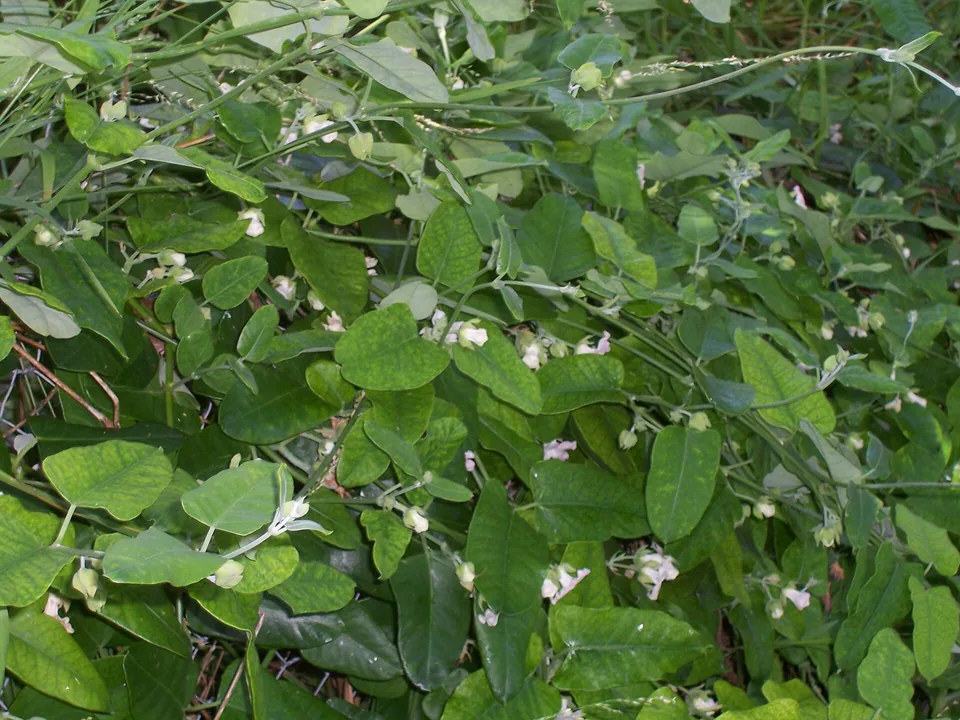


How to Grow and Care for Bladderflower
Araujia sericifera
Written by Emilio Marruso · last checked
Toxic to: Dogs, Livestock, People · Why
At a glance
This climbing vine is easy to please: it grows in full sun, partial shade or dappled light, and asks only for moderate watering and soil kept moist. You can start it from seed, which sprouts in 3–6 weeks, and it grows happily in containers too. Trim it once flowering ends and keep it in check, because its growth can get dense quickly.
- Sun
Full sun, partial shade or dappled light
What the sources say (2)
Light: Dappled sunlight, partial shade or full sun
Light: Dappled Sunlight (Shade through upper canopy all day) Full sun (6 or more hours of direct sunlight a day) Partial Shade (Direct sunlight only part of the day, 2-6 hours)
— Araujia sericifera (Bladderflower, Bladder Vine, Common Moth Vine, Cruel Plant, Cruel Vine, False Choko, Moth Plant, Moth Vine, White Bladderflower) | North Carolina Extension Gardener Plant Toolbox [1] To promote an abundance of flowers, plant in full sun in a loam based soil.
— Araujia sericifera (Bladderflower, Bladder Vine, Common Moth Vine, Cruel Plant, Cruel Vine, False Choko, Moth Plant, Moth Vine, White Bladderflower) | North Carolina Extension Gardener Plant Toolbox [1] - Water
Moderate watering; keep the soil moist
What the sources say (1)
Watering: Moderate, moist soil
It will germinate from seeds in 3 to 6 weeks. It prefers moderate, moist soil.
— Araujia sericifera (Bladderflower, Bladder Vine, Common Moth Vine, Cruel Plant, Cruel Vine, False Choko, Moth Plant, Moth Vine, White Bladderflower) | North Carolina Extension Gardener Plant Toolbox [1] - Cold
Survives winters down to 10 °F (−12.2 °C)
Hardy in cold winters · USDA 8a · RHS H5 · Z8
What the sources say (2)
Hardiness, coldest zone: 8a [winter low −12.2 to −9.4 °C (10 to 15 °F)]
USDA Plant Hardiness Zone: 8a, 8b, 9a, 9b, 10a, 10b, 11a, 11b
— Araujia sericifera (Bladderflower, Bladder Vine, Common Moth Vine, Cruel Plant, Cruel Vine, False Choko, Moth Plant, Moth Vine, White Bladderflower) | North Carolina Extension Gardener Plant Toolbox [1] Hardiness, warmest zone: 11b [winter low 7.2 to 10 °C (45 to 50 °F)]
USDA Plant Hardiness Zone: 8a, 8b, 9a, 9b, 10a, 10b, 11a, 11b
— Araujia sericifera (Bladderflower, Bladder Vine, Common Moth Vine, Cruel Plant, Cruel Vine, False Choko, Moth Plant, Moth Vine, White Bladderflower) | North Carolina Extension Gardener Plant Toolbox [1] - Pruning
Prune once flowering has ended
What the sources say (1)
Pruning: After flowering has ended
Pruning can be done after flowering has ended. Emitting an odor considered foul to humans
— Araujia sericifera (Bladderflower, Bladder Vine, Common Moth Vine, Cruel Plant, Cruel Vine, False Choko, Moth Plant, Moth Vine, White Bladderflower) | North Carolina Extension Gardener Plant Toolbox [1] - Pests
Watch for red spider mites, especially in greenhouses
What the sources say (1)
Pests: glasshouse red spider mite
Insects, Diseases, and Other Plant Problems: Glasshouse red spider mite can be an issue.
— Araujia sericifera (Bladderflower, Bladder Vine, Common Moth Vine, Cruel Plant, Cruel Vine, False Choko, Moth Plant, Moth Vine, White Bladderflower) | North Carolina Extension Gardener Plant Toolbox [1] - Watch out
It can turn weedy and smother nearby plants; cut it at ground level and dig out the roots
- Propagation
Grows from seed
What the sources say (1)
Propagation: Seed
Recommended Propagation Strategy: Seed Country Or Region Of Origin:
— Araujia sericifera (Bladderflower, Bladder Vine, Common Moth Vine, Cruel Plant, Cruel Vine, False Choko, Moth Plant, Moth Vine, White Bladderflower) | North Carolina Extension Gardener Plant Toolbox [1] - Sowing
Seeds sprout in 3–6 weeks
What the sources say (1)
Days to germination: 21-42 days (3-6 weeks)
It will germinate from seeds in 3 to 6 weeks.
— Araujia sericifera (Bladderflower, Bladder Vine, Common Moth Vine, Cruel Plant, Cruel Vine, False Choko, Moth Plant, Moth Vine, White Bladderflower) | North Carolina Extension Gardener Plant Toolbox [1] - Containers
Grows in containers too
What the sources say (1)
In containers: Yes
This plant is grown as a tender annual or as a container plant in most zones.
— Araujia sericifera (Bladderflower, Bladder Vine, Common Moth Vine, Cruel Plant, Cruel Vine, False Choko, Moth Plant, Moth Vine, White Bladderflower) | North Carolina Extension Gardener Plant Toolbox [1] - Safety
Its milky sap irritates skin; poisonous to people and livestock, harmful to dogs
Overview
Bladderflower is a vine native to South America that is an invasive species in North Carolina. [1] The sap is moderately poisonous and causes skin irritation. [3] It is a common weed in citrus groves and is no longer cultivated as a garden ornamental. [1]
Bladderflower care
How to water Bladderflower
Moderate, moist soil
What the sources say (1)
It will germinate from seeds in 3 to 6 weeks. It prefers moderate, moist soil.How much light Bladderflower needs
Dappled sunlight, partial shade or full sun
What the sources say (2)
Light:
Dappled Sunlight (Shade through upper canopy all day)
Full sun (6 or more hours of direct sunlight a day)
Partial Shade (Direct sunlight only part of the day, 2-6 hours)To promote an abundance of flowers, plant in full sun in a loam based soil.How much cold Bladderflower can take
Hardiness, coldest zone
8a [winter low −12.2 to −9.4 °C (10 to 15 °F)]
What the sources say (1)
USDA Plant Hardiness Zone:
8a, 8b, 9a, 9b, 10a, 10b, 11a, 11bHardiness, warmest zone
11b [winter low 7.2 to 10 °C (45 to 50 °F)]
What the sources say (1)
USDA Plant Hardiness Zone:
8a, 8b, 9a, 9b, 10a, 10b, 11a, 11bWhere to grow Bladderflower
Yes
What the sources say (1)
This plant is grown as a tender annual or as a container plant in most zones.How to propagate Bladderflower
Seed
What the sources say (1)
Recommended Propagation Strategy:
Seed
Country Or Region Of Origin:How to grow Bladderflower
The plant
Life cycle
annual, perennial
What the sources say (1)
Life Cycle:
Annual
Perennial
Recommended Propagation Strategy:
SeedFamily
Apocynaceae
What the sources say (1)
Species:
sericifera
Family:
Apocynaceae
Uses (Ethnobotany):
OrnamentalSowing and growth
Days to germination
21-42 days (3-6 weeks)
What the sources say (1)
It will germinate from seeds in 3 to 6 weeks.Pests and diseases
Pests
glasshouse red spider mite
What the sources say (1)
Insects, Diseases, and Other Plant Problems: Glasshouse red spider mite can be an issue.Bladderflower pests and problems
Glasshouse red spider mite
Symptom: Glasshouse red spider mite can be an issue
What the sources say (1)
Insects, Diseases, and Other Plant Problems: Glasshouse red spider mite can be an issue.
— Araujia sericifera (Bladderflower, Bladder Vine, Common Moth Vine, Cruel Plant, Cruel Vine, False Choko, Moth Plant, Moth Vine, White Bladderflower) | North Carolina Extension Gardener Plant Toolbox [1] Invasive weed growth
Symptom: Dense growth smothers the supporting vegetation
What to do: Cut the vine out at ground level, removing as much of the root as possible, and monitor the site for regrowth
What the sources say (2)
The dense growth habit will smother the supporting vegetation.
— Araujia sericifera (Bladderflower, Bladder Vine, Common Moth Vine, Cruel Plant, Cruel Vine, False Choko, Moth Plant, Moth Vine, White Bladderflower) | North Carolina Extension Gardener Plant Toolbox [1] get down to the base of the tree and cut it out at ground level, removing as much of the root as possible.
— Cruel vine | UC Weed Science (weed control, management, ecology, and minutia) [3]
Remedies
Each remedy shows what official sources say about it; traditional remedies without an official source are marked as such. Harmful ones are listed so you know to avoid them.
First aid
First aid: not a substitute for a doctor
sap skin irritation
washing the skin with soap and warm water Official source, not independently tested
If the patient is conscious and responsive call the Poisons Information Centre on 13 11 26 or your doctor.
— weeds.dpi.nsw.gov.au [5] The person is suffering from a severe allergic reaction, such as swelling or difficulty breathing, or has had a severe reaction in the past.
— medlineplus.gov [4] How: Wash the skin thoroughly with soap and warm water as soon as possible after contact.
Wash the skin thoroughly with soap and warm water. Because the plant oil enters skin quickly, try to wash it off within 30 minutes.
— medlineplus.gov [4] cool compresses Official source, not independently tested
If the patient is unconscious, unresponsive or having difficulty breathing dial 000 or get to the emergency section of a hospital immediately.
— weeds.dpi.nsw.gov.au [5] How: Stay cool and apply cool compresses to the skin to ease itching.
Body heat and sweating can aggravate the itching. Stay cool and apply cool compresses to your skin.
— medlineplus.gov [4]
Getting rid of it
invasive vine
cutting the vine at ground level Works
Be sure to use hand protection because many people are allergic to the sap.
— Cruel vine | UC Weed Science (weed control, management, ecology, and minutia) [3] How: Get down to the base of the tree and cut the vine out at ground level, removing as much of the root as possible; monitor the site for regrowth.
To get rid of it, it's important to get down to the base of the tree and cut it out at ground level, removing as much of the root as possible.
— Cruel vine | UC Weed Science (weed control, management, ecology, and minutia) [3] What the evidence says Just cutting the vine at its base is sufficient to kill it.
— Cruel vine | UC Weed Science (weed control, management, ecology, and minutia) [3] hand pulling or digging out seedlings Official source, not independently tested
Take care to avoid contact with the milky sap that is released when the plant is damaged. Wear gloves and other personal protective equipment.
— weeds.dpi.nsw.gov.au [5] How: Seedlings and small plants can be hand pulled or dug out, which is easiest when the soil is damp and loose; remove roots from at least 10 cm below ground.
Seedlings and small plants can be hand pulled or dug out. This is easiest when the soil is damp and loose.
— weeds.dpi.nsw.gov.au [5] digging out the roots after cutting larger vines Partly works
How: Larger vines can be cut and left to wither and die on the plants they are growing on; the roots will need to be dug out to prevent regrowth.
Larger vines can be cut and the left to wither and die on the plants that they are growing on. The roots will need to be dug out to prevent regrowth.
— weeds.dpi.nsw.gov.au [5] What the evidence says removing as much of the root as possible. It still can regenerate, so it will be necessary to monitor the site, removing new growth as it might happen.
— Cruel vine | UC Weed Science (weed control, management, ecology, and minutia) [3] removing and bagging seed pods Works
How: Remove the pods so they do not go to seed; bag and dispose of the fruit carefully to minimise the spread of seeds.
Removing the rest of the vine is necessary if there are pods, in order to prevent them going to seed.
— Cruel vine | UC Weed Science (weed control, management, ecology, and minutia) [3] What the evidence says Removing the rest of the vine is necessary if there are pods, in order to prevent them going to seed.
— Cruel vine | UC Weed Science (weed control, management, ecology, and minutia) [3]
Is Bladderflower toxic to pets?
Reported by the source, quoted verbatim. This is not medical or veterinary advice: if a person or an animal may have eaten this plant, contact a poison control centre or a veterinarian.
Animals
#weedy vine #poisonous to livestock #disease resistant #tropical #problem for dogs
[1]The source flags the risk for this animal but does not explain why.
Contact Dermatitis Invasive Species Poisonous to Humans Problem for Dogs Weedy
[1]The source flags the risk for this animal but does not explain why.
People
Calendar
Pruning
After flowering has ended
What the sources say (1)
Pruning can be done after flowering has ended.
Emitting an odor considered foul to humansMonths as given by the sources, which are mostly from the United States (northern hemisphere). In the southern hemisphere they shift by about six months.
Similar plants
- Allamanda Allamanda cathartica
- Asiatic Jasmine Trachelospermum asiaticum
- Blue Star Amsonia ciliata
- Blue Star Amsonia hubrichtii
- Bush allamanda Allamanda schottii
- Butterfly Weed Asclepias tuberosa
- Carolina Spinypod Matelea carolinensis
- Cinnamon Hoya Hoya lacunosa
Sources
Every value above is quoted from these documents. Links lead to the original publisher.
- Araujia sericifera (Bladderflower, Bladder Vine, Common Moth Vine, Cruel Plant, Cruel Vine, False Choko, Moth Plant, Moth Vine, White Bladderflower) | North Carolina Extension Gardener Plant Toolbox · plants.ces.ncsu.edu, consulted
- False Choko - Araujia sericifera | North Carolina Extension Gardener Plant Toolbox · plants.ces.ncsu.edu, consulted
- Cruel vine | UC Weed Science (weed control, management, ecology, and minutia) · ucanr.edu, consulted
- medlineplus.gov · medlineplus.gov
- weeds.dpi.nsw.gov.au · weeds.dpi.nsw.gov.au
Written by Emilio Marruso · last checked