
How to Grow and Care for Asiatic Jasmine
Trachelospermum asiaticum
Written by Emilio Marruso · last checked
At a glance
Asian jasmine is an easygoing plant that asks for very little: once established, regular rain is usually enough, and it handles drought well. It grows happily in full sun or partial shade, spreads 10 to 12 feet wide, and even does well in a container. A single trim each spring keeps it neat and healthy.
- Sun
Full sun to partial shade
What the sources say (1)
Light: Full sun to partial shade
Plant it in full sun to partial shade in well-drained average to fertile soils
— Trachelospermum asiaticum (Asian Star Jasmine, Asiatic Jasmine, Yellow Star Jasmine) | North Carolina Extension Gardener Plant Toolbox [1] - Water
Keep moist when newly planted; once established, rain is usually enough and it handles drought
What the sources say (3)
Watering: Needs little watering; extra irrigation is rarely needed with regular rainfall once established; drought tolerant
The plant needs little watering; with regular rainfall, extra irrigation is rarely needed.
— Asiatic Jasmine – Gardening Solutions [2] This groundcover is moderately salt tolerant, drought tolerant, disease resistant and tolerates browsing by deer.
— Trachelospermum asiaticum (Asian Star Jasmine, Asiatic Jasmine, Yellow Star Jasmine) | North Carolina Extension Gardener Plant Toolbox [1] Watering notes: Prefers well-draining, moist soil when first planted
This plant will tolerate many soils, but prefers well-draining, moist soil when first planted.
— Asiatic Jasmine – Gardening Solutions [2] - Cold
Survives winters down to 0 °F (−17.8 °C)
Hardy in very cold winters · USDA 7a · RHS H6 · Z7
What the sources say (2)
Hardiness, coldest zone: 7a [winter low −17.8 to −15 °C (0 to 5 °F)]
USDA Plant Hardiness Zone: 7a, 7b, 8a, 8b, 9a, 9b, 10a, 10b, 11a, 11b
— Trachelospermum asiaticum (Asian Star Jasmine, Asiatic Jasmine, Yellow Star Jasmine) | North Carolina Extension Gardener Plant Toolbox [1] Hardiness, warmest zone: 11b [winter low 7.2 to 10 °C (45 to 50 °F)]
USDA Plant Hardiness Zone: 7a, 7b, 8a, 8b, 9a, 9b, 10a, 10b, 11a, 11b
— Trachelospermum asiaticum (Asian Star Jasmine, Asiatic Jasmine, Yellow Star Jasmine) | North Carolina Extension Gardener Plant Toolbox [1] - Soil
Soil that drains well
What the sources say (1)
Watering notes: Prefers well-draining, moist soil when first planted
This plant will tolerate many soils, but prefers well-draining, moist soil when first planted.
— Asiatic Jasmine – Gardening Solutions [2] - Spacing
18 in between plants
What the sources say (1)
Spacing: 45.7 cm (1.5 ft)
Plants should be placed one and a half feet apart and will take two growing seasons to fill in completely.
— Asiatic Jasmine – Gardening Solutions [2] - Feeding
Go easy on fertilizer: too much makes it grow wild and messy
What the sources say (1)
Signs of excess: Excess fertilizer makes it aggressive and unruly
This plant is easier to control when neglected. Too much water, sun or fertilizer can make it aggressive and unruly.
— Asiatic Jasmine – Gardening Solutions [2] - Pruning
Prune once a year, in early spring
What the sources say (2)
Pruning: Early spring; once a year in spring
Prune it back in the early spring.
— Trachelospermum asiaticum (Asian Star Jasmine, Asiatic Jasmine, Yellow Star Jasmine) | North Carolina Extension Gardener Plant Toolbox [1] Asiatic jasmine should be mowed and pruned once a year in the spring to keep an attractive appearance and keep it controlled.
— Asiatic Jasmine – Gardening Solutions [2] - Pests
Scales and whiteflies can bring sooty mold, a minor problem; pruning helps prevent it
What the sources say (2)
Pests: scales, whiteflies
Scales or whiteflies followed by sooty mold can be a minor problem, but pruning will reduce the chances of that as well.
— Asiatic Jasmine – Gardening Solutions [2] Diseases: sooty mold
Scales or whiteflies followed by sooty mold can be a minor problem, but pruning will reduce the chances of that as well.
— Asiatic Jasmine – Gardening Solutions [2] - Size
Spreads 10 to 12 ft wide
What the sources say (1)
Mature width: 305-366 cm (10-12 ft)
Dimensions: Height: 1 ft. 0 in. - 2 ft. 0 in. Width: 10 ft. 0 in. - 12 ft. 0 in.
— Trachelospermum asiaticum (Asian Star Jasmine, Asiatic Jasmine, Yellow Star Jasmine) | North Carolina Extension Gardener Plant Toolbox [1] - Propagation
Easy to multiply by layering or cuttings
What the sources say (2)
Propagation: Layering; cuttings
This plant can be propagated by layering semi-hardwood stem cuttings.
— Trachelospermum asiaticum (Asian Star Jasmine, Asiatic Jasmine, Yellow Star Jasmine) | North Carolina Extension Gardener Plant Toolbox [1] Propagation is by cuttings.
— Asiatic Jasmine – Gardening Solutions [2] - Containers
Grows in containers too
What the sources say (1)
In containers: Yes
This versatile plant can be grown in containers, hanging baskets or even cascading down a wall.
— Asiatic Jasmine – Gardening Solutions [2]
Overview
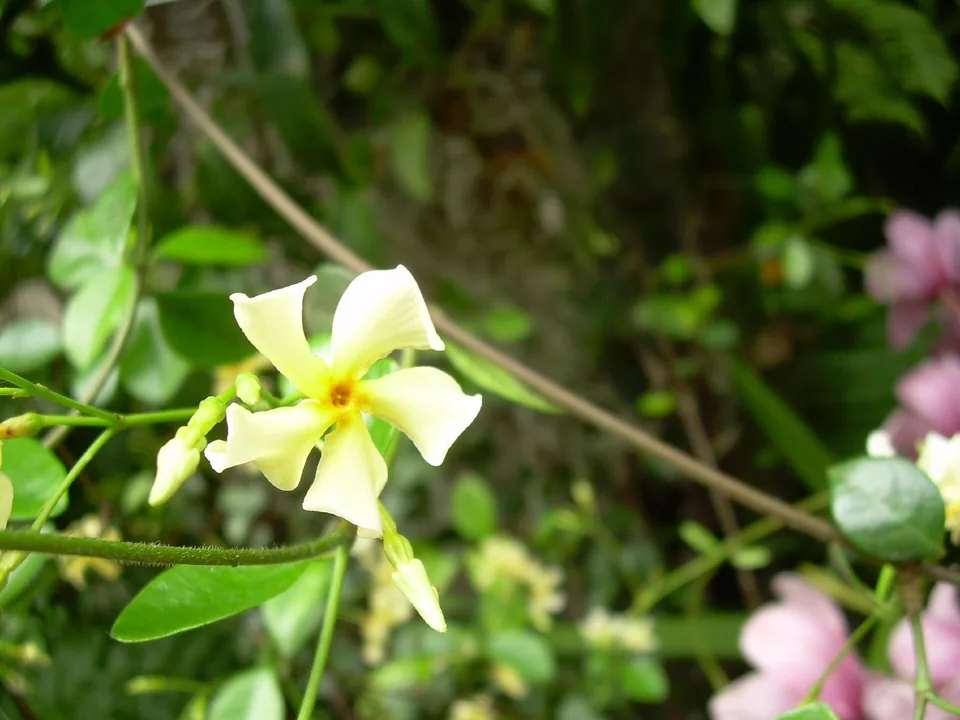
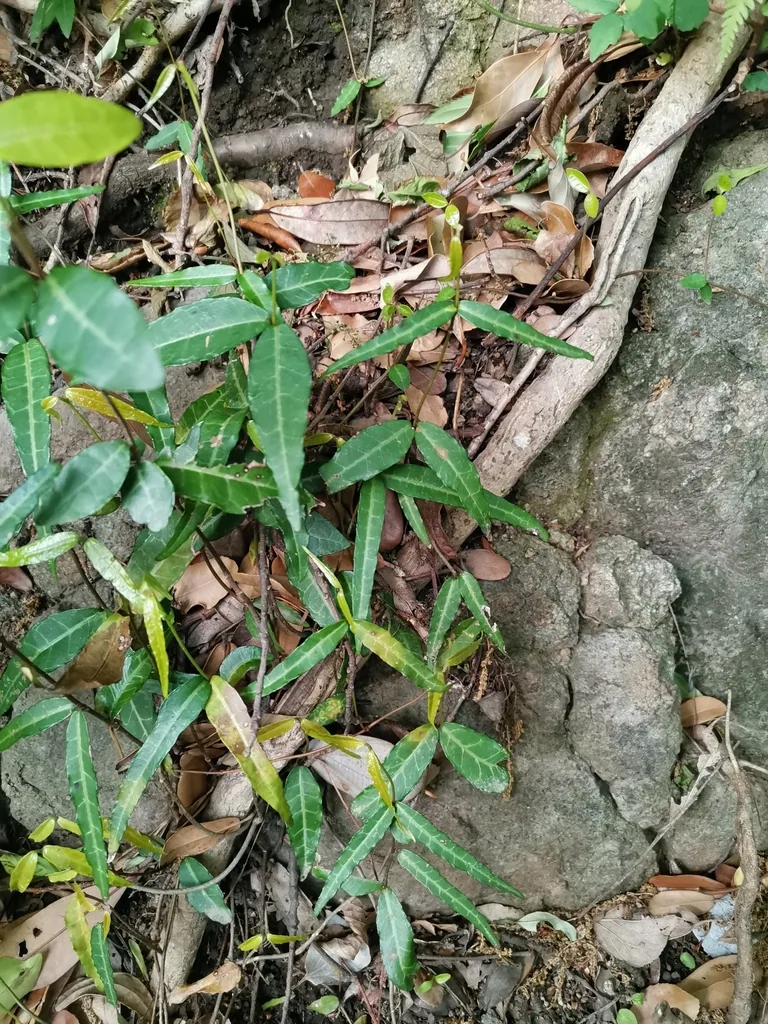
Asiatic jasmine is an evergreen, vine-like woody plant used as a groundcover. [2] It grows in full sun to partial shade and is propagated by layering or cuttings. [1][2]
Asiatic Jasmine care
How to water Asiatic Jasmine
Watering
Needs little watering; extra irrigation is rarely needed with regular rainfall once established; drought tolerant
What the sources say (2)
The plant needs little watering; with regular rainfall, extra irrigation is rarely needed.This groundcover is moderately salt tolerant, drought tolerant, disease resistant and tolerates browsing by deer.Watering notes
Prefers well-draining, moist soil when first planted
What the sources say (1)
This plant will tolerate many soils, but prefers well-draining, moist soil when first planted.How much light Asiatic Jasmine needs
Full sun to partial shade
What the sources say (1)
Plant it in full sun to partial shade in well-drained average to fertile soilsHow much cold Asiatic Jasmine can take
Hardiness, coldest zone
7a [winter low −17.8 to −15 °C (0 to 5 °F)]
What the sources say (1)
USDA Plant Hardiness Zone: 7a, 7b, 8a, 8b, 9a, 9b, 10a, 10b, 11a, 11bHardiness, warmest zone
11b [winter low 7.2 to 10 °C (45 to 50 °F)]
What the sources say (1)
USDA Plant Hardiness Zone: 7a, 7b, 8a, 8b, 9a, 9b, 10a, 10b, 11a, 11bWhere to grow Asiatic Jasmine
In containers
Yes
What the sources say (1)
This versatile plant can be grown in containers, hanging baskets or even cascading down a wall.Spacing
45.7 cm (1.5 ft)
What the sources say (1)
Plants should be placed one and a half feet apart and will take two growing seasons to fill in completely.How to propagate Asiatic Jasmine
Layering; cuttings
What the sources say (2)
This plant can be propagated by layering semi-hardwood stem cuttings.Propagation is by cuttings.How to grow Asiatic Jasmine
The plant
Life cycle
woody
What the sources say (1)
Family:
Apocynaceae
Life Cycle:
Woody
Recommended Propagation Strategy:
LayeringFamily
Apocynaceae
What the sources say (1)
Family:
Apocynaceae
Life Cycle:
Woody
Recommended Propagation Strategy:
LayeringMature height
Mature width
305-366 cm (10-12 ft)
What the sources say (1)
Dimensions:
Height: 1 ft. 0 in. - 2 ft. 0 in.
Width: 10 ft. 0 in. - 12 ft. 0 in.Pests and diseases
Pests
scales, whiteflies
What the sources say (1)
Scales or whiteflies followed by sooty mold can be a minor problem, but pruning will reduce the chances of that as well.Diseases
sooty mold
What the sources say (1)
Scales or whiteflies followed by sooty mold can be a minor problem, but pruning will reduce the chances of that as well.Fertilizing
Signs of excess
Excess fertilizer makes it aggressive and unruly
What the sources say (1)
This plant is easier to control when neglected. Too much water, sun or fertilizer can make it aggressive and unruly.Asiatic Jasmine pests and problems
Scales and whiteflies with sooty mold
Symptom: Scales or whiteflies followed by sooty mold; a minor problem
What to do: Pruning reduces the chances of it
What the sources say (1)
Scales or whiteflies followed by sooty mold can be a minor problem, but pruning will reduce the chances of that as well.
— Asiatic Jasmine – Gardening Solutions [2]
Remedies
Each remedy shows what official sources say about it; traditional remedies without an official source are marked as such. Harmful ones are listed so you know to avoid them.
Treating the plant
scale and sooty mold
pruning Partly works
How: Prune once a year in spring.
Scales or whiteflies followed by sooty mold can be a minor problem, but pruning will reduce the chances of that as well.
— Asiatic Jasmine – Gardening Solutions [2] What the evidence says Scales or whiteflies followed by sooty mold can be a minor problem, but pruning will reduce the chances of that as well.
— Asiatic Jasmine – Gardening Solutions [2] horticultural oil or insecticidal soap Not verified
Traditional remedy, not verified by an official source.
How: Apply a horticultural oil or insecticidal soap, which smothers the insects.
chlorosis
sulfur to lower soil pH Works
How: Test the soil; if alkaline, apply sulfur or add woody organic matter.
If the soil is alkaline, applying sulfur or incorporating woody organic matter helps lower the pH, releasing the bound micronutrients.
— scienceinsights.org [3] What the evidence says If you are interested in lowering the pH in your garden, elemental sulfur will be a safe and affordable option compared to coffee grounds.
— extension.illinois.edu [4]
root rot
improve soil drainage Not verified
Traditional remedy, not verified by an official source.
How: Amend heavy soils or plant in raised beds.
Getting rid of it
unwanted groundcover
digging out by hand in sections Not verified
Traditional remedy, not verified by an official source.
How: Water the day before, loosen and lift the shallow roots one section at a time, rake out leftover pieces and pull new sprouts.
repeated cutting to the ground Not verified
Traditional remedy, not verified by an official source.
While mowing for control can assist in the plant's management over time, it can also stimulate root production during the process.
— housedigest.com [5] How: Cut it to the ground several times.
white vinegar Not proven
However, white vinegar will not discriminate, and it will kill all plant life with which it comes in contact
— hunker.com [6] How: Pour white vinegar onto the jasmine.
If you're someone who tries to avoid using chemicals on your lawn at all costs, you can try pouring white vinegar onto the jasmine you're hoping to kill.
— hunker.com [6] What the evidence says Simply put, kitchen vinegar does not make a good herbicide.
— extension.illinois.edu [7]
Calendar
Pruning
Early spring; once a year in spring
What the sources say (2)
Prune it back in the early spring.Asiatic jasmine should be mowed and pruned once a year in the spring to keep an attractive appearance and keep it controlled.Months as given by the sources, which are mostly from the United States (northern hemisphere). In the southern hemisphere they shift by about six months.
Similar plants
- Star Jasmine Trachelospermum jasminoides
- Allamanda Allamanda cathartica
- Bladderflower Araujia sericifera
- Blue Star Amsonia ciliata
- Blue Star Amsonia hubrichtii
- Bush allamanda Allamanda schottii
- Butterfly Weed Asclepias tuberosa
- Carolina Spinypod Matelea carolinensis
Sources
Every value above is quoted from these documents. Links lead to the original publisher.
- Trachelospermum asiaticum (Asian Star Jasmine, Asiatic Jasmine, Yellow Star Jasmine) | North Carolina Extension Gardener Plant Toolbox · plants.ces.ncsu.edu, consulted
- Asiatic Jasmine – Gardening Solutions · gardeningsolutions.ifas.ufl.edu, consulted
- scienceinsights.org · scienceinsights.org
- extension.illinois.edu · extension.illinois.edu
- housedigest.com · housedigest.com
- hunker.com · hunker.com
- extension.illinois.edu · extension.illinois.edu
Written by Emilio Marruso · last checked