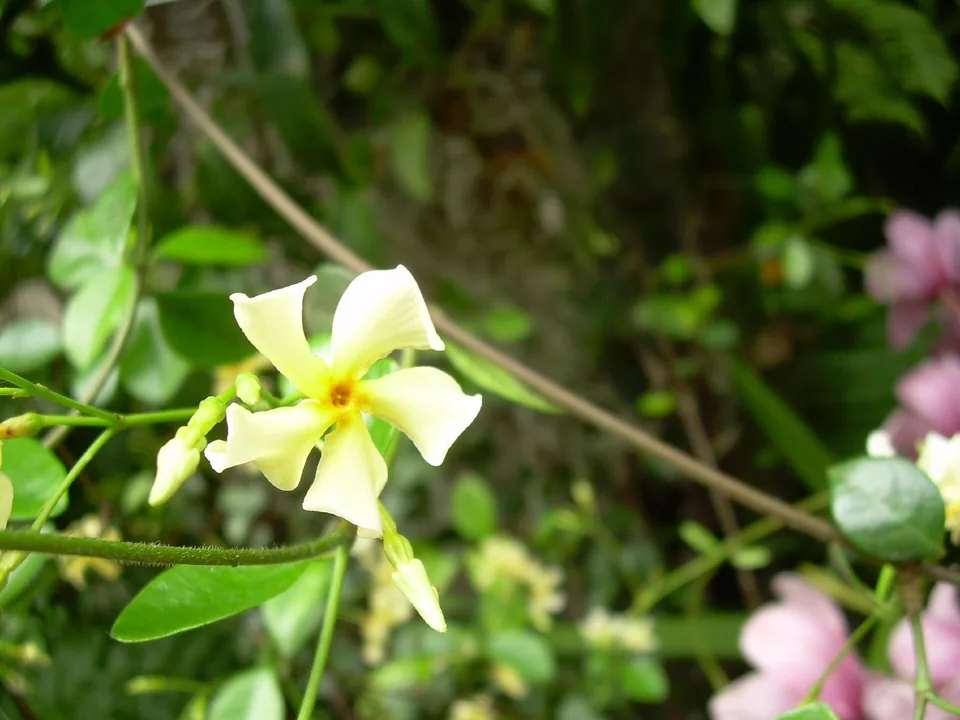
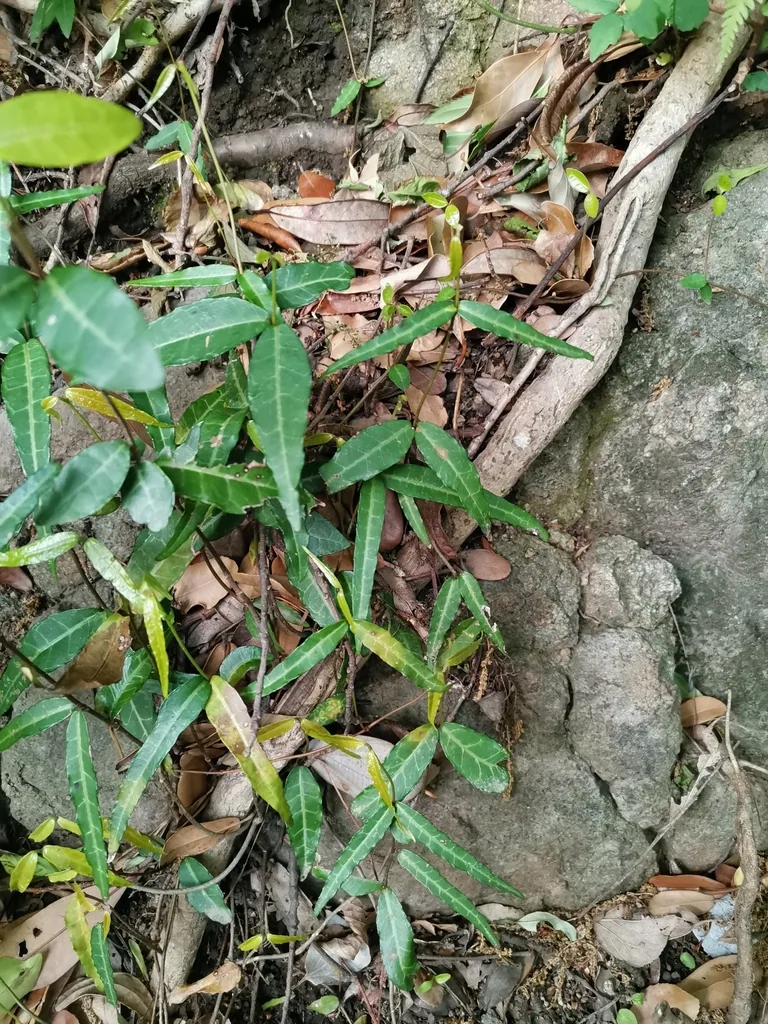

Cómo cultivar y cuidar Jazmín asiático
Trachelospermum asiaticum
Escrito por Emilio Marruso · última revisión
De un vistazo
El jazmín asiático es una planta agradecida que pide muy poco: una vez asentada, suele bastarle la lluvia y aguanta bien la sequía. Crece a gusto a pleno sol o en semisombra, se extiende de 3 a 3,7 m de ancho y también se da bien en maceta. Una sola poda cada primavera la mantiene ordenada y sana.
- Sol
De pleno sol a semisombra
Qué dicen las fuentes (1)
Luz: Pleno sol a semisombra
Plant it in full sun to partial shade in well-drained average to fertile soils
— Trachelospermum asiaticum (Asian Star Jasmine, Asiatic Jasmine, Yellow Star Jasmine) | North Carolina Extension Gardener Plant Toolbox [1] - Riego
Mantén la tierra húmeda al plantarla; una vez asentada, suele bastar la lluvia y aguanta la sequía
Qué dicen las fuentes (3)
Riego: Necesita poco riego; el riego adicional rara vez es necesario con lluvias regulares una vez establecida; tolerante a la sequía
The plant needs little watering; with regular rainfall, extra irrigation is rarely needed.
— Asiatic Jasmine – Gardening Solutions [2] This groundcover is moderately salt tolerant, drought tolerant, disease resistant and tolerates browsing by deer.
— Trachelospermum asiaticum (Asian Star Jasmine, Asiatic Jasmine, Yellow Star Jasmine) | North Carolina Extension Gardener Plant Toolbox [1] Notas sobre el riego: Prefiere suelo bien drenado y húmedo cuando se planta por primera vez
This plant will tolerate many soils, but prefers well-draining, moist soil when first planted.
— Asiatic Jasmine – Gardening Solutions [2] - Frío
Aguanta inviernos de hasta −17,8 °C (0 °F)
Rústica en inviernos muy fríos · USDA 7a · RHS H6 · Z7
Qué dicen las fuentes (2)
Rusticidad, zona más fría: 7a [mínima invernal de −17,8 a −15 °C (de 0 a 5 °F)]
USDA Plant Hardiness Zone: 7a, 7b, 8a, 8b, 9a, 9b, 10a, 10b, 11a, 11b
— Trachelospermum asiaticum (Asian Star Jasmine, Asiatic Jasmine, Yellow Star Jasmine) | North Carolina Extension Gardener Plant Toolbox [1] Rusticidad, zona más cálida: 11b [mínima invernal de 7,2 a 10 °C (de 45 a 50 °F)]
USDA Plant Hardiness Zone: 7a, 7b, 8a, 8b, 9a, 9b, 10a, 10b, 11a, 11b
— Trachelospermum asiaticum (Asian Star Jasmine, Asiatic Jasmine, Yellow Star Jasmine) | North Carolina Extension Gardener Plant Toolbox [1] - Suelo
Suelo con buen drenaje
Qué dicen las fuentes (1)
Notas sobre el riego: Prefiere suelo bien drenado y húmedo cuando se planta por primera vez
This plant will tolerate many soils, but prefers well-draining, moist soil when first planted.
— Asiatic Jasmine – Gardening Solutions [2] - Distancia
46 cm entre plantas
Qué dicen las fuentes (1)
Distancia de plantación: 45.7 cm (1.5 ft)
Plants should be placed one and a half feet apart and will take two growing seasons to fill in completely.
— Asiatic Jasmine – Gardening Solutions [2] - Abonado
No te pases con el abono: si le das demasiado, crece descontrolada y desordenada
Qué dicen las fuentes (1)
Signos de exceso: El exceso de fertilizante la vuelve agresiva y rebelde.
This plant is easier to control when neglected. Too much water, sun or fertilizer can make it aggressive and unruly.
— Asiatic Jasmine – Gardening Solutions [2] - Poda
Pódala una vez al año, a principios de primavera
Qué dicen las fuentes (2)
Poda: Principios de primavera; una vez al año en primavera
Prune it back in the early spring.
— Trachelospermum asiaticum (Asian Star Jasmine, Asiatic Jasmine, Yellow Star Jasmine) | North Carolina Extension Gardener Plant Toolbox [1] Asiatic jasmine should be mowed and pruned once a year in the spring to keep an attractive appearance and keep it controlled.
— Asiatic Jasmine – Gardening Solutions [2] - Plagas
Cochinillas y moscas blancas pueden traer negrilla, un problema menor; la poda ayuda a evitarlo
Qué dicen las fuentes (2)
Plagas: cochinillas, moscas blancas
Scales or whiteflies followed by sooty mold can be a minor problem, but pruning will reduce the chances of that as well.
— Asiatic Jasmine – Gardening Solutions [2] Enfermedades: moho fuliginoso
Scales or whiteflies followed by sooty mold can be a minor problem, but pruning will reduce the chances of that as well.
— Asiatic Jasmine – Gardening Solutions [2] - Tamaño
Se extiende de 3 a 3,7 m de ancho
Qué dicen las fuentes (1)
Anchura adulta: 305-366 cm (10-12 pies)
Dimensions: Height: 1 ft. 0 in. - 2 ft. 0 in. Width: 10 ft. 0 in. - 12 ft. 0 in.
— Trachelospermum asiaticum (Asian Star Jasmine, Asiatic Jasmine, Yellow Star Jasmine) | North Carolina Extension Gardener Plant Toolbox [1] - Multiplicación
Se multiplica por acodo o por esquejes
Qué dicen las fuentes (2)
Propagación: Acodo; esquejes
This plant can be propagated by layering semi-hardwood stem cuttings.
— Trachelospermum asiaticum (Asian Star Jasmine, Asiatic Jasmine, Yellow Star Jasmine) | North Carolina Extension Gardener Plant Toolbox [1] Propagation is by cuttings.
— Asiatic Jasmine – Gardening Solutions [2] - Maceta
Crece también en maceta
Qué dicen las fuentes (1)
En maceta: Sí
This versatile plant can be grown in containers, hanging baskets or even cascading down a wall.
— Asiatic Jasmine – Gardening Solutions [2]
Resumen
El jazmín asiático es una planta leñosa, parecida a una enredadera, siempre verde, que se usa como cubresuelo. [2] Crece a pleno sol o semisombra y se propaga por acodo o esquejes. [1][2]
Citado en inglés, como en la fuente.
Cuidados
Riego
Riego
Necesita poco riego; el riego adicional rara vez es necesario con lluvias regulares una vez establecida; tolerante a la sequía
Qué dicen las fuentes (2)
The plant needs little watering; with regular rainfall, extra irrigation is rarely needed.This groundcover is moderately salt tolerant, drought tolerant, disease resistant and tolerates browsing by deer.Notas sobre el riego
Prefiere suelo bien drenado y húmedo cuando se planta por primera vez
Qué dicen las fuentes (1)
This plant will tolerate many soils, but prefers well-draining, moist soil when first planted.Luz
Pleno sol a semisombra
Qué dicen las fuentes (1)
Plant it in full sun to partial shade in well-drained average to fertile soilsClima y frío
Rusticidad, zona más fría
7a [mínima invernal de −17,8 a −15 °C (de 0 a 5 °F)]
Qué dicen las fuentes (1)
USDA Plant Hardiness Zone: 7a, 7b, 8a, 8b, 9a, 9b, 10a, 10b, 11a, 11bRusticidad, zona más cálida
11b [mínima invernal de 7,2 a 10 °C (de 45 a 50 °F)]
Qué dicen las fuentes (1)
USDA Plant Hardiness Zone: 7a, 7b, 8a, 8b, 9a, 9b, 10a, 10b, 11a, 11bDónde cultivarla
En maceta
Sí
Qué dicen las fuentes (1)
This versatile plant can be grown in containers, hanging baskets or even cascading down a wall.Distancia de plantación
45.7 cm (1.5 ft)
Qué dicen las fuentes (1)
Plants should be placed one and a half feet apart and will take two growing seasons to fill in completely.Propagación
Acodo; esquejes
Qué dicen las fuentes (2)
This plant can be propagated by layering semi-hardwood stem cuttings.Propagation is by cuttings.Cultivo
La planta
Ciclo de vida
leñoso
Qué dicen las fuentes (1)
Family:
Apocynaceae
Life Cycle:
Woody
Recommended Propagation Strategy:
LayeringFamilia
Apocynaceae
Qué dicen las fuentes (1)
Family:
Apocynaceae
Life Cycle:
Woody
Recommended Propagation Strategy:
LayeringAltura adulta
Anchura adulta
305-366 cm (10-12 pies)
Qué dicen las fuentes (1)
Dimensions:
Height: 1 ft. 0 in. - 2 ft. 0 in.
Width: 10 ft. 0 in. - 12 ft. 0 in.Plagas y enfermedades
Plagas
cochinillas, moscas blancas
Qué dicen las fuentes (1)
Scales or whiteflies followed by sooty mold can be a minor problem, but pruning will reduce the chances of that as well.Enfermedades
moho fuliginoso
Qué dicen las fuentes (1)
Scales or whiteflies followed by sooty mold can be a minor problem, but pruning will reduce the chances of that as well.Abonado
Signos de exceso
El exceso de fertilizante la vuelve agresiva y rebelde.
Qué dicen las fuentes (1)
This plant is easier to control when neglected. Too much water, sun or fertilizer can make it aggressive and unruly.Problemas
Cochinillas y moscas blancas con fumagina
Síntoma: Cochinillas o moscas blancas seguidas de fumagina; un problema menor
Qué hacer: La poda reduce las posibilidades de que ocurra
Qué dicen las fuentes (1)
Scales or whiteflies followed by sooty mold can be a minor problem, but pruning will reduce the chances of that as well.
— Asiatic Jasmine – Gardening Solutions [2]
Remedios
Cada remedio indica qué dicen las fuentes oficiales; los remedios tradicionales sin fuente oficial aparecen marcados. Los perjudiciales están para que sepas evitarlos.
Cuidar la planta
cochinilla y fumagina
poda Funciona en parte
Cómo: Poda una vez al año en primavera.
Scales or whiteflies followed by sooty mold can be a minor problem, but pruning will reduce the chances of that as well.
— Asiatic Jasmine – Gardening Solutions [2] Qué dicen las pruebas Scales or whiteflies followed by sooty mold can be a minor problem, but pruning will reduce the chances of that as well.
— Asiatic Jasmine – Gardening Solutions [2] aceite hortícola o jabón insecticida No verificado
Remedio tradicional, no verificado por una fuente oficial.
Cómo: Aplica aceite hortícola o jabón insecticida, que sofoca a los insectos.
clorosis
azufre para bajar el pH del suelo Funciona
Cómo: Prueba el suelo; si es alcalino, aplica azufre o añade materia orgánica leñosa.
If the soil is alkaline, applying sulfur or incorporating woody organic matter helps lower the pH, releasing the bound micronutrients.
— scienceinsights.org [3] Qué dicen las pruebas If you are interested in lowering the pH in your garden, elemental sulfur will be a safe and affordable option compared to coffee grounds.
— extension.illinois.edu [4]
pudrición de la raíz
Mejora el drenaje del suelo No verificado
Remedio tradicional, no verificado por una fuente oficial.
Cómo: Enmienda los suelos pesados o planta en lechos elevados.
Cómo eliminarla
cobertura vegetal no deseada
excavación a mano por secciones No verificado
Remedio tradicional, no verificado por una fuente oficial.
Cómo: Riega el día anterior, afloja y levanta las raíces superficiales una sección a la vez, rastrilla los restos y arranca los brotes nuevos.
Corta repetidamente hasta el suelo No verificado
Remedio tradicional, no verificado por una fuente oficial.
While mowing for control can assist in the plant's management over time, it can also stimulate root production during the process.
— housedigest.com [5] Cómo: Córtalo hasta el suelo varias veces.
vinagre blanco No demostrado
However, white vinegar will not discriminate, and it will kill all plant life with which it comes in contact
— hunker.com [6] Cómo: Vierte vinagre blanco sobre el jazmín.
If you're someone who tries to avoid using chemicals on your lawn at all costs, you can try pouring white vinegar onto the jasmine you're hoping to kill.
— hunker.com [6] Qué dicen las pruebas Simply put, kitchen vinegar does not make a good herbicide.
— extension.illinois.edu [7]
Calendario
Poda
Principios de primavera; una vez al año en primavera
Qué dicen las fuentes (2)
Prune it back in the early spring.Asiatic jasmine should be mowed and pruned once a year in the spring to keep an attractive appearance and keep it controlled.Meses tal como los dan las fuentes, en su mayoría de Estados Unidos (hemisferio norte). En el hemisferio sur se desplazan unos seis meses.
Plantas similares
- Jazmín estrella Trachelospermum jasminoides
- Jazmín de Cuba Allamanda cathartica
- Jazmín de Tucumán Araujia sericifera
- Blue Star Amsonia ciliata
- Blue Star Amsonia hubrichtii
- Bush allamanda Allamanda schottii
- Butterfly Weed Asclepias tuberosa
- Carolina Spinypod Matelea carolinensis
Fuentes
Cada valor anterior se cita de estos documentos. Los enlaces llevan al editor original.
- Trachelospermum asiaticum (Asian Star Jasmine, Asiatic Jasmine, Yellow Star Jasmine) | North Carolina Extension Gardener Plant Toolbox · plants.ces.ncsu.edu, consultado
- Asiatic Jasmine – Gardening Solutions · gardeningsolutions.ifas.ufl.edu, consultado
- scienceinsights.org · scienceinsights.org
- extension.illinois.edu · extension.illinois.edu
- housedigest.com · housedigest.com
- hunker.com · hunker.com
- extension.illinois.edu · extension.illinois.edu
Escrito por Emilio Marruso · última revisión