

How to Grow and Care for Blue Star
Amsonia hubrichtii
Written by Emilio Marruso · last checked
Toxic to: People · Why
At a glance
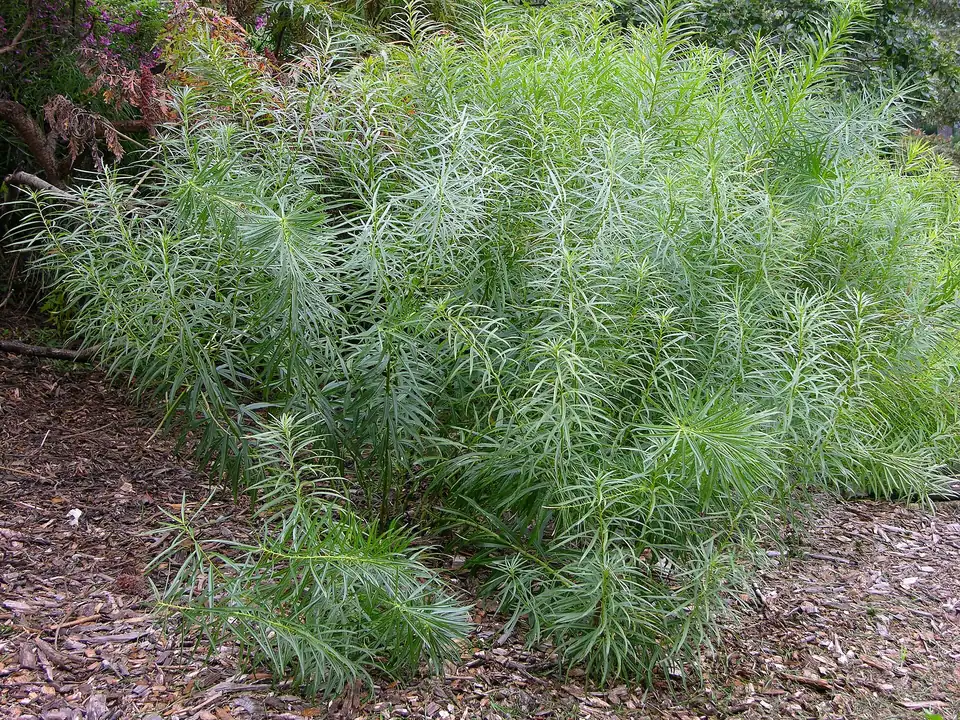
This easygoing perennial fits almost any sunny or partly shaded spot and tolerates some drought, as long as the soil drains well. It grows into a 2–3 ft clump, just as wide as it is tall, and has no serious pest or disease problems. A quick trim after flowering keeps it compact, and you can share it by dividing it in spring.
- Sun
Full sun to partial shade
What the sources say (2)
Light: Full sun to partial shade
Blue star is easily grown in average, medium, well-drained soil in full sun to part shade.
— Amsonia hubrichtii (Arkansas Amsonia, Blue Star, Blue Star Amsonia, Hubricht's Amsonia, Threadleaf Blue Star) | North Carolina Extension Gardener Plant Toolbox [1] This low maintenance perennial does best in full sun, but will also grow in partial shade.
— Arkansas or Thread-leaf Blue Star, Amsonia hubrichtii – Wisconsin Horticulture [3] - Water
Tolerates some drought; don't let it stay wet
What the sources say (2)
Watering: Tolerates some drought; does not like to remain wet
It will tolerate poor soils and some drought.
— Amsonia hubrichtii (Arkansas Amsonia, Blue Star, Blue Star Amsonia, Hubricht's Amsonia, Threadleaf Blue Star) | North Carolina Extension Gardener Plant Toolbox [1] It is not picky about soil type, thriving in everything from sand to clay, but does not like to remain wet.
— Arkansas or Thread-leaf Blue Star, Amsonia hubrichtii – Wisconsin Horticulture [3] - Soil
Moist soil that drains well
What the sources say (1)
Watering notes: Moist, well-drained soil
Moist well-drained soil in a sun to light shade location.
— Arkansas Amsonia (Amsonia hubrichtii)-Hort Answers - University of Illinois Extension [4] - Pruning
Trim after flowering to keep it compact; in spring, cut last year's stems to the ground
What the sources say (2)
Pruning: After flowering, for compact growth; in spring, cutting the previous year's stems back to the ground
It can be cut back after flowering to promote more compact growth, but does not require deadheading.
— Arkansas or Thread-leaf Blue Star, Amsonia hubrichtii – Wisconsin Horticulture [3] It is best to wait until spring to cut the stems from the previous year’s growth back to the ground.
— Arkansas or Thread-leaf Blue Star, Amsonia hubrichtii – Wisconsin Horticulture [3] - Pests
No serious pest or disease problems
- Watch out
Too much shade or too rich soil makes it flop over; cut it back after flowering
- Size
2–3 ft tall and 2–3 ft wide
What the sources say (2)
Mature height: 61-91 cm (2-3 ft)
Dimensions: Height: 2 ft. 0 in. - 3 ft. 0 in. Width: 2 ft. 0 in. - 3 ft. 0 in.
— Amsonia hubrichtii (Arkansas Amsonia, Blue Star, Blue Star Amsonia, Hubricht's Amsonia, Threadleaf Blue Star) | North Carolina Extension Gardener Plant Toolbox [1] Mature width: 61-91 cm (2-3 ft)
Dimensions: Height: 2 ft. 0 in. - 3 ft. 0 in. Width: 2 ft. 0 in. - 3 ft. 0 in.
— Amsonia hubrichtii (Arkansas Amsonia, Blue Star, Blue Star Amsonia, Hubricht's Amsonia, Threadleaf Blue Star) | North Carolina Extension Gardener Plant Toolbox [1] - Propagation
Divide it in spring, or take soft stem cuttings in early summer
What the sources say (2)
Propagation: Division (in spring), seed (sown in spring or fall), softwood stem cuttings (early summer)
Life Cycle: Perennial Recommended Propagation Strategy: Division Seed Stem Cutting
— Amsonia hubrichtii (Arkansas Amsonia, Blue Star, Blue Star Amsonia, Hubricht's Amsonia, Threadleaf Blue Star) | North Carolina Extension Gardener Plant Toolbox [1] Softwood cuttings, preferably from non-flowering stems, can also be taken in early summer and should root within 3 to 4 weeks.
— Arkansas or Thread-leaf Blue Star, Amsonia hubrichtii – Wisconsin Horticulture [3] - Sowing
Sow seeds in spring or fall
What the sources say (3)
Sowing: Spring or fall
Arkansas blue star can be propagated from seed sown in the spring or fall (although germination tends to be somewhat erratic and slow), or from divisions in spring.
— Arkansas or Thread-leaf Blue Star, Amsonia hubrichtii – Wisconsin Horticulture [3] Propagation: Division (in spring), seed (sown in spring or fall), softwood stem cuttings (early summer)
Life Cycle: Perennial Recommended Propagation Strategy: Division Seed Stem Cutting
— Amsonia hubrichtii (Arkansas Amsonia, Blue Star, Blue Star Amsonia, Hubricht's Amsonia, Threadleaf Blue Star) | North Carolina Extension Gardener Plant Toolbox [1] Softwood cuttings, preferably from non-flowering stems, can also be taken in early summer and should root within 3 to 4 weeks.
— Arkansas or Thread-leaf Blue Star, Amsonia hubrichtii – Wisconsin Horticulture [3] - Safety
Be careful when cutting: the milky sap can irritate the skin
Overview
Arkansas blue star is an herbaceous perennial that forms bushy clumps 2 to 3 feet [61–91 cm] tall and wide with feathery foliage that turns golden yellow in fall. [3] It grows in full sun to part shade in well-drained soil and tolerates some drought. [1] Its milky white sap can irritate the skin, so gloves are advised when pruning. [3]
Blue Star care
Measurements in square brackets are our conversion into the other unit system; the quoted text is unchanged.
How to water Blue Star
Watering
Tolerates some drought; does not like to remain wet
What the sources say (2)
It will tolerate poor soils and some drought.It is not picky about soil type, thriving in everything from sand to clay, but does not like to remain wet.Watering notes
Moist, well-drained soil
What the sources say (1)
Moist well-drained soil in a sun to light shade location.How much light Blue Star needs
Full sun to partial shade
What the sources say (2)
Blue star is easily grown in average, medium, well-drained soil in full sun to part shade.This low maintenance perennial does best in full sun, but will also grow in partial shade.How much cold Blue Star can take
Hardiness, coldest zone
The sources give different values depending on region, zone or growing conditions.
What each source says
According to NC State Extension: 5a [winter low −28.9 to −26.1 °C (−20 to −15 °F)]
According to University of Wisconsin Extension: 5a [winter low −28.9 to −26.1 °C (−20 to −15 °F)]
According to Penn State Extension: 4 [winter low −34.4 to −28.9 °C (−30 to −20 °F)]
According to University of Illinois Extension: 3 [winter low −40 to −34.4 °C (−40 to −30 °F)]
According to Clemson HGIC: 5 [winter low −28.9 to −23.3 °C (−20 to −10 °F)]
What the sources say (5)
According to NC State Extension: USDA Plant Hardiness Zone:
5a, 5b, 6a, 6b, 7a, 7b, 8a, 8bAccording to University of Wisconsin Extension: of Arkansas, Oklahoma, and Missouri (mainly in the Ouachita Mountains of Arkansas and Oklahoma) and is hardy in zones 5a to 8bAccording to Penn State Extension: Bloom time: April to May
Hardiness zone: 4 to 9
Salt tolerance: N/AAccording to University of Illinois Extension: Mature Height
2-3 Feet
Size
Medium
USDA Hardiness Zone
3 - 9According to Clemson HGIC: It is hardy in USDA planting zones 5 to 8 and will reach a height and width of 2 to 3 feet.Hardiness, warmest zone
The sources give different values depending on region, zone or growing conditions.
What each source says
According to NC State Extension: 8b [winter low −9.4 to −6.7 °C (15 to 20 °F)]
According to University of Wisconsin Extension: 8b [winter low −9.4 to −6.7 °C (15 to 20 °F)]
According to Penn State Extension: 9 [winter low −6.7 to −1.1 °C (20 to 30 °F)]
According to University of Illinois Extension: 9 [winter low −6.7 to −1.1 °C (20 to 30 °F)]
According to Clemson HGIC: 8 [winter low −12.2 to −6.7 °C (10 to 20 °F)]
What the sources say (5)
According to NC State Extension: USDA Plant Hardiness Zone:
5a, 5b, 6a, 6b, 7a, 7b, 8a, 8bAccording to University of Wisconsin Extension: of Arkansas, Oklahoma, and Missouri (mainly in the Ouachita Mountains of Arkansas and Oklahoma) and is hardy in zones 5a to 8bAccording to Penn State Extension: Bloom time: April to May
Hardiness zone: 4 to 9
Salt tolerance: N/AAccording to University of Illinois Extension: Mature Height
2-3 Feet
Size
Medium
USDA Hardiness Zone
3 - 9According to Clemson HGIC: It is hardy in USDA planting zones 5 to 8 and will reach a height and width of 2 to 3 feet.How to propagate Blue Star
Division (in spring), seed (sown in spring or fall), softwood stem cuttings (early summer)
What the sources say (2)
Life Cycle:
Perennial
Recommended Propagation Strategy:
Division
Seed
Stem CuttingSoftwood cuttings, preferably from non-flowering stems, can also be taken in early summer and should root within 3 to 4 weeks.How to grow Blue Star
The plant
Life cycle
perennial
What the sources say (1)
Genus:
Amsonia
Species:
hubrichtii
Family:
Apocynaceae
Life Cycle:
PerennialFamily
Apocynaceae
What the sources say (1)
Genus:
Amsonia
Species:
hubrichtii
Family:
Apocynaceae
Life Cycle:
PerennialMature height
61-91 cm (2-3 ft)
What the sources say (1)
Dimensions:
Height: 2 ft. 0 in. - 3 ft. 0 in.
Width: 2 ft. 0 in. - 3 ft. 0 in.Mature width
61-91 cm (2-3 ft)
What the sources say (1)
Dimensions:
Height: 2 ft. 0 in. - 3 ft. 0 in.
Width: 2 ft. 0 in. - 3 ft. 0 in.Blue Star pests and problems
Floppy growth
Symptom: Plants flop over with too much shade or too rich soil
What to do: Cut back after flowering
What the sources say (1)
Plants can flop over with too much shade, so cut back after flowering.
— Amsonia hubrichtii (Arkansas Amsonia, Blue Star, Blue Star Amsonia, Hubricht's Amsonia, Threadleaf Blue Star) | North Carolina Extension Gardener Plant Toolbox [1] Pests and diseases
Symptom: No serious insect or disease problems
What the sources say (1)
No serious insect or disease problems. Plants can flop over with too much shade, so cut back after flowering.
— Amsonia hubrichtii (Arkansas Amsonia, Blue Star, Blue Star Amsonia, Hubricht's Amsonia, Threadleaf Blue Star) | North Carolina Extension Gardener Plant Toolbox [1]
Remedies
Each remedy shows what official sources say about it; traditional remedies without an official source are marked as such. Harmful ones are listed so you know to avoid them.
First aid
First aid: not a substitute for a doctor
sap skin irritation
rinse skin with warm water and emollient Official source, not independently tested
See a GP if you have persistent, recurrent or severe symptoms of contact dermatitis.
— nhs.uk [8] How: Rinse the affected skin with warm water and an emollient as soon as possible.
cleaning your skin – if you come into contact with an allergen or irritant, rinse the affected skin with warm water and an emollient as soon as possible
— nhs.uk [8]
Is Blue Star poisonous?
Reported by the source, quoted verbatim. This is not medical or veterinary advice: if a person or an animal may have eaten this plant, contact a poison control centre or a veterinarian.
Calendar
Sowing
Spring or fall
What the sources say (1)
Arkansas blue star can be propagated from seed sown in the spring or fall (although germination tends to be somewhat erratic and slow), or from divisions in spring.Pruning
After flowering, for compact growth; in spring, cutting the previous year's stems back to the ground
What the sources say (2)
It can be cut back after flowering to promote more compact growth, but does not require deadheading.It is best to wait until spring to cut the stems from the previous year’s growth back to the ground.Months as given by the sources, which are mostly from the United States (northern hemisphere). In the southern hemisphere they shift by about six months.
Indicative values
Values from a secondary source, not checked word for word like the rest of this page. Use them as a starting point.
- Hours of sun
- 6-8 hoursIndicative value, adapt it to your climate · Secondary source
- Drought tolerant
- yesIndicative value, adapt it to your climate · Secondary source
- Soil pH
- 6-7Indicative value, adapt it to your climate · Secondary source
- Care level
- EasyIndicative value, adapt it to your climate · Secondary source
- Growth rate
- LowIndicative value, adapt it to your climate · Secondary source
Similar plants
- Blue Star Amsonia ciliata
- Eastern Bluestar Amsonia tabernaemontana
- Allamanda Allamanda cathartica
- Asiatic Jasmine Trachelospermum asiaticum
- Bladderflower Araujia sericifera
- Bush allamanda Allamanda schottii
- Butterfly Weed Asclepias tuberosa
- Carolina Spinypod Matelea carolinensis
Sources
Every value above is quoted from these documents. Links lead to the original publisher.
- Amsonia hubrichtii (Arkansas Amsonia, Blue Star, Blue Star Amsonia, Hubricht's Amsonia, Threadleaf Blue Star) | North Carolina Extension Gardener Plant Toolbox · plants.ces.ncsu.edu, consulted
- Rain Garden Plants: Threadleaf Bluestar · extension.psu.edu, consulted
- Arkansas or Thread-leaf Blue Star, Amsonia hubrichtii – Wisconsin Horticulture · hort.extension.wisc.edu, consulted
- Arkansas Amsonia (Amsonia hubrichtii)-Hort Answers - University of Illinois Extension · web.extension.illinois.edu, consulted
- Bluestar | Home & Garden Information Center · hgic.clemson.edu, consulted
- Arkansas Blue Star · uaex.uada.edu, consulted
- Native Amsonia for the Home Garden · extension.psu.edu, consulted
- nhs.uk · nhs.uk
Written by Emilio Marruso · last checked