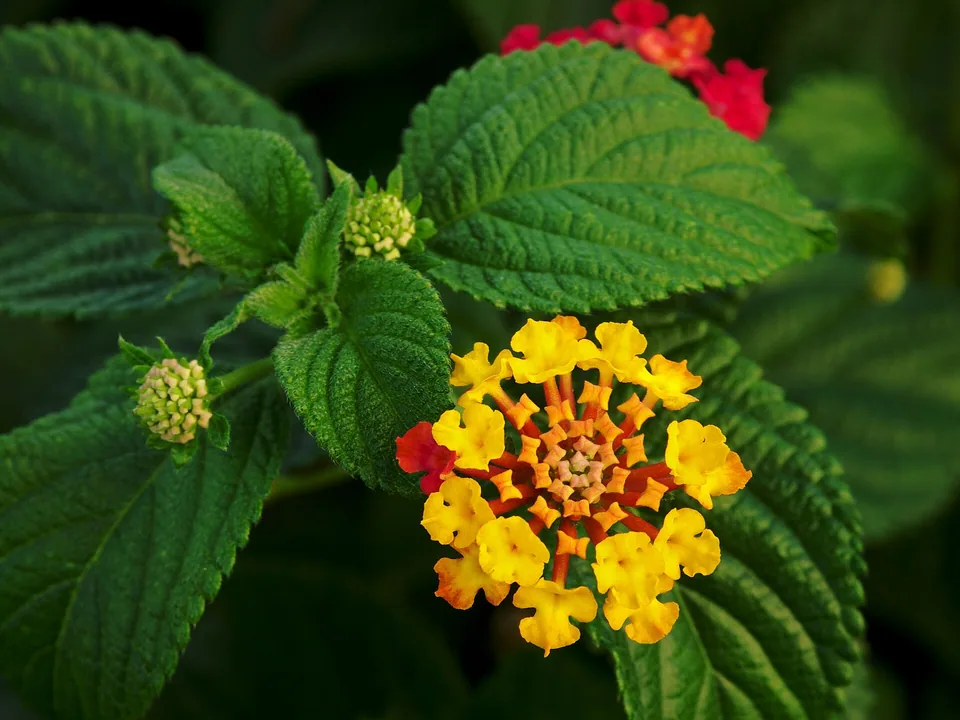


How to Grow and Care for Lantana
Lantana camara
Written by Emilio Marruso · last checked
Toxic to: Cats, Dogs, Livestock, Animals, People · Why
At a glance
Lantana is a small woody shrub that loves full sun and asks for little: once established, it handles drought well. Its flowers are very attractive to butterflies, and birds eat its berries. Grow it in the garden or in a container, plant it in spring once frost is past, and feed it only lightly for the best blooms.
- Sun
Full sun
What the sources say (2)
Light: Full sun
Light: Full sun (6 or more hours of direct sunlight a day)
— Lantana camara (Common Lantana, Lantana, Shrub Verbena) | North Carolina Extension Gardener Plant Toolbox [1] Grow lantana in full sun. Lantana is tolerant of all soil types provided they are well drained and slightly acid.
— Lantana | Home & Garden Information Center [7] - Water
In bloom, water deeply once a week if under 1 inch of rain falls; too much water means fewer flowers
What the sources say (5)
Watering: Established plants are drought tolerant; during the blooming period give a thorough watering once a week if less than 1 inch [2.5 cm] of rain falls that week
During their blooming period, give them a thorough watering once a week if they do not receive an inch of rain that week. Avoid overhead watering.
— Lantana | Home & Garden Information Center [7] It prefers full sun in moist, well-drained soil but will tolerate poor soil and drought.
— Lantana camara (Common Lantana, Lantana, Shrub Verbena) | North Carolina Extension Gardener Plant Toolbox [1] Watering notes: Keep newly planted lantanas moist for the first few weeks until roots spread; too dry for a long period reduces performance, bloom and growth rate; too much water reduces bloom; avoid frequent overhead watering
Newly planted lantanas will need to be kept moist for the first few weeks until the roots have spread into the surrounding soil.
— Lantana | Home & Garden Information Center [7] While established lantanas are drought tolerant, performance, bloom, and growth rate will be reduced if they are too dry for a long period.
— Lantana | Home & Garden Information Center [7] Too much water and fertilizer will reduce bloom. In containers, fertilize once a month during the growing season.
— Lantana – Wisconsin Horticulture [5] - Cold
Survives winters down to 0 °F (−17.8 °C)
Hardy in very cold winters · USDA 7a · RHS H6 · Z7
What the sources say (2)
Hardiness, coldest zone: 7a [winter low −17.8 to −15 °C (0 to 5 °F)]
USDA Plant Hardiness Zone: 7a, 7b, 8a, 8b, 9a, 9b, 10a, 10b, 11a, 11b
— Lantana camara (Common Lantana, Lantana, Shrub Verbena) | North Carolina Extension Gardener Plant Toolbox [1] Hardiness, warmest zone: 11b [winter low 7.2 to 10 °C (45 to 50 °F)]
USDA Plant Hardiness Zone: 7a, 7b, 8a, 8b, 9a, 9b, 10a, 10b, 11a, 11b
— Lantana camara (Common Lantana, Lantana, Shrub Verbena) | North Carolina Extension Gardener Plant Toolbox [1] - Soil
Slightly acidic to alkaline soil, pH 6.0–8.0
What the sources say (2)
Soil pH, minimum: 6.0
Sand Shallow Rocky Soil pH: Neutral (6.0-8.0) Soil Drainage: Good Drainage
— Lantana camara (Common Lantana, Lantana, Shrub Verbena) | North Carolina Extension Gardener Plant Toolbox [1] Soil pH, maximum: 8.0
Sand Shallow Rocky Soil pH: Neutral (6.0-8.0) Soil Drainage: Good Drainage
— Lantana camara (Common Lantana, Lantana, Shrub Verbena) | North Carolina Extension Gardener Plant Toolbox [1] - Planting
In spring, at least 2 weeks after all danger of frost has passed
What the sources say (1)
Planting: Spring, at least 2 weeks after all danger of frost is past
Plant lantana in spring, at least 2 weeks after all danger of frost is past.
— Lantana | Home & Garden Information Center [7] - Feeding
A light feeding in spring; too much fertilizer means fewer flowers and more disease
What the sources say (4)
When: A light feeding in spring; vigorous plants again in midsummer if not water-stressed, and after cutting back
A light fertilization in spring will usually be sufficient. Vigorously growing plants may be fertilized again in mid summer, provided plants are not water stressed.
— Lantana | Home & Garden Information Center [7] Water and lightly fertilize newly cut back plants and they will return to bloom quickly.
— Lantana | Home & Garden Information Center [7] Avoid: Excess fertilizer (and excess water): it reduces flowering and makes plants more prone to disease
Excessive fertilizer may reduce flowering and make plants more susceptible to disease.
— Lantana | Home & Garden Information Center [7] Too much water and fertilizer will reduce bloom.
— Lantana – Wisconsin Horticulture [5] - Pruning
Cut back hard in spring (March), trim the tips in summer; no hard pruning in fall
What the sources say (3)
Pruning: Hard pruning of perennial lantanas in spring (March); light shearing of tip growth periodically during summer; avoid hard pruning in fall
Prune perennial lantanas back hard in spring (March) to remove old growth and prevent woodiness.
— Lantana | Home & Garden Information Center [7] Prune lantana periodically during summer by lightly shearing the tip growth to encourage repeat blooming.
— Lantana | Home & Garden Information Center [7] Avoid hard pruning in fall as this can cause reduced cold hardiness.
— Lantana | Home & Garden Information Center [7] - Pests
Whiteflies, spider mites and lace bugs; powdery mildew in shade, root rot in soggy soil
What the sources say (4)
Pests: whiteflies, spider mites, lantana lace bugs, caterpillars
Whiteflies and spider mites can affect plants kept over the winter.
— Lantana camara (Common Lantana, Lantana, Shrub Verbena) | North Carolina Extension Gardener Plant Toolbox [1] Lantana lace bugs cause leaves to appear grayish and stippled or to brown and drop. Caterpillar damage also can occur. Mites can be a problem, especially if plants are very dry.
— Lantana | Home & Garden Information Center [7] Diseases: powdery mildew, sooty mold, root rot
Lantana is susceptible to powdery mildew if grown in shade. Sooty mold, causing a blackish discoloration on the leaves is usually caused by infestation by whiteflies.
— Lantana | Home & Garden Information Center [7] Root rot can be a problem if soil is poorly drained or plants are watered too frequently.
— Lantana | Home & Garden Information Center [7] - Watch out
It can spread aggressively: pull or dig up plants before they set seed
- Size
1 to 6 ft tall and 3 to 5 ft wide
What the sources say (2)
Mature height: 30-183 cm (1 to 6 ft)
Height: 1 ft. 0 in. - 6 ft. 0 in. Width: 3 ft. 0 in. - 5 ft. 0 in.
— Lantana camara (Common Lantana, Lantana, Shrub Verbena) | North Carolina Extension Gardener Plant Toolbox [1] Mature width: 91-152 cm (3 to 5 ft)
Height: 1 ft. 0 in. - 6 ft. 0 in. Width: 3 ft. 0 in. - 5 ft. 0 in.
— Lantana camara (Common Lantana, Lantana, Shrub Verbena) | North Carolina Extension Gardener Plant Toolbox [1] - Propagation
From seed, stem cuttings (hardwood cuttings in fall) or division
What the sources say (2)
Propagation: Seed; stem cuttings (hardwood cuttings in fall); division
Recommended Propagation Strategy: Division Seed Stem Cutting Country Or Region Of Origin:
— Lantana camara (Common Lantana, Lantana, Shrub Verbena) | North Carolina Extension Gardener Plant Toolbox [1] take hard wood cuttings in the fall to produce young plants for the following spring.
— Lantana – Wisconsin Horticulture [5] - Containers
Grows in containers and indoors too
What the sources say (4)
In containers: Yes
Lantana can be used in mixed beds or borders and is excellent in containers and hanging baskets
— Lantana – Wisconsin Horticulture [5] Use lantana as annuals or perennials in flowerbeds or containers.
— Lantana | Home & Garden Information Center [7] Indoors: Yes
It can also be grown as a houseplant when provided with sufficient light.
— Lantana – Wisconsin Horticulture [5] Lantana is often used as a houseplant, in hanging baskets, or in the border as a cultivated woody shrub or groundcover.
— Lantana camara (Common Lantana, Lantana, Shrub Verbena) | North Carolina Extension Gardener Plant Toolbox [1] - Safety
Toxic: unripe berries are poisonous and leaves can irritate skin; also toxic to livestock
Overview
Lantana camara is a small broadleaf evergreen shrub, annual or perennial, native to the West Indies and Mexico to Tropical America. [1] It prefers full sun in moist, well-drained soil but tolerates poor soil and drought. [1] It is described as toxic to livestock and is considered an invasive weed in several regions. [1][5]
Lantana care
Measurements in square brackets are our conversion into the other unit system; the quoted text is unchanged.
How to water Lantana
Watering
Established plants are drought tolerant; during the blooming period give a thorough watering once a week if less than 1 inch [2.5 cm] of rain falls that week
What the sources say (2)
During their blooming period, give them a thorough watering once a week if they do not receive an inch of rain that week. Avoid overhead watering.It prefers full sun in moist, well-drained soil but will tolerate poor soil and drought.Watering notes
Keep newly planted lantanas moist for the first few weeks until roots spread; too dry for a long period reduces performance, bloom and growth rate; too much water reduces bloom; avoid frequent overhead watering
What the sources say (3)
Newly planted lantanas will need to be kept moist for the first few weeks until the roots have spread into the surrounding soil.While established lantanas are drought tolerant, performance, bloom, and growth rate will be reduced if they are too dry for a long period.Too much water and fertilizer will reduce bloom. In containers, fertilize once a month during the growing season.How much light Lantana needs
Full sun
What the sources say (2)
Light:
Full sun (6 or more hours of direct sunlight a day)Grow lantana in full sun. Lantana is tolerant of all soil types provided they are well drained and slightly acid.How much cold Lantana can take
Hardiness, coldest zone
7a [winter low −17.8 to −15 °C (0 to 5 °F)]
What the sources say (1)
USDA Plant Hardiness Zone:
7a, 7b, 8a, 8b, 9a, 9b, 10a, 10b, 11a, 11bHardiness, warmest zone
11b [winter low 7.2 to 10 °C (45 to 50 °F)]
What the sources say (1)
USDA Plant Hardiness Zone:
7a, 7b, 8a, 8b, 9a, 9b, 10a, 10b, 11a, 11bBest soil for Lantana
Soil pH, minimum
6.0
What the sources say (1)
Sand
Shallow Rocky
Soil pH:
Neutral (6.0-8.0)
Soil Drainage:
Good DrainageSoil pH, maximum
8.0
What the sources say (1)
Sand
Shallow Rocky
Soil pH:
Neutral (6.0-8.0)
Soil Drainage:
Good DrainageWhere to grow Lantana
Indoors
Yes
What the sources say (2)
It can also be grown as a houseplant when provided with sufficient light.Lantana is often used as a houseplant, in hanging baskets, or in the border as a cultivated woody shrub or groundcover.How to propagate Lantana
Seed; stem cuttings (hardwood cuttings in fall); division
What the sources say (2)
Recommended Propagation Strategy:
Division
Seed
Stem Cutting
Country Or Region Of Origin:take hard wood cuttings in the fall to produce young plants for the following spring.How to grow Lantana
The plant
Life cycle
annual or perennial (small woody evergreen shrub)
What the sources say (1)
Lantana is an annual or perennial, small, broadleaf evergreen shrub in the verbena family (Verbenaceae), native to the West Indies and Mexico to Tropical America.Family
Verbenaceae
What the sources say (1)
Lantana is an annual or perennial, small, broadleaf evergreen shrub in the verbena family (Verbenaceae), native to the West Indies and Mexico to Tropical America.Mature height
30-183 cm (1 to 6 ft)
What the sources say (1)
Height: 1 ft. 0 in. - 6 ft. 0 in.
Width: 3 ft. 0 in. - 5 ft. 0 in.Mature width
91-152 cm (3 to 5 ft)
What the sources say (1)
Height: 1 ft. 0 in. - 6 ft. 0 in.
Width: 3 ft. 0 in. - 5 ft. 0 in.Pests and diseases
Pests
whiteflies, spider mites, lantana lace bugs, caterpillars
What the sources say (2)
Whiteflies and spider mites can affect plants kept over the winter.Lantana lace bugs cause leaves to appear grayish and stippled or to brown and drop. Caterpillar damage also can occur. Mites can be a problem, especially if plants are very dry.Diseases
powdery mildew, sooty mold, root rot
What the sources say (2)
Lantana is susceptible to powdery mildew if grown in shade. Sooty mold, causing a blackish discoloration on the leaves is usually caused by infestation by whiteflies.Root rot can be a problem if soil is poorly drained or plants are watered too frequently.Fertilizing
When
A light feeding in spring; vigorous plants again in midsummer if not water-stressed, and after cutting back
What the sources say (2)
A light fertilization in spring will usually be sufficient. Vigorously growing plants may be fertilized again in mid summer, provided plants are not water stressed.Water and lightly fertilize newly cut back plants and they will return to bloom quickly.How often
The sources give different values depending on region, zone or growing conditions.
What each source says
in containers: Once a month during the growing season
in the ground, grown as an annual: No fertilization needed
Avoid
Excess fertilizer (and excess water): it reduces flowering and makes plants more prone to disease
Signs of excess
Poor blooming and greater susceptibility to disease
Lantana pests and problems
Whiteflies and spider mites
Symptom: Affect plants kept over the winter
What the sources say (1)
Whiteflies and spider mites can affect plants kept over the winter. In certain parts of the world with more tropical climates, lantana is a weedy pest.
— Lantana camara (Common Lantana, Lantana, Shrub Verbena) | North Carolina Extension Gardener Plant Toolbox [1] Powdery mildew and sooty mold
Symptom: Sooty mold causes a blackish discoloration on the leaves and is usually caused by whitefly infestation; powdery mildew occurs if grown in shade
What the sources say (1)
Lantana is susceptible to powdery mildew if grown in shade. Sooty mold, causing a blackish discoloration on the leaves is usually caused by infestation by whiteflies.
— Lantana | Home & Garden Information Center [7] Root rot
Symptom: Occurs if soil is poorly drained or plants are watered too frequently
What to do: Avoid overhead watering
What the sources say (2)
Root rot can be a problem if soil is poorly drained or plants are watered too frequently.
— Lantana | Home & Garden Information Center [7] Avoid overhead watering. Overly frequent overhead watering can make plant more susceptible to diseases and root rot.
— Lantana | Home & Garden Information Center [7] Lantana lace bugs and caterpillars
Symptom: Leaves appear grayish and stippled or brown and drop
What the sources say (1)
Lantana lace bugs cause leaves to appear grayish and stippled or to brown and drop. Caterpillar damage also can occur.
— Lantana | Home & Garden Information Center [7] Poor blooming
Symptom: Poor flowering, caused by too much shade or excessive fertilization
What to do: Trim plants back to encourage new growth and flowering
What the sources say (1)
Poor blooming is usually caused by too much shade or excessive fertilization. Plants that set berries may decline in bloom. Trim plants back to encourage new growth and flowering.
— Lantana | Home & Garden Information Center [7] Weedy spread
Symptom: Spreads aggressively across the landscape
What to do: Hand removal and digging up plants before they set seed
What the sources say (1)
Hand removal of invasive Lantanas is easy to do. Digging up and removing parts of the plant will help reduce its spread
— Invasion of the Landscape Snatchers: Lantana (Lantana camara) - [6]
Remedies
Each remedy shows what official sources say about it; traditional remedies without an official source are marked as such. Harmful ones are listed so you know to avoid them.
Treating the plant
lace bugs
hard jet of water from a hose Partly works
How: Spray the underside of the leaves with a hard jet of water from a garden hose, dislodging adult bugs.
You can also try mechanical control by spraying the underside of leaves with a hard jet of water from a garden hose, dislodging adult bugs and possibly killing the immature ones.
— lsuagcenter.com [9] What the evidence says You can also try mechanical control by spraying the underside of leaves with a hard jet of water from a garden hose, dislodging adult bugs and possibly killing the immature ones.
— lsuagcenter.com [9] dish detergent spray Works
However, if your dish washing detergent is labeled for repelling, mitigating or killing germs (or anything else), it is a pesticide that can only be used following the directions on the label.
— content.ces.ncsu.edu [10] How: Mix liquid dish washing detergent at 5 tablespoons per gallon of water (about 2 teaspoons per pint) and spray.
Old fashioned home remedies include [nome commerciale] liquid dish washing detergent (5 tablespoons per gallon of water or about 2 teaspoons per pint).This should work as well as purchasing an insecticidal soap.
— content.ces.ncsu.edu [10] What the evidence says Old fashioned home remedies include [nome commerciale] liquid dish washing detergent (5 tablespoons per gallon of water or about 2 teaspoons per pint).This should work as well as purchasing an insecticidal soap.
— content.ces.ncsu.edu [10] neem oil spray Works
Neem does cause the plant to burn if applied incorrectly.
— bugwiz.com [12] How: Dilute neem oil as directed and spray when the sun is down; water the plant off when done.
Like most other pests on this page, neem oil works against lace bugs. Dilute it as directed and spray when the sun is down. Water off your plant when done.
— bugwiz.com [12] What the evidence says Insecticidal soap, horticultural oil, neem oil and most chemical insecticides provide good control.
— lsuagcenter.com [9]
whiteflies
soapy water spray Not verified
Traditional remedy, not verified by an official source.
Be aware that the products suggested to be combined in these home remedies may include additives that could harm the environment.
— extension.psu.edu [11] How: Dilute 1 tablespoon of dish detergent in a quart of water and spray the lantana leaves regularly.
powdery mildew
neem oil on the leaves Partly works
Neem does cause the plant to burn if applied incorrectly.
— bugwiz.com [12] How: Rinse off the plants as soon as you see the symptoms, then apply neem oil to the leaves every few weeks.
You can control powdery mildew by rinsing off the plants as soon as you see the symptoms. Then you should apply neem oil to the leaves every few weeks.
— gardeningknowhow.com [13] What the evidence says However, neem oil is not effective against every insect and disease, and often must be frequently reapplied to reach the desired outcome.
— extension.unh.edu [14]
spider mites
dish soap spray Not verified
Traditional remedy, not verified by an official source.
Be aware that the products suggested to be combined in these home remedies may include additives that could harm the environment.
— extension.psu.edu [11] How: Spray with DIY dish soap.
Getting rid of it
weedy spread
hand pulling Partly works
Just keep in mind that contact with the leaves and stems can cause skin irritation and a rash. Use gloves and wear long sleeves before tackling lantana.
— gardeningknowhow.com [15] How: In the home garden, simply pull out the lantana; use gloves and long sleeves.
In the home garden, simply pulling out lantana can be adequate for controlling its spread.
— gardeningknowhow.com [15] What the evidence says Hand removal of invasive Lantanas is easy to do. Digging up and removing parts of the plant will help reduce its spread – especially if it is done before the plant creates seeds.
— Invasion of the Landscape Snatchers: Lantana (Lantana camara) - [6] digging out the roots Partly works
How: Dig around the root system with a spade or garden fork and lift the roots without leaving fragments behind; lantana can regenerate from root remnants.
Remove the Roots: Using a spade or garden fork, dig around the root system. Carefully lift the roots, ensuring no fragments are left behind, as lantana can regenerate from root remnants.
— gardeningslash.com [16] What the evidence says Hand removal of invasive Lantanas is easy to do. Digging up and removing parts of the plant will help reduce its spread – especially if it is done before the plant creates seeds.
— Invasion of the Landscape Snatchers: Lantana (Lantana camara) - [6] removing flower heads and seeds Partly works
How: Remove the flower heads before seeds form.
Removing flower heads before seeds form can prevent some of the spread of lantana, for instance.
— gardeningknowhow.com [15] What the evidence says Prevent seed production from any Lantana camara within the landscape. Many non-sterile camaras develop seeds shortly after flowering. Collection and removal of seeds help reduce the spread of the landscape invasive.
— Invasion of the Landscape Snatchers: Lantana (Lantana camara) - [6] thick organic mulch Not verified
Traditional remedy, not verified by an official source.
How: Apply a thick layer of organic mulch such as wood chips or straw around the affected area to block sunlight.
solarization with clear plastic Not verified
Traditional remedy, not verified by an official source.
How: Cover the soil with a clear plastic sheet for 4-6 weeks during the hot season.
vinegar and dish soap spray Partly works
Vinegar contains acetic acid that in concentrations over 11 percent can cause burns if it gets on your skin and permanent corneal injury if it comes in contact with your eyes.
— extension.illinois.edu [18] How: Combine equal parts white vinegar and water with a few drops of dish soap and spray directly onto the lantana foliage.
Combine equal parts white vinegar and water with a few drops of dish soap, and spray directly onto lantana foliage. Be cautious—this mixture can harm other plants, so apply it selectively.
— gardeningslash.com [16] What the evidence says Vinegar can treat and kill weeds, but it must be herbicidal vinegar or acetic acid, not household vinegar
— extension.illinois.edu [17]
Is Lantana toxic to pets?
Reported by the source, quoted verbatim. This is not medical or veterinary advice: if a person or an animal may have eaten this plant, contact a poison control centre or a veterinarian.
Animals
It is toxic to livestock such as cattle, sheep, horses, and goats.
[1]- Poisonous parts
Causes Contact Dermatitis: Yes Poison Part: Flowers Fruits Leaves Sap/Juice
[1]- Toxic principle
Poison Toxic Principle: Pentacyclic triterpenoids, Triterpenes (lantadene A & B) Causes Contact Dermatitis: Yes
[1]- Symptoms
Eating the plant can lead to vomiting, diarrhea, dilated pupils, labored respiration, weakness, liver failure - more common in livestock; the leaves may cause dermatitis in sensitive individuals.
[1]- Severity
This plant has medium severity poison characteristics.
[1]
All parts of the plant are toxic and have poisoned children, pets and livestock.
[8]- Poisonous parts
All parts of the plant are toxic and have poisoned children, pets and livestock.
[8]
Problems: Poisonous to Humans Problem for Cats Problem for Children Problem for Dogs Problem for Horses
[1]- Poisonous parts
Causes Contact Dermatitis: Yes Poison Part: Flowers Fruits Leaves Sap/Juice
[1]- Toxic principle
Poison Toxic Principle: Pentacyclic triterpenoids, Triterpenes (lantadene A & B) Causes Contact Dermatitis: Yes
[1]- Symptoms
Eating the plant can lead to vomiting, diarrhea, dilated pupils, labored respiration, weakness, liver failure - more common in livestock; the leaves may cause dermatitis in sensitive individuals.
[1]- Severity
This plant has medium severity poison characteristics.
[1]
People
Eating the plant can lead to vomiting, diarrhea, dilated pupils, labored respiration, weakness, liver failure - more common in livestock; the leaves may cause dermatitis in sensitive individuals.
[1]- Poisonous parts
Causes Contact Dermatitis: Yes Poison Part: Flowers Fruits Leaves Sap/Juice
[1]- Toxic principle
Poison Toxic Principle: Pentacyclic triterpenoids, Triterpenes (lantadene A & B) Causes Contact Dermatitis: Yes
[1]- Symptoms
Eating the plant can lead to vomiting, diarrhea, dilated pupils, labored respiration, weakness, liver failure - more common in livestock; the leaves may cause dermatitis in sensitive individuals.
[1]- Severity
This plant has medium severity poison characteristics.
[1]
Leaves and unripe, green berries can cause minor skin irritation.
[1]The unripe berries are poisonous, and the leaves can cause contact dermatitis or minor skin irritation in some people.
[5]The fruit can be poisonous, especially if eaten in quantity. Fruiting can be avoided by growing sterile cultivars.
[7]- Poisonous parts
The fruit can be poisonous, especially if eaten in quantity.
[7]
Calendar
Planting
Spring, at least 2 weeks after all danger of frost is past
What the sources say (1)
Plant lantana in spring, at least 2 weeks after all danger of frost is past.Pruning
Hard pruning of perennial lantanas in spring (March); light shearing of tip growth periodically during summer; avoid hard pruning in fall
What the sources say (3)
Prune perennial lantanas back hard in spring (March) to remove old growth and prevent woodiness.Prune lantana periodically during summer by lightly shearing the tip growth to encourage repeat blooming.Avoid hard pruning in fall as this can cause reduced cold hardiness.Months as given by the sources, which are mostly from the United States (northern hemisphere). In the southern hemisphere they shift by about six months.
Relative to frost
Less precise estimate: there is no weather station within 300 km.
Find frost dates by ZIP code or city
Plant: 2 weeks after the last frost
Plant lantana in spring, at least 2 weeks after all danger of frost is past.
— Lantana | Home & Garden Information Center [7]
Count from the average frost dates where you live.
Edibility
Reported by the source, quoted verbatim. Do not eat a plant on the basis of this page alone: identification mistakes can be dangerous.
Lantana flowers are very attractive to butterflies, berries are eaten by birds.
[1]
Indicative values
Values from a secondary source, not checked word for word like the rest of this page. Use them as a starting point.
- Drought tolerant
- yesIndicative value, adapt it to your climate · Secondary source
- Care level
- MediumIndicative value, adapt it to your climate · Secondary source
- Growth rate
- HighIndicative value, adapt it to your climate · Secondary source
Similar plants
- Lantana Lavender Popcorn Lantana trifolia
- Trailing Lantana Lantana montevidensis
- Blue Vervain Verbena hastata
- Brazilian Verbena Verbena brasiliensis
- Frogfruit Phyla nodiflora
- Golden Dewdrop Duranta erecta
- Hoary Vervain Verbena stricta
- Lemon Verbena Aloysia citriodora
Sources
Every value above is quoted from these documents. Links lead to the original publisher.
- Lantana camara (Common Lantana, Lantana, Shrub Verbena) | North Carolina Extension Gardener Plant Toolbox · plants.ces.ncsu.edu, consulted
- Common Lantana - Lantana camara | North Carolina Extension Gardener Plant Toolbox · plants.ces.ncsu.edu, consulted
- Lantana - Lantana camara | North Carolina Extension Gardener Plant Toolbox · plants.ces.ncsu.edu, consulted
- Shrub Verbena - Lantana camara | North Carolina Extension Gardener Plant Toolbox · plants.ces.ncsu.edu, consulted
- Lantana – Wisconsin Horticulture · hort.extension.wisc.edu, consulted
- Invasion of the Landscape Snatchers: Lantana (Lantana camara) - · blogs.ifas.ufl.edu, consulted
- Lantana | Home & Garden Information Center · hgic.clemson.edu, consulted
- Happy Halloweeding: Lantana - UF/IFAS Extension Marion County · blogs.ifas.ufl.edu, consulted
- lsuagcenter.com · lsuagcenter.com
- content.ces.ncsu.edu · content.ces.ncsu.edu
- extension.psu.edu · extension.psu.edu
- bugwiz.com · bugwiz.com
- gardeningknowhow.com · gardeningknowhow.com
- extension.unh.edu · extension.unh.edu
- gardeningknowhow.com · gardeningknowhow.com
- gardeningslash.com · gardeningslash.com
- extension.illinois.edu · extension.illinois.edu
- extension.illinois.edu · extension.illinois.edu
Written by Emilio Marruso · last checked