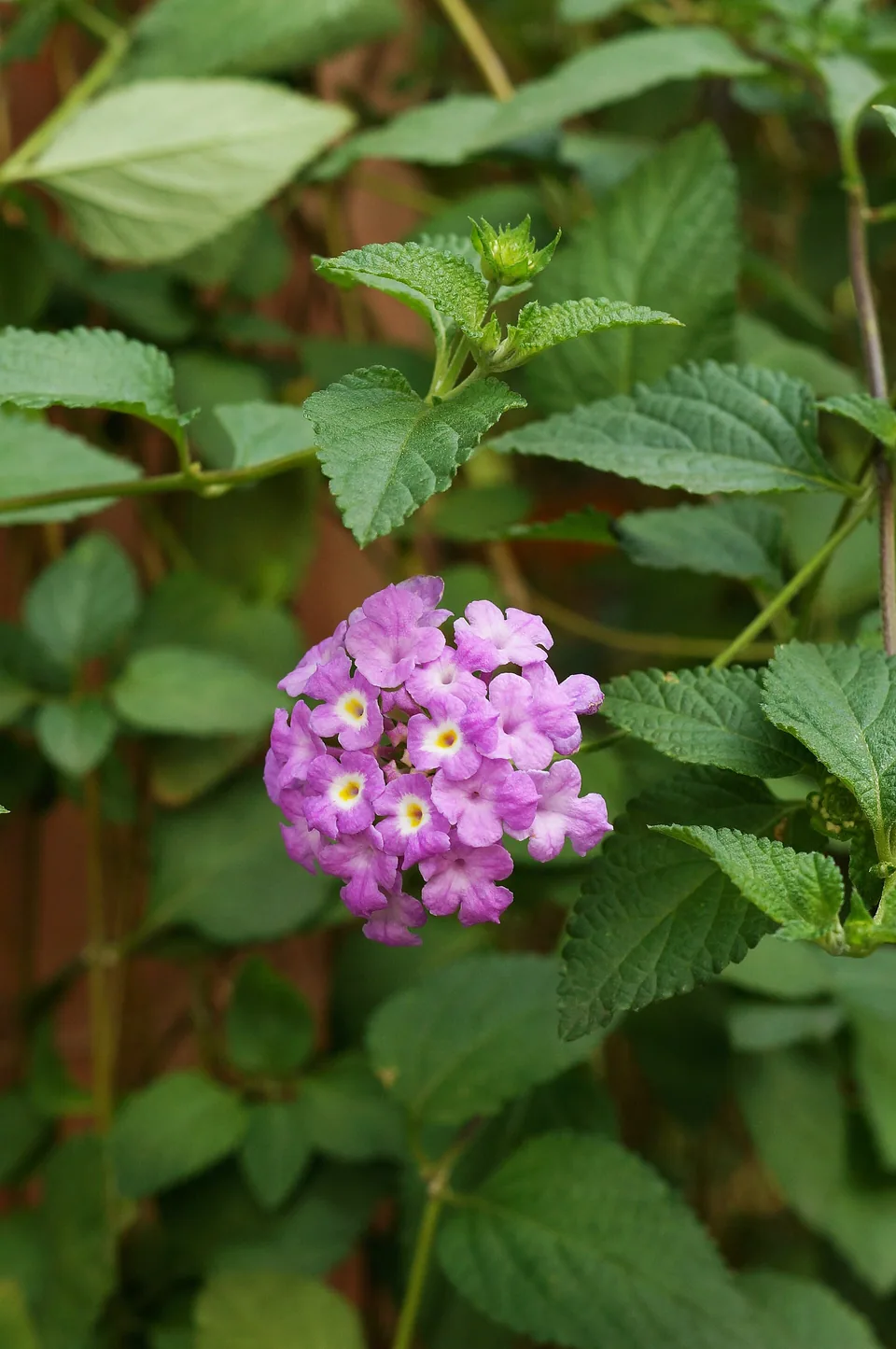


How to Grow and Care for Trailing Lantana
Lantana montevidensis
Written by Emilio Marruso · last checked
Toxic to: Cats, Dogs, Horses, People · Why
At a glance
This lantana stays low, just 1 to 1.5 feet tall, yet spreads 3 to 5 feet wide, making a generous carpet for a sunny spot. Once established, it shrugs off drought and is happy in sandy, slightly dry soil. Go easy on fertilizer and water and it rewards you with more blooms, and it even grows happily in containers.
- Sun
Full sun; also handles partial shade
What the sources say (2)
Light: Full sun; tolerates partial shade
Full sun (6 or more hours of direct sunlight a day)
— Lantana montevidensis (Pole-cat Geranium, Purple Trailing Lantana, Sellow's lantana, Trailing Lantana, Trailing Shrubverbena, Trailing Shrub Verbena, Weeping Lantana, Wild Verbena) | North Carolina Extension Gardener Plant Toolbox [1] They will tolerate partial shade and do well in sandy, slightly dry soil.
— Lantana montevidensis (Pole-cat Geranium, Purple Trailing Lantana, Sellow's lantana, Trailing Lantana, Trailing Shrubverbena, Trailing Shrub Verbena, Weeping Lantana, Wild Verbena) | North Carolina Extension Gardener Plant Toolbox [1] - Water
Handles drought once established; likes slightly dry soil
What the sources say (3)
Watering: Drought tolerant once established; grows in sandy, medium-moist, well-drained soil
It is drought-tolerant once established and tolerant of coastal conditions, such as heat, humidity, and salt spray.
— Lantana montevidensis (Pole-cat Geranium, Purple Trailing Lantana, Sellow's lantana, Trailing Lantana, Trailing Shrubverbena, Trailing Shrub Verbena, Weeping Lantana, Wild Verbena) | North Carolina Extension Gardener Plant Toolbox [1] Easily grown in full sun and sandy, medium-moist, well-drained soil in hardiness zones 8-10.
— Lantana montevidensis (Pole-cat Geranium, Purple Trailing Lantana, Sellow's lantana, Trailing Lantana, Trailing Shrubverbena, Trailing Shrub Verbena, Weeping Lantana, Wild Verbena) | North Carolina Extension Gardener Plant Toolbox [1] Watering notes: Does well in sandy, slightly dry soil
They will tolerate partial shade and do well in sandy, slightly dry soil.
— Lantana montevidensis (Pole-cat Geranium, Purple Trailing Lantana, Sellow's lantana, Trailing Lantana, Trailing Shrubverbena, Trailing Shrub Verbena, Weeping Lantana, Wild Verbena) | North Carolina Extension Gardener Plant Toolbox [1] - Cold
Survives winters down to 10 °F (−12.2 °C)
Hardy in cold winters · USDA 8a · RHS H5 · Z8
What the sources say (2)
Hardiness, coldest zone: 8a [winter low −12.2 to −9.4 °C (10 to 15 °F)]
USDA Plant Hardiness Zone: 8a, 8b, 9a, 9b, 10a, 10b
— Lantana montevidensis (Pole-cat Geranium, Purple Trailing Lantana, Sellow's lantana, Trailing Lantana, Trailing Shrubverbena, Trailing Shrub Verbena, Weeping Lantana, Wild Verbena) | North Carolina Extension Gardener Plant Toolbox [1] Hardiness, warmest zone: 10b [winter low 1.7 to 4.4 °C (35 to 40 °F)]
USDA Plant Hardiness Zone: 8a, 8b, 9a, 9b, 10a, 10b
— Lantana montevidensis (Pole-cat Geranium, Purple Trailing Lantana, Sellow's lantana, Trailing Lantana, Trailing Shrubverbena, Trailing Shrub Verbena, Weeping Lantana, Wild Verbena) | North Carolina Extension Gardener Plant Toolbox [1] - Soil
Sandy soil that drains well
What the sources say (3)
Watering: Drought tolerant once established; grows in sandy, medium-moist, well-drained soil
It is drought-tolerant once established and tolerant of coastal conditions, such as heat, humidity, and salt spray.
— Lantana montevidensis (Pole-cat Geranium, Purple Trailing Lantana, Sellow's lantana, Trailing Lantana, Trailing Shrubverbena, Trailing Shrub Verbena, Weeping Lantana, Wild Verbena) | North Carolina Extension Gardener Plant Toolbox [1] Easily grown in full sun and sandy, medium-moist, well-drained soil in hardiness zones 8-10.
— Lantana montevidensis (Pole-cat Geranium, Purple Trailing Lantana, Sellow's lantana, Trailing Lantana, Trailing Shrubverbena, Trailing Shrub Verbena, Weeping Lantana, Wild Verbena) | North Carolina Extension Gardener Plant Toolbox [1] Watering notes: Does well in sandy, slightly dry soil
They will tolerate partial shade and do well in sandy, slightly dry soil.
— Lantana montevidensis (Pole-cat Geranium, Purple Trailing Lantana, Sellow's lantana, Trailing Lantana, Trailing Shrubverbena, Trailing Shrub Verbena, Weeping Lantana, Wild Verbena) | North Carolina Extension Gardener Plant Toolbox [1] - Feeding
A light feeding in spring; too much fertilizer means fewer flowers and more disease
What the sources say (4)
When: A light feeding in spring; vigorous plants again in midsummer if not water-stressed, and after cutting back
A light fertilization in spring will usually be sufficient. Vigorously growing plants may be fertilized again in mid summer, provided plants are not water stressed.
— Lantana | Home & Garden Information Center [8] Water and lightly fertilize newly cut back plants and they will return to bloom quickly.
— Lantana | Home & Garden Information Center [8] Avoid: Excess fertilizer (and excess water): it reduces flowering and makes plants more prone to disease
Excessive fertilizer may reduce flowering and make plants more susceptible to disease.
— Lantana | Home & Garden Information Center [8] Too much water and fertilizer will reduce bloom.
— Lantana – Wisconsin Horticulture [7] - Pests
Watch for spider mites and whiteflies; can get powdery mildew, leaf spot and stem rot
What the sources say (5)
Pests: spider mites, whiteflies, lantana lace bugs, caterpillars
No significant insect pests or diseases. Monitor for spider mites and whiteflies. May be susceptible to powdery mildew, leaf spot, and stem rot.
— Lantana montevidensis (Pole-cat Geranium, Purple Trailing Lantana, Sellow's lantana, Trailing Lantana, Trailing Shrubverbena, Trailing Shrub Verbena, Weeping Lantana, Wild Verbena) | North Carolina Extension Gardener Plant Toolbox [1] Lantana lace bugs cause leaves to appear grayish and stippled or to brown and drop. Caterpillar damage also can occur. Mites can be a problem, especially if plants are very dry.
— Lantana | Home & Garden Information Center [8] Diseases: powdery mildew, leaf spot, stem rot, sooty mold, root rot
No significant insect pests or diseases. Monitor for spider mites and whiteflies. May be susceptible to powdery mildew, leaf spot, and stem rot.
— Lantana montevidensis (Pole-cat Geranium, Purple Trailing Lantana, Sellow's lantana, Trailing Lantana, Trailing Shrubverbena, Trailing Shrub Verbena, Weeping Lantana, Wild Verbena) | North Carolina Extension Gardener Plant Toolbox [1] Lantana is susceptible to powdery mildew if grown in shade. Sooty mold, causing a blackish discoloration on the leaves is usually caused by infestation by whiteflies.
— Lantana | Home & Garden Information Center [8] Root rot can be a problem if soil is poorly drained or plants are watered too frequently.
— Lantana | Home & Garden Information Center [8] - Size
1–1.5 ft tall, spreading 3–5 ft wide
What the sources say (2)
Mature height: 30-46 cm (1-1.5 ft)
It grows 1-1.5 feet tall and 3-5 feet wide, and can be used as a climbing vine with support
— Lantana montevidensis (Pole-cat Geranium, Purple Trailing Lantana, Sellow's lantana, Trailing Lantana, Trailing Shrubverbena, Trailing Shrub Verbena, Weeping Lantana, Wild Verbena) | North Carolina Extension Gardener Plant Toolbox [1] Mature width: 91-152 cm (3-5 ft)
It grows 1-1.5 feet tall and 3-5 feet wide, and can be used as a climbing vine with support
— Lantana montevidensis (Pole-cat Geranium, Purple Trailing Lantana, Sellow's lantana, Trailing Lantana, Trailing Shrubverbena, Trailing Shrub Verbena, Weeping Lantana, Wild Verbena) | North Carolina Extension Gardener Plant Toolbox [1] - Propagation
From seeds, stem cuttings or by layering
What the sources say (1)
Propagation: Seeds, vegetative layering, and stem cuttings
Trailing lantana may be propagated by seeds, vegetative layering, and stem cuttings. Seeds are easily spread by wildlife.
— Lantana montevidensis (Pole-cat Geranium, Purple Trailing Lantana, Sellow's lantana, Trailing Lantana, Trailing Shrubverbena, Trailing Shrub Verbena, Weeping Lantana, Wild Verbena) | North Carolina Extension Gardener Plant Toolbox [1] - Containers
Grows in containers too
What the sources say (1)
In containers: Yes
The trailing and cascading stems make it a perfect specimen for a hanging basket or container plant.
— Lantana montevidensis (Pole-cat Geranium, Purple Trailing Lantana, Sellow's lantana, Trailing Lantana, Trailing Shrubverbena, Trailing Shrub Verbena, Weeping Lantana, Wild Verbena) | North Carolina Extension Gardener Plant Toolbox [1] - Safety
Toxic if eaten by people, dogs, cats and horses; wear gloves, as leaves and sap irritate skin
Overview
Lantana montevidensis is a low-growing tropical groundcover, woody vine and shrub native to Bolivia, Brazil and Northern Argentina, with light purple to purplish-pink flowers. [1] It grows easily in full sun and well-drained soil, is drought tolerant once established, and is propagated by seeds, layering or stem cuttings. [1] The plant is toxic to humans, dogs, cats and horses if ingested, and its leaves and sap are skin irritants. [1]
This record is incomplete: the sources we read do not cover every field yet.
Not yet covered by our sources: Pruning
Trailing Lantana care
How to water Trailing Lantana
Watering
Drought tolerant once established; grows in sandy, medium-moist, well-drained soil
What the sources say (2)
It is drought-tolerant once established and tolerant of coastal conditions, such as heat, humidity, and salt spray.Easily grown in full sun and sandy, medium-moist, well-drained soil in hardiness zones 8-10.Watering notes
Does well in sandy, slightly dry soil
What the sources say (1)
They will tolerate partial shade and do well in sandy, slightly dry soil.How much light Trailing Lantana needs
Full sun; tolerates partial shade
What the sources say (2)
Full sun (6 or more hours of direct sunlight a day)They will tolerate partial shade and do well in sandy, slightly dry soil.How much cold Trailing Lantana can take
Hardiness, coldest zone
8a [winter low −12.2 to −9.4 °C (10 to 15 °F)]
What the sources say (1)
USDA Plant Hardiness Zone:
8a, 8b, 9a, 9b, 10a, 10bHardiness, warmest zone
10b [winter low 1.7 to 4.4 °C (35 to 40 °F)]
What the sources say (1)
USDA Plant Hardiness Zone:
8a, 8b, 9a, 9b, 10a, 10bWhere to grow Trailing Lantana
Yes
What the sources say (1)
The trailing and cascading stems make it a perfect specimen for a hanging basket or container plant.How to propagate Trailing Lantana
Seeds, vegetative layering, and stem cuttings
What the sources say (1)
Trailing lantana may be propagated by seeds, vegetative layering, and stem cuttings. Seeds are easily spread by wildlife.How to grow Trailing Lantana
The plant
Life cycle
perennial (tender; also grown as an annual in colder climates)
What the sources say (1)
In colder climates, they may be used as annuals and either overwintered indoors or replaced in the following spring.Family
Verbenaceae
What the sources say (1)
This species is a member of the verbena family (Verbenaceae)Mature height
30-46 cm (1-1.5 ft)
What the sources say (1)
It grows 1-1.5 feet tall and 3-5 feet wide, and can be used as a climbing vine with supportMature width
91-152 cm (3-5 ft)
What the sources say (1)
It grows 1-1.5 feet tall and 3-5 feet wide, and can be used as a climbing vine with supportPests and diseases
Pests
spider mites, whiteflies, lantana lace bugs, caterpillars
What the sources say (2)
No significant insect pests or diseases. Monitor for spider mites and whiteflies. May be susceptible to powdery mildew, leaf spot, and stem rot.Lantana lace bugs cause leaves to appear grayish and stippled or to brown and drop. Caterpillar damage also can occur. Mites can be a problem, especially if plants are very dry.Diseases
powdery mildew, leaf spot, stem rot, sooty mold, root rot
What the sources say (3)
No significant insect pests or diseases. Monitor for spider mites and whiteflies. May be susceptible to powdery mildew, leaf spot, and stem rot.Lantana is susceptible to powdery mildew if grown in shade. Sooty mold, causing a blackish discoloration on the leaves is usually caused by infestation by whiteflies.Root rot can be a problem if soil is poorly drained or plants are watered too frequently.Fertilizing
When
A light feeding in spring; vigorous plants again in midsummer if not water-stressed, and after cutting back
What the sources say (2)
A light fertilization in spring will usually be sufficient. Vigorously growing plants may be fertilized again in mid summer, provided plants are not water stressed.Water and lightly fertilize newly cut back plants and they will return to bloom quickly.How often
The sources give different values depending on region, zone or growing conditions.
What each source says
in containers: Once a month during the growing season
in the ground, grown as an annual: No fertilization needed
Avoid
Excess fertilizer (and excess water): it reduces flowering and makes plants more prone to disease
Signs of excess
Poor blooming and greater susceptibility to disease
Trailing Lantana pests and problems
Spider mites and whiteflies
Symptom: No significant insect pests; monitor for spider mites and whiteflies
What to do: Monitor the plant
What the sources say (1)
No significant insect pests or diseases. Monitor for spider mites and whiteflies. May be susceptible to powdery mildew, leaf spot, and stem rot.
— Lantana montevidensis (Pole-cat Geranium, Purple Trailing Lantana, Sellow's lantana, Trailing Lantana, Trailing Shrubverbena, Trailing Shrub Verbena, Weeping Lantana, Wild Verbena) | North Carolina Extension Gardener Plant Toolbox [1] Powdery mildew, leaf spot and stem rot
Symptom: May be susceptible to powdery mildew, leaf spot, and stem rot
What to do: Not stated in the documents
What the sources say (1)
No significant insect pests or diseases. Monitor for spider mites and whiteflies. May be susceptible to powdery mildew, leaf spot, and stem rot.
— Lantana montevidensis (Pole-cat Geranium, Purple Trailing Lantana, Sellow's lantana, Trailing Lantana, Trailing Shrubverbena, Trailing Shrub Verbena, Weeping Lantana, Wild Verbena) | North Carolina Extension Gardener Plant Toolbox [1] Frost damage
Symptom: Dies back to the ground in winter in Zone 8; used as an annual in colder climates
What to do: Mulch well in Zone 8 so it resprouts in spring; overwinter indoors or replace in spring in colder climates
What the sources say (1)
In Zone 8, plants are root hardy; they will die back to the ground in winter but, if well mulched, will resprout in spring.
— Lantana montevidensis (Pole-cat Geranium, Purple Trailing Lantana, Sellow's lantana, Trailing Lantana, Trailing Shrubverbena, Trailing Shrub Verbena, Weeping Lantana, Wild Verbena) | North Carolina Extension Gardener Plant Toolbox [1]
Remedies
Each remedy shows what official sources say about it; traditional remedies without an official source are marked as such. Harmful ones are listed so you know to avoid them.
Treating the plant
lace bugs
hard jet of water Not verified
Traditional remedy, not verified by an official source.
How: Spray the underside of the leaves with a hard jet of water from a garden hose, dislodging adult bugs and possibly killing the immature ones.
insecticidal soap spray Works
How: Directly spray the underside of the leaves for best coverage.
Chemical controls include insecticidal soap, horticultural oil and neem oil. Directly spray the underside of the leaves for best coverage.
— theadvocate.com [9] What the evidence says For example, insecticidal soap is a safe, effective organic insecticide with minimal environmental impact.
— extension.psu.edu [10]
Getting rid of it
unwanted lantana
hand pulling or digging out Official source, not independently tested
Wear gloves when hand weeding. Dispose of all plant parts as creeping lantana can reshoot from parts left on the ground.
— weeds.dpi.nsw.gov.au [11] How: Hand pull or dig out plants; useful for small infestations or isolated plants. Follow up when regrowth appears.
Hand pulling or digging out plants is useful for small infestations or isolated plants.
— weeds.dpi.nsw.gov.au [11] mulching Official source, not independently tested
How: Mulch to a height of at least 20 cm.
Mulching to a height of at least 20 cm can supress plants.
— weeds.dpi.nsw.gov.au [11] repeated slashing Official source, not independently tested
How: Repeated slashing can kill the plants; do not slash fruiting plants.
Repeated slashing can kill the plants. Do not slash fruiting plants as this can spread the seeds.
— weeds.dpi.nsw.gov.au [11] removing flower heads before seed Not verified
Traditional remedy, not verified by an official source.
Use gloves and wear long sleeves before tackling lantana.
— gardeningknowhow.com [12] How: Remove flower heads before seeds form to limit spread.
Is Trailing Lantana toxic to pets?
Reported by the source, quoted verbatim. This is not medical or veterinary advice: if a person or an animal may have eaten this plant, contact a poison control centre or a veterinarian.
This plant is toxic to humans, dogs, cats, and horses if ingested. The leaves and sap are skin irritants. Wear protective clothing and gloves when handling this plant.
[1]- Poisonous parts
Poison Part: Fruits Leaves Sap/Juice Seeds Stems Download Print-Friendly QR Code
[1]- Toxic principle
Poison Toxic Principle: Pentacyclic triterpenoids Causes Contact Dermatitis: Yes Poison
[1]- Symptoms
Poison Symptoms: Vomiting, diarrhea, dilated pupils, labored respiration; the leaves may cause
[1]- Severity
Poison Severity: Medium Poison Symptoms: Vomiting, diarrhea, dilated pupils, labored respiration; the
[1]
Calendar
Pruning
The sources give different values depending on region, zone or growing conditions.
What each source says
Clemson · Lantana (genus): Prune lantana periodically during summer by lightly shearing the tip growth to encourage repeat blooming.
What the sources say (1)
Clemson · Lantana (genus): Prune lantana periodically during summer by lightly shearing the tip growth to encourage repeat blooming.Months as given by the sources, which are mostly from the United States (northern hemisphere). In the southern hemisphere they shift by about six months.
Relative to frost
Less precise estimate: there is no weather station within 300 km.
Find frost dates by ZIP code or city
Plant: 2 weeks after the last frost
Plant lantana in spring, at least 2 weeks after all danger of frost is past.
— Lantana | Home & Garden Information Center [8]
Count from the average frost dates where you live.
Similar plants
- Lantana Lantana camara
- Lantana Lavender Popcorn Lantana trifolia
- Blue Vervain Verbena hastata
- Brazilian Verbena Verbena brasiliensis
- Frogfruit Phyla nodiflora
- Golden Dewdrop Duranta erecta
- Hoary Vervain Verbena stricta
- Lemon Verbena Aloysia citriodora
Sources
Every value above is quoted from these documents. Links lead to the original publisher.
- Lantana montevidensis (Pole-cat Geranium, Purple Trailing Lantana, Sellow's lantana, Trailing Lantana, Trailing Shrubverbena, Trailing Shrub Verbena, Weeping Lantana, Wild Verbena) | North Carolina Extension Gardener Plant Toolbox · plants.ces.ncsu.edu, consulted
- Wild Verbena - Lantana montevidensis | North Carolina Extension Gardener Plant Toolbox · plants.ces.ncsu.edu, consulted
- Weeping Lantana - Lantana montevidensis | North Carolina Extension Gardener Plant Toolbox · plants.ces.ncsu.edu, consulted
- Trailing Lantana - Lantana montevidensis | North Carolina Extension Gardener Plant Toolbox · plants.ces.ncsu.edu, consulted
- Sellow's lantana - Lantana montevidensis | North Carolina Extension Gardener Plant Toolbox · plants.ces.ncsu.edu, consulted
- Purple Trailing Lantana - Lantana montevidensis | North Carolina Extension Gardener Plant Toolbox · plants.ces.ncsu.edu, consulted
- Lantana – Wisconsin Horticulture · hort.extension.wisc.edu, consulted
- Lantana | Home & Garden Information Center · hgic.clemson.edu, consulted
- theadvocate.com · theadvocate.com
- extension.psu.edu · extension.psu.edu
- weeds.dpi.nsw.gov.au · weeds.dpi.nsw.gov.au
- gardeningknowhow.com · gardeningknowhow.com
Written by Emilio Marruso · last checked