
How to Grow and Care for Frogfruit
Phyla nodiflora
Written by Emilio Marruso · last checked
At a glance
This tough little perennial stays just 3–6 inches tall and handles almost anything: full sun or partial shade, drought or flooding, even poorly drained and salty soils. Water it slowly and deeply at planting, keep the soil moist until it settles in, and then let it take care of itself. You can even grow it in a container.
- Sun
Full sun to partial shade
What the sources say (2)
Light: Full sun to partial shade
Turkey tangle frogfruit grows low to the ground in full sun to partial shade in moist to dry soils.
— Phyla nodiflora (Frogfruit, Texas Frogfruit, Turkey Tangle Frogfruit) | North Carolina Extension Gardener Plant Toolbox [1] Light Requirement: Sun , Part Shade Soil Moisture: Dry , Moist
— Lady Bird Johnson Wildflower Center - The University of Texas at Austin [4] - Water
Water slowly and deeply at planting and keep moist until settled; then it handles drought and flooding
What the sources say (3)
Watering notes: At planting water slowly and deeply and keep soil moist until established; tolerates drought and flooding
At planting, water the roots and surrounding area slowly and deeply. Keep soil moist until plant is established
— Phyla nodiflora – Sustainable Landscape Demonstration Garden [5] It tolerates most soil types, including poor-draining and saline soils and both drought and flooding.
— Phyla nodiflora (Frogfruit, Texas Frogfruit, Turkey Tangle Frogfruit) | North Carolina Extension Gardener Plant Toolbox [1] Drought: Tolerates both drought and flooding, and most soil types including poor-draining and saline soils.
It tolerates most soil types, including poor-draining and saline soils and both drought and flooding.
— Phyla nodiflora (Frogfruit, Texas Frogfruit, Turkey Tangle Frogfruit) | North Carolina Extension Gardener Plant Toolbox [1] - Soil
Grows in most soils, even poorly drained or salty ones
What the sources say (1)
Drought: Tolerates both drought and flooding, and most soil types including poor-draining and saline soils.
It tolerates most soil types, including poor-draining and saline soils and both drought and flooding.
— Phyla nodiflora (Frogfruit, Texas Frogfruit, Turkey Tangle Frogfruit) | North Carolina Extension Gardener Plant Toolbox [1] - Harvest
The leaves can be fed to cattle
- Size
3–6 inches tall
What the sources say (2)
Mature height: 8-15 cm (3-6 in)
Dimensions: Height: 0 ft. 3 in. - 0 ft. 6 in. Width: 1 ft. 0 in. - 2 ft. 0 in.
— Phyla nodiflora (Frogfruit, Texas Frogfruit, Turkey Tangle Frogfruit) | North Carolina Extension Gardener Plant Toolbox [1] Height & Width: Around 6″ tall will spread 3ft+ in a growing season10,20
— Phyla nodiflora – Sustainable Landscape Demonstration Garden [5] - Propagation
Divide the roots or take stem cuttings
What the sources say (2)
Propagation: Root division; stem cuttings
## Propagation Propagation Material: Root Division Commercially Avail: yes
— Lady Bird Johnson Wildflower Center - The University of Texas at Austin [4] | Plant Growth Rate | Fast | Rootzone Tolerance | Easy to Grow, Waterlogged Soils (Drains Site) | Maintenance Requirements | Moderate | Propagation Method | Stem Cutting
— NParks | Phyla nodiflora [2] - Containers
Grows in containers too
What the sources say (2)
In containers: Yes
Use turkey tangle frogfruit as a ground cover, in a rock garden, in a butterfly garden or in a container
— Phyla nodiflora (Frogfruit, Texas Frogfruit, Turkey Tangle Frogfruit) | North Carolina Extension Gardener Plant Toolbox [1] with trailing foliage and charming, mini-verbena-like flowers. Would also do well as a pot plant.
— Lady Bird Johnson Wildflower Center - The University of Texas at Austin [4]
Overview
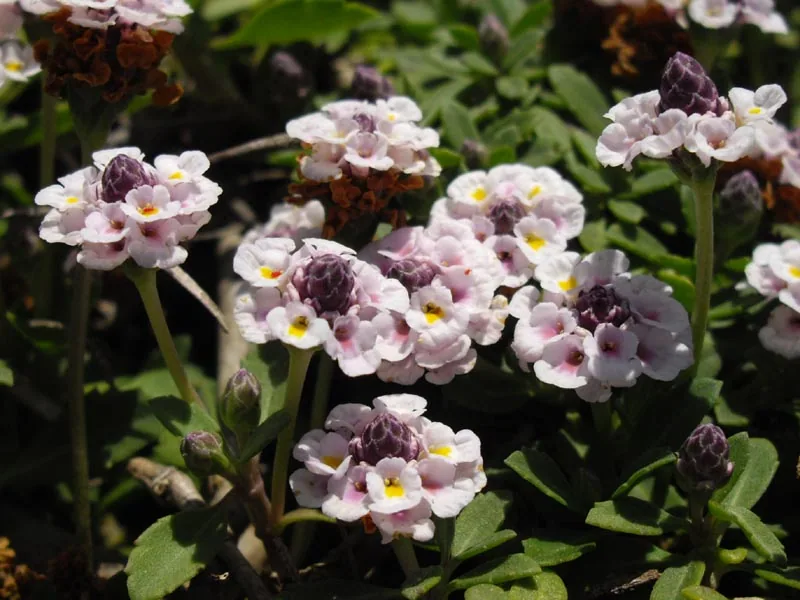
Phyla nodiflora is a low, creeping perennial groundcover of the verbena family whose stems root at the nodes. [1] It grows in full sun to partial shade and tolerates most soils, including poorly drained and saline soils, as well as drought and flooding. [1] It is a larval host for several butterflies and attracts pollinators. [1]
This record is incomplete: the sources we read do not cover every field yet.
Not yet covered by our sources: Pruning
Frogfruit care
How to water Frogfruit
Watering
The sources disagree:
What the sources say (2)
Keep soil moist until plant is established, then apply enough water to
thoroughly moisten the root zone when the soil is dry or during drought.Maintenance: Water in dry areas or seasons to maintain a solid cover.Watering notes
At planting water slowly and deeply and keep soil moist until established; tolerates drought and flooding
What the sources say (2)
At planting, water the roots and surrounding area
slowly and deeply. Keep soil moist until plant is establishedIt tolerates most soil types, including poor-draining and saline soils and both drought and flooding.How much light Frogfruit needs
Full sun to partial shade
What the sources say (2)
Turkey tangle frogfruit grows low to the ground in full sun to partial shade in moist to dry soils.Light Requirement: Sun , Part Shade
Soil Moisture: Dry , MoistHow much cold Frogfruit can take
Hardiness, coldest zone
The sources give different values depending on region, zone or growing conditions.
What each source says
According to NC State Extension: 7a-11b [winter low −17.8 to 10 °C (0 to 50 °F)]
According to Clemson Sustainable Landscape Demonstration Garden: 6-11 [winter low −23.3 to 10 °C (−10 to 50 °F)]
According to Florida Native Plant Society: 8A-11 [winter low −12.2 to 10 °C (10 to 50 °F)]
What the sources say (3)
According to NC State Extension: USDA Plant Hardiness Zone:
7a, 7b, 8a, 8b, 9a, 9b, 10a, 10b, 11a, 11bAccording to Clemson Sustainable Landscape Demonstration Garden: Soil*: Sand, loam, clay, caliche, limestone. Poor drainage and saline soils10
Zones: 6-1121According to Florida Native Plant Society: pH del suelo:
Adaptable
Apto para cultivo en:
8A,8B,9A,9B,10A,10B,11Hardiness, warmest zone
11b [winter low 7.2 to 10 °C (45 to 50 °F)]
What each source says
According to NC State Extension: 7a-11b [winter low −17.8 to 10 °C (0 to 50 °F)]
According to Clemson Sustainable Landscape Demonstration Garden: 6-11 [winter low −23.3 to 10 °C (−10 to 50 °F)]
According to Florida Native Plant Society: 8A-11 [winter low −12.2 to 10 °C (10 to 50 °F)]
What the sources say (4)
According to NC State Extension: USDA Plant Hardiness Zone:
7a, 7b, 8a, 8b, 9a, 9b, 10a, 10b, 11a, 11bAccording to Clemson Sustainable Landscape Demonstration Garden: Soil*: Sand, loam, clay, caliche, limestone. Poor drainage and saline soils10
Zones: 6-1121According to Florida Native Plant Society: pH del suelo:
Adaptable
Apto para cultivo en:
8A,8B,9A,9B,10A,10B,11USDA Plant Hardiness Zone:
7a, 7b, 8a, 8b, 9a, 9b, 10a, 10b, 11a, 11bWhere to grow Frogfruit
Yes
What the sources say (2)
Use turkey tangle frogfruit as a ground cover, in a rock garden, in a butterfly garden or in a containerwith trailing foliage and charming, mini-verbena-like flowers. Would also do well as a pot plant.How to propagate Frogfruit
Root division; stem cuttings
What the sources say (2)
## Propagation
Propagation Material: Root Division
Commercially Avail: yes| Plant Growth Rate
| Fast
| Rootzone Tolerance
| Easy to Grow, Waterlogged Soils (Drains Site)
| Maintenance Requirements
| Moderate
| Propagation Method
| Stem CuttingHow to grow Frogfruit
The plant
Life cycle
perennial
What the sources say (1)
Family: Verbenaceae Life Cycle: Perennial Country Or Region Of Origin: North and South America, Africa and AsiaFamily
Verbenaceae
What the sources say (1)
Turkey tangle frogfruit is a flowering groundcover in the verbena family (Verbenaceae) native to the southern half of the United States to the tropics.Mature height
8-15 cm (3-6 in)
What the sources say (2)
Dimensions: Height: 0 ft. 3 in. - 0 ft. 6 in. Width: 1 ft. 0 in. - 2 ft. 0 in.Height & Width: Around 6″ tall will spread 3ft+ in a growing season10,20Heat and drought
Drought
Tolerates both drought and flooding, and most soil types including poor-draining and saline soils.
What the sources say (1)
It tolerates most soil types, including poor-draining and saline soils and both drought and flooding.Remedies
The sources we checked give no remedies for this plant.
Calendar
Pruning
Not stated in the sources we read.
Months as given by the sources, which are mostly from the United States (northern hemisphere). In the southern hemisphere they shift by about six months.
Edibility
Reported by the source, quoted verbatim. Do not eat a plant on the basis of this page alone: identification mistakes can be dangerous.
Freshly pressed juice from the leaves is used on gums to stop bleeding. Others: Leaves can be fed to cattle.
[2]
Similar plants
- Blue Vervain Verbena hastata
- Golden Dewdrop Duranta erecta
- Hoary Vervain Verbena stricta
- Lantana Lantana camara
- Lantana Lavender Popcorn Lantana trifolia
- Lemon Verbena Aloysia citriodora
- Moss Verbena Verbena aristigera
- Petrea Petrea volubilis
Sources
Every value above is quoted from these documents. Links lead to the original publisher.
- Phyla nodiflora (Frogfruit, Texas Frogfruit, Turkey Tangle Frogfruit) | North Carolina Extension Gardener Plant Toolbox · plants.ces.ncsu.edu, consulted
- NParks | Phyla nodiflora · nparks.gov.sg, consulted
- · cretanflora.com, consulted
- Lady Bird Johnson Wildflower Center - The University of Texas at Austin · wildflower.org, consulted
- Phyla nodiflora – Sustainable Landscape Demonstration Garden · blogs.clemson.edu, consulted
- Florida Native Plant Society | Conserve, Preserve & Restore Florida's Native Plants · fnps.org, consulted
Written by Emilio Marruso · last checked