

How to Grow and Care for Moss Verbena
Verbena aristigera
Written by Emilio Marruso · last checked
At a glance
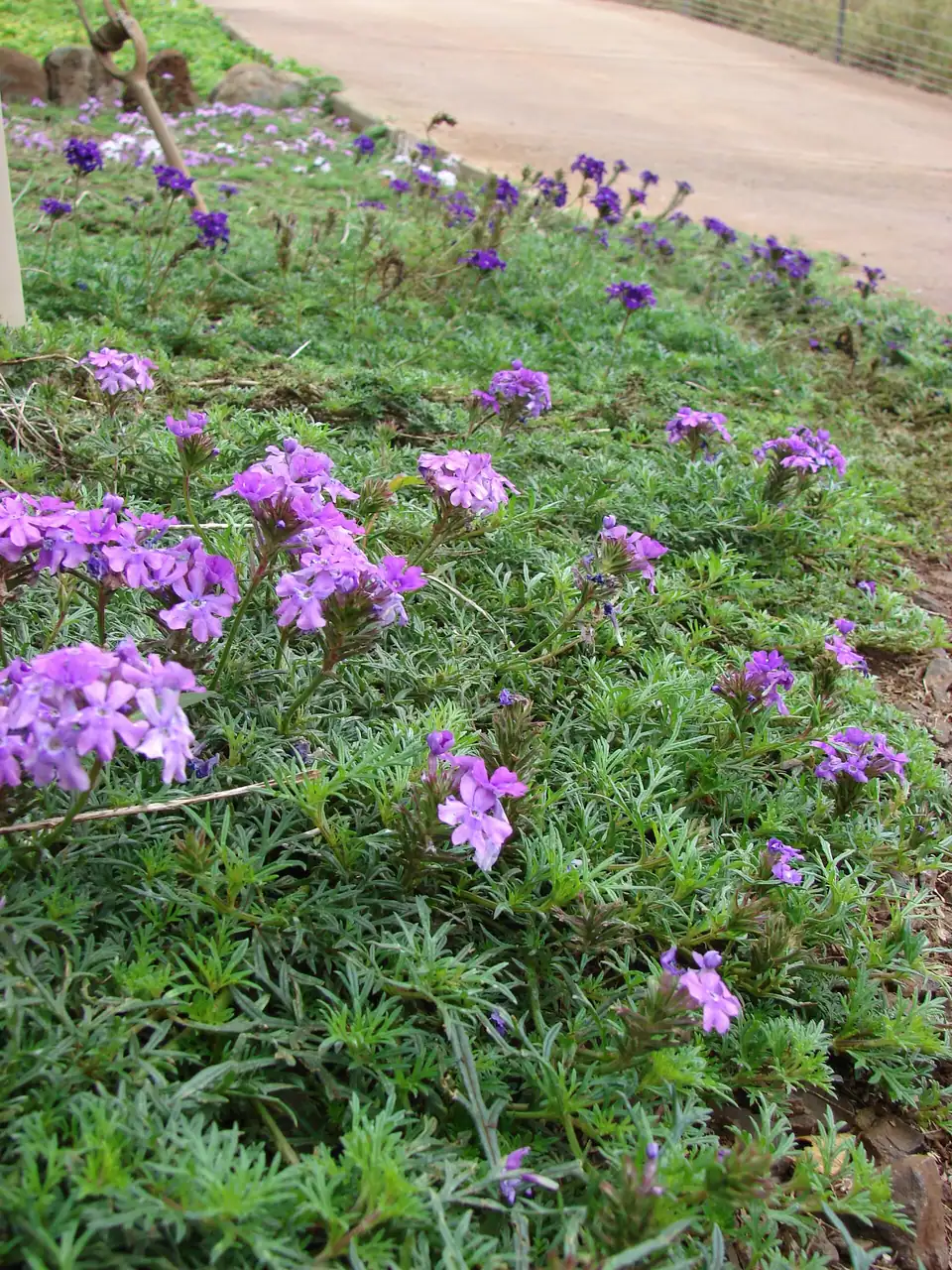
This low verbena spreads into a wide carpet, just 8 inches to 1 foot tall but 3 to 6 feet across. Give it full sun, at least 6 hours a day, and it handles dry spells with good drought tolerance. It comes back year after year, grows easily from seed or cuttings, and is happy in containers too.
- Sun
Full sun: at least 6 hours a day
What the sources say (1)
Light: Full sun (6 or more hours of direct sunlight a day)
Cultural Conditions: Light: Full sun (6 or more hours of direct sunlight a day)
— Verbena aristigera (Moss Verbena) | North Carolina Extension Gardener Plant Toolbox [1] - Water
Handles dry spells well; little watering needed
What the sources say (1)
Watering: Good drought tolerance
Moss Verbena is a spreading plant with good drought tolerance that has naturalized from Georgia to Florida growing in old fields, waste areas and roadsides. Prefers full sun
— Verbena aristigera (Moss Verbena) | North Carolina Extension Gardener Plant Toolbox [1] - Cold
Survives winters down to 10 °F (−12.2 °C)
Hardy in cold winters · USDA 8a · RHS H5 · Z8
What the sources say (2)
Hardiness, coldest zone: 8a [winter low −12.2 to −9.4 °C (10 to 15 °F)]
Soil Drainage: Good Drainage NC Region: Coastal USDA Plant Hardiness Zone: 8a, 8b, 9a, 9b, 10a, 10b
— Verbena aristigera (Moss Verbena) | North Carolina Extension Gardener Plant Toolbox [1] Hardiness, warmest zone: 10b [winter low 1.7 to 4.4 °C (35 to 40 °F)]
Soil Drainage: Good Drainage NC Region: Coastal USDA Plant Hardiness Zone: 8a, 8b, 9a, 9b, 10a, 10b
— Verbena aristigera (Moss Verbena) | North Carolina Extension Gardener Plant Toolbox [1] - Soil
Slightly acidic to alkaline soil, pH 6.0–8.0
What the sources say (2)
Soil pH, minimum: 6.0
Soil Texture: Loam (Silt) Sand Soil pH: Neutral (6.0-8.0)
— Verbena aristigera (Moss Verbena) | North Carolina Extension Gardener Plant Toolbox [1] Soil pH, maximum: 8.0
Soil Texture: Loam (Silt) Sand Soil pH: Neutral (6.0-8.0)
— Verbena aristigera (Moss Verbena) | North Carolina Extension Gardener Plant Toolbox [1] - Feeding
A light feed of complete fertilizer in mid to late spring, and again after trimming in summer
What the sources say (4)
When: Mid- to late spring, and again after trimming back in summer
A light application of a complete fertilizer such as 16-4-8 in mid- to late spring and again after trimming back will revitalize plants, but additional fertilization is not generally required.
— [2] If bloom slows during the summer, trim the whole plant back by about one fourth of its height and spread, water thoroughly and fertilize lightly.
— [2] Mineral fertilizers: Light application of a complete fertilizer such as 16-4-8; more is not generally required
in containers: Fertilize container grown plants either with a controlled-release fertilizer, or with a liquid fertilizer once a month.
— [2] A light application of a complete fertilizer such as 16-4-8 in mid- to late spring and again after trimming back will revitalize plants, but additional fertilization is not generally required.
— [2] - Size
8 in to 1 ft tall, spreading 3 to 6 ft wide
What the sources say (2)
Mature height: 20.32-30.48 cm (8 in-1 ft)
Dimensions: Height: 0 ft. 8 in. - 1 ft. 0 in. Width: 3 ft. 0 in. - 6 ft. 0 in.
— Verbena aristigera (Moss Verbena) | North Carolina Extension Gardener Plant Toolbox [1] Mature width: 91.44-182.88 cm (3-6 ft)
Dimensions: Height: 0 ft. 8 in. - 1 ft. 0 in. Width: 3 ft. 0 in. - 6 ft. 0 in.
— Verbena aristigera (Moss Verbena) | North Carolina Extension Gardener Plant Toolbox [1] - Propagation
Grow new plants from seed or stem cuttings
What the sources say (1)
Propagation: Seed, stem cutting
Recommended Propagation Strategy: Seed Stem Cutting Country Or
— Verbena aristigera (Moss Verbena) | North Carolina Extension Gardener Plant Toolbox [1] - Containers
Grows in containers too; feed with slow-release or liquid fertilizer
What the sources say (3)
In containers: Yes
Landscape Location: Container Meadow Naturalized Area Rock Wall Slope/Bank Small Space Walkways
— Verbena aristigera (Moss Verbena) | North Carolina Extension Gardener Plant Toolbox [1] Mineral fertilizers: Light application of a complete fertilizer such as 16-4-8; more is not generally required
in containers: Fertilize container grown plants either with a controlled-release fertilizer, or with a liquid fertilizer once a month.
— [2] A light application of a complete fertilizer such as 16-4-8 in mid- to late spring and again after trimming back will revitalize plants, but additional fertilization is not generally required.
— [2]
Overview
Moss verbena is a spreading, drought-tolerant plant that prefers full sun and well-drained soil. [1] It is a perennial ground cover with showy flowers that attract butterflies and pollinators. [1]
This record is incomplete: the sources we read do not cover every field yet.
Not yet covered by our sources: Pruning
Moss Verbena care
How to water Moss Verbena
Good drought tolerance
What the sources say (1)
Moss Verbena is a spreading plant with good drought tolerance that has naturalized from Georgia to Florida growing in old fields, waste areas and roadsides. Prefers full sunHow much light Moss Verbena needs
Full sun (6 or more hours of direct sunlight a day)
What the sources say (1)
Cultural Conditions:
Light:
Full sun (6 or more hours of direct sunlight a day)How much cold Moss Verbena can take
Hardiness, coldest zone
8a [winter low −12.2 to −9.4 °C (10 to 15 °F)]
What the sources say (1)
Soil Drainage:
Good Drainage
NC Region:
Coastal
USDA Plant Hardiness Zone:
8a, 8b, 9a, 9b, 10a, 10bHardiness, warmest zone
10b [winter low 1.7 to 4.4 °C (35 to 40 °F)]
What the sources say (1)
Soil Drainage:
Good Drainage
NC Region:
Coastal
USDA Plant Hardiness Zone:
8a, 8b, 9a, 9b, 10a, 10bBest soil for Moss Verbena
Soil pH, minimum
6.0
What the sources say (1)
Soil Texture:
Loam (Silt)
Sand
Soil pH:
Neutral (6.0-8.0)Soil pH, maximum
8.0
What the sources say (1)
Soil Texture:
Loam (Silt)
Sand
Soil pH:
Neutral (6.0-8.0)Where to grow Moss Verbena
Yes
What the sources say (1)
Landscape Location:
Container
Meadow
Naturalized Area
Rock Wall
Slope/Bank
Small Space
WalkwaysHow to propagate Moss Verbena
Seed, stem cutting
What the sources say (1)
Recommended Propagation Strategy:
Seed
Stem Cutting
Country OrHow to grow Moss Verbena
The plant
Life cycle
perennial
What the sources say (1)
Genus:
Verbena
Species:
aristigera
Family:
Verbenaceae
Life Cycle:
PerennialFamily
Verbenaceae
What the sources say (1)
Genus:
Verbena
Species:
aristigera
Family:
Verbenaceae
Life Cycle:
PerennialMature height
20.32-30.48 cm (8 in-1 ft)
What the sources say (1)
Dimensions:
Height: 0 ft. 8 in. - 1 ft. 0 in.
Width: 3 ft. 0 in. - 6 ft. 0 in.Mature width
91.44-182.88 cm (3-6 ft)
What the sources say (1)
Dimensions:
Height: 0 ft. 8 in. - 1 ft. 0 in.
Width: 3 ft. 0 in. - 6 ft. 0 in.Fertilizing
When
Mid- to late spring, and again after trimming back in summer
What the sources say (2)
A light application of a complete fertilizer such as 16-4-8 in mid- to late spring and again after trimming back will revitalize plants, but additional fertilization is not generally required.If bloom slows during the summer, trim the whole plant back by about one fourth of its height and spread, water thoroughly and fertilize lightly.How often
The sources give different values depending on region, zone or growing conditions.
What each source says
in containers: Liquid fertilizer once a month
very sandy, poor soil: More frequent fertilization
What the sources say (2)
in containers: Fertilize container grown plants either with a controlled-release fertilizer, or with a liquid fertilizer once a month.very sandy, poor soil: Plants growing in very sandy, poor soil may need more frequent fertilization.Mineral fertilizers
Light application of a complete fertilizer such as 16-4-8; more is not generally required
What each source says
in containers: Controlled-release fertilizer or liquid fertilizer
What the sources say (2)
in containers: Fertilize container grown plants either with a controlled-release fertilizer, or with a liquid fertilizer once a month.A light application of a complete fertilizer such as 16-4-8 in mid- to late spring and again after trimming back will revitalize plants, but additional fertilization is not generally required.Remedies
Each remedy shows what official sources say about it; traditional remedies without an official source are marked as such. Harmful ones are listed so you know to avoid them.
Treating the plant
botrytis blight
spacing plants and removing dead flowers and leaves Official source, not independently tested
How: Maintain low humidity by spacing plants and venting to improve air circulation, and remove dead and dying flowers and leaves.
Maintain low humidity by spacing plants and venting to improve air circulation. Remove dead and dying flowers and leaves.
— extension.psu.edu [3]
Calendar
Pruning
Not stated in the sources we read.
Months as given by the sources, which are mostly from the United States (northern hemisphere). In the southern hemisphere they shift by about six months.
Similar plants
- Blue Vervain Verbena hastata
- Hoary Vervain Verbena stricta
- Rigid Verbena Verbena rigida
- Rose Verbena Verbena canadensis
- Tall Verbena Verbena bonariensis
- Brazilian Verbena Verbena brasiliensis
- Vervain Verbena officinalis
- Frogfruit Phyla nodiflora
Sources
Every value above is quoted from these documents. Links lead to the original publisher.
- Verbena aristigera (Moss Verbena) | North Carolina Extension Gardener Plant Toolbox · plants.ces.ncsu.edu, consulted
- hgic.clemson.edu · hgic.clemson.edu
- extension.psu.edu · extension.psu.edu
Written by Emilio Marruso · last checked