

How to Grow and Care for Blue Vervain
Verbena hastata
Written by Emilio Marruso · last checked
Toxic to: People · Why
At a glance
Swamp vervain is a perennial that comes back year after year, happy in full sun or partial shade. It loves soil that stays medium to wet, so it suits the damp corners of your garden. Start it from seed or stem cuttings, then give it a light feeding in spring and again after you cut it back in summer.
- Sun
Full sun to partial shade
What the sources say (1)
Light: Full sun to partial shade
Plant in full sun to partial shade in average medium to wet soils and pinch the tops to encourage branching and a bushier growth habit.
— Verbena hastata (Blue Verbena, Blue Vervain, Simpler’s Joy, Swamp Verbena, Swamp Vervain) | North Carolina Extension Gardener Plant Toolbox [1] - Water
Keep the soil medium to wet; it likes moisture
What the sources say (1)
Watering: Average medium to wet soils
Plant in full sun to partial shade in average medium to wet soils and pinch the tops to encourage branching and a bushier growth habit.
— Verbena hastata (Blue Verbena, Blue Vervain, Simpler’s Joy, Swamp Verbena, Swamp Vervain) | North Carolina Extension Gardener Plant Toolbox [1] - Cold
Survives winters down to −40 °F (−40 °C)
Very hardy · USDA 3a · RHS H7 · Z3
What the sources say (2)
Hardiness, coldest zone: 3a [winter low −40 to −37.2 °C (−40 to −35 °F)]
USDA Plant Hardiness Zone: 3a, 3b, 4a, 4b, 5a, 5b, 6a, 6b, 7a, 7b, 8a, 8b
— Verbena hastata (Blue Verbena, Blue Vervain, Simpler’s Joy, Swamp Verbena, Swamp Vervain) | North Carolina Extension Gardener Plant Toolbox [1] Hardiness, warmest zone: 8b [winter low −9.4 to −6.7 °C (15 to 20 °F)]
USDA Plant Hardiness Zone: 3a, 3b, 4a, 4b, 5a, 5b, 6a, 6b, 7a, 7b, 8a, 8b
— Verbena hastata (Blue Verbena, Blue Vervain, Simpler’s Joy, Swamp Verbena, Swamp Vervain) | North Carolina Extension Gardener Plant Toolbox [1] - Feeding
A light all-purpose feeding in mid to late spring and again after cutting back in summer
What the sources say (5)
When: Mid- to late spring, and again after cutting back in summer
A light application of a complete fertilizer such as 16-4-8 in mid- to late spring and again after trimming back will revitalize plants, but additional fertilization is not generally required.
— Verbena | Home & Garden Information Center [3] How often: Twice a year in the ground; more often in very sandy, poor soil
in containers: Fertilize container grown plants either with a controlled-release fertilizer, or with a liquid fertilizer once a month.
— Verbena | Home & Garden Information Center [3] A light application of a complete fertilizer such as 16-4-8 in mid- to late spring and again after trimming back will revitalize plants, but additional fertilization is not generally required. Plants growing in very sandy, poor soil may need more frequent fertilization.
— Verbena | Home & Garden Information Center [3] Mineral fertilizers: A light application of a complete fertilizer such as 16-4-8
in containers: Fertilize container grown plants either with a controlled-release fertilizer, or with a liquid fertilizer once a month.
— Verbena | Home & Garden Information Center [3] A light application of a complete fertilizer such as 16-4-8 in mid- to late spring and again after trimming back will revitalize plants, but additional fertilization is not generally required.
— Verbena | Home & Garden Information Center [3] - Watch out
Drought can damage it: don't let the soil dry out
- Size
1 to 2.5 ft wide
What the sources say (1)
Mature width: 30-76 cm (1 ft 0 in - 2 ft 6 in)
Dimensions: Height: 2 ft. 0 in. - 5 ft. 0 in. Width: 1 ft. 0 in. - 2 ft. 6 in.
— Verbena hastata (Blue Verbena, Blue Vervain, Simpler’s Joy, Swamp Verbena, Swamp Vervain) | North Carolina Extension Gardener Plant Toolbox [1] - Propagation
Grow new plants from seed or stem cuttings
What the sources say (1)
Propagation: Seed; stem cuttings
Recommended Propagation Strategy: Seed Stem Cutting Country Or Region Of Origin: North America
— Verbena hastata (Blue Verbena, Blue Vervain, Simpler’s Joy, Swamp Verbena, Swamp Vervain) | North Carolina Extension Gardener Plant Toolbox [1] - Containers
In pots, feed with liquid fertilizer once a month or use a slow-release fertilizer
What the sources say (4)
How often: Twice a year in the ground; more often in very sandy, poor soil
in containers: Fertilize container grown plants either with a controlled-release fertilizer, or with a liquid fertilizer once a month.
— Verbena | Home & Garden Information Center [3] A light application of a complete fertilizer such as 16-4-8 in mid- to late spring and again after trimming back will revitalize plants, but additional fertilization is not generally required. Plants growing in very sandy, poor soil may need more frequent fertilization.
— Verbena | Home & Garden Information Center [3] Mineral fertilizers: A light application of a complete fertilizer such as 16-4-8
in containers: Fertilize container grown plants either with a controlled-release fertilizer, or with a liquid fertilizer once a month.
— Verbena | Home & Garden Information Center [3] A light application of a complete fertilizer such as 16-4-8 in mid- to late spring and again after trimming back will revitalize plants, but additional fertilization is not generally required.
— Verbena | Home & Garden Information Center [3] - Safety
Don't eat it: it can affect blood pressure and hormone medicines; large amounts cause vomiting
Overview
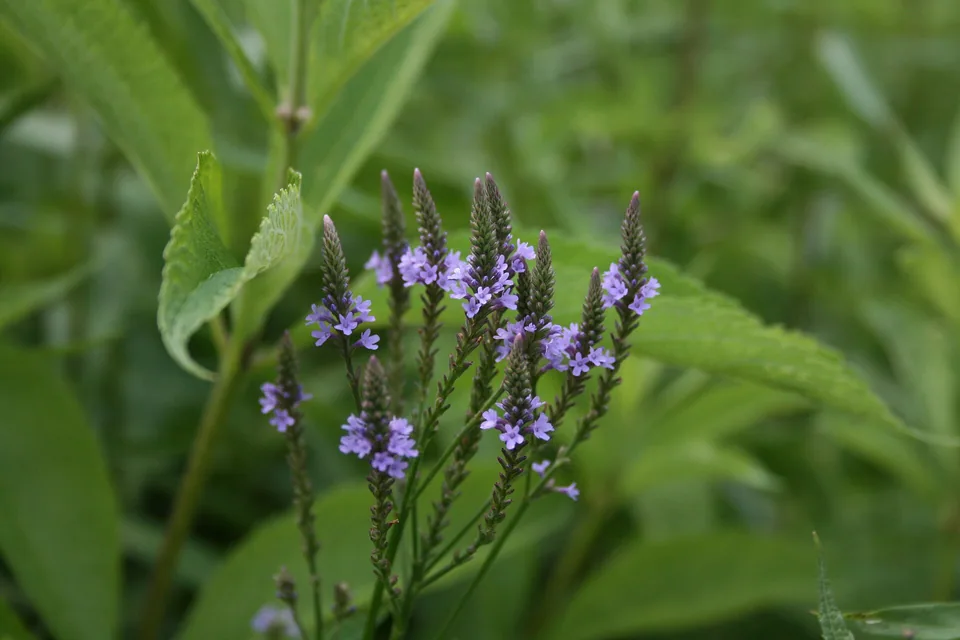
Blue vervain is a native wildflower that spreads slowly through rhizomes and self-seeding. [1] It is planted in full sun to partial shade in average medium to wet soils. [1] Its purple flowers in candelabra-shaped panicles are a high-value nectar plant that blooms in mid to late summer. [1]
This record is incomplete: the sources we read do not cover every field yet.
Not yet covered by our sources: Pruning
Blue Vervain care
How to water Blue Vervain
Average medium to wet soils
What the sources say (1)
Plant in full sun to partial shade in average medium to wet soils and pinch the tops to encourage branching and a bushier growth habit.How much light Blue Vervain needs
Full sun to partial shade
What the sources say (1)
Plant in full sun to partial shade in average medium to wet soils and pinch the tops to encourage branching and a bushier growth habit.How much cold Blue Vervain can take
Hardiness, coldest zone
3a [winter low −40 to −37.2 °C (−40 to −35 °F)]
What the sources say (1)
USDA Plant Hardiness Zone:
3a, 3b, 4a, 4b, 5a, 5b, 6a, 6b, 7a, 7b, 8a, 8bHardiness, warmest zone
8b [winter low −9.4 to −6.7 °C (15 to 20 °F)]
What the sources say (1)
USDA Plant Hardiness Zone:
3a, 3b, 4a, 4b, 5a, 5b, 6a, 6b, 7a, 7b, 8a, 8bHow to propagate Blue Vervain
Seed; stem cuttings
What the sources say (1)
Recommended Propagation Strategy:
Seed
Stem Cutting
Country Or Region Of Origin:
North AmericaHow to grow Blue Vervain
The plant
Life cycle
perennial
What the sources say (1)
Life Cycle: Perennial Recommended Propagation Strategy: Seed Stem Cutting Country Or Region Of Origin: North AmericaFamily
Verbenaceae
What the sources say (1)
Genus: Verbena Species: hastata Family: Verbenaceae Uses (Ethnobotany)Mature height
Mature width
30-76 cm (1 ft 0 in - 2 ft 6 in)
What the sources say (1)
Dimensions: Height: 2 ft. 0 in. - 5 ft. 0 in. Width: 1 ft. 0 in. - 2 ft. 6 in.Fertilizing
When
Mid- to late spring, and again after cutting back in summer
What the sources say (1)
A light application of a complete fertilizer such as 16-4-8 in mid- to late spring and again after trimming back will revitalize plants, but additional fertilization is not generally required.How often
Twice a year in the ground; more often in very sandy, poor soil
What each source says
in containers: Liquid fertilizer once a month, or a controlled-release fertilizer
What the sources say (2)
in containers: Fertilize container grown plants either with a controlled-release fertilizer, or with a liquid fertilizer once a month.A light application of a complete fertilizer such as 16-4-8 in mid- to late spring and again after trimming back will revitalize plants, but additional fertilization is not generally required. Plants growing in very sandy, poor soil may need more frequent fertilization.Mineral fertilizers
A light application of a complete fertilizer such as 16-4-8
What each source says
in containers: Controlled-release fertilizer or a monthly liquid fertilizer
What the sources say (2)
in containers: Fertilize container grown plants either with a controlled-release fertilizer, or with a liquid fertilizer once a month.A light application of a complete fertilizer such as 16-4-8 in mid- to late spring and again after trimming back will revitalize plants, but additional fertilization is not generally required.Blue Vervain pests and problems
Drought
Symptom: Drought is listed under environmental damage.
What the sources say (1)
Environmental Damage - Drought Additional pests and problems that may affect this plant: No serious insect or disease problems.
— Blue Vervain (Verbena hastata)-Hort Answers - University of Illinois Extension [2]
Remedies
The sources we checked give no remedies for this plant.
Is Blue Vervain poisonous?
Reported by the source, quoted verbatim. This is not medical or veterinary advice: if a person or an animal may have eaten this plant, contact a poison control centre or a veterinarian.
Calendar
Pruning
Not stated in the sources we read.
Months as given by the sources, which are mostly from the United States (northern hemisphere). In the southern hemisphere they shift by about six months.
Indicative values
Values from a secondary source, not checked word for word like the rest of this page. Use them as a starting point.
- Hours of sun
- 6-8 hoursIndicative value, adapt it to your climate · Secondary source
- Soil
- Sandy Loamy Clay HumusIndicative value, adapt it to your climate · Secondary source
- Soil pH
- 5.5-7.5Indicative value, adapt it to your climate · Secondary source
- Care level
- MediumIndicative value, adapt it to your climate · Secondary source
- Growth rate
- LowIndicative value, adapt it to your climate · Secondary source
- Pruning
- AugustIndicative value, adapt it to your climate · Secondary source
Similar plants
- Hoary Vervain Verbena stricta
- Moss Verbena Verbena aristigera
- Rigid Verbena Verbena rigida
- Rose Verbena Verbena canadensis
- Tall Verbena Verbena bonariensis
- Brazilian Verbena Verbena brasiliensis
- Vervain Verbena officinalis
- Frogfruit Phyla nodiflora
Sources
Every value above is quoted from these documents. Links lead to the original publisher.
- Verbena hastata (Blue Verbena, Blue Vervain, Simpler’s Joy, Swamp Verbena, Swamp Vervain) | North Carolina Extension Gardener Plant Toolbox · plants.ces.ncsu.edu, consulted
- Blue Vervain (Verbena hastata)-Hort Answers - University of Illinois Extension · web.extension.illinois.edu, consulted
- Verbena | Home & Garden Information Center · hgic.clemson.edu, consulted
Written by Emilio Marruso · last checked