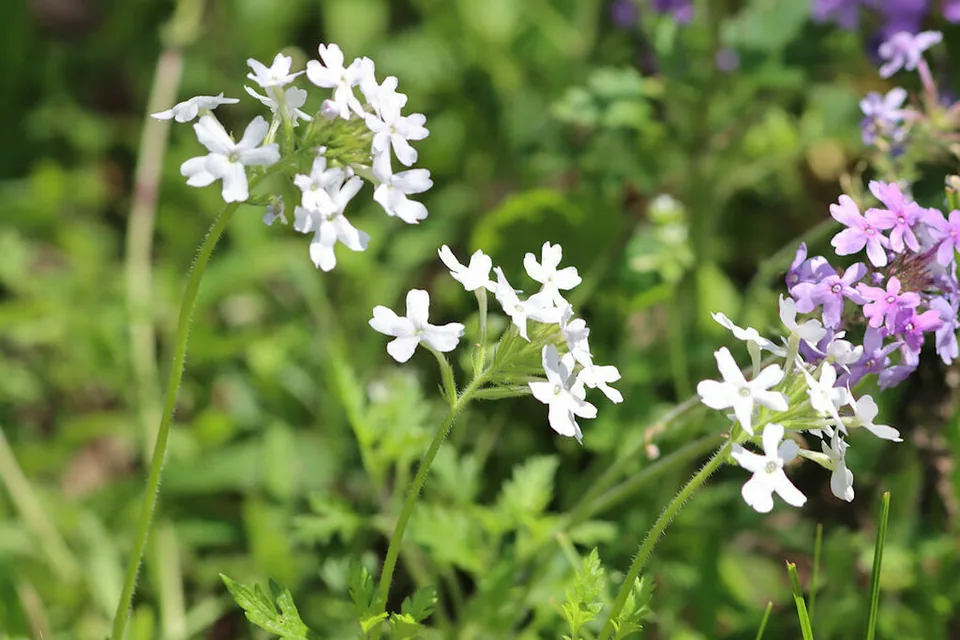
How to Grow and Care for Rose Verbena
Verbena canadensis
Written by Emilio Marruso · last checked
At a glance
Canada verbena is an easygoing perennial that comes back year after year. It handles anything from full sun to partial shade, tolerates drought as long as its soil drains well, and stays low at 8 inches to 1.5 feet tall while spreading 1 to 2 feet wide. It grows happily in containers too, so even a small patio or balcony can hold one.
- Sun
Full sun to partial shade
What the sources say (2)
Light: Full sun to partial shade
Plant Rose Verbena in well-drained soils in full sun
— Verbena canadensis (Clump Verbena, Rose Verbena, Rose Vervain) | North Carolina Extension Gardener Plant Toolbox [1] Full sun (6 or more hours of direct sunlight a day) Partial Shade (Direct sunlight only part of the day, 2-6 hours)
— Verbena canadensis (Clump Verbena, Rose Verbena, Rose Vervain) | North Carolina Extension Gardener Plant Toolbox [1] - Water
Handles drought well; water only when the soil is dry
What the sources say (2)
Watering: Drought tolerant
It is drought and salt tolerant but may be damaged by deer.
— Verbena canadensis (Clump Verbena, Rose Verbena, Rose Vervain) | North Carolina Extension Gardener Plant Toolbox [1] Plants are tolerant of heat and drought, although best growth will occur with plenty of water and fertilizer.
— Verbena | Home & Garden Information Center [2] - Cold
Survives winters down to −10 °F (−23.3 °C)
Very hardy · USDA 6a · RHS H7 · Z6
What the sources say (2)
Hardiness, coldest zone: 6a [winter low −23.3 to −20.6 °C (−10 to −5 °F)]
6a, 6b, 7a, 7b, 8a, 8b, 9a, 9b, 10a, 10b
— Verbena canadensis (Clump Verbena, Rose Verbena, Rose Vervain) | North Carolina Extension Gardener Plant Toolbox [1] Hardiness, warmest zone: 10b [winter low 1.7 to 4.4 °C (35 to 40 °F)]
6a, 6b, 7a, 7b, 8a, 8b, 9a, 9b, 10a, 10b
— Verbena canadensis (Clump Verbena, Rose Verbena, Rose Vervain) | North Carolina Extension Gardener Plant Toolbox [1] - Soil
Needs soil that drains very well
What the sources say (2)
Watering notes: Needs well-drained soil with excellent drainage
Plant Rose Verbena in well-drained soils in full sun
— Verbena canadensis (Clump Verbena, Rose Verbena, Rose Vervain) | North Carolina Extension Gardener Plant Toolbox [1] Like most verbenas, they need excellent soil drainage.
— Verbena | Home & Garden Information Center [2] - Feeding
A light feeding in mid to late spring, and again after cutting it back in summer
What the sources say (3)
When: Mid- to late spring, and again after cutting back in summer
A light application of a complete fertilizer such as 16-4-8 in mid- to late spring and again after trimming back will revitalize plants, but additional fertilization is not generally required.
— Verbena | Home & Garden Information Center [2] Mineral fertilizers: A light application of a complete fertilizer such as 16-4-8
in containers: Fertilize container grown plants either with a controlled-release fertilizer, or with a liquid fertilizer once a month.
— Verbena | Home & Garden Information Center [2] A light application of a complete fertilizer such as 16-4-8 in mid- to late spring and again after trimming back will revitalize plants, but additional fertilization is not generally required.
— Verbena | Home & Garden Information Center [2] - Pests
Aphids, whiteflies, thrips and slugs; also powdery mildew and root rot
What the sources say (5)
Pests: aphids, whitefly, thrips, leaf miners, mites, snails, slugs
Verbenas are relatively pest free. Aphids, whitefly, thrips, leaf miners and mites are the most common pests.
— Verbena | Home & Garden Information Center [2] Snails and slugs are an occasional problem.
— Verbena | Home & Garden Information Center [2] Diseases: powdery mildew, botrytis blight, root rot
Powdery mildew appears as a white powder fungus on the surfaces of leaves.
— Verbena | Home & Garden Information Center [2] Botrytis blight often occurs under overly moist conditions.
— Verbena | Home & Garden Information Center [2] Root rot caused by Pythium or Rhizoctonia may occur in overly moist soil.
— Verbena | Home & Garden Information Center [2] - Watch out
Deer may damage it
- Size
8 in to 1.5 ft tall, 1 to 2 ft wide
What the sources say (2)
Mature height: 20.32-45.72 cm (0 ft. 8 in. - 1 ft. 6 in.)
Dimensions: Height: 0 ft. 8 in. - 1 ft. 6 in. Width: 1 ft. 0 in. - 2 ft. 0 in.
— Verbena canadensis (Clump Verbena, Rose Verbena, Rose Vervain) | North Carolina Extension Gardener Plant Toolbox [1] Mature width: 30.48-60.96 cm (1 ft. - 2 ft.)
Dimensions: Height: 0 ft. 8 in. - 1 ft. 6 in. Width: 1 ft. 0 in. - 2 ft. 0 in.
— Verbena canadensis (Clump Verbena, Rose Verbena, Rose Vervain) | North Carolina Extension Gardener Plant Toolbox [1] - Containers
Grows in containers too; feed with liquid fertilizer once a month
What the sources say (4)
In containers: Yes
Plant Rose Verbena in well-drained soils in full sun and use as a ground cover, in a rock garden, in a container or in the front of the border to add season-long color.
— Verbena canadensis (Clump Verbena, Rose Verbena, Rose Vervain) | North Carolina Extension Gardener Plant Toolbox [1] How often: Twice a year in the ground; more often in very sandy, poor soil
in containers: Fertilize container grown plants either with a controlled-release fertilizer, or with a liquid fertilizer once a month.
— Verbena | Home & Garden Information Center [2] cultivar 'Homestead Purple': Homestead Purple should be placed in full sun in a well drained soil. Like most fast growing perennials, it responds well to good soil preparation and occasional fertilization.
— Verbena, Homestead Purple [3] A light application of a complete fertilizer such as 16-4-8 in mid- to late spring and again after trimming back will revitalize plants, but additional fertilization is not generally required. Plants growing in very sandy, poor soil may need more frequent fertilization.
— Verbena | Home & Garden Information Center [2]
Overview
Rose verbena is a low-growing, mounding herbaceous perennial native to North Carolina, with clusters of rose-pink to purple flowers from spring through fall. [1] It is drought and salt tolerant, and is planted in well-drained soil in full sun as a ground cover, in a rock garden or in a container. [1] It is short-lived and self-seeds in the right conditions. [1]
This record is incomplete: the sources we read do not cover every field yet.
Not yet covered by our sources: Pruning, Propagation
Rose Verbena care
How to water Rose Verbena
Watering
Drought tolerant
What the sources say (2)
It is drought and salt tolerant but may be damaged by deer.Plants are tolerant of heat and drought, although best growth will occur with plenty of water and fertilizer.Watering notes
Needs well-drained soil with excellent drainage
How much light Rose Verbena needs
Full sun to partial shade
What the sources say (2)
Plant Rose Verbena in well-drained soils in full sunFull sun (6 or more hours of direct sunlight a day)
Partial Shade (Direct sunlight only part of the day, 2-6 hours)How much cold Rose Verbena can take
Hardiness, coldest zone
6a [winter low −23.3 to −20.6 °C (−10 to −5 °F)]
What the sources say (1)
6a, 6b, 7a, 7b, 8a, 8b, 9a, 9b, 10a, 10bHardiness, warmest zone
10b [winter low 1.7 to 4.4 °C (35 to 40 °F)]
What the sources say (1)
6a, 6b, 7a, 7b, 8a, 8b, 9a, 9b, 10a, 10bWhere to grow Rose Verbena
Yes
What the sources say (1)
Plant Rose Verbena in well-drained soils in full sun and use as a ground cover, in a rock garden, in a container or in the front of the border to add season-long color.How to propagate Rose Verbena
Not stated in the sources we read.
How to grow Rose Verbena
The plant
Life cycle
perennial
What the sources say (1)
Genus:
Verbena
Species:
canadensis
Family:
Verbenaceae
Life Cycle:
PerennialFamily
Verbenaceae
What the sources say (1)
Genus:
Verbena
Species:
canadensis
Family:
Verbenaceae
Life Cycle:
PerennialMature height
20.32-45.72 cm (0 ft. 8 in. - 1 ft. 6 in.)
What the sources say (1)
Dimensions:
Height: 0 ft. 8 in. - 1 ft. 6 in.
Width: 1 ft. 0 in. - 2 ft. 0 in.Mature width
30.48-60.96 cm (1 ft. - 2 ft.)
What the sources say (1)
Dimensions:
Height: 0 ft. 8 in. - 1 ft. 6 in.
Width: 1 ft. 0 in. - 2 ft. 0 in.Pests and diseases
Pests
aphids, whitefly, thrips, leaf miners, mites, snails, slugs
Diseases
powdery mildew, botrytis blight, root rot
What the sources say (3)
Powdery mildew appears as a white powder fungus on the surfaces of leaves.Botrytis blight often occurs under overly moist conditions.Root rot caused by Pythium or Rhizoctonia may occur in overly moist soil.Fertilizing
When
Mid- to late spring, and again after cutting back in summer
What the sources say (1)
A light application of a complete fertilizer such as 16-4-8 in mid- to late spring and again after trimming back will revitalize plants, but additional fertilization is not generally required.How often
Twice a year in the ground; more often in very sandy, poor soil
What each source says
in containers: Liquid fertilizer once a month, or a controlled-release fertilizer
cultivar 'Homestead Purple': Occasional fertilization
What the sources say (3)
in containers: Fertilize container grown plants either with a controlled-release fertilizer, or with a liquid fertilizer once a month.cultivar 'Homestead Purple': Homestead Purple should be placed in full sun in a well drained soil. Like most fast growing perennials, it responds well to good soil preparation and occasional fertilization.A light application of a complete fertilizer such as 16-4-8 in mid- to late spring and again after trimming back will revitalize plants, but additional fertilization is not generally required. Plants growing in very sandy, poor soil may need more frequent fertilization.Mineral fertilizers
A light application of a complete fertilizer such as 16-4-8
What each source says
in containers: Controlled-release fertilizer or a monthly liquid fertilizer
What the sources say (2)
in containers: Fertilize container grown plants either with a controlled-release fertilizer, or with a liquid fertilizer once a month.A light application of a complete fertilizer such as 16-4-8 in mid- to late spring and again after trimming back will revitalize plants, but additional fertilization is not generally required.Rose Verbena pests and problems
Deer damage
Symptom: May be damaged by deer
What the sources say (1)
It is drought and salt tolerant but may be damaged by deer.
— Verbena canadensis (Clump Verbena, Rose Verbena, Rose Vervain) | North Carolina Extension Gardener Plant Toolbox [1]
Remedies
Each remedy shows what official sources say about it; traditional remedies without an official source are marked as such. Harmful ones are listed so you know to avoid them.
Treating the plant
aphids
insecticidal soap spray Works
How: Insecticidal soap spray usually takes care of the pests, but reapplication may be necessary.
Insecticidal soap spray usually takes care of the pests, but reapplication may be necessary.
— gardeningknowhow.com [4] What the evidence says Among the compounds registered for control of this pest in Connecticut are insecticidal soap and ultrafine horticultural oil. Apply them as foliar sprays when insects are present.
— portal.ct.gov [5]
powdery mildew
picking off affected leaves Partly works
How: Avoid overcrowded spacing of plants and carefully pick off affected leaves as soon as symptoms are evident.
Disease can be minimized by avoiding overcrowded spacing of plants and by carefully picking off affected leaves as soon as symptoms are evident.
— portal.ct.gov [5] What the evidence says Disease can be minimized by avoiding overcrowded spacing of plants and by carefully picking off affected leaves as soon as symptoms are evident.
— portal.ct.gov [5]
verbena leaf miner
handpicking infested leaves Works
How: Handpick and destroy infested leaves when mines have just started.
Handpicking and destruction of infested leaves when mines have just started should be sufficient to control the usual infestation.
— portal.ct.gov [5] What the evidence says Handpicking and destruction of infested leaves when mines have just started should be sufficient to control the usual infestation.
— portal.ct.gov [5]
gray mold
removing spent flowers Partly works
How: Groom the plants and remove spent or senescing flowers; avoid wetting the flowers when watering and crowding plants.
Good sanitation practices including grooming the plants and removing spent or senescing flowers can minimize the potential for infection.
— portal.ct.gov [5] What the evidence says Good sanitation practices including grooming the plants and removing spent or senescing flowers can minimize the potential for infection.
— portal.ct.gov [5]
Calendar
Pruning
Not stated in the sources we read.
Months as given by the sources, which are mostly from the United States (northern hemisphere). In the southern hemisphere they shift by about six months.
Indicative values
Values from a secondary source, not checked word for word like the rest of this page. Use them as a starting point.
- Hours of sun
- 6-8 hoursIndicative value, adapt it to your climate · Secondary source
- Drought tolerant
- yesIndicative value, adapt it to your climate · Secondary source
- Soil pH
- 6-7.5Indicative value, adapt it to your climate · Secondary source
- Care level
- MediumIndicative value, adapt it to your climate · Secondary source
- Growth rate
- LowIndicative value, adapt it to your climate · Secondary source
- Pruning
- February, March, April, MayIndicative value, adapt it to your climate · Secondary source
- Propagation
- Cutting, Division, Layering Propagation, Seed PropagationIndicative value, adapt it to your climate · Secondary source
Similar plants
- Blue Vervain Verbena hastata
- Hoary Vervain Verbena stricta
- Moss Verbena Verbena aristigera
- Rigid Verbena Verbena rigida
- Tall Verbena Verbena bonariensis
- Brazilian Verbena Verbena brasiliensis
- Vervain Verbena officinalis
- Frogfruit Phyla nodiflora
Sources
Every value above is quoted from these documents. Links lead to the original publisher.
- Verbena canadensis (Clump Verbena, Rose Verbena, Rose Vervain) | North Carolina Extension Gardener Plant Toolbox · plants.ces.ncsu.edu, consulted
- Verbena | Home & Garden Information Center · hgic.clemson.edu, consulted
- Verbena, Homestead Purple · uaex.uada.edu, consulted
- gardeningknowhow.com · gardeningknowhow.com
- portal.ct.gov · portal.ct.gov
Written by Emilio Marruso · last checked