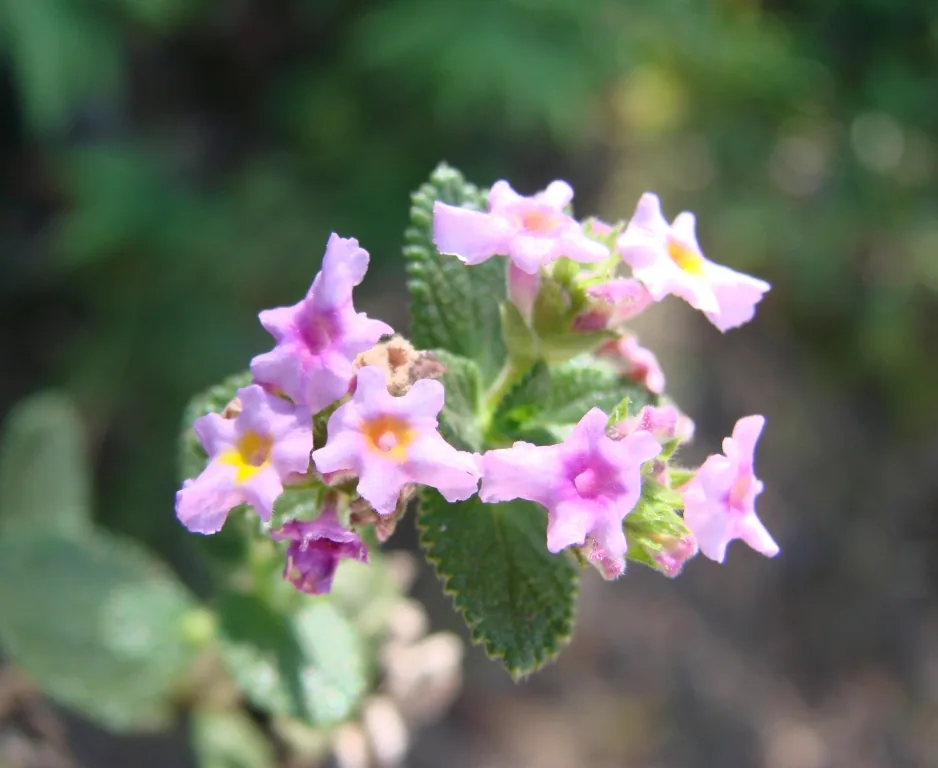


How to Grow and Care for Lantana Lavender Popcorn
Lantana trifolia
Written by Emilio Marruso · last checked
Toxic to: Cats, Dogs, Horses, People · Why
At a glance
Lantana is a sun lover that fills the garden with life: its nectar-rich flowers draw butterflies, bees and hummingbirds, and songbirds feed on its berries. Give it full sun and soil that drains well, and once established it handles dry spells with ease. It grows happily in containers too, reaching 2–5 feet tall and 1–3 feet wide.
- Sun
Full sun
What the sources say (1)
Light: Full sun
Light: Full sun (6 or more hours of direct sunlight a day) Soil Texture: Clay
— Lantana trifolia (Lantana Lavender Popcorn, Lavender Popcorn, Popcorn Lantana, Shrub Verbena, Three-Leaf Shrub-Verbena, Three Leaved Lantana) | North Carolina Extension Gardener Plant Toolbox [1] - Water
Handles dry spells once established; too much water or poor drainage rots the roots
What the sources say (3)
Watering: Tolerates moist, well-drained soils; drought-tolerant once established
This plant prefers full sun and tolerates a variety of moist, well-drained soils with a slightly acidic to neutral pH.
— Lantana trifolia (Lantana Lavender Popcorn, Lavender Popcorn, Popcorn Lantana, Shrub Verbena, Three-Leaf Shrub-Verbena, Three Leaved Lantana) | North Carolina Extension Gardener Plant Toolbox [1] It is poor-soil-, heat-, and drought-tolerant once established.
— Lantana trifolia (Lantana Lavender Popcorn, Lavender Popcorn, Popcorn Lantana, Shrub Verbena, Three-Leaf Shrub-Verbena, Three Leaved Lantana) | North Carolina Extension Gardener Plant Toolbox [1] Watering notes: Overwatering or poor soil drainage can cause root rot
Overwatering or poor soil drainage can cause root rot. High humidity and poor air circulation can cause powdery mildew or crown rot.
— Lantana trifolia (Lantana Lavender Popcorn, Lavender Popcorn, Popcorn Lantana, Shrub Verbena, Three-Leaf Shrub-Verbena, Three Leaved Lantana) | North Carolina Extension Gardener Plant Toolbox [1] - Cold
Survives winters down to 30 °F (−1.1 °C)
Half hardy: mild winters or an unheated greenhouse · USDA 10a · RHS H3 · Z10
What the sources say (2)
Hardiness, coldest zone: 10a [winter low −1.1 to 1.7 °C (30 to 35 °F)]
USDA Plant Hardiness Zone: 10a, 10b, 11a, 11b - Fruit:
— Lantana trifolia (Lantana Lavender Popcorn, Lavender Popcorn, Popcorn Lantana, Shrub Verbena, Three-Leaf Shrub-Verbena, Three Leaved Lantana) | North Carolina Extension Gardener Plant Toolbox [1] Hardiness, warmest zone: 11b [winter low 7.2 to 10 °C (45 to 50 °F)]
USDA Plant Hardiness Zone: 10a, 10b, 11a, 11b - Fruit:
— Lantana trifolia (Lantana Lavender Popcorn, Lavender Popcorn, Popcorn Lantana, Shrub Verbena, Three-Leaf Shrub-Verbena, Three Leaved Lantana) | North Carolina Extension Gardener Plant Toolbox [1] - Soil
Well-drained soil, pH 6.0–8.0
What the sources say (4)
Soil pH, minimum: 6.0
Soil pH: Neutral (6.0-8.0) Soil Drainage: Good Drainage Moist
— Lantana trifolia (Lantana Lavender Popcorn, Lavender Popcorn, Popcorn Lantana, Shrub Verbena, Three-Leaf Shrub-Verbena, Three Leaved Lantana) | North Carolina Extension Gardener Plant Toolbox [1] Soil pH, maximum: 8.0
Soil pH: Neutral (6.0-8.0) Soil Drainage: Good Drainage Moist
— Lantana trifolia (Lantana Lavender Popcorn, Lavender Popcorn, Popcorn Lantana, Shrub Verbena, Three-Leaf Shrub-Verbena, Three Leaved Lantana) | North Carolina Extension Gardener Plant Toolbox [1] Watering: Tolerates moist, well-drained soils; drought-tolerant once established
This plant prefers full sun and tolerates a variety of moist, well-drained soils with a slightly acidic to neutral pH.
— Lantana trifolia (Lantana Lavender Popcorn, Lavender Popcorn, Popcorn Lantana, Shrub Verbena, Three-Leaf Shrub-Verbena, Three Leaved Lantana) | North Carolina Extension Gardener Plant Toolbox [1] It is poor-soil-, heat-, and drought-tolerant once established.
— Lantana trifolia (Lantana Lavender Popcorn, Lavender Popcorn, Popcorn Lantana, Shrub Verbena, Three-Leaf Shrub-Verbena, Three Leaved Lantana) | North Carolina Extension Gardener Plant Toolbox [1] - Feeding
A light feeding in spring; too much fertilizer means fewer flowers and more disease
What the sources say (3)
When: A light feeding in spring; vigorous plants again in midsummer if not water-stressed, and after cutting back
A light fertilization in spring will usually be sufficient. Vigorously growing plants may be fertilized again in mid summer, provided plants are not water stressed.
— Lantana | Home & Garden Information Center [4] Water and lightly fertilize newly cut back plants and they will return to bloom quickly.
— Lantana | Home & Garden Information Center [4] Avoid: Excess fertilizer (and excess water): it reduces flowering and makes plants more prone to disease
Excessive fertilizer may reduce flowering and make plants more susceptible to disease.
— Lantana | Home & Garden Information Center [4] - Pruning
Prune in early spring
What the sources say (1)
Pruning: Early spring
To help the plant maintain its shape and size, prune in early spring. For propagation, stem cuttings should be taken in the early spring or summer.
— Lantana trifolia (Lantana Lavender Popcorn, Lavender Popcorn, Popcorn Lantana, Shrub Verbena, Three-Leaf Shrub-Verbena, Three Leaved Lantana) | North Carolina Extension Gardener Plant Toolbox [1] - Pests
Whiteflies, scale and spider mites; powdery mildew and rot when it's too humid or wet
What the sources say (2)
Pests: whiteflies, scale, spider mites
No significant insect pests or diseases. Monitor for whiteflies, scale, and spider mites, especially when grown indoors.
— Lantana trifolia (Lantana Lavender Popcorn, Lavender Popcorn, Popcorn Lantana, Shrub Verbena, Three-Leaf Shrub-Verbena, Three Leaved Lantana) | North Carolina Extension Gardener Plant Toolbox [1] Diseases: root rot, powdery mildew, crown rot
Overwatering or poor soil drainage can cause root rot. High humidity and poor air circulation can cause powdery mildew or crown rot.
— Lantana trifolia (Lantana Lavender Popcorn, Lavender Popcorn, Popcorn Lantana, Shrub Verbena, Three-Leaf Shrub-Verbena, Three Leaved Lantana) | North Carolina Extension Gardener Plant Toolbox [1] - Size
2–5 ft tall and 1–3 ft wide
What the sources say (2)
Mature height: 60.96-152.4 cm (2-5 ft)
Height: 2 ft. 0 in. - 5 ft. 0 in. Width: 1 ft. 0 in. - 3 ft. 0 in.
— Lantana trifolia (Lantana Lavender Popcorn, Lavender Popcorn, Popcorn Lantana, Shrub Verbena, Three-Leaf Shrub-Verbena, Three Leaved Lantana) | North Carolina Extension Gardener Plant Toolbox [1] Mature width: 30.48-91.44 cm (1-3 ft)
Height: 2 ft. 0 in. - 5 ft. 0 in. Width: 1 ft. 0 in. - 3 ft. 0 in.
— Lantana trifolia (Lantana Lavender Popcorn, Lavender Popcorn, Popcorn Lantana, Shrub Verbena, Three-Leaf Shrub-Verbena, Three Leaved Lantana) | North Carolina Extension Gardener Plant Toolbox [1] - Propagation
From seed or stem cuttings taken in early spring or summer
What the sources say (2)
Propagation: Seed; stem cuttings (taken in early spring or summer)
Recommended Propagation Strategy: Seed Stem Cutting Country Or Region Of Origin:
— Lantana trifolia (Lantana Lavender Popcorn, Lavender Popcorn, Popcorn Lantana, Shrub Verbena, Three-Leaf Shrub-Verbena, Three Leaved Lantana) | North Carolina Extension Gardener Plant Toolbox [1] To help the plant maintain its shape and size, prune in early spring. For propagation, stem cuttings should be taken in the early spring or summer.
— Lantana trifolia (Lantana Lavender Popcorn, Lavender Popcorn, Popcorn Lantana, Shrub Verbena, Three-Leaf Shrub-Verbena, Three Leaved Lantana) | North Carolina Extension Gardener Plant Toolbox [1] - Containers
Grows in containers too
What the sources say (1)
In containers: Yes
Attractive as an annual border or container plant.
— Lantana trifolia (Lantana Lavender Popcorn, Lavender Popcorn, Popcorn Lantana, Shrub Verbena, Three-Leaf Shrub-Verbena, Three Leaved Lantana) | North Carolina Extension Gardener Plant Toolbox [1] - Safety
Toxic if eaten by people and pets, and can irritate skin: wear gloves
Overview
Three-leaved lantana is a fast-growing tropical evergreen shrub grown for its lavender flowers and ornamental popcorn-like fruit spikes. [1] It prefers full sun and moist, well-drained soils, and is drought-tolerant once established. [1] If ingested, the plant is toxic to humans and pets. [1]
Lantana Lavender Popcorn care
How to water Lantana Lavender Popcorn
Watering
Tolerates moist, well-drained soils; drought-tolerant once established
What the sources say (2)
This plant prefers full sun and tolerates a variety of moist, well-drained soils with a slightly acidic to neutral pH.It is poor-soil-, heat-, and drought-tolerant once established.Watering notes
Overwatering or poor soil drainage can cause root rot
What the sources say (1)
Overwatering or poor soil drainage can cause root rot. High humidity and poor air circulation can cause powdery mildew or crown rot.How much light Lantana Lavender Popcorn needs
Full sun
What the sources say (1)
Light:
Full sun (6 or more hours of direct sunlight a day)
Soil Texture:
ClayHow much cold Lantana Lavender Popcorn can take
Hardiness, coldest zone
10a [winter low −1.1 to 1.7 °C (30 to 35 °F)]
What the sources say (1)
USDA Plant Hardiness Zone:
10a, 10b, 11a, 11b
-
Fruit:Hardiness, warmest zone
11b [winter low 7.2 to 10 °C (45 to 50 °F)]
What the sources say (1)
USDA Plant Hardiness Zone:
10a, 10b, 11a, 11b
-
Fruit:Best soil for Lantana Lavender Popcorn
Soil pH, minimum
6.0
What the sources say (1)
Soil pH:
Neutral (6.0-8.0)
Soil Drainage:
Good Drainage
MoistSoil pH, maximum
8.0
What the sources say (1)
Soil pH:
Neutral (6.0-8.0)
Soil Drainage:
Good Drainage
MoistWhere to grow Lantana Lavender Popcorn
Yes
What the sources say (1)
Attractive as an annual border or container plant.How to propagate Lantana Lavender Popcorn
Seed; stem cuttings (taken in early spring or summer)
What the sources say (2)
Recommended Propagation Strategy:
Seed
Stem Cutting
Country Or Region Of Origin:To help the plant maintain its shape and size, prune in early spring. For propagation, stem cuttings should be taken in the early spring or summer.How to grow Lantana Lavender Popcorn
The plant
Life cycle
annual, perennial
What the sources say (1)
Life Cycle:
Annual
Perennial
Recommended Propagation Strategy:
SeedFamily
Verbenaceae
What the sources say (1)
Family:
Verbenaceae
Uses (Ethnobotany):
Crushed leaves are made into a teaMature height
60.96-152.4 cm (2-5 ft)
What the sources say (1)
Height: 2 ft. 0 in. - 5 ft. 0 in.
Width: 1 ft. 0 in. - 3 ft. 0 in.Mature width
30.48-91.44 cm (1-3 ft)
What the sources say (1)
Height: 2 ft. 0 in. - 5 ft. 0 in.
Width: 1 ft. 0 in. - 3 ft. 0 in.Pests and diseases
Pests
whiteflies, scale, spider mites
What the sources say (1)
No significant insect pests or diseases. Monitor for whiteflies, scale, and spider mites, especially when grown indoors.Diseases
root rot, powdery mildew, crown rot
What the sources say (1)
Overwatering or poor soil drainage can cause root rot. High humidity and poor air circulation can cause powdery mildew or crown rot.Fertilizing
When
A light feeding in spring; vigorous plants again in midsummer if not water-stressed, and after cutting back
What the sources say (2)
A light fertilization in spring will usually be sufficient. Vigorously growing plants may be fertilized again in mid summer, provided plants are not water stressed.Water and lightly fertilize newly cut back plants and they will return to bloom quickly.Avoid
Excess fertilizer (and excess water): it reduces flowering and makes plants more prone to disease
What the sources say (1)
Excessive fertilizer may reduce flowering and make plants more susceptible to disease.Signs of excess
Poor blooming and greater susceptibility to disease
Lantana Lavender Popcorn pests and problems
Pests
Symptom: Whiteflies, scale and spider mites, especially when grown indoors
What to do: Monitor the plant
What the sources say (1)
Monitor for whiteflies, scale, and spider mites, especially when grown indoors.
— Lantana trifolia (Lantana Lavender Popcorn, Lavender Popcorn, Popcorn Lantana, Shrub Verbena, Three-Leaf Shrub-Verbena, Three Leaved Lantana) | North Carolina Extension Gardener Plant Toolbox [1] Root rot
Symptom: Root rot from overwatering or poor soil drainage
What the sources say (1)
Overwatering or poor soil drainage can cause root rot. High humidity and poor air circulation can cause powdery mildew or crown rot.
— Lantana trifolia (Lantana Lavender Popcorn, Lavender Popcorn, Popcorn Lantana, Shrub Verbena, Three-Leaf Shrub-Verbena, Three Leaved Lantana) | North Carolina Extension Gardener Plant Toolbox [1] Powdery mildew and crown rot
Symptom: Powdery mildew or crown rot with high humidity and poor air circulation
What the sources say (1)
Overwatering or poor soil drainage can cause root rot. High humidity and poor air circulation can cause powdery mildew or crown rot.
— Lantana trifolia (Lantana Lavender Popcorn, Lavender Popcorn, Popcorn Lantana, Shrub Verbena, Three-Leaf Shrub-Verbena, Three Leaved Lantana) | North Carolina Extension Gardener Plant Toolbox [1]
Remedies
Each remedy shows what official sources say about it; traditional remedies without an official source are marked as such. Harmful ones are listed so you know to avoid them.
First aid
First aid: not a substitute for a doctor
contact dermatitis
rinse the skin with warm water Official source, not independently tested
See a GP if you have persistent, recurrent or severe symptoms of contact dermatitis.
— nhs.uk [6] How: If you come into contact with an allergen or irritant, rinse the affected skin with warm water and an emollient as soon as possible.
cleaning your skin – if you come into contact with an allergen or irritant, rinse the affected skin with warm water and an emollient as soon as possible
— nhs.uk [6]
Treating the plant
lantana lace bug
insecticidal soap Official source, not independently tested
Because the flowers of lantana are extremely attractive to a wide variety of pollinators, insecticide use should be approached very carefully.
— fieldreport.caes.uga.edu [8] How: Use insecticidal soaps; several applications may be needed.
Use of insecticidal soaps and horticultural oils should provide enough control without threatening these pollinators. Our climate can support two generations per year, so several applications may be needed.
— lee.ces.ncsu.edu [7] horticultural oil Official source, not independently tested
Because the flowers of lantana are extremely attractive to a wide variety of pollinators, insecticide use should be approached very carefully.
— fieldreport.caes.uga.edu [8] How: Use horticultural oils; several applications may be needed.
Use of insecticidal soaps and horticultural oils should provide enough control without threatening these pollinators. Our climate can support two generations per year, so several applications may be needed.
— lee.ces.ncsu.edu [7] cutting back infested growth Official source, not independently tested
How: Cut heavily infested portions to the ground and remove the cuttings from the site.
Another means of control is to cut heavily infested portions to the ground. You would be surprised how quickly the plant recovers from these cuts. Be sure to remove cuttings from the site.
— lee.ces.ncsu.edu [7] removing chlorotic leaves by hand Official source, not independently tested
How: Remove yellowed or blanched leaves by hand and destroy them.
If any leaves appear chlorotic —yellowed or blanched—remove those leaves by hand and destroy them.
— fieldreport.caes.uga.edu [8]
Is Lantana Lavender Popcorn toxic to pets?
Reported by the source, quoted verbatim. This is not medical or veterinary advice: if a person or an animal may have eaten this plant, contact a poison control centre or a veterinarian.
Animals
Problems: Contact Dermatitis Poisonous to Humans Problem for Cats Problem for Children Problem for Dogs Problem for Horses
[1]- Poisonous parts
Poison Part: Flowers Fruits Leaves Roots Sap/Juice Seeds Stems
[1]- Toxic principle
Poison Toxic Principle: Pentacyclic triterpenoids Causes Contact Dermatitis: Yes
[1]- Symptoms
Poison Symptoms: Humans and animals may have allergic reactions if this plant is consumed or by coming into contact with sap from bruised or broken plant parts.
[1]- Severity
This plant has medium severity poison characteristics. See below Description
[1]
People
If ingested, this plant is toxic to humans and pets. Wear protective gloves and clothing when handling this plant.
[1]- Poisonous parts
Poison Part: Flowers Fruits Leaves Roots Sap/Juice Seeds Stems
[1]- Toxic principle
Poison Toxic Principle: Pentacyclic triterpenoids Causes Contact Dermatitis: Yes
[1]- Symptoms
Poison Symptoms: Humans and animals may have allergic reactions if this plant is consumed or by coming into contact with sap from bruised or broken plant parts.
[1]- Severity
This plant has medium severity poison characteristics. See below Description
[1]
Calendar
Pruning
Early spring
What the sources say (1)
To help the plant maintain its shape and size, prune in early spring. For propagation, stem cuttings should be taken in the early spring or summer.Months as given by the sources, which are mostly from the United States (northern hemisphere). In the southern hemisphere they shift by about six months.
Edibility
Reported by the source, quoted verbatim. Do not eat a plant on the basis of this page alone: identification mistakes can be dangerous.
Nectar-producing flowers attract pollinators, especially butterflies, bees, and hummingbirds. Berries are a food source for songbirds.
[1]
Indicative values
Values from a secondary source, not checked word for word like the rest of this page. Use them as a starting point.
- Hours of sun
- 6-8 hoursIndicative value, adapt it to your climate · Secondary source
- Drought tolerant
- yesIndicative value, adapt it to your climate · Secondary source
- Care level
- MediumIndicative value, adapt it to your climate · Secondary source
- Growth rate
- LowIndicative value, adapt it to your climate · Secondary source
Similar plants
- Lantana Lantana camara
- Trailing Lantana Lantana montevidensis
- Blue Vervain Verbena hastata
- Frogfruit Phyla nodiflora
- Golden Dewdrop Duranta erecta
- Hoary Vervain Verbena stricta
- Lemon Verbena Aloysia citriodora
- Moss Verbena Verbena aristigera
Sources
Every value above is quoted from these documents. Links lead to the original publisher.
- Lantana trifolia (Lantana Lavender Popcorn, Lavender Popcorn, Popcorn Lantana, Shrub Verbena, Three-Leaf Shrub-Verbena, Three Leaved Lantana) | North Carolina Extension Gardener Plant Toolbox · plants.ces.ncsu.edu, consulted
- Three Leaved Lantana - Lantana trifolia | North Carolina Extension Gardener Plant Toolbox · plants.ces.ncsu.edu, consulted
- Shrub Verbena - Lantana trifolia | North Carolina Extension Gardener Plant Toolbox · plants.ces.ncsu.edu, consulted
- Lantana | Home & Garden Information Center · hgic.clemson.edu, consulted
- Lantana Lavender Popcorn - Lantana trifolia | North Carolina Extension Gardener Plant Toolbox · plants.ces.ncsu.edu, consulted
- nhs.uk · nhs.uk
- lee.ces.ncsu.edu · lee.ces.ncsu.edu
- fieldreport.caes.uga.edu · fieldreport.caes.uga.edu
Written by Emilio Marruso · last checked