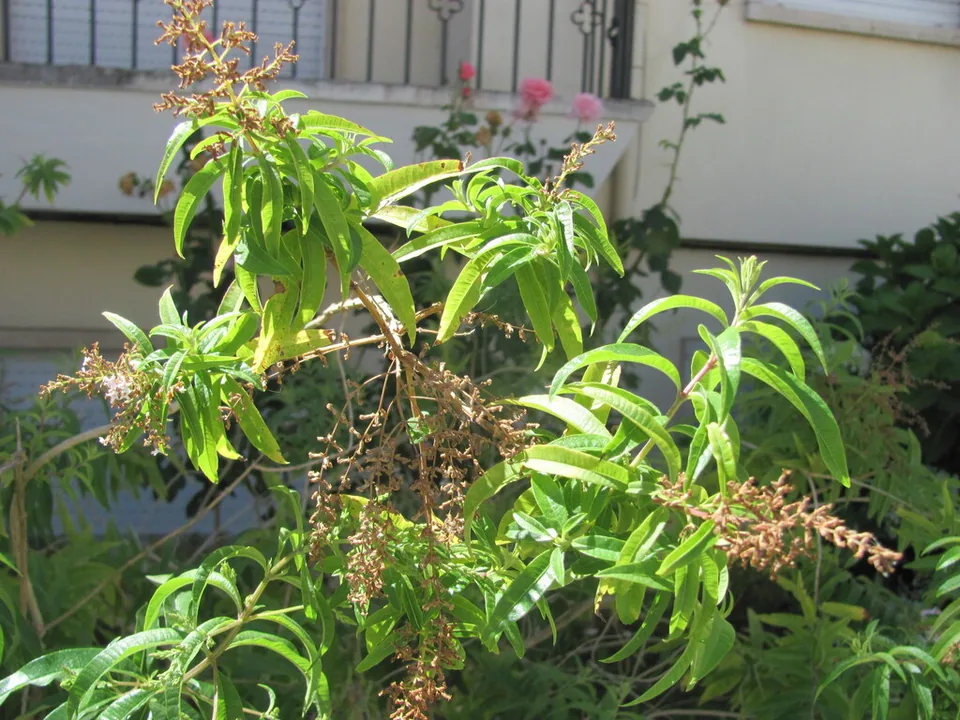
How to Grow and Care for Lemon Verbena
Aloysia citriodora
Written by Emilio Marruso · last checked
Toxic to: Cats, Dogs, Horses · Why
At a glance
Lemon verbena is a perennial that loves full sun and moist, well-drained soil. Its leaves and flowers flavor teas, desserts, fruit salads and jams, and the leaves taste best picked right before the plant blooms. It reaches 6–8 ft in the ground, yet grows happily in a pot too, and you can start new plants from stem cuttings.
- Sun
Full sun
What the sources say (4)
Light: Full sun
According to NC State Extension: It prefers full sun in well-drained moist fertile light soils.
— Aloysia citriodora (Lemon Beebrush, Lemon Verbena) | North Carolina Extension Gardener Plant Toolbox [1] cooler climate: It needs full sun in our cooler climate and moist, well-drained soil to thrive
— Lemon-scented Plants – Wisconsin Horticulture [3] It prefers full sun in well-drained moist fertile light soils.
— Aloysia citriodora (Lemon Beebrush, Lemon Verbena) | North Carolina Extension Gardener Plant Toolbox [1] Light: Full sun (6 or more hours of direct sunlight a day)
— Aloysia citriodora (Lemon Beebrush, Lemon Verbena) | North Carolina Extension Gardener Plant Toolbox [1] - Water
Keep the soil moist but well drained
What the sources say (2)
Watering: Moist, well-drained soil
It prefers full sun in well-drained moist fertile light soils.
— Aloysia citriodora (Lemon Beebrush, Lemon Verbena) | North Carolina Extension Gardener Plant Toolbox [1] It needs full sun in our cooler climate and moist, well-drained soil to thrive
— Lemon-scented Plants – Wisconsin Horticulture [3] - Cold
Survives winters down to 10 °F (−12.2 °C)
Hardy in cold winters · USDA 8a · RHS H5 · Z8
What the sources say (2)
Hardiness, coldest zone: 8a [winter low −12.2 to −9.4 °C (10 to 15 °F)]
USDA Plant Hardiness Zone: 8a, 8b, 9a, 9b, 10a, 10b - Flowers:
— Aloysia citriodora (Lemon Beebrush, Lemon Verbena) | North Carolina Extension Gardener Plant Toolbox [1] Hardiness, warmest zone: 10b [winter low 1.7 to 4.4 °C (35 to 40 °F)]
USDA Plant Hardiness Zone: 8a, 8b, 9a, 9b, 10a, 10b - Flowers:
— Aloysia citriodora (Lemon Beebrush, Lemon Verbena) | North Carolina Extension Gardener Plant Toolbox [1] - Pruning
Prune in early spring
What the sources say (1)
Pruning: Early spring
Pruning the branches in early spring encourages a bushier form.
— Aloysia citriodora (Lemon Beebrush, Lemon Verbena) | North Carolina Extension Gardener Plant Toolbox [1] - Harvest
Pick the leaves right before it blooms, when flavor is best; great in teas and desserts
What the sources say (2)
Harvest: Flavor is best when harvested right before plants bloom
The flavor is best when harvested right before plants bloom in delicate upright spikes of small lavender-white to mauve flowers.
— Lemon-scented Plants – Wisconsin Horticulture [3] How to harvest: harvest the leaves right before the plants bloom, when the flavor is best
The flavor is best when harvested right before plants bloom in delicate upright spikes of small lavender-white to mauve flowers.
— Lemon-scented Plants – Wisconsin Horticulture [3] - Pests
Sometimes aphids, whiteflies, mealybugs and spider mites; no serious problems otherwise
What the sources say (1)
Pests: aphids, whiteflies, mealy bugs, spider mites
Insects, Diseases, and Other Plant Problems: No serious problems. Aphids, whiteflies, mealy bugs and spider mites are occasional problems.
— Aloysia citriodora (Lemon Beebrush, Lemon Verbena) | North Carolina Extension Gardener Plant Toolbox [1] - Size
6–8 ft tall and wide in the ground; 2–4 ft in a pot
What the sources say (2)
Mature height: 183-244 cm (6-8 ft) in the ground; 61-122 cm (2-4 ft) in a pot
Lemon verbena will grow 6 to 8 feet tall and wide in the ground but 2 to 4 feet tall and wide in a pot.
— Aloysia citriodora (Lemon Beebrush, Lemon Verbena) | North Carolina Extension Gardener Plant Toolbox [1] Mature width: 183-244 cm (6-8 ft) in the ground; 61-122 cm (2-4 ft) in a pot
Lemon verbena will grow 6 to 8 feet tall and wide in the ground but 2 to 4 feet tall and wide in a pot.
— Aloysia citriodora (Lemon Beebrush, Lemon Verbena) | North Carolina Extension Gardener Plant Toolbox [1] - Propagation
Start new plants from stem cuttings
What the sources say (1)
Propagation: Stem cuttings
Best propagation is by stem cuttings as seed set is variable in North America.
— Aloysia citriodora (Lemon Beebrush, Lemon Verbena) | North Carolina Extension Gardener Plant Toolbox [1] - Containers
Grows in containers too, staying 2–4 ft
What the sources say (3)
In containers: Yes
Lemon verbena will grow 6 to 8 feet tall and wide in the ground but 2 to 4 feet tall and wide in a pot.
— Aloysia citriodora (Lemon Beebrush, Lemon Verbena) | North Carolina Extension Gardener Plant Toolbox [1] lemon-flavored plants – all of which can be cultivated in containers
— Lemon-scented Plants – Wisconsin Horticulture [3] Mature height: 183-244 cm (6-8 ft) in the ground; 61-122 cm (2-4 ft) in a pot
Lemon verbena will grow 6 to 8 feet tall and wide in the ground but 2 to 4 feet tall and wide in a pot.
— Aloysia citriodora (Lemon Beebrush, Lemon Verbena) | North Carolina Extension Gardener Plant Toolbox [1] - Safety
Can be a problem for cats, dogs and horses
Overview
Lemon verbena is a perennial shrub native to South America, with strongly lemon-scented leaves used in teas and cooking. [1] It prefers full sun and well-drained moist soil, and can be grown in a pot and brought indoors for the winter in cold climates. [1]
This record is incomplete: the sources we read do not cover every field yet.
Not yet covered by our sources: Sowing / Planting
Lemon Verbena care
How to water Lemon Verbena
Moist, well-drained soil
What the sources say (2)
It prefers full sun in well-drained moist fertile light soils.It needs full sun in our cooler climate and moist, well-drained soil to thriveHow much light Lemon Verbena needs
Full sun
What each source says
According to NC State Extension: Full sun
cooler climate: Full sun
What the sources say (4)
According to NC State Extension: It prefers full sun in well-drained moist fertile light soils.cooler climate: It needs full sun in our cooler climate and moist, well-drained soil to thriveIt prefers full sun in well-drained moist fertile light soils.Light:
Full sun (6 or more hours of direct sunlight a day)How much cold Lemon Verbena can take
Hardiness, coldest zone
8a [winter low −12.2 to −9.4 °C (10 to 15 °F)]
What the sources say (1)
USDA Plant Hardiness Zone:
8a, 8b, 9a, 9b, 10a, 10b
-
Flowers:Hardiness, warmest zone
10b [winter low 1.7 to 4.4 °C (35 to 40 °F)]
What the sources say (1)
USDA Plant Hardiness Zone:
8a, 8b, 9a, 9b, 10a, 10b
-
Flowers:Where to grow Lemon Verbena
Yes
What the sources say (2)
Lemon verbena will grow 6 to 8 feet tall and wide in the ground but 2 to 4 feet tall and wide in a pot.lemon-flavored plants – all of which can be cultivated in containersHow to propagate Lemon Verbena
Stem cuttings
What the sources say (1)
Best propagation is by stem cuttings as seed set is variable in North America.How to grow Lemon Verbena
The plant
Life cycle
perennial
What the sources say (1)
Lemon verbena is a perennial shrub in the verbena family (Verbenaceae) native to South America and was imported to Europe in the 17th centuryFamily
Verbenaceae
What the sources say (1)
Genus: Aloysia Species: citriodora Family: Verbenaceae Uses (Ethnobotany): Used medicinally as a folk remedy.Mature height
183-244 cm (6-8 ft) in the ground; 61-122 cm (2-4 ft) in a pot
What the sources say (1)
Lemon verbena will grow 6 to 8 feet tall and wide in the ground but 2 to 4 feet tall and wide in a pot.Mature width
183-244 cm (6-8 ft) in the ground; 61-122 cm (2-4 ft) in a pot
What the sources say (1)
Lemon verbena will grow 6 to 8 feet tall and wide in the ground but 2 to 4 feet tall and wide in a pot.Harvest and storage
How to harvest
harvest the leaves right before the plants bloom, when the flavor is best
What the sources say (1)
The flavor is best when harvested right before plants bloom in delicate upright spikes of small lavender-white to mauve flowers.Pests and diseases
Pests
aphids, whiteflies, mealy bugs, spider mites
What the sources say (1)
Insects, Diseases, and Other Plant Problems: No serious problems. Aphids, whiteflies, mealy bugs and spider mites are occasional problems.Lemon Verbena pests and problems
Aphids, whiteflies, mealy bugs and spider mites
Symptom: Occasional pest problems; no serious problems otherwise.
What to do: Source gives no management.
What the sources say (1)
No serious problems. Aphids, whiteflies, mealy bugs and spider mites are occasional problems.
— Aloysia citriodora (Lemon Beebrush, Lemon Verbena) | North Carolina Extension Gardener Plant Toolbox [1]
Remedies
The sources we checked give no remedies for this plant.
Is Lemon Verbena toxic to pets?
Reported by the source, quoted verbatim. This is not medical or veterinary advice: if a person or an animal may have eaten this plant, contact a poison control centre or a veterinarian.
Problems: Problem for Cats Problem for Dogs Problem for Horses Download
[1]The source flags the risk for this animal but does not explain why.
Calendar
Sowing
Not stated in the sources we read.
Planting
Not stated in the sources we read.
Harvest
Flavor is best when harvested right before plants bloom
What the sources say (1)
The flavor is best when harvested right before plants bloom in delicate upright spikes of small lavender-white to mauve flowers.Pruning
Early spring
What the sources say (1)
Pruning the branches in early spring encourages a bushier form.Months as given by the sources, which are mostly from the United States (northern hemisphere). In the southern hemisphere they shift by about six months.
Edibility
Reported by the source, quoted verbatim. Do not eat a plant on the basis of this page alone: identification mistakes can be dangerous.
Indicative values
Values from a secondary source, not checked word for word like the rest of this page. Use them as a starting point.
- Hours of sun
- 6-8 hoursIndicative value, adapt it to your climate · Secondary source
- Drought tolerant
- yesIndicative value, adapt it to your climate · Secondary source
- Soil pH
- 6-7.5Indicative value, adapt it to your climate · Secondary source
- Care level
- MediumIndicative value, adapt it to your climate · Secondary source
- Growth rate
- LowIndicative value, adapt it to your climate · Secondary source
Similar plants
- Sweet Almond Bush Aloysia virgata
- Blue Vervain Verbena hastata
- Frogfruit Phyla nodiflora
- Golden Dewdrop Duranta erecta
- Hoary Vervain Verbena stricta
- Lantana Lantana camara
- Lantana Lavender Popcorn Lantana trifolia
- Moss Verbena Verbena aristigera
Sources
Every value above is quoted from these documents. Links lead to the original publisher.
- Aloysia citriodora (Lemon Beebrush, Lemon Verbena) | North Carolina Extension Gardener Plant Toolbox · plants.ces.ncsu.edu, consulted
- Lemon Verbena - Aloysia citriodora | North Carolina Extension Gardener Plant Toolbox · plants.ces.ncsu.edu, consulted
- Lemon-scented Plants – Wisconsin Horticulture · hort.extension.wisc.edu, consulted
Written by Emilio Marruso · last checked