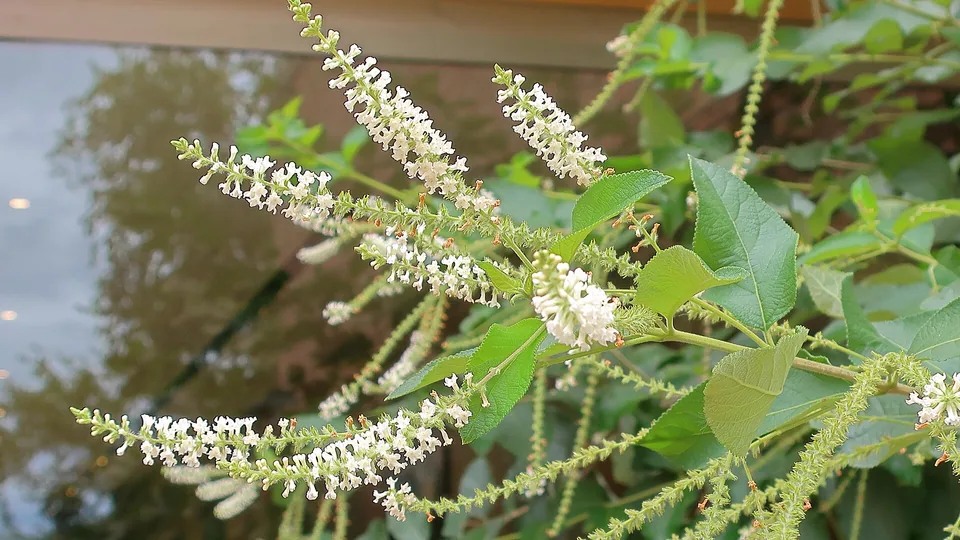


How to Grow and Care for Sweet Almond Bush
Aloysia virgata
Written by Emilio Marruso · last checked
At a glance
This easygoing plant thrives in full sun to part shade and can grow 5 to 15 feet tall. Give it a decent amount of water for its first couple of years so it flowers well; once established, it is highly drought tolerant and happy with one or two waterings a week. It even grows in containers, and you prune it simply between bloom cycles.
- Sun
Full sun to part shade
What the sources say (2)
- Water
Water well its first couple of years; once settled, 1–2 waterings a week is plenty
What the sources say (3)
Watering: Highly drought tolerant once established; does well with summer rainfall or 1-2 waterings a week
The are highly drought tolerant plants, and do well with summer rainfall or 1-2x weekly waterings.
— Aromatic Sweet Almond Bush - UF/IFAS Extension Lake County [2] Watering notes: Needs a decent amount of water in the first couple of years after planting; without enough water it does not flower and the leaf edges curl. Root rot can occur in too wet soils
requires a decent amount of water in the first couple years after planting. Without sufficient water, you will notice it doesn’t produce flowers and the leaves will start to curl around the edges.
— Aromatic Sweet Almond Bush - UF/IFAS Extension Lake County [2] Root rot can occur in too wet soils.
— Aloysia virgata (Sweet Almond Bush) | North Carolina Extension Gardener Plant Toolbox [1] - Cold
Survives winters down to 10 °F (−12.2 °C)
Hardy in cold winters · USDA 8a · RHS H5 · Z8
What the sources say (2)
Hardiness, coldest zone: 8a [winter low −12.2 to −9.4 °C (10 to 15 °F)]
USDA Plant Hardiness Zone: 8a, 8b, 9a, 9b, 10a, 10b, 11a, 11b
— Aloysia virgata (Sweet Almond Bush) | North Carolina Extension Gardener Plant Toolbox [1] Hardiness, warmest zone: 11b [winter low 7.2 to 10 °C (45 to 50 °F)]
USDA Plant Hardiness Zone: 8a, 8b, 9a, 9b, 10a, 10b, 11a, 11b
— Aloysia virgata (Sweet Almond Bush) | North Carolina Extension Gardener Plant Toolbox [1] - Pruning
Prune between bloom cycles
What the sources say (1)
Pruning: Between bloom cycles
pruning the shrub between bloom cycles is recommended for denser growth to overcome a leggy habit
— Fact sheet: Sweet Almond Bush - UF/IFAS Extension Nassau County [3] - Pests
Whiteflies, spider mites and aphids; soil that stays too wet rots the roots
What the sources say (4)
Pests: whitefly, spider mite, aphid
Those brought inside are susseptable to white fly, spider mite, and aphid infestations.
— Aloysia virgata (Sweet Almond Bush) | North Carolina Extension Gardener Plant Toolbox [1] Diseases: root rot
Root rot can occur in too wet soils.
— Aloysia virgata (Sweet Almond Bush) | North Carolina Extension Gardener Plant Toolbox [1] Watering notes: Needs a decent amount of water in the first couple of years after planting; without enough water it does not flower and the leaf edges curl. Root rot can occur in too wet soils
requires a decent amount of water in the first couple years after planting. Without sufficient water, you will notice it doesn’t produce flowers and the leaves will start to curl around the edges.
— Aromatic Sweet Almond Bush - UF/IFAS Extension Lake County [2] Root rot can occur in too wet soils.
— Aloysia virgata (Sweet Almond Bush) | North Carolina Extension Gardener Plant Toolbox [1] - Size
5 to 15 ft tall and 3 to 8 ft wide
What the sources say (2)
Mature height: 152.4-457.2 cm (5-15 ft)
Height: 5 ft. 0 in. - 15 ft. 0 in. Width: 3 ft. 0 in. - 8 ft. 0 in.
— Aloysia virgata (Sweet Almond Bush) | North Carolina Extension Gardener Plant Toolbox [1] Mature width: 91.44-243.84 cm (3-8 ft)
Height: 5 ft. 0 in. - 15 ft. 0 in. Width: 3 ft. 0 in. - 8 ft. 0 in.
— Aloysia virgata (Sweet Almond Bush) | North Carolina Extension Gardener Plant Toolbox [1] - Propagation
Propagate by layering or stem cuttings
What the sources say (1)
Propagation: Layering; stem cutting
Recommended Propagation Strategy: Layering Stem Cutting
— Aloysia virgata (Sweet Almond Bush) | North Carolina Extension Gardener Plant Toolbox [1] - Containers
Grows in containers too
What the sources say (1)
In containers: Yes
Use in containers, borders or as a specimen in pollinator, night and cottage gardens.
— Aloysia virgata (Sweet Almond Bush) | North Carolina Extension Gardener Plant Toolbox [1]
Overview
Sweet almond bush is a fast-growing woody shrub or small tree grown for its fragrant white flowers. [1] It prefers average to dry, well-drained soil in full sun and tolerates some drought. [1]
Sweet Almond Bush care
How to water Sweet Almond Bush
Watering
Highly drought tolerant once established; does well with summer rainfall or 1-2 waterings a week
What the sources say (1)
The are highly drought tolerant plants, and do well with summer rainfall or 1-2x weekly waterings.Watering notes
Needs a decent amount of water in the first couple of years after planting; without enough water it does not flower and the leaf edges curl. Root rot can occur in too wet soils
What the sources say (2)
requires a decent amount of water in the first couple years after planting. Without sufficient water, you will notice it doesn’t produce flowers and the leaves will start to curl around the edges.Root rot can occur in too wet soils.How much light Sweet Almond Bush needs
How much cold Sweet Almond Bush can take
Hardiness, coldest zone
8a [winter low −12.2 to −9.4 °C (10 to 15 °F)]
What the sources say (1)
USDA Plant Hardiness Zone:
8a, 8b, 9a, 9b, 10a, 10b, 11a, 11bHardiness, warmest zone
11b [winter low 7.2 to 10 °C (45 to 50 °F)]
What the sources say (1)
USDA Plant Hardiness Zone:
8a, 8b, 9a, 9b, 10a, 10b, 11a, 11bWhere to grow Sweet Almond Bush
Yes
What the sources say (1)
Use in containers, borders or as a specimen in pollinator, night and cottage gardens.How to propagate Sweet Almond Bush
Layering; stem cutting
What the sources say (1)
Recommended Propagation Strategy:
Layering
Stem CuttingHow to grow Sweet Almond Bush
The plant
Family
Verbenaceae
What the sources say (1)
Sweet almond bush is a fast-growing woody large shrub or small tree in the verbena family (Verbenaceae) native to South America.Mature height
152.4-457.2 cm (5-15 ft)
What the sources say (1)
Height: 5 ft. 0 in. - 15 ft. 0 in. Width: 3 ft. 0 in. - 8 ft. 0 in.Mature width
91.44-243.84 cm (3-8 ft)
What the sources say (1)
Height: 5 ft. 0 in. - 15 ft. 0 in. Width: 3 ft. 0 in. - 8 ft. 0 in.Pests and diseases
Pests
whitefly, spider mite, aphid
What the sources say (1)
Those brought inside are susseptable to white fly, spider mite, and aphid infestations.Diseases
root rot
What the sources say (1)
Root rot can occur in too wet soils.Remedies
Each remedy shows what official sources say about it; traditional remedies without an official source are marked as such. Harmful ones are listed so you know to avoid them.
Treating the plant
spider mites
hosing with water Partly works
How: Address infestations with a strong spray of water from the hose; on smaller shrubs apply a forceful stream of water to dislodge mites.
Address infestations with a strong spray of water from the hose and applications of neem oil as needed.
— gardenerspath.com [4] What the evidence says On smaller trees and shrubs it may be possible to reduce light mite populations with periodic "hosings." Use the garden hose to apply a forceful stream of water to dislodge mites from an infested plant.
— yardandgarden.extension.iastate.edu [5] neem oil Partly works
Despite these being biological pesticides, it is important to read the directions on the label and wear safety equipment.
— extension.illinois.edu [7] How: Apply neem oil as needed after a strong spray of water.
Address infestations with a strong spray of water from the hose and applications of neem oil as needed.
— gardenerspath.com [4] What the evidence says However, neem oil is not effective against every insect and disease, and often must be frequently reapplied to reach the desired outcome.
— extension.unh.edu [6] insecticidal soap Works
Soap sprays have no residual activity and only control mites and insects that are contacted directly. Thorough spraying is important for control.
— yardandgarden.extension.iastate.edu [5] For example, spraying home remedies that contain dish detergent on plants on a sunny day can injure the plant, essentially burning it.
— extension.psu.edu [9] How: Mix 5 tablespoons of liquid dishwashing detergent in 1 gallon of water; soap sprays only control mites and insects that are contacted directly, so spray thoroughly.
To make your own insecticidal soap spray solution, mix 5 tablespoons of liquid dishwashing detergent in 1 gallon of water.
— yardandgarden.extension.iastate.edu [5] What the evidence says For example, insecticidal soap is a safe, effective organic insecticide with minimal environmental impact.
— extension.psu.edu [8]
Calendar
Pruning
Between bloom cycles
What the sources say (1)
pruning the shrub between bloom cycles is recommended for denser growth to overcome a leggy habitMonths as given by the sources, which are mostly from the United States (northern hemisphere). In the southern hemisphere they shift by about six months.
Indicative values
Values from a secondary source, not checked word for word like the rest of this page. Use them as a starting point.
- Life cycle
- Herbaceous PerennialIndicative value, adapt it to your climate · Secondary source
- Hours of sun
- 6-8 hoursIndicative value, adapt it to your climate · Secondary source
- Drought tolerant
- yesIndicative value, adapt it to your climate · Secondary source
- Soil pH
- 6-7.5Indicative value, adapt it to your climate · Secondary source
- Care level
- MediumIndicative value, adapt it to your climate · Secondary source
- Growth rate
- LowIndicative value, adapt it to your climate · Secondary source
Similar plants
- Lemon Verbena Aloysia citriodora
- Blue Vervain Verbena hastata
- Frogfruit Phyla nodiflora
- Golden Dewdrop Duranta erecta
- Hoary Vervain Verbena stricta
- Lantana Lantana camara
- Lantana Lavender Popcorn Lantana trifolia
- Moss Verbena Verbena aristigera
Sources
Every value above is quoted from these documents. Links lead to the original publisher.
- Aloysia virgata (Sweet Almond Bush) | North Carolina Extension Gardener Plant Toolbox · plants.ces.ncsu.edu, consulted
- Aromatic Sweet Almond Bush - UF/IFAS Extension Lake County · blogs.ifas.ufl.edu, consulted
- Fact sheet: Sweet Almond Bush - UF/IFAS Extension Nassau County · blogs.ifas.ufl.edu, consulted
- gardenerspath.com · gardenerspath.com
- yardandgarden.extension.iastate.edu · yardandgarden.extension.iastate.edu
- extension.unh.edu · extension.unh.edu
- extension.illinois.edu · extension.illinois.edu
- extension.psu.edu · extension.psu.edu
- extension.psu.edu · extension.psu.edu
Written by Emilio Marruso · last checked