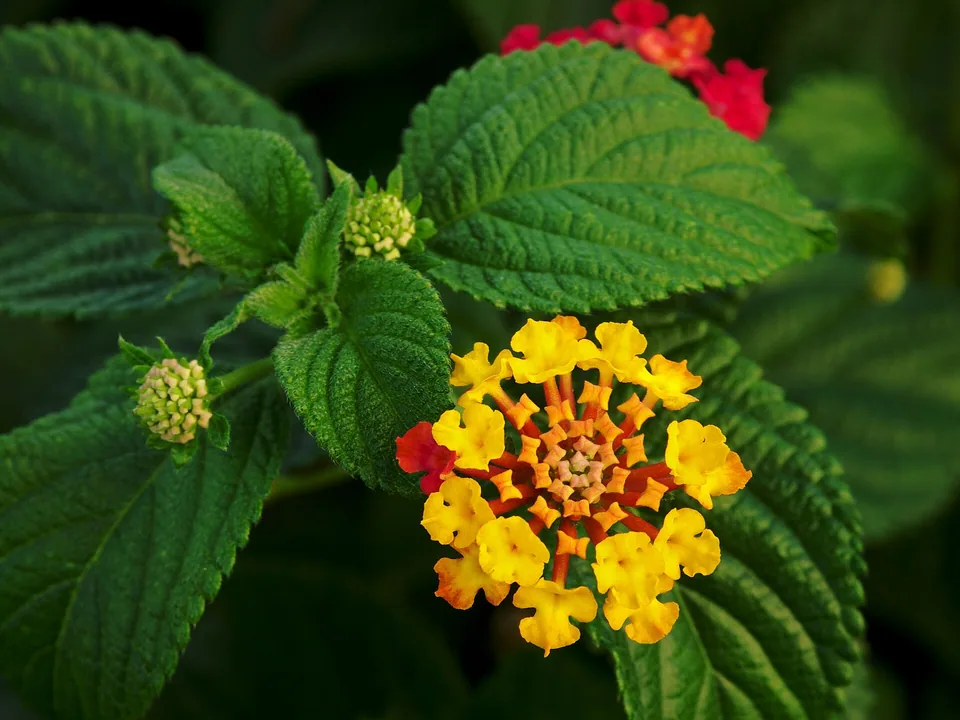


Cómo cultivar y cuidar Lantana
Lantana camara
Escrito por Emilio Marruso · última revisión
Tóxica para: Gatos, Perros, Ganado, Animales, Personas · Por qué
De un vistazo
La lantana es un pequeño arbusto leñoso que adora el sol pleno y pide poco: una vez arraigada, aguanta bien la sequía. Sus flores atraen muchísimo a las mariposas y los pájaros se comen sus bayas. Cultívala en el jardín o en maceta, plántala en primavera cuando ya no haya heladas y abónala con moderación para que florezca más.
- Sol
Sol pleno
Qué dicen las fuentes (2)
Luz: Pleno sol
Light: Full sun (6 or more hours of direct sunlight a day)
— Lantana camara (Common Lantana, Lantana, Shrub Verbena) | North Carolina Extension Gardener Plant Toolbox [1] Grow lantana in full sun. Lantana is tolerant of all soil types provided they are well drained and slightly acid.
— Lantana | Home & Garden Information Center [7] - Riego
En floración, riega a fondo una vez por semana si llueven menos de 2,5 cm; el exceso de agua reduce las flores
Qué dicen las fuentes (5)
Riego: Las plantas establecidas toleran la sequía; durante el período de floración da un riego profundo una vez por semana si llueve menos de 1 pulgada [2,5 cm] esa semana
During their blooming period, give them a thorough watering once a week if they do not receive an inch of rain that week. Avoid overhead watering.
— Lantana | Home & Garden Information Center [7] It prefers full sun in moist, well-drained soil but will tolerate poor soil and drought.
— Lantana camara (Common Lantana, Lantana, Shrub Verbena) | North Carolina Extension Gardener Plant Toolbox [1] Notas sobre el riego: Mantén las lantanas recién plantadas húmedas durante las primeras semanas hasta que las raíces se extiendan; demasiado seco por un período prolongado reduce el rendimiento, la floración y la tasa de crecimiento; demasiada agua reduce la floración; evita el riego por aspersión frecuente
Newly planted lantanas will need to be kept moist for the first few weeks until the roots have spread into the surrounding soil.
— Lantana | Home & Garden Information Center [7] While established lantanas are drought tolerant, performance, bloom, and growth rate will be reduced if they are too dry for a long period.
— Lantana | Home & Garden Information Center [7] Too much water and fertilizer will reduce bloom. In containers, fertilize once a month during the growing season.
— Lantana – Wisconsin Horticulture [5] - Frío
Aguanta inviernos de hasta −17,8 °C (0 °F)
Rústica en inviernos muy fríos · USDA 7a · RHS H6 · Z7
Qué dicen las fuentes (2)
Rusticidad, zona más fría: 7a [mínima invernal de −17,8 a −15 °C (de 0 a 5 °F)]
USDA Plant Hardiness Zone: 7a, 7b, 8a, 8b, 9a, 9b, 10a, 10b, 11a, 11b
— Lantana camara (Common Lantana, Lantana, Shrub Verbena) | North Carolina Extension Gardener Plant Toolbox [1] Rusticidad, zona más cálida: 11b [mínima invernal de 7,2 a 10 °C (de 45 a 50 °F)]
USDA Plant Hardiness Zone: 7a, 7b, 8a, 8b, 9a, 9b, 10a, 10b, 11a, 11b
— Lantana camara (Common Lantana, Lantana, Shrub Verbena) | North Carolina Extension Gardener Plant Toolbox [1] - Suelo
Suelo de ligeramente ácido a alcalino, pH 6,0–8,0
Qué dicen las fuentes (2)
pH del suelo, mínimo: 6.0
Sand Shallow Rocky Soil pH: Neutral (6.0-8.0) Soil Drainage: Good Drainage
— Lantana camara (Common Lantana, Lantana, Shrub Verbena) | North Carolina Extension Gardener Plant Toolbox [1] pH del suelo, máximo: 8.0
Sand Shallow Rocky Soil pH: Neutral (6.0-8.0) Soil Drainage: Good Drainage
— Lantana camara (Common Lantana, Lantana, Shrub Verbena) | North Carolina Extension Gardener Plant Toolbox [1] - Plantación
En primavera, al menos 2 semanas después de que pase el riesgo de heladas
Qué dicen las fuentes (1)
Plantación: Primavera, al menos 2 semanas después de que pase todo peligro de heladas
Plant lantana in spring, at least 2 weeks after all danger of frost is past.
— Lantana | Home & Garden Information Center [7] - Abonado
Abonado ligero en primavera; el exceso reduce la floración y favorece las enfermedades
Qué dicen las fuentes (4)
Cuándo: Una alimentación ligera en primavera; plantas vigorosas nuevamente a mediados del verano si no hay estrés hídrico, y después de podar
A light fertilization in spring will usually be sufficient. Vigorously growing plants may be fertilized again in mid summer, provided plants are not water stressed.
— Lantana | Home & Garden Information Center [7] Water and lightly fertilize newly cut back plants and they will return to bloom quickly.
— Lantana | Home & Garden Information Center [7] Evitar: Exceso de fertilizante (y exceso de agua): reduce la floración y hace que las plantas sean más propensas a enfermedades
Excessive fertilizer may reduce flowering and make plants more susceptible to disease.
— Lantana | Home & Garden Information Center [7] Too much water and fertilizer will reduce bloom.
— Lantana – Wisconsin Horticulture [5] - Poda
Poda fuerte en primavera (marzo) y recorta las puntas en verano; no la podes fuerte en otoño
Qué dicen las fuentes (3)
Poda: Poda drástica de las lantanas perennes en primavera (marzo); recorte ligero del crecimiento de las puntas periódicamente durante el verano; evita la poda drástica en otoño.
Prune perennial lantanas back hard in spring (March) to remove old growth and prevent woodiness.
— Lantana | Home & Garden Information Center [7] Prune lantana periodically during summer by lightly shearing the tip growth to encourage repeat blooming.
— Lantana | Home & Garden Information Center [7] Avoid hard pruning in fall as this can cause reduced cold hardiness.
— Lantana | Home & Garden Information Center [7] - Plagas
Mosca blanca, araña roja y chinches de encaje; oídio a la sombra y podredumbre de raíz con exceso de agua
Qué dicen las fuentes (4)
Plagas: moscas blancas, arañitas rojas, tíngidos de la lantana, orugas
Whiteflies and spider mites can affect plants kept over the winter.
— Lantana camara (Common Lantana, Lantana, Shrub Verbena) | North Carolina Extension Gardener Plant Toolbox [1] Lantana lace bugs cause leaves to appear grayish and stippled or to brown and drop. Caterpillar damage also can occur. Mites can be a problem, especially if plants are very dry.
— Lantana | Home & Garden Information Center [7] Enfermedades: mildiu polvoriento, moho hollín, pudrición de raíces
Lantana is susceptible to powdery mildew if grown in shade. Sooty mold, causing a blackish discoloration on the leaves is usually caused by infestation by whiteflies.
— Lantana | Home & Garden Information Center [7] Root rot can be a problem if soil is poorly drained or plants are watered too frequently.
— Lantana | Home & Garden Information Center [7] - Atención
Puede extenderse de forma agresiva: arráncala antes de que forme semillas
- Tamaño
De 30 cm a 1,8 m de alto y de 0,9 a 1,5 m de ancho
Qué dicen las fuentes (2)
Altura adulta: 30-183 cm (1 a 6 pies)
Height: 1 ft. 0 in. - 6 ft. 0 in. Width: 3 ft. 0 in. - 5 ft. 0 in.
— Lantana camara (Common Lantana, Lantana, Shrub Verbena) | North Carolina Extension Gardener Plant Toolbox [1] Anchura adulta: 91-152 cm (3 a 5 pies)
Height: 1 ft. 0 in. - 6 ft. 0 in. Width: 3 ft. 0 in. - 5 ft. 0 in.
— Lantana camara (Common Lantana, Lantana, Shrub Verbena) | North Carolina Extension Gardener Plant Toolbox [1] - Multiplicación
Por semilla, esquejes de tallo (leñosos en otoño) o división
Qué dicen las fuentes (2)
Propagación: Semilla; esquejes de tallo (esquejes de madera dura en otoño); división
Recommended Propagation Strategy: Division Seed Stem Cutting Country Or Region Of Origin:
— Lantana camara (Common Lantana, Lantana, Shrub Verbena) | North Carolina Extension Gardener Plant Toolbox [1] take hard wood cuttings in the fall to produce young plants for the following spring.
— Lantana – Wisconsin Horticulture [5] - Maceta
Crece también en maceta y en interior
Qué dicen las fuentes (4)
En maceta: Sí
Lantana can be used in mixed beds or borders and is excellent in containers and hanging baskets
— Lantana – Wisconsin Horticulture [5] Use lantana as annuals or perennials in flowerbeds or containers.
— Lantana | Home & Garden Information Center [7] En interior: Sí
It can also be grown as a houseplant when provided with sufficient light.
— Lantana – Wisconsin Horticulture [5] Lantana is often used as a houseplant, in hanging baskets, or in the border as a cultivated woody shrub or groundcover.
— Lantana camara (Common Lantana, Lantana, Shrub Verbena) | North Carolina Extension Gardener Plant Toolbox [1] - Seguridad
Tóxica: las bayas verdes son venenosas y las hojas pueden irritar la piel; también es tóxica para el ganado
Resumen
Lantana camara es un arbusto pequeño de hoja ancha y perenne, anual o perenne, nativo de las Indias Occidentales y México hasta la América Tropical. [1] Prefiere pleno sol en suelo húmedo y bien drenado, pero tolera suelos pobres y sequía. [1] Se describe como tóxico para el ganado y se considera una maleza invasora en varias regiones. [1][5]
Citado en inglés, como en la fuente.
Cuidados
Las medidas entre corchetes son nuestra conversión al otro sistema de unidades; el texto citado no cambia.
Riego
Riego
Las plantas establecidas toleran la sequía; durante el período de floración da un riego profundo una vez por semana si llueve menos de 1 pulgada [2,5 cm] esa semana
Qué dicen las fuentes (2)
During their blooming period, give them a thorough watering once a week if they do not receive an inch of rain that week. Avoid overhead watering.It prefers full sun in moist, well-drained soil but will tolerate poor soil and drought.Notas sobre el riego
Mantén las lantanas recién plantadas húmedas durante las primeras semanas hasta que las raíces se extiendan; demasiado seco por un período prolongado reduce el rendimiento, la floración y la tasa de crecimiento; demasiada agua reduce la floración; evita el riego por aspersión frecuente
Qué dicen las fuentes (3)
Newly planted lantanas will need to be kept moist for the first few weeks until the roots have spread into the surrounding soil.While established lantanas are drought tolerant, performance, bloom, and growth rate will be reduced if they are too dry for a long period.Too much water and fertilizer will reduce bloom. In containers, fertilize once a month during the growing season.Luz
Pleno sol
Qué dicen las fuentes (2)
Light:
Full sun (6 or more hours of direct sunlight a day)Grow lantana in full sun. Lantana is tolerant of all soil types provided they are well drained and slightly acid.Clima y frío
Rusticidad, zona más fría
7a [mínima invernal de −17,8 a −15 °C (de 0 a 5 °F)]
Qué dicen las fuentes (1)
USDA Plant Hardiness Zone:
7a, 7b, 8a, 8b, 9a, 9b, 10a, 10b, 11a, 11bRusticidad, zona más cálida
11b [mínima invernal de 7,2 a 10 °C (de 45 a 50 °F)]
Qué dicen las fuentes (1)
USDA Plant Hardiness Zone:
7a, 7b, 8a, 8b, 9a, 9b, 10a, 10b, 11a, 11bSuelo
pH del suelo, mínimo
6.0
Qué dicen las fuentes (1)
Sand
Shallow Rocky
Soil pH:
Neutral (6.0-8.0)
Soil Drainage:
Good DrainagepH del suelo, máximo
8.0
Qué dicen las fuentes (1)
Sand
Shallow Rocky
Soil pH:
Neutral (6.0-8.0)
Soil Drainage:
Good DrainageDónde cultivarla
En interior
Sí
Qué dicen las fuentes (2)
It can also be grown as a houseplant when provided with sufficient light.Lantana is often used as a houseplant, in hanging baskets, or in the border as a cultivated woody shrub or groundcover.Propagación
Semilla; esquejes de tallo (esquejes de madera dura en otoño); división
Qué dicen las fuentes (2)
Recommended Propagation Strategy:
Division
Seed
Stem Cutting
Country Or Region Of Origin:take hard wood cuttings in the fall to produce young plants for the following spring.Cultivo
La planta
Ciclo de vida
anual o perenne (arbusto pequeño siempreverde leñoso)
Qué dicen las fuentes (1)
Lantana is an annual or perennial, small, broadleaf evergreen shrub in the verbena family (Verbenaceae), native to the West Indies and Mexico to Tropical America.Familia
Verbenaceae
Qué dicen las fuentes (1)
Lantana is an annual or perennial, small, broadleaf evergreen shrub in the verbena family (Verbenaceae), native to the West Indies and Mexico to Tropical America.Altura adulta
30-183 cm (1 a 6 pies)
Qué dicen las fuentes (1)
Height: 1 ft. 0 in. - 6 ft. 0 in.
Width: 3 ft. 0 in. - 5 ft. 0 in.Anchura adulta
91-152 cm (3 a 5 pies)
Qué dicen las fuentes (1)
Height: 1 ft. 0 in. - 6 ft. 0 in.
Width: 3 ft. 0 in. - 5 ft. 0 in.Plagas y enfermedades
Plagas
moscas blancas, arañitas rojas, tíngidos de la lantana, orugas
Qué dicen las fuentes (2)
Whiteflies and spider mites can affect plants kept over the winter.Lantana lace bugs cause leaves to appear grayish and stippled or to brown and drop. Caterpillar damage also can occur. Mites can be a problem, especially if plants are very dry.Enfermedades
mildiu polvoriento, moho hollín, pudrición de raíces
Qué dicen las fuentes (2)
Lantana is susceptible to powdery mildew if grown in shade. Sooty mold, causing a blackish discoloration on the leaves is usually caused by infestation by whiteflies.Root rot can be a problem if soil is poorly drained or plants are watered too frequently.Abonado
Cuándo
Una alimentación ligera en primavera; plantas vigorosas nuevamente a mediados del verano si no hay estrés hídrico, y después de podar
Qué dicen las fuentes (2)
A light fertilization in spring will usually be sufficient. Vigorously growing plants may be fertilized again in mid summer, provided plants are not water stressed.Water and lightly fertilize newly cut back plants and they will return to bloom quickly.Frecuencia
Las fuentes dan valores distintos según la región, la zona o las condiciones de cultivo.
Lo que dice cada fuente
en contenedores: Una vez al mes durante la temporada de crecimiento
en el suelo, cultivada como anual: No se necesita fertilización
Evitar
Exceso de fertilizante (y exceso de agua): reduce la floración y hace que las plantas sean más propensas a enfermedades
Signos de exceso
Floración deficiente y mayor susceptibilidad a enfermedades
Problemas
Moscas blancas y arañitas rojas
Síntoma: Afectan a las plantas que se mantienen durante el invierno
Qué dicen las fuentes (1)
Whiteflies and spider mites can affect plants kept over the winter. In certain parts of the world with more tropical climates, lantana is a weedy pest.
— Lantana camara (Common Lantana, Lantana, Shrub Verbena) | North Carolina Extension Gardener Plant Toolbox [1] Mildiu polvoriento y fumagina
Síntoma: La fumagina causa una decoloración negruzca en las hojas y generalmente es causada por la infestación de moscas blancas; el mildiu polvoriento ocurre si se cultiva a la sombra
Qué dicen las fuentes (1)
Lantana is susceptible to powdery mildew if grown in shade. Sooty mold, causing a blackish discoloration on the leaves is usually caused by infestation by whiteflies.
— Lantana | Home & Garden Information Center [7] Podredumbre de la raíz
Síntoma: Ocurre si el suelo está mal drenado o las plantas se riegan con demasiada frecuencia
Qué hacer: Evita el riego por aspersión.
Qué dicen las fuentes (2)
Root rot can be a problem if soil is poorly drained or plants are watered too frequently.
— Lantana | Home & Garden Information Center [7] Avoid overhead watering. Overly frequent overhead watering can make plant more susceptible to diseases and root rot.
— Lantana | Home & Garden Information Center [7] Tíngidos de la lantana y orugas
Síntoma: Las hojas aparecen grisáceas y picadas o marrones y se caen
Qué dicen las fuentes (1)
Lantana lace bugs cause leaves to appear grayish and stippled or to brown and drop. Caterpillar damage also can occur.
— Lantana | Home & Garden Information Center [7] Floración deficiente
Síntoma: Floración deficiente, causada por demasiada sombra o fertilización excesiva
Qué hacer: Poda las plantas para estimular el crecimiento y la floración.
Qué dicen las fuentes (1)
Poor blooming is usually caused by too much shade or excessive fertilization. Plants that set berries may decline in bloom. Trim plants back to encourage new growth and flowering.
— Lantana | Home & Garden Information Center [7] Propagación como maleza
Síntoma: Se extiende agresivamente por todo el paisaje.
Qué hacer: Eliminación manual y desenterrar las plantas antes de que produzcan semillas.
Qué dicen las fuentes (1)
Hand removal of invasive Lantanas is easy to do. Digging up and removing parts of the plant will help reduce its spread
— Invasion of the Landscape Snatchers: Lantana (Lantana camara) - [6]
Remedios
Cada remedio indica qué dicen las fuentes oficiales; los remedios tradicionales sin fuente oficial aparecen marcados. Los perjudiciales están para que sepas evitarlos.
Cuidar la planta
tíngidos
chorro fuerte de agua de una manguera Funciona en parte
Cómo: Rocía el envés de las hojas con un chorro fuerte de agua de una manguera de jardín, desalojando los insectos adultos.
You can also try mechanical control by spraying the underside of leaves with a hard jet of water from a garden hose, dislodging adult bugs and possibly killing the immature ones.
— lsuagcenter.com [9] Qué dicen las pruebas You can also try mechanical control by spraying the underside of leaves with a hard jet of water from a garden hose, dislodging adult bugs and possibly killing the immature ones.
— lsuagcenter.com [9] rociado con jabón para platos Funciona
However, if your dish washing detergent is labeled for repelling, mitigating or killing germs (or anything else), it is a pesticide that can only be used following the directions on the label.
— content.ces.ncsu.edu [10] Cómo: Mezcla jabón líquido para lavar platos a 5 cucharadas por galón de agua (aproximadamente 2 cucharaditas por pinta) y rocía.
Old fashioned home remedies include [nome commerciale] liquid dish washing detergent (5 tablespoons per gallon of water or about 2 teaspoons per pint).This should work as well as purchasing an insecticidal soap.
— content.ces.ncsu.edu [10] Qué dicen las pruebas Old fashioned home remedies include [nome commerciale] liquid dish washing detergent (5 tablespoons per gallon of water or about 2 teaspoons per pint).This should work as well as purchasing an insecticidal soap.
— content.ces.ncsu.edu [10] spray de aceite de neem Funciona
Neem does cause the plant to burn if applied incorrectly.
— bugwiz.com [12] Cómo: Diluye el aceite de neem según las indicaciones y rocía cuando el sol se haya puesto; riega la planta después de hacerlo.
Like most other pests on this page, neem oil works against lace bugs. Dilute it as directed and spray when the sun is down. Water off your plant when done.
— bugwiz.com [12] Qué dicen las pruebas Insecticidal soap, horticultural oil, neem oil and most chemical insecticides provide good control.
— lsuagcenter.com [9]
moscas blancas
spray de agua jabonosa No verificado
Remedio tradicional, no verificado por una fuente oficial.
Be aware that the products suggested to be combined in these home remedies may include additives that could harm the environment.
— extension.psu.edu [11] Cómo: Diluye 1 cucharada de jabón para platos en un cuarto de galón de agua y rocía las hojas de lantana regularmente.
mildiu polvoriento
aceite de neem en las hojas Funciona en parte
Neem does cause the plant to burn if applied incorrectly.
— bugwiz.com [12] Cómo: Enjuaga las plantas apenas veas los síntomas y luego aplica aceite de neem en las hojas cada pocas semanas.
You can control powdery mildew by rinsing off the plants as soon as you see the symptoms. Then you should apply neem oil to the leaves every few weeks.
— gardeningknowhow.com [13] Qué dicen las pruebas However, neem oil is not effective against every insect and disease, and often must be frequently reapplied to reach the desired outcome.
— extension.unh.edu [14]
ácaros araña
spray de jabón para platos No verificado
Remedio tradicional, no verificado por una fuente oficial.
Be aware that the products suggested to be combined in these home remedies may include additives that could harm the environment.
— extension.psu.edu [11] Cómo: Rocía con jabón para platos hecho en casa.
Cómo eliminarla
propagación como maleza
arrancado a mano Funciona en parte
Just keep in mind that contact with the leaves and stems can cause skin irritation and a rash. Use gloves and wear long sleeves before tackling lantana.
— gardeningknowhow.com [15] Cómo: En el jardín casero, simplemente arranca la lantana; usa guantes y mangas largas.
In the home garden, simply pulling out lantana can be adequate for controlling its spread.
— gardeningknowhow.com [15] Qué dicen las pruebas Hand removal of invasive Lantanas is easy to do. Digging up and removing parts of the plant will help reduce its spread – especially if it is done before the plant creates seeds.
— Invasion of the Landscape Snatchers: Lantana (Lantana camara) - [6] Excava las raíces Funciona en parte
Cómo: Excava alrededor del sistema de raíces con una pala o un tenedor de jardín y levanta las raíces sin dejar fragmentos; la lantana puede regenerarse a partir de restos de raíces.
Remove the Roots: Using a spade or garden fork, dig around the root system. Carefully lift the roots, ensuring no fragments are left behind, as lantana can regenerate from root remnants.
— gardeningslash.com [16] Qué dicen las pruebas Hand removal of invasive Lantanas is easy to do. Digging up and removing parts of the plant will help reduce its spread – especially if it is done before the plant creates seeds.
— Invasion of the Landscape Snatchers: Lantana (Lantana camara) - [6] Quita las cabezas de las flores y las semillas. Funciona en parte
Cómo: Quita las cabezas de las flores antes de que se formen las semillas.
Removing flower heads before seeds form can prevent some of the spread of lantana, for instance.
— gardeningknowhow.com [15] Qué dicen las pruebas Prevent seed production from any Lantana camara within the landscape. Many non-sterile camaras develop seeds shortly after flowering. Collection and removal of seeds help reduce the spread of the landscape invasive.
— Invasion of the Landscape Snatchers: Lantana (Lantana camara) - [6] mantillo orgánico grueso No verificado
Remedio tradicional, no verificado por una fuente oficial.
Cómo: Aplica una capa gruesa de mantillo orgánico, como astillas de madera o paja, alrededor de la zona afectada para bloquear la luz solar.
solarización con plástico transparente No verificado
Remedio tradicional, no verificado por una fuente oficial.
Cómo: Cubre el suelo con una lámina de plástico transparente durante 4-6 semanas en la temporada calurosa.
rociado con vinagre y jabón Funciona en parte
Vinegar contains acetic acid that in concentrations over 11 percent can cause burns if it gets on your skin and permanent corneal injury if it comes in contact with your eyes.
— extension.illinois.edu [18] Cómo: Combina partes iguales de vinagre blanco y agua con unas gotas de jabón para platos y rocía directamente sobre el follaje de la lantana.
Combine equal parts white vinegar and water with a few drops of dish soap, and spray directly onto lantana foliage. Be cautious—this mixture can harm other plants, so apply it selectively.
— gardeningslash.com [16] Qué dicen las pruebas Vinegar can treat and kill weeds, but it must be herbicidal vinegar or acetic acid, not household vinegar
— extension.illinois.edu [17]
Venenosa para los animales
Según la fuente, citada textualmente. No es un consejo médico ni veterinario: si una persona o un animal pudo haber ingerido esta planta, contacta con un centro de toxicología o con un veterinario.
Animales
It is toxic to livestock such as cattle, sheep, horses, and goats.
[1]- Partes venenosas
Causes Contact Dermatitis: Yes Poison Part: Flowers Fruits Leaves Sap/Juice
[1]- Principio tóxico
Poison Toxic Principle: Pentacyclic triterpenoids, Triterpenes (lantadene A & B) Causes Contact Dermatitis: Yes
[1]- Síntomas
Eating the plant can lead to vomiting, diarrhea, dilated pupils, labored respiration, weakness, liver failure - more common in livestock; the leaves may cause dermatitis in sensitive individuals.
[1]- Gravedad
This plant has medium severity poison characteristics.
[1]
All parts of the plant are toxic and have poisoned children, pets and livestock.
[8]- Partes venenosas
All parts of the plant are toxic and have poisoned children, pets and livestock.
[8]
Problems: Poisonous to Humans Problem for Cats Problem for Children Problem for Dogs Problem for Horses
[1]- Partes venenosas
Causes Contact Dermatitis: Yes Poison Part: Flowers Fruits Leaves Sap/Juice
[1]- Principio tóxico
Poison Toxic Principle: Pentacyclic triterpenoids, Triterpenes (lantadene A & B) Causes Contact Dermatitis: Yes
[1]- Síntomas
Eating the plant can lead to vomiting, diarrhea, dilated pupils, labored respiration, weakness, liver failure - more common in livestock; the leaves may cause dermatitis in sensitive individuals.
[1]- Gravedad
This plant has medium severity poison characteristics.
[1]
Personas
Eating the plant can lead to vomiting, diarrhea, dilated pupils, labored respiration, weakness, liver failure - more common in livestock; the leaves may cause dermatitis in sensitive individuals.
[1]- Partes venenosas
Causes Contact Dermatitis: Yes Poison Part: Flowers Fruits Leaves Sap/Juice
[1]- Principio tóxico
Poison Toxic Principle: Pentacyclic triterpenoids, Triterpenes (lantadene A & B) Causes Contact Dermatitis: Yes
[1]- Síntomas
Eating the plant can lead to vomiting, diarrhea, dilated pupils, labored respiration, weakness, liver failure - more common in livestock; the leaves may cause dermatitis in sensitive individuals.
[1]- Gravedad
This plant has medium severity poison characteristics.
[1]
Leaves and unripe, green berries can cause minor skin irritation.
[1]The unripe berries are poisonous, and the leaves can cause contact dermatitis or minor skin irritation in some people.
[5]The fruit can be poisonous, especially if eaten in quantity. Fruiting can be avoided by growing sterile cultivars.
[7]- Partes venenosas
The fruit can be poisonous, especially if eaten in quantity.
[7]
Calendario
Plantación
Primavera, al menos 2 semanas después de que pase todo peligro de heladas
Qué dicen las fuentes (1)
Plant lantana in spring, at least 2 weeks after all danger of frost is past.Poda
Poda drástica de las lantanas perennes en primavera (marzo); recorte ligero del crecimiento de las puntas periódicamente durante el verano; evita la poda drástica en otoño.
Qué dicen las fuentes (3)
Prune perennial lantanas back hard in spring (March) to remove old growth and prevent woodiness.Prune lantana periodically during summer by lightly shearing the tip growth to encourage repeat blooming.Avoid hard pruning in fall as this can cause reduced cold hardiness.Meses tal como los dan las fuentes, en su mayoría de Estados Unidos (hemisferio norte). En el hemisferio sur se desplazan unos seis meses.
Respecto a las heladas
Estimación menos precisa: no hay ninguna estación meteorológica a menos de 300 km.
Busca las fechas de heladas por código postal o ciudad
Plantación: 2 semanas después de la última helada
Plant lantana in spring, at least 2 weeks after all danger of frost is past.
— Lantana | Home & Garden Information Center [7]
Cuenta desde las fechas medias de las heladas de tu zona.
Comestibilidad
Según la fuente, citada textualmente. No comas una planta basándote solo en esta página: los errores de identificación pueden ser peligrosos.
Lantana flowers are very attractive to butterflies, berries are eaten by birds.
[1]
Valores orientativos
Valores de una fuente secundaria, no comprobados palabra por palabra como el resto de esta página. Úselos como punto de partida.
- Resiste la sequía
- SíValor orientativo, adáptalo a tu clima · Fuente secundaria
- Nivel de cuidado
- MedioValor orientativo, adáptalo a tu clima · Fuente secundaria
- Crecimiento
- AltaValor orientativo, adáptalo a tu clima · Fuente secundaria
Plantas similares
- Lantana Lavender Popcorn Lantana trifolia
- Trailing Lantana Lantana montevidensis
- Blue Vervain Verbena hastata
- Verbena lila Verbena brasiliensis
- Frogfruit Phyla nodiflora
- Golden Dewdrop Duranta erecta
- Hoary Vervain Verbena stricta
- Lemon Verbena Aloysia citriodora
Fuentes
Cada valor anterior se cita de estos documentos. Los enlaces llevan al editor original.
- Lantana camara (Common Lantana, Lantana, Shrub Verbena) | North Carolina Extension Gardener Plant Toolbox · plants.ces.ncsu.edu, consultado
- Common Lantana - Lantana camara | North Carolina Extension Gardener Plant Toolbox · plants.ces.ncsu.edu, consultado
- Lantana - Lantana camara | North Carolina Extension Gardener Plant Toolbox · plants.ces.ncsu.edu, consultado
- Shrub Verbena - Lantana camara | North Carolina Extension Gardener Plant Toolbox · plants.ces.ncsu.edu, consultado
- Lantana – Wisconsin Horticulture · hort.extension.wisc.edu, consultado
- Invasion of the Landscape Snatchers: Lantana (Lantana camara) - · blogs.ifas.ufl.edu, consultado
- Lantana | Home & Garden Information Center · hgic.clemson.edu, consultado
- Happy Halloweeding: Lantana - UF/IFAS Extension Marion County · blogs.ifas.ufl.edu, consultado
- lsuagcenter.com · lsuagcenter.com
- content.ces.ncsu.edu · content.ces.ncsu.edu
- extension.psu.edu · extension.psu.edu
- bugwiz.com · bugwiz.com
- gardeningknowhow.com · gardeningknowhow.com
- extension.unh.edu · extension.unh.edu
- gardeningknowhow.com · gardeningknowhow.com
- gardeningslash.com · gardeningslash.com
- extension.illinois.edu · extension.illinois.edu
- extension.illinois.edu · extension.illinois.edu
Escrito por Emilio Marruso · última revisión