
How to Grow and Care for Aloe vera
Aloe vera
Written by Emilio Marruso · last checked
Toxic to: Cats, Dogs, Horses, People · Why
At a glance
Aloe vera is a perennial that happily lives indoors or in a pot, and it asks for very little: it usually needs no fertilizer at all. Let the soil dry completely between waterings and never let it sit in water. Best of all, it makes little pups you can separate from the mother plant to start brand-new plants.
- Water
Let the soil dry completely between waterings; water less in winter and never let it sit in water
What the sources say (3)
Watering notes: Never let the plant sit in water; use pots with drainage holes; reduce watering in the dormant winter months; outdoors in Florida, water to establish then rainwater alone
If the plant sits in water, it be susceptible to root rot.
— Aloe Vera: Houseplant How-To [3] Since the plant goes dormant during the winter months, it is best to reduce watering.
— Aloe Vera: Houseplant How-To [3] Water to establish the plants, but from then on allow them to survive on rainwater alone.
— One of the most popular houseplants – aloe – easy-going growing! - UF/IFAS Extension Charlotte County [7] - Feeding
Usually needs no fertilizer
What the sources say (1)
How often: Usually not required to keep the plant healthy
No fertilizer is usually required to keep the plant healthy.
— Aloe Vera: Houseplant How-To [3] - Pests
Mealybugs, aphids and scale; too much water rots the roots and can kill it
What the sources say (4)
Pests: mealybugs, aphids, aloe scale, aloe mite
Mealybugs and aphids are insects that may affect the health of your aloe plant.
— Aloe vera (Aloe, Aloe Vera, Barbados Aloe, Medicinal Aloe, Medicine Plant, True Aloe) | North Carolina Extension Gardener Plant Toolbox [1] Mealybugs, aloe scale, and aloe mite may be a problem.
— Aloe Vera: Houseplant How-To [3] Diseases: leaf spot, aloe rust, sooty mold, root rot, fungal disease
Diseases include scale, leaf spot, aloe rust, and sooty mold. Overwatering should be avoided, it can lead to the roots rotting.
— Aloe vera (Aloe, Aloe Vera, Barbados Aloe, Medicinal Aloe, Medicine Plant, True Aloe) | North Carolina Extension Gardener Plant Toolbox [1] Aloe rust, root rot, and fungal disease may appear.
— Aloe Vera: Houseplant How-To [3] - Watch out
Move it into bright light little by little: a sudden change burns it
- Size
1 to 2.5 ft wide
What the sources say (1)
Mature width: 30-76 cm (1 ft to 2 ft 6 in)
Height: 1 ft. 0 in. - 2 ft. 0 in. Width: 1 ft. 0 in. - 2 ft. 6 in.
— Aloe vera (Aloe, Aloe Vera, Barbados Aloe, Medicinal Aloe, Medicine Plant, True Aloe) | North Carolina Extension Gardener Plant Toolbox [1] - Propagation
Separate the pups from the mother plant, or divide it
What the sources say (2)
Propagation: Division; offsets (pups) removed from the mother plant
It will grow 2 to 3 feet tall and spread by offsets. Propagation can be done by division.
— Aloe vera (Aloe, Aloe Vera, Barbados Aloe, Medicinal Aloe, Medicine Plant, True Aloe) | North Carolina Extension Gardener Plant Toolbox [1] you can divide the pups from the mother plant and repot them to share with friends.
— What Should I Know About Growing Aloe at Home? | Extension [5] - Containers
Grows well indoors and in pots with drainage holes
What the sources say (6)
In containers: Yes
can be grown for years in a pot; just be sure to let the soil dry between waterings.
— Aloe Vera – Gardening Solutions [8] The pot used should also have several drainage holes and clay is best.
— Aloe vera (Aloe, Aloe Vera, Barbados Aloe, Medicinal Aloe, Medicine Plant, True Aloe) | North Carolina Extension Gardener Plant Toolbox [1] Indoors: Yes
It is often grown indoors as a houseplant, but it can be an outdoor perennial in zones 10 and higher.
— Aloe vera (Aloe, Aloe Vera, Barbados Aloe, Medicinal Aloe, Medicine Plant, True Aloe) | North Carolina Extension Gardener Plant Toolbox [1] Watering notes: Never let the plant sit in water; use pots with drainage holes; reduce watering in the dormant winter months; outdoors in Florida, water to establish then rainwater alone
If the plant sits in water, it be susceptible to root rot.
— Aloe Vera: Houseplant How-To [3] Since the plant goes dormant during the winter months, it is best to reduce watering.
— Aloe Vera: Houseplant How-To [3] Water to establish the plants, but from then on allow them to survive on rainwater alone.
— One of the most popular houseplants – aloe – easy-going growing! - UF/IFAS Extension Charlotte County [7] - Safety
Don't eat it: it can cause nausea; it's poisonous to cats, dogs and horses
Overview
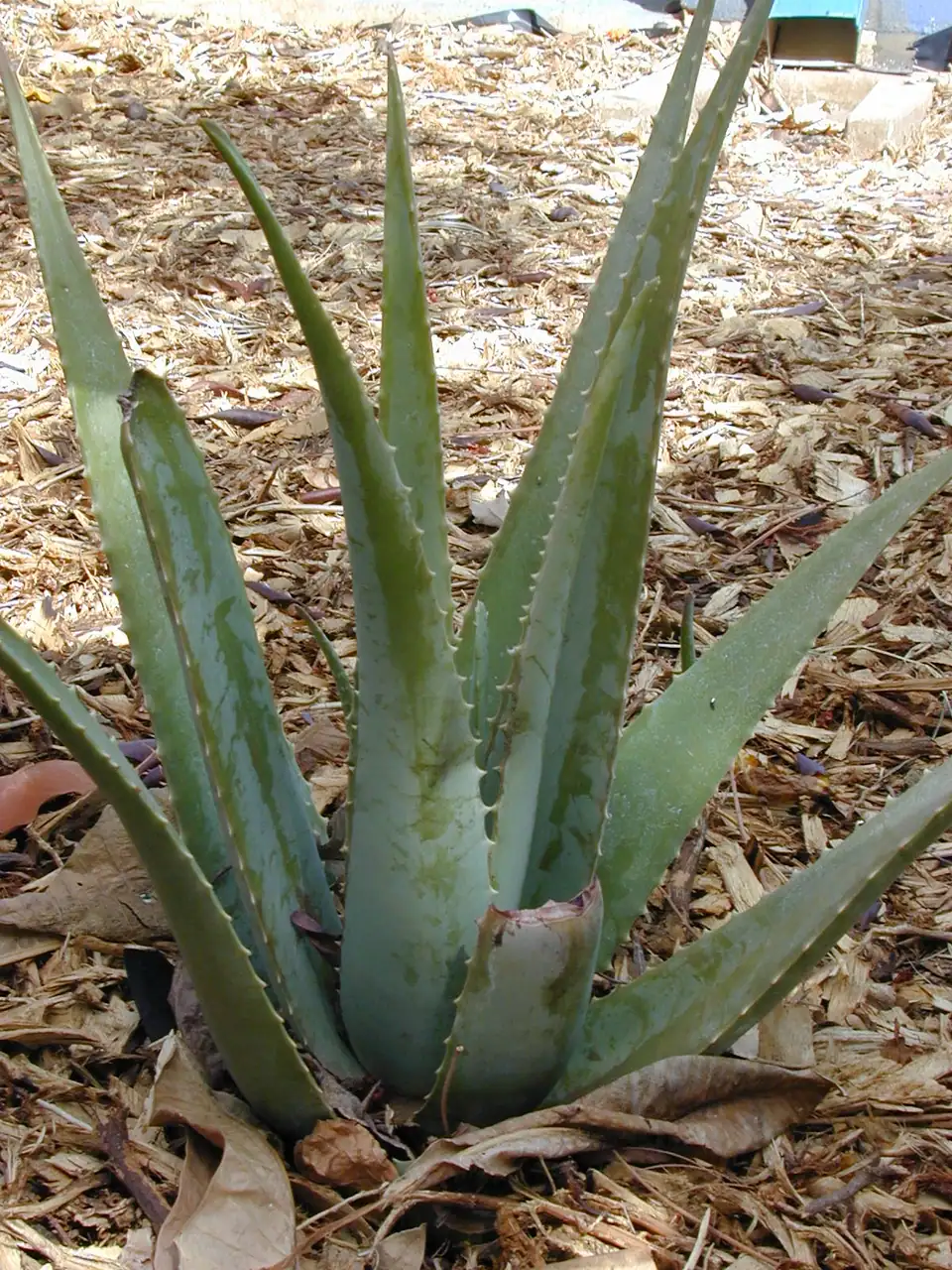
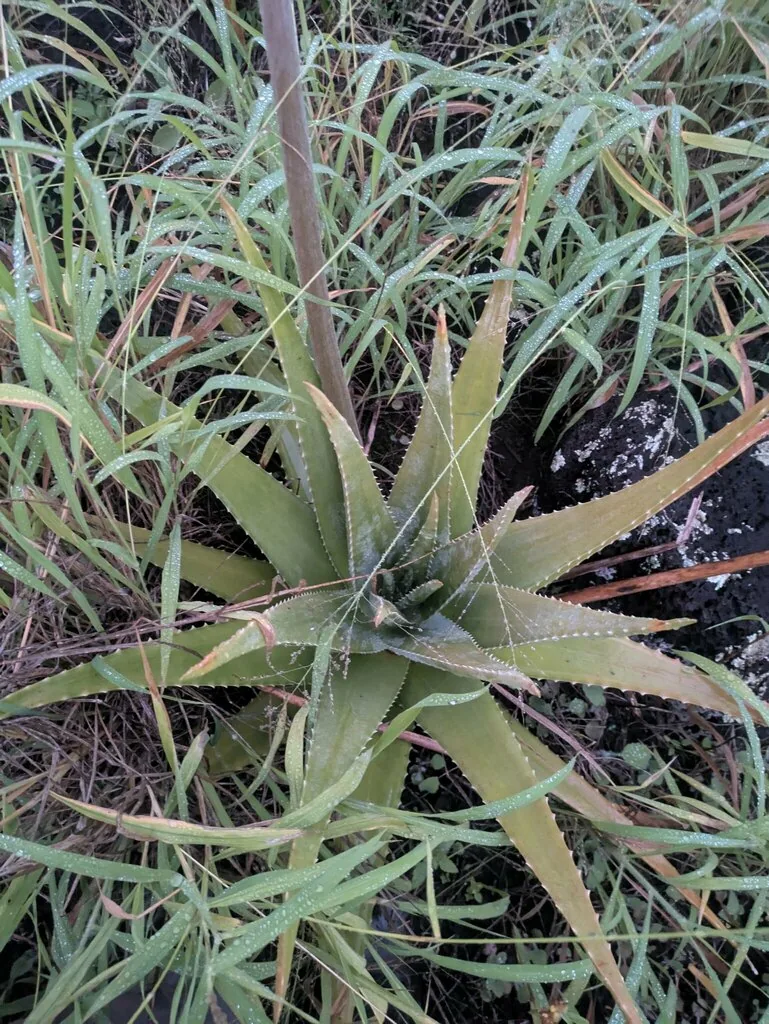
Aloe vera is an evergreen succulent that is often grown indoors as a houseplant and can be moved outdoors in summer. [1][4] It needs very well-drained soil suited to succulents and should dry between waterings, since overwatering leads to root rot. [1][3] It spreads by offsets, which can be divided from the mother plant. [1]
Aloe vera care
How to water Aloe vera
Watering
The sources give different values depending on region, zone or growing conditions.
What each source says
According to NC State Extension: Allow the soil to completely dry between waterings
According to UF/IFAS Gardening Solutions: Water only when the top inch of soil is dry to the touch
growing season, early spring to early fall (Penn State Extension): Water thoroughly when the soil surface is dry
dormant period, fall through winter (Penn State Extension): Reduce watering so the soil is barely moist
outdoors, Florida (UF/IFAS Charlotte County): Water to establish, then rainwater alone
What the sources say (8)
According to NC State Extension: Allow the soil to completely dry between waterings.According to UF/IFAS Gardening Solutions: only water your plant when the top inch of soil is dry to the touch.growing season, early spring to early fall (Penn State Extension): During the growing season, from early spring to early fall, water thoroughly when the soil's surface is dry.dormant period, fall through winter (Penn State Extension): During the dormant period, from fall through winter, reduce watering so the soil is barely moist, and the leaves don't shrivel.outdoors, Florida (UF/IFAS Charlotte County): Water to establish the plants, but from then on allow them to survive on rainwater alone.Allow the soil to completely dry between waterings.Regular, thorough watering is best, making sure that the soil dries out completely before watering again.only water your plant when the top inch of soil is dry to the touch.Watering notes
Never let the plant sit in water; use pots with drainage holes; reduce watering in the dormant winter months; outdoors in Florida, water to establish then rainwater alone
What the sources say (3)
If the plant sits in water, it be susceptible to root rot.Since the plant goes dormant during the winter months, it is best to reduce watering.Water to establish the plants, but from then on allow them to survive on rainwater alone.How much light Aloe vera needs
The sources give different values depending on region, zone or growing conditions.
What each source says
outdoors (NC State Extension): Full sun to partial shade
outdoors, Florida (UF/IFAS Charlotte County): Full sun
indoors (SDSU Extension): Bright, indirect sunlight; direct sunlight can burn
indoors (Penn State Extension): Full sun to bright indirect light, near sunny windows
indoors (UNH Extension): Bright, sunny place; south-facing windowsill ideal, unobstructed east or west window also works
What the sources say (7)
outdoors (NC State Extension): Grow this plant in full sun to partial shade in very well-drained soils suitable for succulents.outdoors, Florida (UF/IFAS Charlotte County): can be planted outdoors and does well in full sun areas with well-drained soil.indoors (SDSU Extension): It requires bright, indirect sunlight. Direct sunlight can burn its tender skin.indoors (Penn State Extension): When growing indoors, place them near sunny windows so they can receive full sun to bright indirect light.indoors (UNH Extension): A south facing windowsill is perfect for growing aloe, but an unobstructed east or west facing window will also work.Grow this plant in full sun to partial shade in very well-drained soils suitable for succulents.It requires bright, indirect sunlight. Direct sunlight can burn its tender skin.How much cold Aloe vera can take
Hardiness, coldest zone
The sources give different values depending on region, zone or growing conditions.
What each source says
According to NC State Extension: 10a [winter low −1.1 to 1.7 °C (30 to 35 °F)]
According to UF/IFAS Gardening Solutions: 8 [winter low −12.2 to −6.7 °C (10 to 20 °F)]
What the sources say (2)
According to NC State Extension: USDA Plant Hardiness Zone: 10a, 10b, 11a, 11b, 12a, 12bAccording to UF/IFAS Gardening Solutions: plants can be grown outside year-round in zones 8-11Hardiness, warmest zone
The sources give different values depending on region, zone or growing conditions.
What each source says
According to NC State Extension: 12b [winter low 12.8 to 15.6 °C (55 to 60 °F)]
According to UF/IFAS Gardening Solutions: 11 [winter low 4.4 to 10 °C (40 to 50 °F)]
What the sources say (2)
According to NC State Extension: USDA Plant Hardiness Zone: 10a, 10b, 11a, 11b, 12a, 12bAccording to UF/IFAS Gardening Solutions: plants can be grown outside year-round in zones 8-11Where to grow Aloe vera
Indoors
Yes
What the sources say (1)
It is often grown indoors as a houseplant, but it can be an outdoor perennial in zones 10 and higher.In containers
Yes
What the sources say (2)
can be grown for years in a pot; just be sure to let the soil dry between waterings.The pot used should also have several drainage holes and clay is best.How to propagate Aloe vera
Division; offsets (pups) removed from the mother plant
What the sources say (2)
It will grow 2 to 3 feet tall and spread by offsets. Propagation can be done by division.you can divide the pups from the mother plant and repot them to share with friends.How to grow Aloe vera
The plant
Life cycle
perennial
What the sources say (1)
It is often grown indoors as a houseplant, but it can be an outdoor perennial in zones 10 and higher.Family
Asphodelaceae
What the sources say (2)
Aloe Vera is an evergreen succulent plant in the daylily family (Asphodelaceae) native to the Arabian Peninsula that has spread to many other regions and is considered invasive in some counties.Originating in Africa, aloes are members of the Asphodelaceae family, and some species have been cultivated for over 2,000 years.Mature height
Mature width
30-76 cm (1 ft to 2 ft 6 in)
What the sources say (1)
Height: 1 ft. 0 in. - 2 ft. 0 in.
Width: 1 ft. 0 in. - 2 ft. 6 in.Pests and diseases
Pests
mealybugs, aphids, aloe scale, aloe mite
What the sources say (2)
Mealybugs and aphids are insects that may affect the health of your aloe plant.Mealybugs, aloe scale, and aloe mite may be a problem.Diseases
leaf spot, aloe rust, sooty mold, root rot, fungal disease
What the sources say (2)
Diseases include scale, leaf spot, aloe rust, and sooty mold. Overwatering should be avoided, it can lead to the roots rotting.Aloe rust, root rot, and fungal disease may appear.Fertilizing
How often
Usually not required to keep the plant healthy
What the sources say (1)
No fertilizer is usually required to keep the plant healthy.Aloe vera pests and problems
Root rot from overwatering
Symptom: Roots rot when the plant sits in water or is overwatered; the condition can be fatal.
What to do: Let the soil dry completely between waterings and never let the plant sit in water.
What the sources say (2)
Root rot is due to overwatering. There is no treatment, and this can be fatal if not caught early enough.
— Aloe Vera: Houseplant How-To [3] Overwatering should be avoided, it can lead to the roots rotting.
— Aloe vera (Aloe, Aloe Vera, Barbados Aloe, Medicinal Aloe, Medicine Plant, True Aloe) | North Carolina Extension Gardener Plant Toolbox [1] Mealybugs and other pests
Symptom: Mealybugs gather at the base and leave a sticky secretion on which mold develops; aphids and aloe scale may also occur.
What to do: Insecticidal soap can be used to control mealybugs, following the product label.
What the sources say (2)
Mealybugs usually congregate at the base of the plant. They leave behind a sticky secretion.
— Aloe Vera: Houseplant How-To [3] Insecticidal soap can be used to control mealybugs. Make sure you follow the label on the product for the best results.
— Aloe Vera: Houseplant How-To [3] Aloe rust and fungal disease
Symptom: Yellow spots that turn brown on the leaves; caused by cool temperatures and high humidity.
What to do: Usually does not need treatment.
What the sources say (1)
Yellow spots that turn brown on the leaves are the sign of Aloe rust. It usually does not need treatment.
— Aloe Vera: Houseplant How-To [3] Too little water
Symptom: Yellow, shriveled and puckered leaves.
What to do: The plant should recover once it is watered again.
What the sources say (1)
Too little water will give you yellow, shriveled, and puckered leaves. The plant should recover once it is watered again.
— Aloe Vera: Houseplant How-To [3] Sunburn after sudden move to bright light
Symptom: Plant sunburns when moved suddenly from low to bright light.
What to do: Make the move outdoors gradual.
What the sources say (1)
make the move gradual as the plant can sunburn when moved from low to bright light too quickly
— Aloe Vera – Gardening Solutions [8]
Remedies
Each remedy shows what official sources say about it; traditional remedies without an official source are marked as such. Harmful ones are listed so you know to avoid them.
Treating the plant
mealybugs
insecticidal soap spray Works
How: Use insecticidal soap and follow the label on the product.
Insecticidal soap can be used to control mealybugs. Make sure you follow the label on the product for the best results.
— Aloe Vera: Houseplant How-To [3] What the evidence says insecticidal soap is a safe, effective organic insecticide with minimal environmental impact.
— extension.psu.edu [9]
fungus gnats
letting the soil dry out Not verified
Traditional remedy, not verified by an official source.
How: Let the soil dry out, which kills the gnats and prevents them from spreading; avoid overwatering.
aloe rust
baking soda spray Not verified
Traditional remedy, not verified by an official source.
Penn State Extension does not recommend using home remedies for many reasons. They do not come with precise instructions on how to use; they may not be effective; they have the potential to harm humans, pets, and plants; and their use can violate federal law.
— extension.psu.edu [10] How: Spray a solution of one teaspoon of baking soda in one quart of water to help fight the rust.
sulfur powder dusting Not verified
Traditional remedy, not verified by an official source.
Penn State Extension does not recommend using home remedies for many reasons. They do not come with precise instructions on how to use; they may not be effective; they have the potential to harm humans, pets, and plants; and their use can violate federal law.
— extension.psu.edu [10] How: Dust the plants with sulfur powder every one to two weeks; this does not kill the rust but prevents germination of new spores.
sooty mold
washing off the honeydew Not verified
Traditional remedy, not verified by an official source.
How: Wash off the honeydew, which can be hard and reduces the light reaching the leaves.
snout beetles
cutting the stalk above the infestation Not verified
Traditional remedy, not verified by an official source.
How: If the plant is large, cut the stalk above the infestation, cutting again until no more bore holes show.
Is Aloe vera toxic to pets?
Reported by the source, quoted verbatim. This is not medical or veterinary advice: if a person or an animal may have eaten this plant, contact a poison control centre or a veterinarian.
Animals
#poisonous #interiorscape #drought tolerant #tropical herbaceous perennial #problem for cats #problem for dogs #problem for horses
[1]The source flags the risk for this animal but does not explain why.
People
A word of caution, people or pets should not ingest the plant. It can cause nausea and indigestion if taken in large quantities.
[3]- Poisonous parts
Causes Contact Dermatitis: Yes Poison Part: Leaves
[1]- Toxic principle
Poison Toxic Principle: Anthraquinone glycoside Causes Contact Dermatitis: Yes
[1]- Symptoms
Symptoms may include: Abdominal cramping, diarrhea, red urine; skin irritation from latex.
[1]- Severity
Poison Severity: Low Poison Symptoms: Poisonous through ingestion or dermatitis.
[1]
Causes low toxicity if eaten. Used medicinally and in drinks when properly prepared.
[1]- Poisonous parts
Causes Contact Dermatitis: Yes Poison Part: Leaves
[1]- Toxic principle
Poison Toxic Principle: Anthraquinone glycoside Causes Contact Dermatitis: Yes
[1]- Symptoms
Symptoms may include: Abdominal cramping, diarrhea, red urine; skin irritation from latex.
[1]- Severity
Poison Severity: Low Poison Symptoms: Poisonous through ingestion or dermatitis.
[1]
Edibility
Reported by the source, quoted verbatim. Do not eat a plant on the basis of this page alone: identification mistakes can be dangerous.
Causes low toxicity if eaten. Used medicinally and in drinks when properly prepared.
[1]
Indicative values
Values from a secondary source, not checked word for word like the rest of this page. Use them as a starting point.
- Hours of sun
- 4-6 hoursIndicative value, adapt it to your climate · Secondary source
- Drought tolerant
- yesIndicative value, adapt it to your climate · Secondary source
- Soil
- Well-drainedIndicative value, adapt it to your climate · Secondary source
- Soil pH
- 6-8Indicative value, adapt it to your climate · Secondary source
- Growth rate
- HighIndicative value, adapt it to your climate · Secondary source
- Pruning
- March, AprilIndicative value, adapt it to your climate · Secondary source
Similar plants
- Aloe aristata Aloe aristata
- Aloe striata Aloe striata
- Cape aloe Aloe ferox
- Krantz aloe Aloe arborescens
- Soap aloe Aloe maculata
- Asphodeline lutea Asphodeline lutea
- Bulbine frutescens Bulbine frutescens
- Daylily Hemerocallis fulva
Sources
Every value above is quoted from these documents. Links lead to the original publisher.
- Aloe vera (Aloe, Aloe Vera, Barbados Aloe, Medicinal Aloe, Medicine Plant, True Aloe) | North Carolina Extension Gardener Plant Toolbox · plants.ces.ncsu.edu, consulted
- Aloe Vera - Aloe vera | North Carolina Extension Gardener Plant Toolbox · plants.ces.ncsu.edu, consulted
- Aloe Vera: Houseplant How-To · extension.sdstate.edu, consulted
- Aloe, a Hardy Houseplant · extension.psu.edu, consulted
- What Should I Know About Growing Aloe at Home? | Extension · extension.unh.edu, consulted
- Aloe (Aloe) | North Carolina Extension Gardener Plant Toolbox · plants.ces.ncsu.edu, consulted
- One of the most popular houseplants – aloe – easy-going growing! - UF/IFAS Extension Charlotte County · blogs.ifas.ufl.edu, consulted
- Aloe Vera – Gardening Solutions · gardeningsolutions.ifas.ufl.edu, consulted
- extension.psu.edu · extension.psu.edu
- extension.psu.edu · extension.psu.edu
Written by Emilio Marruso · last checked