
How to Grow and Care for Asphodeline lutea
Asphodeline lutea
Written by Emilio Marruso · last checked
Toxic to: People · Why
At a glance
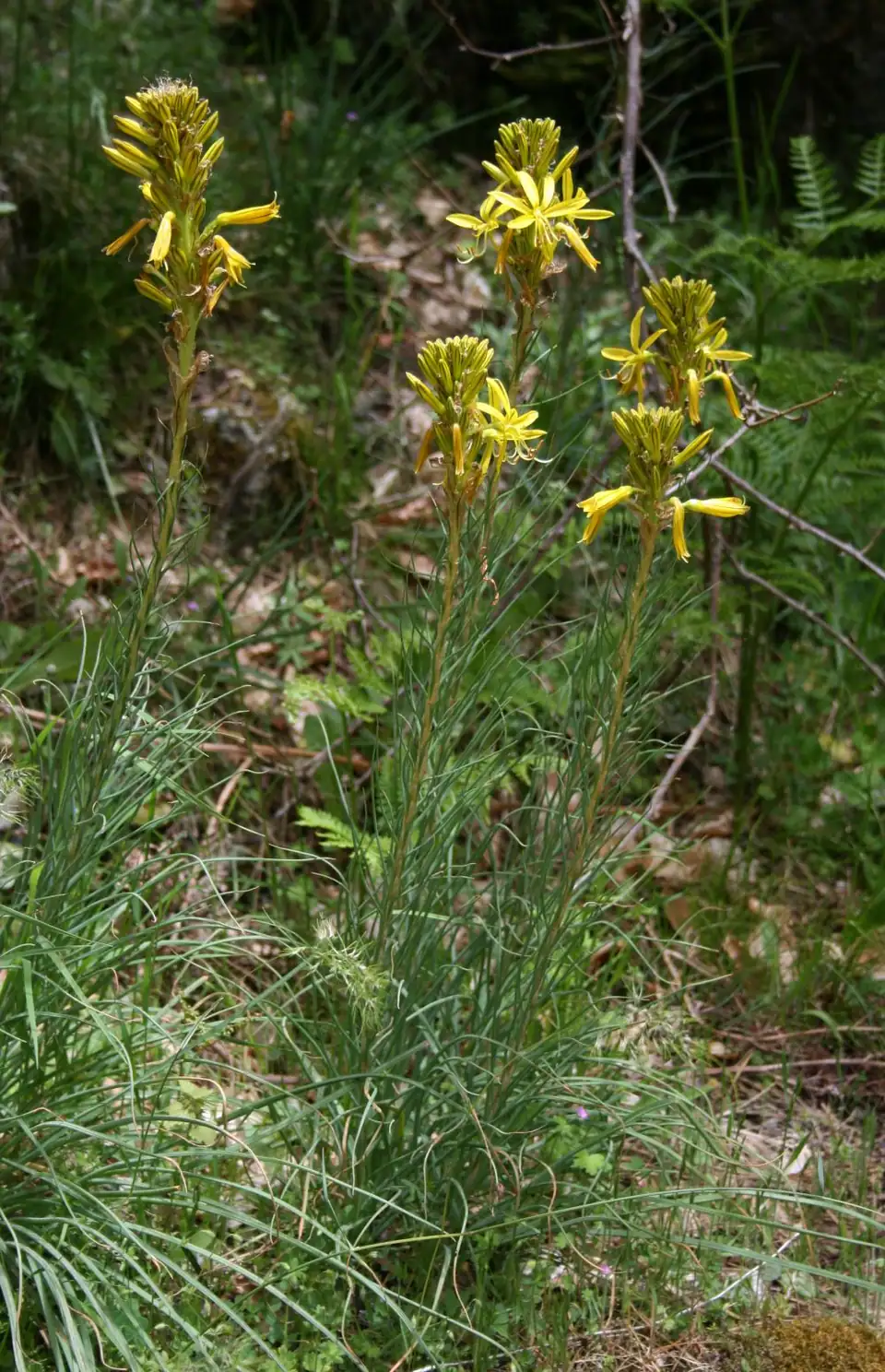
This sun-loving perennial grows 2 to 4 feet tall and comes back year after year. Start seeds in a greenhouse in early to mid spring and plant the seedlings out in late spring, or simply divide a clump in spring or fall. Give it a warm, sunny spot, and its sweet flowers can even brighten your salad bowl.
- Sun
A warm, sunny spot
What the sources say (1)
Light: Warm sunny position
Prefers a soil that is not too rich and a warm sunny position
— Asphodeline lutea - Useful Temperate Plants [3] - Planting
Plant the seedlings out in late spring
What the sources say (1)
Planting: Late spring (seedlings planted out)
Plant them out into their permanent positions in late spring.
— Asphodeline lutea - Useful Temperate Plants [3] - Harvest
The flowers can be eaten raw in salads; do not eat the tubers or stems
- Size
2 to 4 ft tall
What the sources say (1)
Mature height: 60-120 cm [24–47 in]
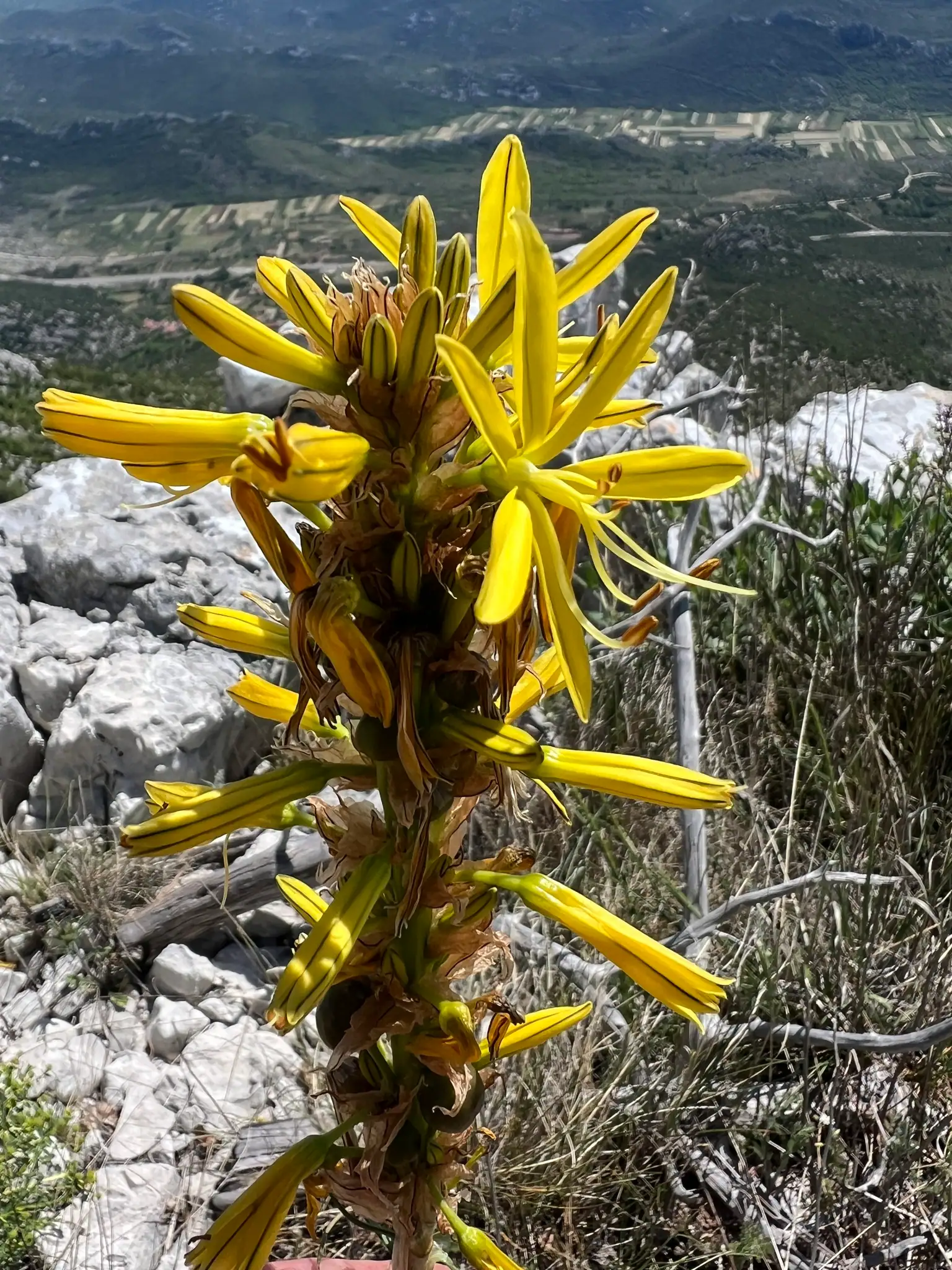
Habit: A perennial plant reaching 60–120 cm. Stem: Erect, cylindrical and smooth, supported by roots formed by long, narrow tubers.
— Asphodeline lutea (L.) Rchb. – Giardino della Flora Appenninica [1] - Propagation
From seed, or divide the clump in spring or fall
What the sources say (2)
Propagation: Seed; division in spring or autumn
Seed - sow early to mid spring in a greenhouse and only just cover the seed. Germination usually takes place in 1 - 3 months at 15°c
— Asphodeline lutea - Useful Temperate Plants [3] Division in spring or autumn, with care since the roots are easily damaged
— Asphodeline lutea - Useful Temperate Plants [3] - Sowing
Sow in a greenhouse in early to mid spring
What the sources say (1)
Sowing: Early to mid spring (in a greenhouse)
Seed - sow early to mid spring in a greenhouse and only just cover the seed.
— Asphodeline lutea - Useful Temperate Plants [3] - Safety
Toxic: tubers, leaves and stems can cause severe stomach upset
Overview
Yellow asphodel is a rhizomatous perennial of stony, dry and poor sites, 60-120 cm [24–47 in] tall. [1] It is grown as an ornamental in well-drained soil and a warm sunny position. [3] Sources disagree on safety: one describes the plant as toxic, another lists no known hazards. [1][3]
This record is incomplete: the sources we read do not cover every field yet.
Not yet covered by our sources: Watering, Hardiness, coldest zone, Hardiness, warmest zone, Pruning
Asphodeline lutea care
Measurements in square brackets are our conversion into the other unit system; the quoted text is unchanged.
How to water Asphodeline lutea
Not stated in the sources we read.
How much light Asphodeline lutea needs
Warm sunny position
What the sources say (1)
Prefers a soil that is not too rich and a warm sunny positionHow much cold Asphodeline lutea can take
Hardiness, coldest zone
Not stated in the sources we read.
Hardiness, warmest zone
Not stated in the sources we read.
How to propagate Asphodeline lutea
Seed; division in spring or autumn
What the sources say (2)
Seed - sow early to mid spring in a greenhouse and only just cover the seed. Germination usually takes place in 1 - 3 months at 15°cDivision in spring or autumn, with care since the roots are easily damagedHow to grow Asphodeline lutea
The plant
Life cycle
perennial
What the sources say (1)
Habit: A perennial plant reaching 60–120 cm. Stem: Erect, cylindrical and smooth, supported by roots formed by long, narrow tubers.Family
Asphodelaceae
What the sources say (1)
Scientific name: Asphodeline lutea (L.) Rchb. Common name: Yellow Asphodel Family: Asphodelaceae Biological form: Geofita rizomatosaMature height
60-120 cm [24–47 in]
What the sources say (1)
Habit: A perennial plant reaching 60–120 cm. Stem: Erect, cylindrical and smooth, supported by roots formed by long, narrow tubers.Remedies
The sources we checked give no remedies for this plant.
Is Asphodeline lutea poisonous?
Reported by the source, quoted verbatim. This is not medical or veterinary advice: if a person or an animal may have eaten this plant, contact a poison control centre or a veterinarian.
Calendar
Sowing
Early to mid spring (in a greenhouse)
What the sources say (1)
Seed - sow early to mid spring in a greenhouse and only just cover the seed.Planting
Late spring (seedlings planted out)
What the sources say (1)
Plant them out into their permanent positions in late spring.Pruning
Not stated in the sources we read.
Months as given by the sources, which are mostly from the United States (northern hemisphere). In the southern hemisphere they shift by about six months.
Edibility
Reported by the source, quoted verbatim. Do not eat a plant on the basis of this page alone: identification mistakes can be dangerous.
Indicative values
Values from a secondary source, not checked word for word like the rest of this page. Use them as a starting point.
- Watering
- AverageIndicative value, adapt it to your climate · Secondary source
- Soil pH
- 6-7.5Indicative value, adapt it to your climate · Secondary source
- USDA hardiness zones
- 6-9 [winter low −23.3 to −1.1 °C (−10 to 30 °F)]Indicative value, adapt it to your climate · Secondary source
- Care level
- MediumIndicative value, adapt it to your climate · Secondary source
- Growth rate
- LowIndicative value, adapt it to your climate · Secondary source
- Pruning
- MayIndicative value, adapt it to your climate · Secondary source
Similar plants
- Aloe aristata Aloe aristata
- Aloe vera Aloe vera
- Bulbine frutescens Bulbine frutescens
- Daylily Hemerocallis fulva
- Daylily Hemerocallis minor
- Eremurus robustus Eremurus robustus
- New Zealand Flax Phormium tenax
- Pearl Plant Tulista pumila
Sources
Every value above is quoted from these documents. Links lead to the original publisher.
- Asphodeline lutea (L.) Rchb. – Giardino della Flora Appenninica · giardinocapracotta.unimol.it, consulted
- Asphodeline lutea | Euro+Med-Plantbase · europlusmed.org, consulted
- Asphodeline lutea - Useful Temperate Plants · temperate.theferns.info, consulted
- How to Grow Jacob's-Rod - Asphodeline · harvesttotable.com, consulted
- Asphodeline Plant Growing & Care Guide for Gardeners · gardenershq.com, consulted
Written by Emilio Marruso · last checked