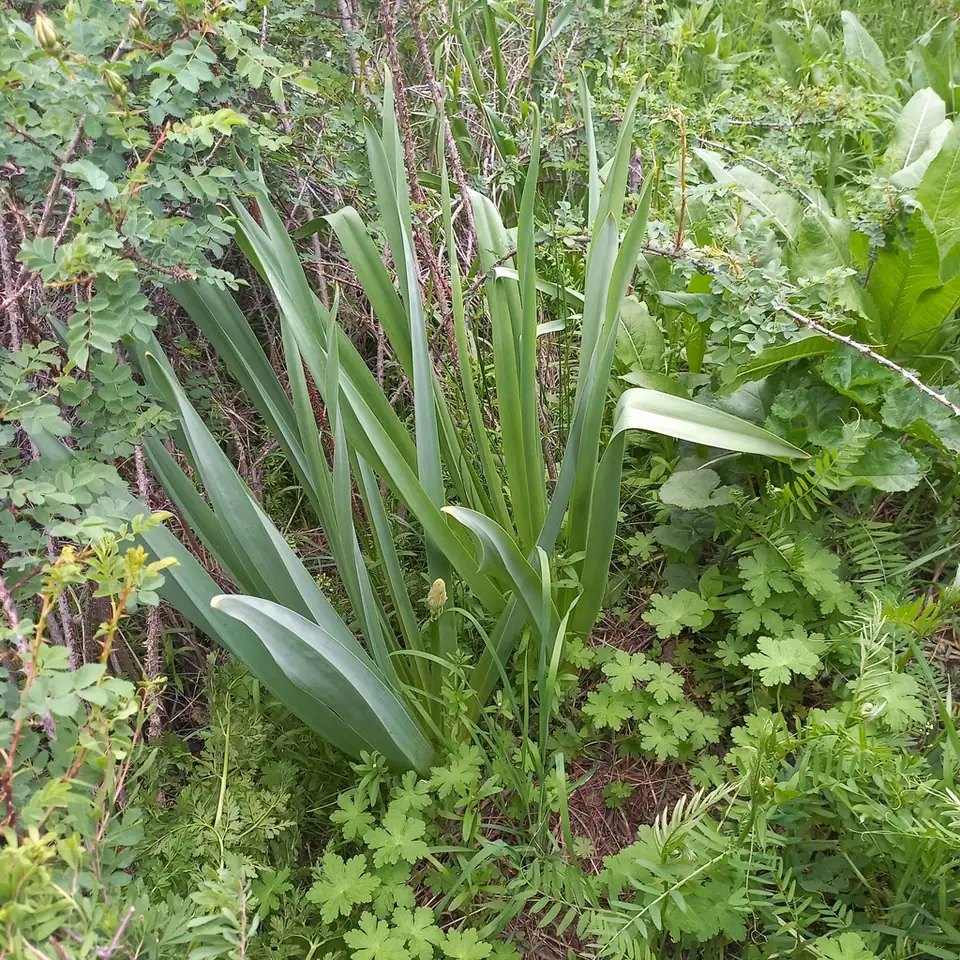
How to Grow and Care for Eremurus robustus
Eremurus robustus
Written by Emilio Marruso · last checked
At a glance
This perennial is a true giant: it grows 8 to 10 feet tall and comes back year after year. Give it a semi-shaded spot and let it tower over the rest of your garden for season after season. Just keep an eye out for slugs and snails, and watch for root rot, its main disease.
- Sun
Partial shade
What the sources say (1)
Light: Semi-shaded position
Among the most attractive species are E. robustus and E. olgae . The first one prefers a semi shaded position and rich soil.
— MBG: Research: Russia: Ornamental plants from Russia [1] - Cold
Survives winters down to −20 °F (−28.9 °C)
Very hardy · USDA 5a · RHS H7 · Z5
What the sources say (2)
Hardiness, coldest zone: 5a [winter low −28.9 to −26.1 °C (−20 to −15 °F)]
As its name implies, it is robust in terms of frost tolerance. 2.5m x 60cm. AGM. RHS H6, USDA 5a-8b.
— How to plant Eremurus: everything you need to know about these tall, colourful dry-loving plants [4] Hardiness, warmest zone: 8b [winter low −9.4 to −6.7 °C (15 to 20 °F)]
As its name implies, it is robust in terms of frost tolerance. 2.5m x 60cm. AGM. RHS H6, USDA 5a-8b.
— How to plant Eremurus: everything you need to know about these tall, colourful dry-loving plants [4] - Pests
Slugs and snails; watch for root rot
What the sources say (2)
Pests: slugs, snails
No significant insect or disease problems. Monitor new growth for slugs and snails.
— Desert Candle - Eremurus | North Carolina Extension Gardener Plant Toolbox [6] Diseases: root rot
Poor soil drainage can result in root rot.
— Desert Candle - Eremurus | North Carolina Extension Gardener Plant Toolbox [6] - Size
8 to 10 ft tall
What the sources say (1)
Mature height: 244-305 cm (8 to 10 ft)
Eremurus robustus (Giant Desert Candle) 8 to 10-foot-tall stem, pale peach-pink blooms
— Desert Candle - Eremurus | North Carolina Extension Gardener Plant Toolbox [6]
Overview
Eremurus robustus is the largest foxtail lily, with pink or white flower spikes 8 to 10 feet [2.4–3 m] tall and 4-foot [1.2 m] leaves. [2] A single flower spike can carry as many as 800 flowers. [4]
This record is incomplete: the sources we read do not cover every field yet.
Not yet covered by our sources: Watering, Pruning, Propagation
Eremurus robustus care
Measurements in square brackets are our conversion into the other unit system; the quoted text is unchanged.
How to water Eremurus robustus
Not stated in the sources we read.
How much light Eremurus robustus needs
Semi-shaded position
What the sources say (1)
Among the most
attractive species are E. robustus and E. olgae .
The first one prefers a semi shaded position and rich soil.How much cold Eremurus robustus can take
Hardiness, coldest zone
5a [winter low −28.9 to −26.1 °C (−20 to −15 °F)]
What the sources say (1)
As its name implies, it is robust in terms of frost tolerance. 2.5m x 60cm. AGM. RHS H6, USDA 5a-8b.Hardiness, warmest zone
8b [winter low −9.4 to −6.7 °C (15 to 20 °F)]
What the sources say (1)
As its name implies, it is robust in terms of frost tolerance. 2.5m x 60cm. AGM. RHS H6, USDA 5a-8b.How to propagate Eremurus robustus
Not stated in the sources we read.
How to grow Eremurus robustus
The plant
Life cycle
perennial
What the sources say (1)
Eremurus is a genus of tuberous, ornamental, herbaceous perennial plants native to portions of Russia, Crimea, Mongolia, and Central ChinaFamily
Asphodelaceae
What the sources say (1)
The genus is a member of the day lily family (Asphodelaceae).Mature height
244-305 cm (8 to 10 ft)
What the sources say (1)
Eremurus robustus (Giant Desert Candle) 8 to 10-foot-tall stem, pale peach-pink bloomsPests and diseases
Pests
slugs, snails
What the sources say (1)
No significant insect or disease problems. Monitor new growth for slugs and snails.Diseases
root rot
What the sources say (1)
Poor soil drainage can result in root rot.Remedies
The sources we checked give no remedies for this plant.
Calendar
Pruning
Not stated in the sources we read.
Months as given by the sources, which are mostly from the United States (northern hemisphere). In the southern hemisphere they shift by about six months.
Indicative values
Values from a secondary source, not checked word for word like the rest of this page. Use them as a starting point.
- Hours of sun
- 5-6 hoursIndicative value, adapt it to your climate · Secondary source
- Watering
- AverageIndicative value, adapt it to your climate · Secondary source
- Drought tolerant
- yesIndicative value, adapt it to your climate · Secondary source
- Soil pH
- 6-7.5Indicative value, adapt it to your climate · Secondary source
- Growth rate
- HighIndicative value, adapt it to your climate · Secondary source
- Pruning
- AugustIndicative value, adapt it to your climate · Secondary source
- Propagation
- Division, Seed Propagation, CuttingIndicative value, adapt it to your climate · Secondary source
Similar plants
- Aloe aristata Aloe aristata
- Aloe vera Aloe vera
- Asphodeline lutea Asphodeline lutea
- Bulbine frutescens Bulbine frutescens
- Daylily Hemerocallis fulva
- Daylily Hemerocallis minor
- New Zealand Flax Phormium tenax
- Pearl Plant Tulista pumila
Sources
Every value above is quoted from these documents. Links lead to the original publisher.
- MBG: Research: Russia: Ornamental plants from Russia · mobot.org, consulted
- Foxtail Lily | Chicago Botanic Garden · chicagobotanic.org, consulted
- How to Grow Foxtail Lilies (Eremurus) | BBC Gardeners World Magazine · gardenersworld.com, consulted
- How to plant Eremurus: everything you need to know about these tall, colourful dry-loving plants · gardensillustrated.com, consulted
- How to Grow Eremurus - Foxtail Lily · harvesttotable.com, consulted
- Desert Candle - Eremurus | North Carolina Extension Gardener Plant Toolbox · plants.ces.ncsu.edu, consulted
Written by Emilio Marruso · last checked