
How to Grow and Care for Afghan Redbud
Cercis griffithii
Written by Emilio Marruso · last checked
At a glance
This tree is easy to please: it grows in full sun or partial shade and tolerates drought and dry soil. Its flowers are edible, with a sour but pleasant taste you can enjoy straight from the branch. Once pollinated, they form pods whose seeds feed the birds, so your garden gets a little busier too.
- Sun
Full sun to partial shade
What the sources say (1)
Light: Full sun to partial shade
Light: Full sun (6 or more hours of direct sunlight a day) Partial Shade (Direct sunlight only part of the day, 2-6 hours)
— Cercis griffithii (Afghanistan Redbud, Afghan Redbud, Griffith's Redbud) | North Carolina Extension Gardener Plant Toolbox [1] - Water
Drought tolerant; copes with dry soil
What the sources say (1)
Watering notes: Drought tolerant; tolerates dry soil
Attracts: Pollinators Songbirds Specialized Bees Resistance To Challenges: Drought Dry Soil
— Cercis griffithii (Afghanistan Redbud, Afghan Redbud, Griffith's Redbud) | North Carolina Extension Gardener Plant Toolbox [1] - Cold
Survives winters down to 0 °F (−17.8 °C)
Hardy in very cold winters · USDA 7a · RHS H6 · Z7
What the sources say (2)
Hardiness, coldest zone: 7a [winter low −17.8 to −15 °C (0 to 5 °F)]
USDA Plant Hardiness Zone: 7a, 7b, 8a, 8b, 9a, 9b
— Cercis griffithii (Afghanistan Redbud, Afghan Redbud, Griffith's Redbud) | North Carolina Extension Gardener Plant Toolbox [1] Hardiness, warmest zone: 9b [winter low −3.9 to −1.1 °C (25 to 30 °F)]
USDA Plant Hardiness Zone: 7a, 7b, 8a, 8b, 9a, 9b
— Cercis griffithii (Afghanistan Redbud, Afghan Redbud, Griffith's Redbud) | North Carolina Extension Gardener Plant Toolbox [1] - Harvest
The flowers are edible, with a sour but pleasant taste
- Pests
Deer love this tree and can damage it
- Propagation
Grow new plants from seed
What the sources say (1)
Propagation: Seed
Recommended Propagation Strategy: Seed Country Or Region Of Origin:
— Cercis griffithii (Afghanistan Redbud, Afghan Redbud, Griffith's Redbud) | North Carolina Extension Gardener Plant Toolbox [1]
Overview
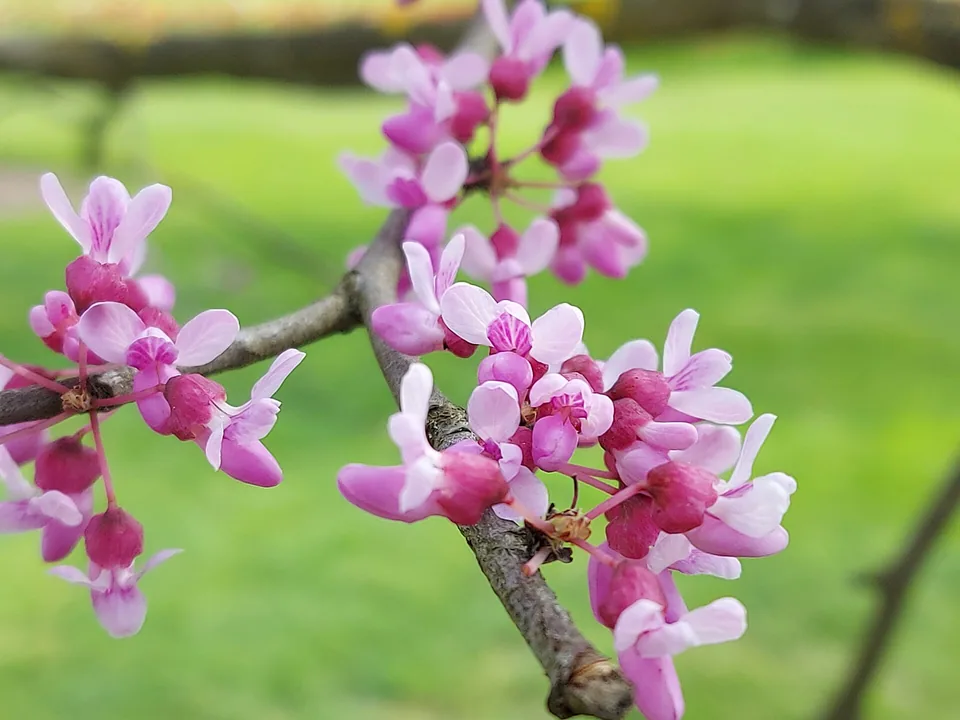
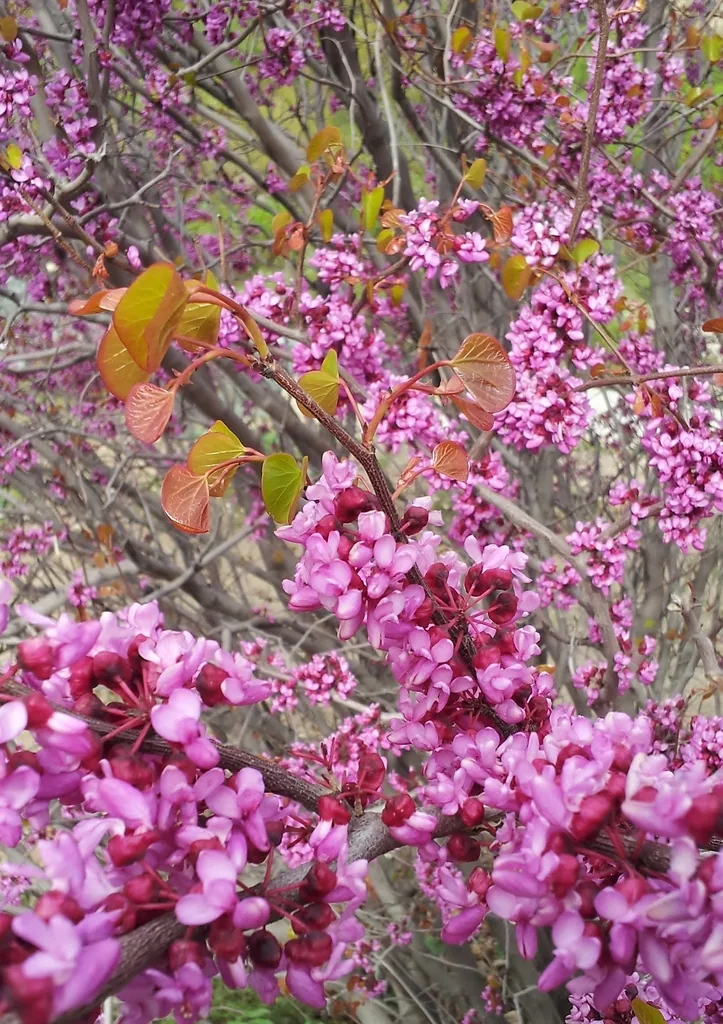
Cercis griffithii is an upright deciduous tree of the Fabaceae family, found in the wild on dry stony slopes in semi-desert conditions. [1] Dense clusters of purple and pink flowers emerge in early spring before the foliage. [1] It is considered endangered in its native locations. [1]
This record is incomplete: the sources we read do not cover every field yet.
Not yet covered by our sources: Watering, Pruning
Afghan Redbud care
How to water Afghan Redbud
Watering
Not stated in the sources we read.
Watering notes
Drought tolerant; tolerates dry soil
What the sources say (1)
Attracts:
Pollinators
Songbirds
Specialized Bees
Resistance To Challenges:
Drought
Dry Soil How much light Afghan Redbud needs
Full sun to partial shade
What the sources say (1)
Light:
Full sun (6 or more hours of direct sunlight a day)
Partial Shade (Direct sunlight only part of the day, 2-6 hours) How much cold Afghan Redbud can take
Hardiness, coldest zone
7a [winter low −17.8 to −15 °C (0 to 5 °F)]
What the sources say (1)
USDA Plant Hardiness Zone:
7a, 7b, 8a, 8b, 9a, 9bHardiness, warmest zone
9b [winter low −3.9 to −1.1 °C (25 to 30 °F)]
What the sources say (1)
USDA Plant Hardiness Zone:
7a, 7b, 8a, 8b, 9a, 9bHow to propagate Afghan Redbud
Seed
What the sources say (1)
Recommended Propagation Strategy:
Seed
Country Or Region Of Origin:How to grow Afghan Redbud
The plant
Family
Fabaceae
What the sources say (1)
Commonly called Afghan redbud, this upright deciduous tree is in the Fabaceae (bean) family.Afghan Redbud pests and problems
Deer damage
Symptom: This tree is a favorite of deer and can suffer from damage.
What to do: Not given in the source.
What the sources say (1)
This tree is a favorite of deer and can suffer from damage.
— Cercis griffithii (Afghanistan Redbud, Afghan Redbud, Griffith's Redbud) | North Carolina Extension Gardener Plant Toolbox [1]
Remedies
Each remedy shows what official sources say about it; traditional remedies without an official source are marked as such. Harmful ones are listed so you know to avoid them.
Treating the plant
spider mites
insecticidal soap spray Official source, not independently tested
Special care should be taken with soap or oil to obtain thorough spray coverage, because they only work on contact.
— portal.ct.gov [2] How: Apply insecticidal soap at least twice at 7-10 day intervals with thorough spray coverage.
Spraying with insecticidal soap will give sufficient control if applied at least twice at 7 - 10 day intervals.
— portal.ct.gov [2]
canker
pruning out infected wood Official source, not independently tested
How: Prune infected material well back of any discoloration in the wood, fertilize in spring and water during dry weather.
Pruning infected material well back of any discoloration in the wood may prevent further spread. Fertilize trees in the spring and water during dry weather to maintain tree vigor.
— portal.ct.gov [2]
verticillium wilt
pruning, watering and fertilizing Partly works
How: Proper pruning, watering, and fertilizing.
However, some other measures may be taken to prolong the life and to improve the aesthetic value of an infected tree. Management of this disease includes proper pruning, watering, and fertilizing.
— ask.extension.org [3] What the evidence says However, some other measures may be taken to prolong the life and to improve the aesthetic value of an infected tree. Management of this disease includes proper pruning, watering, and fertilizing.
— ask.extension.org [3]
Calendar
Pruning
Not stated in the sources we read.
Months as given by the sources, which are mostly from the United States (northern hemisphere). In the southern hemisphere they shift by about six months.
Edibility
Reported by the source, quoted verbatim. Do not eat a plant on the basis of this page alone: identification mistakes can be dangerous.
Similar plants
- Chain-flowered Redbud Cercis racemosa
- Chinese Redbud Cercis chinensis
- Mediterranean Redbud Cercis siliquastrum
- Redbud Cercis canadensis
- Western Redbud Cercis orbiculata
- American Groundnut Apios americana
- Amur Maackia Maackia amurensis
- Bauhinia Bauhinia blakeana
Sources
Every value above is quoted from these documents. Links lead to the original publisher.
- Cercis griffithii (Afghanistan Redbud, Afghan Redbud, Griffith's Redbud) | North Carolina Extension Gardener Plant Toolbox · plants.ces.ncsu.edu, consulted
- portal.ct.gov · portal.ct.gov
- ask.extension.org · ask.extension.org
Written by Emilio Marruso · last checked