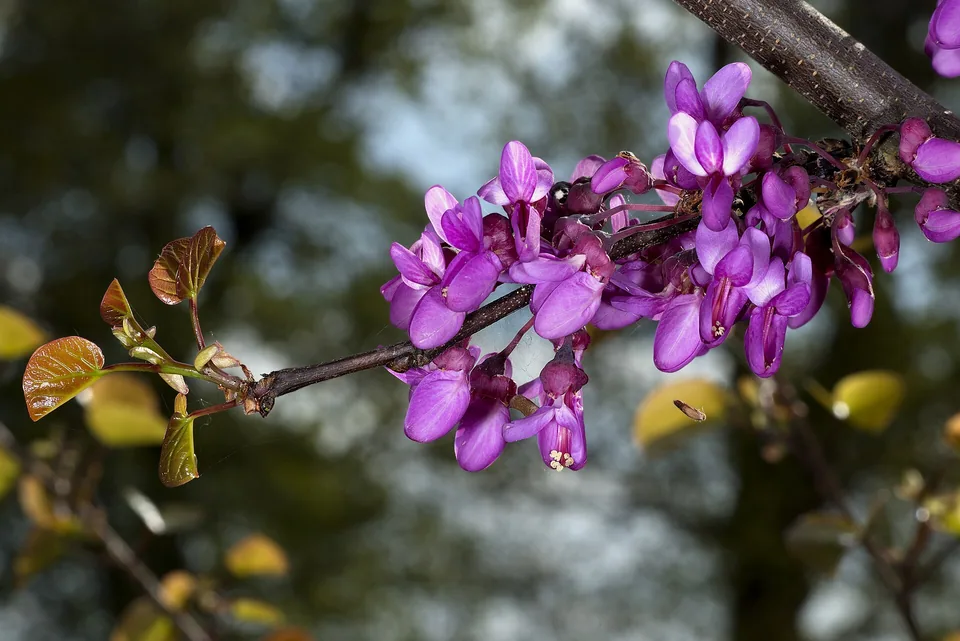


How to Grow and Care for Mediterranean Redbud
Cercis siliquastrum
Written by Emilio Marruso · last checked
At a glance
This small tree grows 15–25 feet tall and just as wide, happy in full sun or partial shade. Its flowers are edible, with a sweet-tart taste, and once pollinated they turn into pods whose seeds feed the birds. Give it moist soil that drains well, never soggy, and you will have flowers for you and seeds for the birds.
- Sun
Full sun to partial shade
What the sources say (1)
Light: Full sun to partial shade
Full sun to partial shade and moist, well-drained, fertile soil are recommended.
— Cercis siliquastrum (Judas Tree, Love Tree, Mediterranean Redbud, Zemzarig) | North Carolina Extension Gardener Plant Toolbox [1] - Water
Keep the soil moist but well drained; it hates soggy, wet ground
What the sources say (1)
Watering: Moist, well-drained soil; intolerant of wet or poorly drained soil
Full sun to partial shade and moist, well-drained, fertile soil are recommended. It is intolerant of wet or poorly drained soil.
— Cercis siliquastrum (Judas Tree, Love Tree, Mediterranean Redbud, Zemzarig) | North Carolina Extension Gardener Plant Toolbox [1] - Cold
Survives winters down to −10 °F (−23.3 °C)
Very hardy · USDA 6a · RHS H7 · Z6
What the sources say (2)
Hardiness, coldest zone: 6a [winter low −23.3 to −20.6 °C (−10 to −5 °F)]
6a, 6b, 7a, 7b, 8a, 8b, 9a, 9b
— Cercis siliquastrum (Judas Tree, Love Tree, Mediterranean Redbud, Zemzarig) | North Carolina Extension Gardener Plant Toolbox [1] Hardiness, warmest zone: 9b [winter low −3.9 to −1.1 °C (25 to 30 °F)]
6a, 6b, 7a, 7b, 8a, 8b, 9a, 9b
— Cercis siliquastrum (Judas Tree, Love Tree, Mediterranean Redbud, Zemzarig) | North Carolina Extension Gardener Plant Toolbox [1] - Soil
Well-drained soil, pH 6.0–8.0
What the sources say (3)
Soil pH, minimum: 6.0
Soil pH: Neutral (6.0-8.0) Soil Drainage: Good Drainage
— Cercis siliquastrum (Judas Tree, Love Tree, Mediterranean Redbud, Zemzarig) | North Carolina Extension Gardener Plant Toolbox [1] Soil pH, maximum: 8.0
Soil pH: Neutral (6.0-8.0) Soil Drainage: Good Drainage
— Cercis siliquastrum (Judas Tree, Love Tree, Mediterranean Redbud, Zemzarig) | North Carolina Extension Gardener Plant Toolbox [1] Watering: Moist, well-drained soil; intolerant of wet or poorly drained soil
Full sun to partial shade and moist, well-drained, fertile soil are recommended. It is intolerant of wet or poorly drained soil.
— Cercis siliquastrum (Judas Tree, Love Tree, Mediterranean Redbud, Zemzarig) | North Carolina Extension Gardener Plant Toolbox [1] - Harvest
The flowers are edible, with a sweet-tart taste; the seeds feed the birds
- Pests
Japanese beetles, scales and borers; canker, powdery mildew and leaf spots, worse in wet soil
What the sources say (2)
Pests: Japanese beetles, tree hoppers, leaf hoppers, caterpillars, borers, webworms, whiteflies, scales
Potential insect pests include Japanese beetles, tree hoppers, leaf hoppers, caterpillars, borers, webworms, whiteflies, and scales.
— Cercis siliquastrum (Judas Tree, Love Tree, Mediterranean Redbud, Zemzarig) | North Carolina Extension Gardener Plant Toolbox [1] Diseases: canker, verticillium wilt, dieback, powdery mildew, blight, leaf spots
This tree is susceptible to canker, as well as verticillium wilt, dieback, powdery mildew, blight, and leaf spots.
— Cercis siliquastrum (Judas Tree, Love Tree, Mediterranean Redbud, Zemzarig) | North Carolina Extension Gardener Plant Toolbox [1] - Size
15–25 ft tall and just as wide
What the sources say (2)
Mature height: 457-762 cm (15-25 ft)
Height: 15 ft. 0 in. - 25 ft. 0 in.
— Cercis siliquastrum (Judas Tree, Love Tree, Mediterranean Redbud, Zemzarig) | North Carolina Extension Gardener Plant Toolbox [1] Mature width: 457-762 cm (15-25 ft)
Width: 15 ft. 0 in. - 25 ft. 0 in.
— Cercis siliquastrum (Judas Tree, Love Tree, Mediterranean Redbud, Zemzarig) | North Carolina Extension Gardener Plant Toolbox [1] - Propagation
Grows from seed
What the sources say (1)
Propagation: Seed
Recommended Propagation Strategy: Seed Country Or Region Of Origin:
— Cercis siliquastrum (Judas Tree, Love Tree, Mediterranean Redbud, Zemzarig) | North Carolina Extension Gardener Plant Toolbox [1]
Overview
Mediterranean redbud is a small, deciduous, often multi-trunked understory tree native to southern Europe and western Asia. [1] It is recommended in full sun to partial shade with moist, well-drained, fertile soil. [1] It prefers not to be transplanted and is best planted young and then left alone. [1]
This record is incomplete: the sources we read do not cover every field yet.
Not yet covered by our sources: Pruning
Mediterranean Redbud care
How to water Mediterranean Redbud
Moist, well-drained soil; intolerant of wet or poorly drained soil
What the sources say (1)
Full sun to partial shade and moist, well-drained, fertile soil are recommended. It is intolerant of wet or poorly drained soil.How much light Mediterranean Redbud needs
Full sun to partial shade
What the sources say (1)
Full sun to partial shade and moist, well-drained, fertile soil are recommended.How much cold Mediterranean Redbud can take
Hardiness, coldest zone
6a [winter low −23.3 to −20.6 °C (−10 to −5 °F)]
What the sources say (1)
6a, 6b, 7a, 7b, 8a, 8b, 9a, 9bHardiness, warmest zone
9b [winter low −3.9 to −1.1 °C (25 to 30 °F)]
What the sources say (1)
6a, 6b, 7a, 7b, 8a, 8b, 9a, 9bBest soil for Mediterranean Redbud
Soil pH, minimum
6.0
What the sources say (1)
Soil pH:
Neutral (6.0-8.0)
Soil Drainage:
Good DrainageSoil pH, maximum
8.0
What the sources say (1)
Soil pH:
Neutral (6.0-8.0)
Soil Drainage:
Good DrainageHow to propagate Mediterranean Redbud
Seed
What the sources say (1)
Recommended Propagation Strategy:
Seed
Country Or Region Of Origin:How to grow Mediterranean Redbud
The plant
Life cycle
woody
What the sources say (1)
Life Cycle: WoodyFamily
Fabaceae
What the sources say (1)
This tree is a member of the bean family (Fabaceae).Mature height
457-762 cm (15-25 ft)
What the sources say (1)
Height: 15 ft. 0 in. - 25 ft. 0 in.Mature width
457-762 cm (15-25 ft)
What the sources say (1)
Width: 15 ft. 0 in. - 25 ft. 0 in.Pests and diseases
Pests
Japanese beetles, tree hoppers, leaf hoppers, caterpillars, borers, webworms, whiteflies, scales
What the sources say (1)
Potential insect pests include Japanese beetles, tree hoppers, leaf hoppers, caterpillars, borers, webworms, whiteflies, and scales.Diseases
canker, verticillium wilt, dieback, powdery mildew, blight, leaf spots
What the sources say (1)
This tree is susceptible to canker, as well as verticillium wilt, dieback, powdery mildew, blight, and leaf spots.Mediterranean Redbud pests and problems
Fungal diseases and canker
Symptom: Susceptible to canker, verticillium wilt, dieback, powdery mildew, blight, and leaf spots
What to do: Intolerant of wet or poorly drained soil; the source gives no specific treatment
What the sources say (1)
This tree is susceptible to canker, as well as verticillium wilt, dieback, powdery mildew, blight, and leaf spots.
— Cercis siliquastrum (Judas Tree, Love Tree, Mediterranean Redbud, Zemzarig) | North Carolina Extension Gardener Plant Toolbox [1] Insect pests
Symptom: Potential pests include Japanese beetles, tree hoppers, leaf hoppers, caterpillars, borers, webworms, whiteflies, and scales
What to do: The source gives no specific management
What the sources say (1)
Potential insect pests include Japanese beetles, tree hoppers, leaf hoppers, caterpillars, borers, webworms, whiteflies, and scales.
— Cercis siliquastrum (Judas Tree, Love Tree, Mediterranean Redbud, Zemzarig) | North Carolina Extension Gardener Plant Toolbox [1]
Remedies
Each remedy shows what official sources say about it; traditional remedies without an official source are marked as such. Harmful ones are listed so you know to avoid them.
Treating the plant
scale insects
soap and water scrub Not verified
Traditional remedy, not verified by an official source.
For example, spraying home remedies that contain dish detergent on plants on a sunny day can injure the plant, essentially burning it.
— extension.psu.edu [2] How: Scrub small, localized infestations off branches with a soft brush and soapy water, and prune out heavily infested twigs.
caterpillars
hand-picking Works
How: Handpick caterpillars where reachable and dispose of them, and encourage birds and beneficial insects by maintaining diverse planting nearby.
Handpick caterpillars where reachable and dispose of them, and encourage birds and beneficial insects by maintaining diverse planting nearby.
— botanapp.com [3] What the evidence says Many insect and disease issues can be solved in the home garden by hand-picking insects or clipping and disposing of diseased plant parts.
— extension.unh.edu [4]
whiteflies
water shower wash-off Not verified
Traditional remedy, not verified by an official source.
How: A good steady shower of water will sometimes wash them off the plant.
aluminum foil reflective mulch Not verified
Traditional remedy, not verified by an official source.
How: Use a reflective mulch (aluminum foil) under plants.
Calendar
Pruning
Not stated in the sources we read.
Months as given by the sources, which are mostly from the United States (northern hemisphere). In the southern hemisphere they shift by about six months.
Edibility
Reported by the source, quoted verbatim. Do not eat a plant on the basis of this page alone: identification mistakes can be dangerous.
Indicative values
Values from a secondary source, not checked word for word like the rest of this page. Use them as a starting point.
- Drought tolerant
- yesIndicative value, adapt it to your climate · Secondary source
- Care level
- MediumIndicative value, adapt it to your climate · Secondary source
- Growth rate
- HighIndicative value, adapt it to your climate · Secondary source
- Pruning
- February, March, AprilIndicative value, adapt it to your climate · Secondary source
Similar plants
- Afghan Redbud Cercis griffithii
- Chain-flowered Redbud Cercis racemosa
- Chinese Redbud Cercis chinensis
- Redbud Cercis canadensis
- Western Redbud Cercis orbiculata
- American Groundnut Apios americana
- Amur Maackia Maackia amurensis
- Bauhinia Bauhinia blakeana
Sources
Every value above is quoted from these documents. Links lead to the original publisher.
- Cercis siliquastrum (Judas Tree, Love Tree, Mediterranean Redbud, Zemzarig) | North Carolina Extension Gardener Plant Toolbox · plants.ces.ncsu.edu, consulted
- extension.psu.edu · extension.psu.edu
- botanapp.com · botanapp.com
- extension.unh.edu · extension.unh.edu
Written by Emilio Marruso · last checked