How to Grow and Care for American Groundnut
Apios americana
Written by Emilio Marruso · last checked
At a glance
Apios americana is a perennial vine that grows 8–16 ft long and rewards patience: plant the tubers in early spring, and after one year of growth you can dig several from each plant. Cooked, they taste like a potato with a nuttier flavor and finer texture. It likes sun to partial shade, moist conditions and no fertilizer at all.
- Sun
Sun to partial shade
What the sources say (1)
Light: Sun to partial shade
It will grow in sun to partial shade and needs moist conditions, preferring sandy or gravelly loams with some humus added.
— Apios americana (American Groundnut, Cinnamon Vine, Common Groundnut, Hodoimo, Hopniss, Indian Potato, Potato Bean) | North Carolina Extension Gardener Plant Toolbox [1] - Water
Keep it moist
What the sources say (1)
Watering: Needs moist conditions
It will grow in sun to partial shade and needs moist conditions, preferring sandy or gravelly loams with some humus added.
— Apios americana (American Groundnut, Cinnamon Vine, Common Groundnut, Hodoimo, Hopniss, Indian Potato, Potato Bean) | North Carolina Extension Gardener Plant Toolbox [1] - Cold
Survives winters down to −30 °F (−34.4 °C)
Very hardy · USDA 4a · RHS H7 · Z4
What the sources say (2)
Hardiness, coldest zone: 4a [winter low −34.4 to −31.7 °C (−30 to −25 °F)]
4a, 4b, 5a, 5b, 6a, 6b, 7a, 7b, 8a, 8b, 9a, 9b
— Apios americana (American Groundnut, Cinnamon Vine, Common Groundnut, Hodoimo, Hopniss, Indian Potato, Potato Bean) | North Carolina Extension Gardener Plant Toolbox [1] Hardiness, warmest zone: 9b [winter low −3.9 to −1.1 °C (25 to 30 °F)]
4a, 4b, 5a, 5b, 6a, 6b, 7a, 7b, 8a, 8b, 9a, 9b
— Apios americana (American Groundnut, Cinnamon Vine, Common Groundnut, Hodoimo, Hopniss, Indian Potato, Potato Bean) | North Carolina Extension Gardener Plant Toolbox [1] - Planting
Plant the tubers in early spring, 2–3 in deep
What the sources say (2)
Planting: Early spring (tubers, 2-3 inches [5.1–7.6 cm] deep)
Plant tubers two to three inches deep in the early spring and mulch to stop competition from weeds and grass.
— Apios americana (American Groundnut, Cinnamon Vine, Common Groundnut, Hodoimo, Hopniss, Indian Potato, Potato Bean) | North Carolina Extension Gardener Plant Toolbox [1] Sowing depth: 5.1-7.6 cm (2-3 in), planting depth of tubers in early spring
The vine can grow 8-16 feet long. Plant tubers two to three inches deep in the early spring and mulch to stop competition from weeds and grass.
— Apios americana (American Groundnut, Cinnamon Vine, Common Groundnut, Hodoimo, Hopniss, Indian Potato, Potato Bean) | North Carolina Extension Gardener Plant Toolbox [1] - Feeding
No fertilizer needed; nitrogen can lower the harvest
What the sources say (2)
How often: Not needed: no supplemental fertilizer
It doesn’t need supplemental fertilizer, in fact nitrogen fertilizer can decrease yields!
— [2] Avoid: Nitrogen fertilizer, which can decrease yields
It doesn’t need supplemental fertilizer, in fact nitrogen fertilizer can decrease yields!
— [2] - Harvest
After one year, dig several 1-inch-thick tubers per plant; eat them cooked, like potatoes
What the sources say (2)
Harvest: After one year of growth (tubers)
After one year of growth, several one-inch-thick tubers can be harvested from each plant.
— Apios americana (American Groundnut, Cinnamon Vine, Common Groundnut, Hodoimo, Hopniss, Indian Potato, Potato Bean) | North Carolina Extension Gardener Plant Toolbox [1] How to harvest: Tubers are harvested after one year of growth; several tubers about 2.5 cm (1 in) thick can be dug from each plant
After one year of growth, several one-inch-thick tubers can be harvested from each plant.
— Apios americana (American Groundnut, Cinnamon Vine, Common Groundnut, Hodoimo, Hopniss, Indian Potato, Potato Bean) | North Carolina Extension Gardener Plant Toolbox [1] - Watch out
It spreads into colonies and can become weedy
- Size
Vine 8–16 ft long
What the sources say (1)
Mature height: vine 244-488 cm long (8-16 ft)
The vine can grow 8-16 feet long. Plant tubers two to three inches deep in the early spring and mulch to stop competition from weeds and grass.
— Apios americana (American Groundnut, Cinnamon Vine, Common Groundnut, Hodoimo, Hopniss, Indian Potato, Potato Bean) | North Carolina Extension Gardener Plant Toolbox [1] - Propagation
Grow new plants from tubers
What the sources say (1)
Propagation: Tubers
Plant tubers two to three inches deep in the early spring and mulch to stop competition from weeds and grass.
— Apios americana (American Groundnut, Cinnamon Vine, Common Groundnut, Hodoimo, Hopniss, Indian Potato, Potato Bean) | North Carolina Extension Gardener Plant Toolbox [1]
Overview
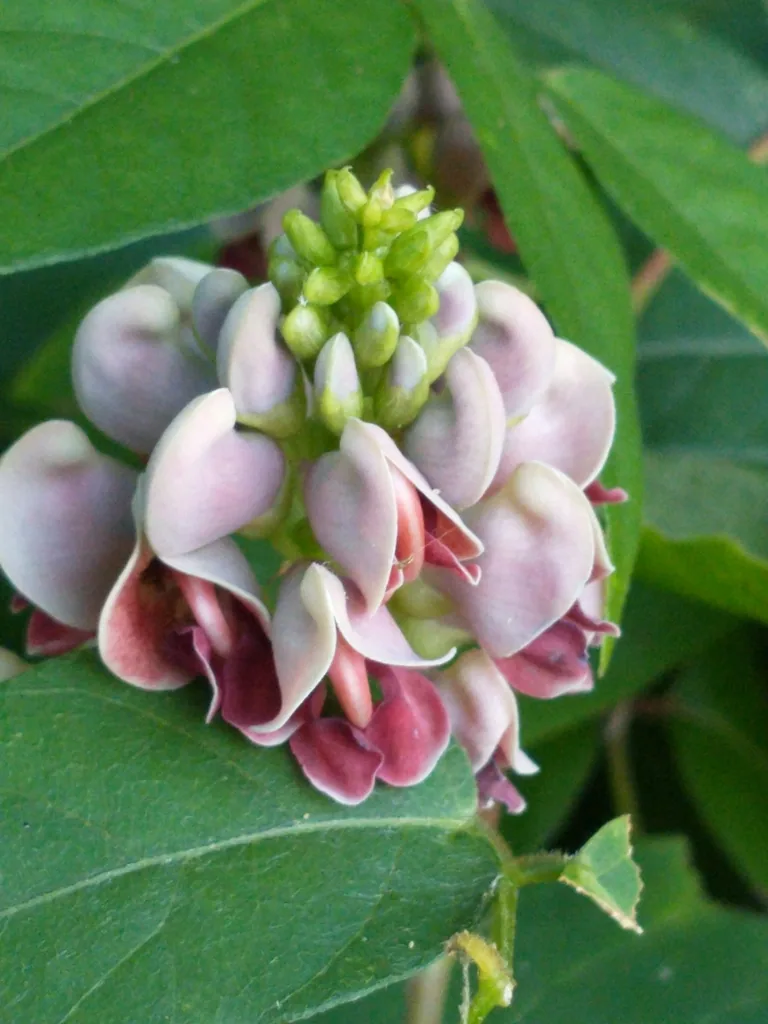
Apios americana is a native perennial twining vine in the bean family that bears edible tubers and maroon pea-like flowers. [1] It grows in sun to partial shade with moist conditions and needs something to climb on. [1]
This record is incomplete: the sources we read do not cover every field yet.
Not yet covered by our sources: Pruning
American Groundnut care
Measurements in square brackets are our conversion into the other unit system; the quoted text is unchanged.
How to water American Groundnut
Needs moist conditions
What the sources say (1)
It will grow in sun to partial shade and needs moist conditions, preferring sandy or gravelly loams with some humus added.How much light American Groundnut needs
Sun to partial shade
What the sources say (1)
It will grow in sun to partial shade and needs moist conditions, preferring sandy or gravelly loams with some humus added.How much cold American Groundnut can take
Hardiness, coldest zone
4a [winter low −34.4 to −31.7 °C (−30 to −25 °F)]
What the sources say (1)
4a, 4b, 5a, 5b, 6a, 6b, 7a, 7b, 8a, 8b, 9a, 9bHardiness, warmest zone
9b [winter low −3.9 to −1.1 °C (25 to 30 °F)]
What the sources say (1)
4a, 4b, 5a, 5b, 6a, 6b, 7a, 7b, 8a, 8b, 9a, 9bHow to propagate American Groundnut
Tubers
What the sources say (1)
Plant tubers two to three inches deep in the early spring and mulch to stop competition from weeds and grass.How to grow American Groundnut
The plant
Life cycle
perennial
What the sources say (1)
Common groundnut is a native perennial vine in the bean family and is found in tidal and non-tidal marshes, wet thickets, stream banks and bottomland forests.Family
Fabaceae
What the sources say (1)
Genus: Apios Species: americana Family: Fabaceae Uses (Ethnobotany): Native Americans used the tubers extensively for food and taught settlersMature height
vine 244-488 cm long (8-16 ft)
What the sources say (1)
The vine can grow 8-16 feet long. Plant tubers two to three inches deep in the early spring and mulch to stop competition from weeds and grass.Sowing and growth
Sowing depth
5.1-7.6 cm (2-3 in), planting depth of tubers in early spring
What the sources say (1)
The vine can grow 8-16 feet long. Plant tubers two to three inches deep in the early spring and mulch to stop competition from weeds and grass.Days to maturity
1 year of growth before the tubers can be harvested
What the sources say (1)
After one year of growth, several one-inch-thick tubers can be harvested from each plant.Harvest and storage
How to harvest
Tubers are harvested after one year of growth; several tubers about 2.5 cm (1 in) thick can be dug from each plant
What the sources say (1)
After one year of growth, several one-inch-thick tubers can be harvested from each plant.Fertilizing
How often
Not needed: no supplemental fertilizer
What the sources say (1)
It doesn’t need supplemental fertilizer, in fact nitrogen fertilizer can decrease yields!Avoid
Nitrogen fertilizer, which can decrease yields
What the sources say (1)
It doesn’t need supplemental fertilizer, in fact nitrogen fertilizer can decrease yields!American Groundnut pests and problems
Weediness
Symptom: Spreads to form colonies and can become weedy
What the sources say (1)
The vines and flowers are ornamental enough to grow for their looks but will spread to form colonies and can become weedy.
— Apios americana (American Groundnut, Cinnamon Vine, Common Groundnut, Hodoimo, Hopniss, Indian Potato, Potato Bean) | North Carolina Extension Gardener Plant Toolbox [1]
Remedies
The sources we checked give no remedies for this plant.
Calendar
Planting
Early spring (tubers, 2-3 inches [5.1–7.6 cm] deep)
What the sources say (1)
Plant tubers two to three inches deep in the early spring and mulch to stop competition from weeds and grass.Harvest
After one year of growth (tubers)
What the sources say (1)
After one year of growth, several one-inch-thick tubers can be harvested from each plant.Pruning
Not stated in the sources we read.
Months as given by the sources, which are mostly from the United States (northern hemisphere). In the southern hemisphere they shift by about six months.
Edibility
Reported by the source, quoted verbatim. Do not eat a plant on the basis of this page alone: identification mistakes can be dangerous.
Indicative values
Values from a secondary source, not checked word for word like the rest of this page. Use them as a starting point.
- Hours of sun
- 6-8 hoursIndicative value, adapt it to your climate · Secondary source
- Soil
- Clay, Sand, LoamIndicative value, adapt it to your climate · Secondary source
- Soil pH
- 5.5-6.5Indicative value, adapt it to your climate · Secondary source
- Care level
- MediumIndicative value, adapt it to your climate · Secondary source
- Growth rate
- LowIndicative value, adapt it to your climate · Secondary source
- Pruning
- May, June, July, June, July, AugustIndicative value, adapt it to your climate · Secondary source
Similar plants
- Afghan Redbud Cercis griffithii
- Amur Maackia Maackia amurensis
- Bauhinia Bauhinia blakeana
- Bicolor Lespedeza Lespedeza bicolor
- Black Locust Robinia pseudoacacia
- Black Medick Medicago lupulina
- Blue False Indigo Baptisia australis
- Blue Ridge Golden-banner Thermopsis villosa
Sources
Every value above is quoted from these documents. Links lead to the original publisher.
- Apios americana (American Groundnut, Cinnamon Vine, Common Groundnut, Hodoimo, Hopniss, Indian Potato, Potato Bean) | North Carolina Extension Gardener Plant Toolbox · plants.ces.ncsu.edu, consulted
- blogs.ifas.ufl.edu · blogs.ifas.ufl.edu
Written by Emilio Marruso · last checked