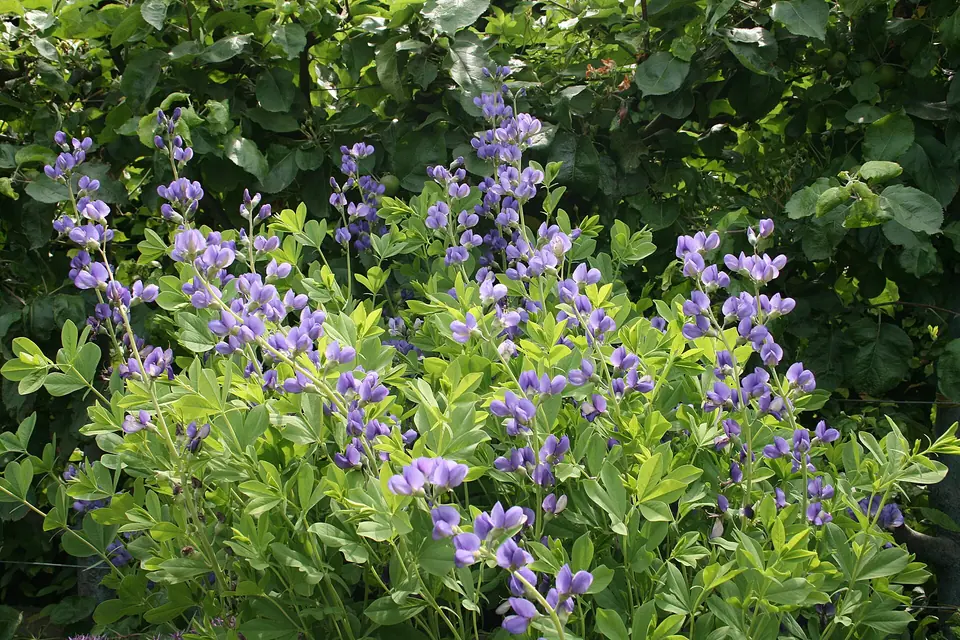


How to Grow and Care for Blue False Indigo
Baptisia australis
Written by Emilio Marruso · last checked
Toxic to: Cats, Animals, People · Why
At a glance
Baptisia is an easygoing perennial that asks for very little. Give it full sun for the best blooms, water it well until it settles in, and after that it shrugs off dry spells. As a legume that makes its own nitrogen, it needs little or no fertilizer, so it's a lovely, low-fuss plant to grow year after year.
- Sun
Full sun to part shade; it blooms best in full sun
What the sources say (1)
Light: Full sun to part shade; best blooming in full sun
grows 3 to 4 feet tall and 2 to 4 feet wide in full sun to part shade but best blooming is in full sun
— Baptisia australis (Blue False Indigo, Blue Wild Indigo, False Indigo, Wild Indigo) | North Carolina Extension Gardener Plant Toolbox [1] - Water
Water well until settled, then it handles drought; too much water makes stems flop
What the sources say (3)
Watering: Drought tolerant once established
Keep well-watered until established, after which time it is drought tolerant.
— Blue False Indigo, Baptisia australis – Wisconsin Horticulture [2] The deep tap root makes it drought tolerant but difficult to transplant.
— Baptisia australis (Blue False Indigo, Blue Wild Indigo, False Indigo, Wild Indigo) | North Carolina Extension Gardener Plant Toolbox [1] Watering notes: Keep well-watered until established; overwatering may cause the stems to flop over
Keep well-watered until established, after which time it is drought tolerant. Overwatering may cause the stems to flop over.
— Blue False Indigo, Baptisia australis – Wisconsin Horticulture [2] - Cold
Survives winters down to −40 °F (−40 °C)
Very hardy · USDA 3a · RHS H7 · Z3
What the sources say (6)
Hardiness, coldest zone: 3a [winter low −40 to −37.2 °C (−40 to −35 °F)]
USDA Plant Hardiness Zone: 3a, 3b, 4a, 4b, 5a, 5b, 6a, 6b, 7a, 7b, 8a, 8b, 9a, 9b
— Baptisia australis (Blue False Indigo, Blue Wild Indigo, False Indigo, Wild Indigo) | North Carolina Extension Gardener Plant Toolbox [1] Baptisia australis , or blue false indigo, is a long-lived perennial legume, hardy in zones 3a to 9b
— Blue False Indigo, Baptisia australis – Wisconsin Horticulture [2] Hardiness, warmest zone:
According to NC State Extension: USDA Plant Hardiness Zone: 3a, 3b, 4a, 4b, 5a, 5b, 6a, 6b, 7a, 7b, 8a, 8b, 9a, 9b
— Baptisia australis (Blue False Indigo, Blue Wild Indigo, False Indigo, Wild Indigo) | North Carolina Extension Gardener Plant Toolbox [1] According to UW-Madison Extension: hardy in zones 3a to 9b
— Blue False Indigo, Baptisia australis – Wisconsin Horticulture [2] According to Penn State Extension: Easy to grow in Zones 3-10
— False Blue Indigo [6] According to University of Illinois Extension: USDA Hardiness Zone 3 - 9
— Blue False Indigo (Baptisia australis)-Hort Answers - University of Illinois Extension [7] - Planting
Move or divide in cool weather; early spring, before new shoots grow long, is best
What the sources say (1)
Planting: Can be transplanted or divided in cool weather if kept well watered until re-established; early spring before new shoots have elongated is the best time to divide
It can, however, be transplanted or divided in cool weather if kept well watered until re-established. If it needs to be divided, early spring, before new shoots have elongated, is the best time .
— Blue False Indigo, Baptisia australis – Wisconsin Horticulture [2] - Feeding
Little or no fertilizer: it makes its own nitrogen
What the sources say (2)
How often: Little or none: as a nitrogen-fixing legume it does not need much fertilizer
Because it can fix nitrogen in the soil like most legumes, it does not require much fertilization .
— Blue False Indigo, Baptisia australis – Wisconsin Horticulture [2] It is a long-lived plant, and it requires no chemical input (fertilizer, pesticides) and needs no pruning.
— False Blue Indigo [6] - Pruning
Cut stems to the ground in late fall, winter or early spring, before new shoots appear
What the sources say (2)
Pruning: After flowering if seed pods are not desired; cut stems back to the ground in late fall, winter, or early spring before new shoots appear
Prune after flowering if seed pods are not desired and to shape.
— Baptisia australis (Blue False Indigo, Blue Wild Indigo, False Indigo, Wild Indigo) | North Carolina Extension Gardener Plant Toolbox [1] Cut the stems back to the ground in late fall, winter, or early spring before new shoots appear.
— Blue False Indigo, Baptisia australis – Wisconsin Horticulture [2] - Pests
Weevils often get into the seed pods and spoil the seeds
What the sources say (2)
Pests: weevils (seed pod weevils)
Weevils often infest the seed pods, however, making the number of viable seeds very low.
— Blue False Indigo, Baptisia australis – Wisconsin Horticulture [2] A weevil commonly damages seed, but does not affect the appearance of the plant.
— Baptisia (False or Wild Indigo) | Home & Garden Information Center [8] - Watch out
Heavy seed pods make stems flop: remove spent flowers and don't overwater
What the sources say (1)
Watering notes: Keep well-watered until established; overwatering may cause the stems to flop over
Keep well-watered until established, after which time it is drought tolerant. Overwatering may cause the stems to flop over.
— Blue False Indigo, Baptisia australis – Wisconsin Horticulture [2] - Propagation
From seed, stem cuttings, root cuttings or division
What the sources say (3)
Propagation: Seed; stem cuttings; root cuttings; division
Recommended Propagation Strategy: Root Cutting Seed Country Or Region Of Origin: Central & Eastern U.S.A
— Baptisia australis (Blue False Indigo, Blue Wild Indigo, False Indigo, Wild Indigo) | North Carolina Extension Gardener Plant Toolbox [1] Prune after flowering if seed pods are not desired and to shape. Propagation is by seeds or stem cuttings.
— Baptisia australis (Blue False Indigo, Blue Wild Indigo, False Indigo, Wild Indigo) | North Carolina Extension Gardener Plant Toolbox [1] It can, however, be transplanted or divided in cool weather if kept well watered until re-established. If it needs to be divided, early spring, before new shoots have elongated, is the best time .
— Blue False Indigo, Baptisia australis – Wisconsin Horticulture [2] - Sowing
Sow fresh seed 1/4 inch deep; it sprouts within 2 weeks. Stored seed needs 6–12 weeks in the fridge
What the sources say (4)
Sowing depth: 0.6 cm (1/4 in)
Plant seed ¼” deep. Fresh seed usually germinates within 2 weeks.
— Baptisia (False or Wild Indigo) | Home & Garden Information Center [8] Days to germination: within 14 days (2 weeks), fresh seed
Plant seed ¼” deep. Fresh seed usually germinates within 2 weeks.
— Baptisia (False or Wild Indigo) | Home & Garden Information Center [8] Saving seeds: Collect seed when the pods darken and begin to split; inspect for weevil holes and discard damaged seed; seed saved for later sowing is stratified (chilled) in the refrigerator for 6 to 12 weeks
Collect seed when the pods darken and begin to split. Inspect seed for small holes made by weevils and discard damaged seeds.
— Baptisia (False or Wild Indigo) | Home & Garden Information Center [8] If seed is saved for later sowing, stratify (chill) the seeds in the refrigerator for 6 to 12 weeks.
— Baptisia (False or Wild Indigo) | Home & Garden Information Center [8] - Safety
All parts are poisonous to people and cats; eaten in quantity, they cause vomiting and diarrhea
Overview
Blue false indigo is a long-lived herbaceous perennial legume native to central and eastern North America. [2][1] It grows in full sun to part shade and becomes drought tolerant once established. [1][2] Its deep tap root makes it difficult to transplant. [1]
Blue False Indigo care
How to water Blue False Indigo
Watering
Drought tolerant once established
What the sources say (2)
Keep well-watered until established, after which time it is drought tolerant.The deep tap root makes it drought tolerant but difficult to transplant.Watering notes
Keep well-watered until established; overwatering may cause the stems to flop over
What the sources say (1)
Keep well-watered until established, after which time it is drought tolerant. Overwatering may cause the stems to flop over.How much light Blue False Indigo needs
Full sun to part shade; best blooming in full sun
What the sources say (1)
grows 3 to 4 feet tall and 2 to 4 feet wide in full sun to part shade but best blooming is in full sunHow much cold Blue False Indigo can take
Hardiness, coldest zone
3a [winter low −40 to −37.2 °C (−40 to −35 °F)]
What the sources say (2)
USDA Plant Hardiness Zone:
3a, 3b, 4a, 4b, 5a, 5b, 6a, 6b, 7a, 7b, 8a, 8b, 9a, 9bBaptisia australis , or blue false indigo, is a long-lived perennial legume, hardy in zones 3a to 9bHardiness, warmest zone
The sources give different values depending on region, zone or growing conditions.
What each source says
According to NC State Extension: 9b [winter low −3.9 to −1.1 °C (25 to 30 °F)]
According to UW-Madison Extension: 9b [winter low −3.9 to −1.1 °C (25 to 30 °F)]
According to Penn State Extension: 10 [winter low −1.1 to 4.4 °C (30 to 40 °F)]
According to University of Illinois Extension: 9 [winter low −6.7 to −1.1 °C (20 to 30 °F)]
What the sources say (4)
According to NC State Extension: USDA Plant Hardiness Zone:
3a, 3b, 4a, 4b, 5a, 5b, 6a, 6b, 7a, 7b, 8a, 8b, 9a, 9bAccording to UW-Madison Extension: hardy in zones 3a to 9bAccording to Penn State Extension: Easy to grow in Zones 3-10According to University of Illinois Extension: USDA Hardiness Zone
3 - 9Best soil for Blue False Indigo
The sources give different values depending on region, zone or growing conditions.
What each source says
According to NC State Extension: 6.0
According to University of Maryland Extension: 6.8
According to UW-Madison Extension: not acidic (does not bloom well in acidic soils)
According to Penn State Extension: slightly acid soil preferred
What the sources say (4)
According to NC State Extension: Soil pH:
Acid (<6.0)According to University of Maryland Extension: Soil: sandy-rocky soil; tolerates clay; pH < 6.8According to UW-Madison Extension: The plant does not bloom well in acidic soils, so adding lime in those conditions can improve flowering.According to Penn State Extension: It prefers slightly acid soil but will do well as long as the soil is well-drained.How to propagate Blue False Indigo
Seed; stem cuttings; root cuttings; division
What the sources say (3)
Recommended Propagation Strategy:
Root Cutting
Seed
Country Or Region Of Origin:
Central & Eastern U.S.APrune after flowering if seed pods are not desired and to shape. Propagation is by seeds or stem cuttings.It can, however, be transplanted or divided in cool weather if kept well watered until re-established. If it needs to be divided, early spring, before new shoots have elongated, is the best time .How to grow Blue False Indigo
The plant
Life cycle
perennial
What the sources say (2)
Life Cycle:
Perennial
Recommended Propagation Strategy:
Root Cutting
Seed
Country Or Region Of Origin:
Central & Eastern U.S.ABaptisia australis , or blue false indigo, is a long-lived perennial legume, hardy in zones 3a to 9bFamily
Fabaceae
What the sources say (1)
Genus:
Baptisia
Species:
australis
Family:
Fabaceae
Uses (Ethnobotany):
Uses by indigenous people included rattles (from the ripened seed pods) for children and blue dye.Mature height
Sowing and growth
Days to germination
within 14 days (2 weeks), fresh seed
What the sources say (1)
Plant seed ¼” deep. Fresh seed usually germinates within 2 weeks.Sowing depth
0.6 cm (1/4 in)
What the sources say (1)
Plant seed ¼” deep. Fresh seed usually germinates within 2 weeks.Harvest and storage
Saving seeds
Collect seed when the pods darken and begin to split; inspect for weevil holes and discard damaged seed; seed saved for later sowing is stratified (chilled) in the refrigerator for 6 to 12 weeks
What the sources say (2)
Collect seed when the pods darken and begin to split. Inspect seed for small holes made by weevils and discard damaged seeds.If seed is saved for later sowing, stratify (chill) the seeds in the refrigerator for 6 to 12 weeks.Pests and diseases
Pests
weevils (seed pod weevils)
What the sources say (2)
Weevils often infest the seed pods, however, making the number of viable seeds very low.A weevil commonly damages seed, but does not affect the appearance of the plant.Fertilizing
How often
Little or none: as a nitrogen-fixing legume it does not need much fertilizer
What the sources say (2)
Because it can fix nitrogen in the soil like most legumes, it does not require much fertilization .It is a long-lived plant, and it requires no chemical input (fertilizer, pesticides) and needs no pruning.Blue False Indigo pests and problems
Seed pod weevils
Symptom: Weevils often infest the seed pods, making the number of viable seeds very low
What to do: Not stated in sources
What the sources say (1)
Weevils often infest the seed pods, however, making the number of viable seeds very low.
— Blue False Indigo, Baptisia australis – Wisconsin Horticulture [2] Floppy stems
Symptom: Heavy seed pods cause stems to flop over; overwatering may also cause flopping
What to do: Deadheading eliminates the problem with heavy pods; avoid overwatering
What the sources say (1)
The architectural appearance of the seed pods can lend winter interest , but because of their heavy weight, they often cause the stems to flop over. Deadheading will eliminate this problem, as well as self-seeding.
— Blue False Indigo, Baptisia australis – Wisconsin Horticulture [2]
Remedies
Each remedy shows what official sources say about it; traditional remedies without an official source are marked as such. Harmful ones are listed so you know to avoid them.
Treating the plant
weevils
discarding weevil-damaged seeds Official source, not independently tested
How: Inspect seed for small holes made by weevils and discard damaged seeds.
Inspect seed for small holes made by weevils and discard damaged seeds.
— Baptisia (False or Wild Indigo) | Home & Garden Information Center [8]
spider mites
strong water stream Not verified
Traditional remedy, not verified by an official source.
How: Identify stippling damage and webbing on the foliage; remove the mites with strong water streams.
neem oil Partly works
How: Apply neem oil to the foliage after identifying stippling damage and webbing.
Spider Mites: Identify stippling damage and webbing on foliage. Remove with strong water streams or apply neem oil.
— 8billiontrees.com [9] What the evidence says However, neem oil is not effective against every insect and disease, and often must be frequently reapplied to reach the desired outcome.
— extension.unh.edu [10]
aphids
insecticidal soap spray Works
spraying home remedies that contain dish detergent on plants on a sunny day can injure the plant, essentially burning it.
— extension.psu.edu [12] How: Treat visible aphid colonies with insecticidal soap spray.
Aphids: Treat visible colonies with insecticidal soap spray. Ladybugs and lacewings will feed on them.
— 8billiontrees.com [9] What the evidence says For example, insecticidal soap is a safe, effective organic insecticide with minimal environmental impact.
— extension.psu.edu [11] encouraging ladybugs and lacewings Not verified
Traditional remedy, not verified by an official source.
How: Ladybugs and lacewings will feed on aphid colonies.
Is Blue False Indigo toxic to pets?
Reported by the source, quoted verbatim. This is not medical or veterinary advice: if a person or an animal may have eaten this plant, contact a poison control centre or a veterinarian.
Animals
Allelopathic Problem for Cats Problem for Children Weedy
[1]The source flags the risk for this animal but does not explain why.
There is an alkaloid in the plant which makes it toxic to many insects, although butterfly larvae appear to be unaffected.
[6]
People
Causes low toxicity only if eaten in quantity. Poisonous through ingestion. All parts are poisonous. Symptoms: Nausea, vomiting, diarrhea
[1]- Poisonous parts
All parts are poisonous.
[1]- Poisonous parts
Poison Part: Bark Flowers Fruits Leaves Roots Sap/Juice Seeds Stems
[1]- Toxic principle
Poison Toxic Principle: Baptisin and cytisine
[1]- Symptoms
Symptoms: Nausea, vomiting, diarrhea
[1]- Severity
Causes low toxicity only if eaten in quantity. Poisonous through ingestion.
[1]
Calendar
Planting
Can be transplanted or divided in cool weather if kept well watered until re-established; early spring before new shoots have elongated is the best time to divide
What the sources say (1)
It can, however, be transplanted or divided in cool weather if kept well watered until re-established. If it needs to be divided, early spring, before new shoots have elongated, is the best time .Pruning
After flowering if seed pods are not desired; cut stems back to the ground in late fall, winter, or early spring before new shoots appear
What the sources say (2)
Prune after flowering if seed pods are not desired and to shape.Cut the stems back to the ground in late fall, winter, or early spring before new shoots appear.Months as given by the sources, which are mostly from the United States (northern hemisphere). In the southern hemisphere they shift by about six months.
Relative to frost
Less precise estimate: there is no weather station within 300 km.
Find frost dates by ZIP code or city
Transplant: around the last frost
New seedlings can be planted outside after last frost date in spring,
— Baptisia (False or Wild Indigo) | Home & Garden Information Center [8]
Count from the average frost dates where you live.
Indicative values
Values from a secondary source, not checked word for word like the rest of this page. Use them as a starting point.
- Drought tolerant
- yesIndicative value, adapt it to your climate · Secondary source
- Care level
- MediumIndicative value, adapt it to your climate · Secondary source
- Growth rate
- LowIndicative value, adapt it to your climate · Secondary source
Similar plants
- White Wild Indigo Baptisia alba
- Wild Indigo Baptisia tinctoria
- Afghan Redbud Cercis griffithii
- American Groundnut Apios americana
- Amur Maackia Maackia amurensis
- Bauhinia Bauhinia blakeana
- Bean Phaseolus vulgaris
- Bicolor Lespedeza Lespedeza bicolor
Sources
Every value above is quoted from these documents. Links lead to the original publisher.
- Baptisia australis (Blue False Indigo, Blue Wild Indigo, False Indigo, Wild Indigo) | North Carolina Extension Gardener Plant Toolbox · plants.ces.ncsu.edu, consulted
- Blue False Indigo, Baptisia australis – Wisconsin Horticulture · hort.extension.wisc.edu, consulted
- False Blue Indigo | University of Maryland Extension · extension.umd.edu, consulted
- Baptisia (Baptisia, False Indigo, Wild Indigo) | North Carolina Extension Gardener Plant Toolbox · plants.ces.ncsu.edu, consulted
- Baptisia: A Hardy, Flowering Perennial · extension.sdstate.edu, consulted
- False Blue Indigo · extension.psu.edu, consulted
- Blue False Indigo (Baptisia australis)-Hort Answers - University of Illinois Extension · web.extension.illinois.edu, consulted
- Baptisia (False or Wild Indigo) | Home & Garden Information Center · hgic.clemson.edu, consulted
- 8billiontrees.com · 8billiontrees.com
- extension.unh.edu · extension.unh.edu
- extension.psu.edu · extension.psu.edu
- extension.psu.edu · extension.psu.edu
Written by Emilio Marruso · last checked