
How to Grow and Care for Bicolor Lespedeza
Lespedeza bicolor
Written by Emilio Marruso · last checked
At a glance
Bicolor lespedeza is a tough woody plant that shrugs off dry soil and drought, happy in full sun or partial shade. It grows 5 to 10 feet tall and just as wide, and a hard pruning in early spring keeps it in shape. Go easy on fertilizer, and keep an eye on it: it can spread and form dense thickets.
- Sun
Full sun to partial shade
What the sources say (1)
Light: Full sun to partial shade
Well-drained soil in full sun to partial shade is preferred while it is very tolerant of poor, dry soils and drought.
— Lespedeza bicolor (Bicolor Lespedeza, Shrub Bushclover, Shrubby Lespedeza) | North Carolina Extension Gardener Plant Toolbox [1] - Water
Very tolerant of dry soil and drought
What the sources say (1)
Watering: Very tolerant of dry soils and drought
Well-drained soil in full sun to partial shade is preferred while it is very tolerant of poor, dry soils and drought.
— Lespedeza bicolor (Bicolor Lespedeza, Shrub Bushclover, Shrubby Lespedeza) | North Carolina Extension Gardener Plant Toolbox [1] - Cold
Survives winters down to −30 °F (−34.4 °C)
Very hardy · USDA 4a · RHS H7 · Z4
What the sources say (2)
Hardiness, coldest zone: 4a [winter low −34.4 to −31.7 °C (−30 to −25 °F)]
USDA Plant Hardiness Zone: 4a, 4b, 5a, 5b, 6a, 6b, 7a, 7b, 8a, 8b
— Lespedeza bicolor (Bicolor Lespedeza, Shrub Bushclover, Shrubby Lespedeza) | North Carolina Extension Gardener Plant Toolbox [1] Hardiness, warmest zone: 8b [winter low −9.4 to −6.7 °C (15 to 20 °F)]
USDA Plant Hardiness Zone: 4a, 4b, 5a, 5b, 6a, 6b, 7a, 7b, 8a, 8b
— Lespedeza bicolor (Bicolor Lespedeza, Shrub Bushclover, Shrubby Lespedeza) | North Carolina Extension Gardener Plant Toolbox [1] - Feeding
Avoid too much fertilizer
What the sources say (1)
Avoid: Excess fertilizer
Avoid excess fertilizer as it becomes leggy and unkept with age and prune back heavily in early spring.
— Lespedeza bicolor (Bicolor Lespedeza, Shrub Bushclover, Shrubby Lespedeza) | North Carolina Extension Gardener Plant Toolbox [1] - Pruning
Cut it back hard in early spring
What the sources say (1)
Pruning: Early spring (prune back heavily)
Avoid excess fertilizer as it becomes leggy and unkept with age and prune back heavily in early spring.
— Lespedeza bicolor (Bicolor Lespedeza, Shrub Bushclover, Shrubby Lespedeza) | North Carolina Extension Gardener Plant Toolbox [1] - Watch out
Can spread and form dense thickets; dig up and bag clumps so the seeds don't spread
- Size
5 to 10 ft tall and just as wide
What the sources say (2)
Mature height: 152.4-304.8 cm (5-10 ft)
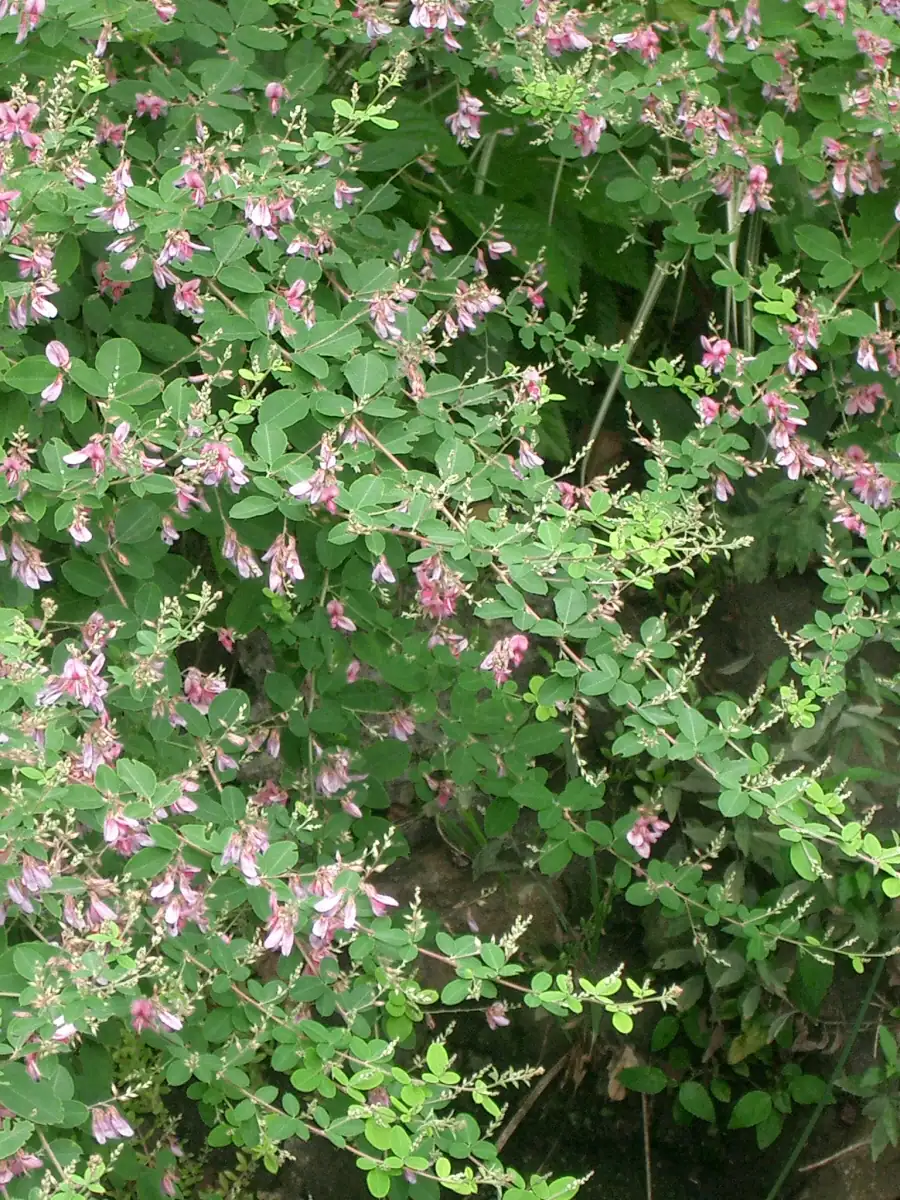
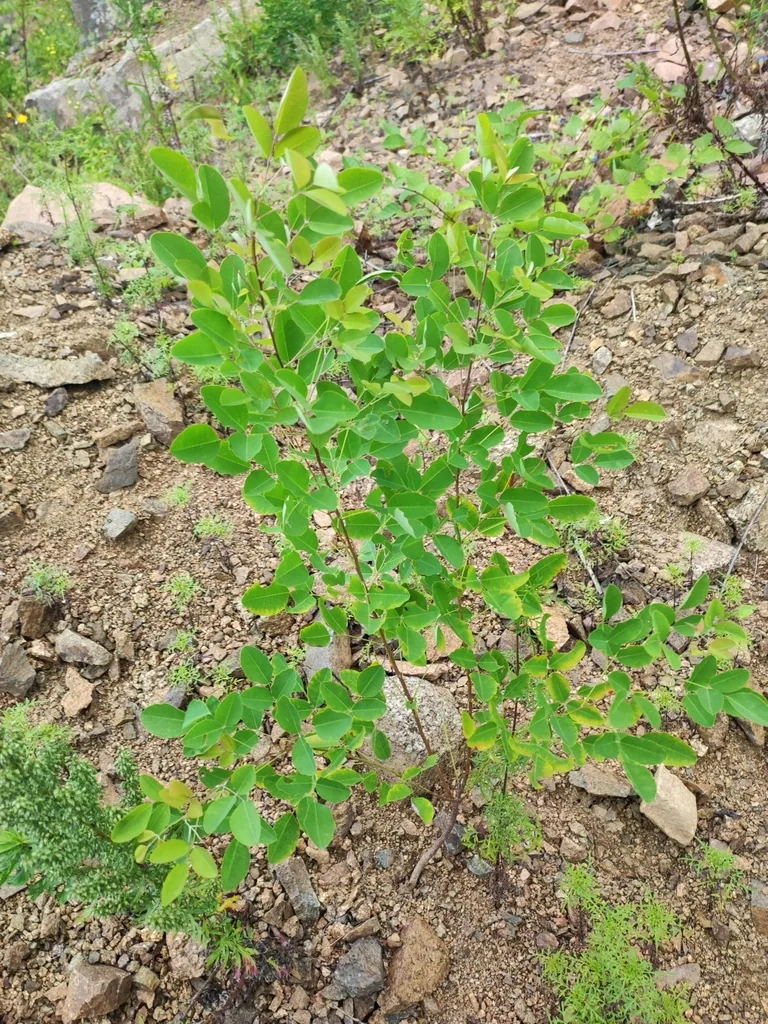
It grows as an upright, open, loosely branched, arching shrub reaching a mature height and width of 5 to 10 feet.
— Lespedeza bicolor (Bicolor Lespedeza, Shrub Bushclover, Shrubby Lespedeza) | North Carolina Extension Gardener Plant Toolbox [1] Mature width: 152.4-304.8 cm (5-10 ft)
It grows as an upright, open, loosely branched, arching shrub reaching a mature height and width of 5 to 10 feet.
— Lespedeza bicolor (Bicolor Lespedeza, Shrub Bushclover, Shrubby Lespedeza) | North Carolina Extension Gardener Plant Toolbox [1]
Overview
Bicolor lespedeza is a deciduous shrub that the source lists as invasive in North Carolina and several other states. [1] It prefers well-drained soil in full sun to partial shade and tolerates poor, dry soils and drought. [1]
This record is incomplete: the sources we read do not cover every field yet.
Not yet covered by our sources: Propagation
Bicolor Lespedeza care
How to water Bicolor Lespedeza
Very tolerant of dry soils and drought
What the sources say (1)
Well-drained soil in full sun to partial shade is preferred while it is very tolerant of poor, dry soils and drought.How much light Bicolor Lespedeza needs
Full sun to partial shade
What the sources say (1)
Well-drained soil in full sun to partial shade is preferred while it is very tolerant of poor, dry soils and drought.How much cold Bicolor Lespedeza can take
Hardiness, coldest zone
4a [winter low −34.4 to −31.7 °C (−30 to −25 °F)]
What the sources say (1)
USDA Plant Hardiness Zone:
4a, 4b, 5a, 5b, 6a, 6b, 7a, 7b, 8a, 8bHardiness, warmest zone
8b [winter low −9.4 to −6.7 °C (15 to 20 °F)]
What the sources say (1)
USDA Plant Hardiness Zone:
4a, 4b, 5a, 5b, 6a, 6b, 7a, 7b, 8a, 8bHow to propagate Bicolor Lespedeza
Not stated in the sources we read.
How to grow Bicolor Lespedeza
The plant
Life cycle
woody
What the sources say (1)
Genus: Lespedeza Species: bicolor Family: Fabaceae Life Cycle: WoodyFamily
Fabaceae
What the sources say (1)
Genus: Lespedeza Species: bicolor Family: Fabaceae Life Cycle: WoodyMature height
152.4-304.8 cm (5-10 ft)
What the sources say (1)
It grows as an upright, open, loosely branched, arching shrub reaching a mature height and width of 5 to 10 feet.Mature width
152.4-304.8 cm (5-10 ft)
What the sources say (1)
It grows as an upright, open, loosely branched, arching shrub reaching a mature height and width of 5 to 10 feet.Fertilizing
Avoid
Excess fertilizer
What the sources say (1)
Avoid excess fertilizer as it becomes leggy and unkept with age and prune back heavily in early spring.Bicolor Lespedeza pests and problems
Invasive spread
Symptom: Forms dense thickets that limit forest regeneration and crowd out native vegetation.
What to do: Clumps can be dug up and bagged in heavy-duty garbage bags so the seeds do not spread.
What the sources say (2)
This invasive shrub was introduced for soil stabilization and in wildlife food plots but it easily spreads in openings and under forest canopies. The plant can form dense thickets that limit forest regeneration and crowding out native vegetation.
— Lespedeza bicolor (Bicolor Lespedeza, Shrub Bushclover, Shrubby Lespedeza) | North Carolina Extension Gardener Plant Toolbox [1] Clumps can be dug up and bagged in large heavy-duty garbage bags so the seeds do not spread.
— Lespedeza bicolor (Bicolor Lespedeza, Shrub Bushclover, Shrubby Lespedeza) | North Carolina Extension Gardener Plant Toolbox [1]
Remedies
Each remedy shows what official sources say about it; traditional remedies without an official source are marked as such. Harmful ones are listed so you know to avoid them.
Getting rid of it
invasive-spread
digging up clumps and bagging them Official source, not independently tested
How: Dig up the clumps and bag them in large heavy-duty garbage bags so the seeds do not spread.
Clumps can be dug up and bagged in large heavy-duty garbage bags so the seeds do not spread.
— Lespedeza bicolor (Bicolor Lespedeza, Shrub Bushclover, Shrubby Lespedeza) | North Carolina Extension Gardener Plant Toolbox [1] hand-pulling young plants in moist soil Not verified
Traditional remedy, not verified by an official source.
How: Hand-pulling works only when the soil is moist and the plant is young (page on invasive Lespedeza cuneata).
mowing or string-trimming at 12 inches Not verified
Traditional remedy, not verified by an official source.
How: Mow or string-trim when spring growth is about 12 inches tall, then mow again when flowering begins on the regrowth (page on invasive Lespedeza cuneata).
Calendar
Pruning
Early spring (prune back heavily)
What the sources say (1)
Avoid excess fertilizer as it becomes leggy and unkept with age and prune back heavily in early spring.Months as given by the sources, which are mostly from the United States (northern hemisphere). In the southern hemisphere they shift by about six months.
Indicative values
Values from a secondary source, not checked word for word like the rest of this page. Use them as a starting point.
- Drought tolerant
- yesIndicative value, adapt it to your climate · Secondary source
- Soil pH
- 5.5-7.5Indicative value, adapt it to your climate · Secondary source
- Care level
- MediumIndicative value, adapt it to your climate · Secondary source
- Growth rate
- LowIndicative value, adapt it to your climate · Secondary source
- Propagation
- Seed Propagation, Cutting, Layering Propagation, DivisionIndicative value, adapt it to your climate · Secondary source
Similar plants
- Bush Clover Lespedeza capitata
- Bush Clover Lespedeza thunbergii
- Bush Clover Lespedeza virginica
- Sericea Lespedeza cuneata
- Afghan Redbud Cercis griffithii
- American Groundnut Apios americana
- American hogpeanut Amphicarpaea bracteata
- Amur Maackia Maackia amurensis
Sources
Every value above is quoted from these documents. Links lead to the original publisher.
- Lespedeza bicolor (Bicolor Lespedeza, Shrub Bushclover, Shrubby Lespedeza) | North Carolina Extension Gardener Plant Toolbox · plants.ces.ncsu.edu, consulted
Written by Emilio Marruso · last checked