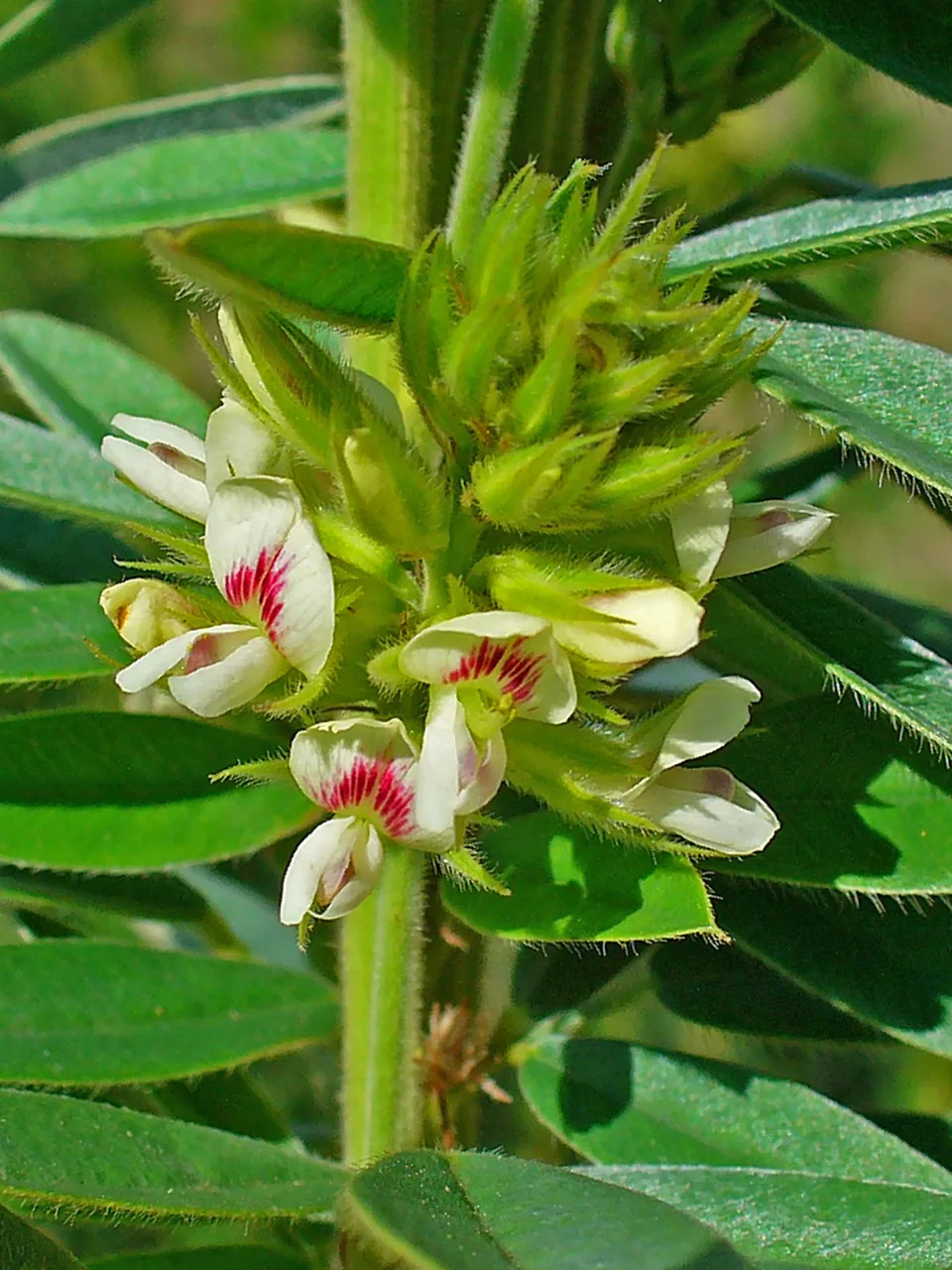


How to Grow and Care for Bush Clover
Lespedeza capitata
Written by Emilio Marruso · last checked
At a glance
Round-headed bush clover is a tough perennial that thrives in full sun to partial shade and grows 2 to 5 feet tall. Once established, it handles dry spells well and asks only for well-drained soil. Its flowers feed pollinators with nectar, and birds and small mammals feast on the seeds, so your garden fills with life.
- Sun
Full sun to partial shade
What the sources say (2)
Light: Full sun to partial shade
Plant in the full sun in moist to dry soils.
— Lespedeza capitata (Bush Clover, Round-headed Bush Clover) | North Carolina Extension Gardener Plant Toolbox [1] Light: Full sun (6 or more hours of direct sunlight a day) Partial Shade (Direct sunlight only part of the day, 2-6 hours)
— Lespedeza capitata (Bush Clover, Round-headed Bush Clover) | North Carolina Extension Gardener Plant Toolbox [1] - Water
Likes moist to dry soil; handles drought well once established
What the sources say (1)
Watering: Moist to dry soils; quite drought tolerant once established
Plant in the full sun in moist to dry soils. Clay, loam, sand or even shallow rocky soils are all appropriate. Once established this plant is quite drought tolerant
— Lespedeza capitata (Bush Clover, Round-headed Bush Clover) | North Carolina Extension Gardener Plant Toolbox [1] - Cold
Survives winters down to −30 °F (−34.4 °C)
Very hardy · USDA 4a · RHS H7 · Z4
What the sources say (2)
Hardiness, coldest zone: 4a [winter low −34.4 to −31.7 °C (−30 to −25 °F)]
USDA Plant Hardiness Zone: 4a, 4b, 5a, 5b, 6a, 6b, 7a, 7b, 8a, 8b
— Lespedeza capitata (Bush Clover, Round-headed Bush Clover) | North Carolina Extension Gardener Plant Toolbox [1] Hardiness, warmest zone: 8b [winter low −9.4 to −6.7 °C (15 to 20 °F)]
USDA Plant Hardiness Zone: 4a, 4b, 5a, 5b, 6a, 6b, 7a, 7b, 8a, 8b
— Lespedeza capitata (Bush Clover, Round-headed Bush Clover) | North Carolina Extension Gardener Plant Toolbox [1] - Soil
Grows in many kinds of soil, as long as it drains well
What the sources say (1)
Watering notes: Adaptable to different soil types as long as they are well-drained
It is adaptable to different soil types as long as they are well-drained and is drought-tolerant.
— Lespedeza capitata (Bush Clover, Round-headed Bush Clover) | North Carolina Extension Gardener Plant Toolbox [1] - Pollination
Its nectar feeds pollinators, and birds and small mammals eat the seeds
- Size
2 to 5 ft tall
What the sources say (1)
Mature height: 60.96-152.4 cm (2-5 ft)
The upright stems reach a height of 2 to 5 feet tall and the plant is 1 to 3 feet wide.
— Lespedeza capitata (Bush Clover, Round-headed Bush Clover) | North Carolina Extension Gardener Plant Toolbox [1]
Overview
Round-headed bush clover is a native perennial wildflower of the bean family that reaches 2 to 5 feet [0.6–1.5 m] tall. [1] It is planted in full sun and, once established, is quite drought tolerant. [1] It supports butterflies, pollinators, birds and small mammals. [1]
This record is incomplete: the sources we read do not cover every field yet.
Not yet covered by our sources: Pruning, Propagation
Bush Clover care
Measurements in square brackets are our conversion into the other unit system; the quoted text is unchanged.
How to water Bush Clover
Watering
Moist to dry soils; quite drought tolerant once established
What the sources say (1)
Plant in the full sun in moist to dry soils. Clay, loam, sand or even shallow rocky soils are all appropriate. Once established this plant is quite drought tolerantWatering notes
Adaptable to different soil types as long as they are well-drained
What the sources say (1)
It is adaptable to different soil types as long as they are well-drained and is drought-tolerant.How much light Bush Clover needs
Full sun to partial shade
What the sources say (2)
Plant in the full sun in moist to dry soils.Light:
Full sun (6 or more hours of direct sunlight a day)
Partial Shade (Direct sunlight only part of the day, 2-6 hours)How much cold Bush Clover can take
Hardiness, coldest zone
4a [winter low −34.4 to −31.7 °C (−30 to −25 °F)]
What the sources say (1)
USDA Plant Hardiness Zone:
4a, 4b, 5a, 5b, 6a, 6b, 7a, 7b, 8a, 8bHardiness, warmest zone
8b [winter low −9.4 to −6.7 °C (15 to 20 °F)]
What the sources say (1)
USDA Plant Hardiness Zone:
4a, 4b, 5a, 5b, 6a, 6b, 7a, 7b, 8a, 8bHow to propagate Bush Clover
Not stated in the sources we read.
How to grow Bush Clover
The plant
Life cycle
perennial
What the sources say (1)
Genus: Lespedeza Species: capitata Family: Fabaceae Life Cycle: PerennialFamily
Fabaceae
What the sources say (1)
Genus: Lespedeza Species: capitata Family: Fabaceae Life Cycle: PerennialMature height
60.96-152.4 cm (2-5 ft)
What the sources say (1)
The upright stems reach a height of 2 to 5 feet tall and the plant is 1 to 3 feet wide.Remedies
Each remedy shows what official sources say about it; traditional remedies without an official source are marked as such. Harmful ones are listed so you know to avoid them.
Treating the plant
rabbit browsing
chicken-wire fence Works
Because it is high in protein and palatable, many mammalian herbivores eat the plant during different growth stages, including deer, rabbits, groundhogs, and livestock.
— m.illinoiswildflowers.info [3] How: A 2-foot chicken-wire fence with the bottom tight to the ground or buried a few inches.
A 2-foot, chicken-wire fence with the bottom tight to the ground or buried a few inches is sufficient.
— extension.psu.edu [2] What the evidence says Exclusion techniques, such as fences and tree wraps, are the most effective way to control damage and the only way to control damage in areas where rabbit populations are high.
— extension.psu.edu [2] chicken-wire cage over young plants Official source, not independently tested
Because it is high in protein and palatable, many mammalian herbivores eat the plant during different growth stages, including deer, rabbits, groundhogs, and livestock.
— m.illinoiswildflowers.info [3] How: A dome or cage of chicken wire secured over a small bed lets vulnerable plants get a good start.
A dome or cage of chicken wire secured over a small flower bed will allow vulnerable plants such as tulips to get a good start before they are left unprotected.
— extension.psu.edu [2]
Calendar
Pruning
Not stated in the sources we read.
Months as given by the sources, which are mostly from the United States (northern hemisphere). In the southern hemisphere they shift by about six months.
Edibility
Reported by the source, quoted verbatim. Do not eat a plant on the basis of this page alone: identification mistakes can be dangerous.
a nectar plant for pollinators and seeds are eaten by birds and small mammals.
[1]
Indicative values
Values from a secondary source, not checked word for word like the rest of this page. Use them as a starting point.
- Hours of sun
- 6-8 hoursIndicative value, adapt it to your climate · Secondary source
- Soil pH
- 6-7.5Indicative value, adapt it to your climate · Secondary source
- Care level
- MediumIndicative value, adapt it to your climate · Secondary source
- Growth rate
- LowIndicative value, adapt it to your climate · Secondary source
- Pruning
- March, April, May, June, July, August, September, March, April, May, June, JulyIndicative value, adapt it to your climate · Secondary source
- Propagation
- Seed Propagation, Cutting, Layering Propagation, DivisionIndicative value, adapt it to your climate · Secondary source
Similar plants
- Bicolor Lespedeza Lespedeza bicolor
- Bush Clover Lespedeza thunbergii
- Bush Clover Lespedeza virginica
- Sericea Lespedeza cuneata
- Afghan Redbud Cercis griffithii
- American Groundnut Apios americana
- Amur Maackia Maackia amurensis
- Bauhinia Bauhinia blakeana
Sources
Every value above is quoted from these documents. Links lead to the original publisher.
- Lespedeza capitata (Bush Clover, Round-headed Bush Clover) | North Carolina Extension Gardener Plant Toolbox · plants.ces.ncsu.edu, consulted
- extension.psu.edu · extension.psu.edu
- m.illinoiswildflowers.info · m.illinoiswildflowers.info
Written by Emilio Marruso · last checked