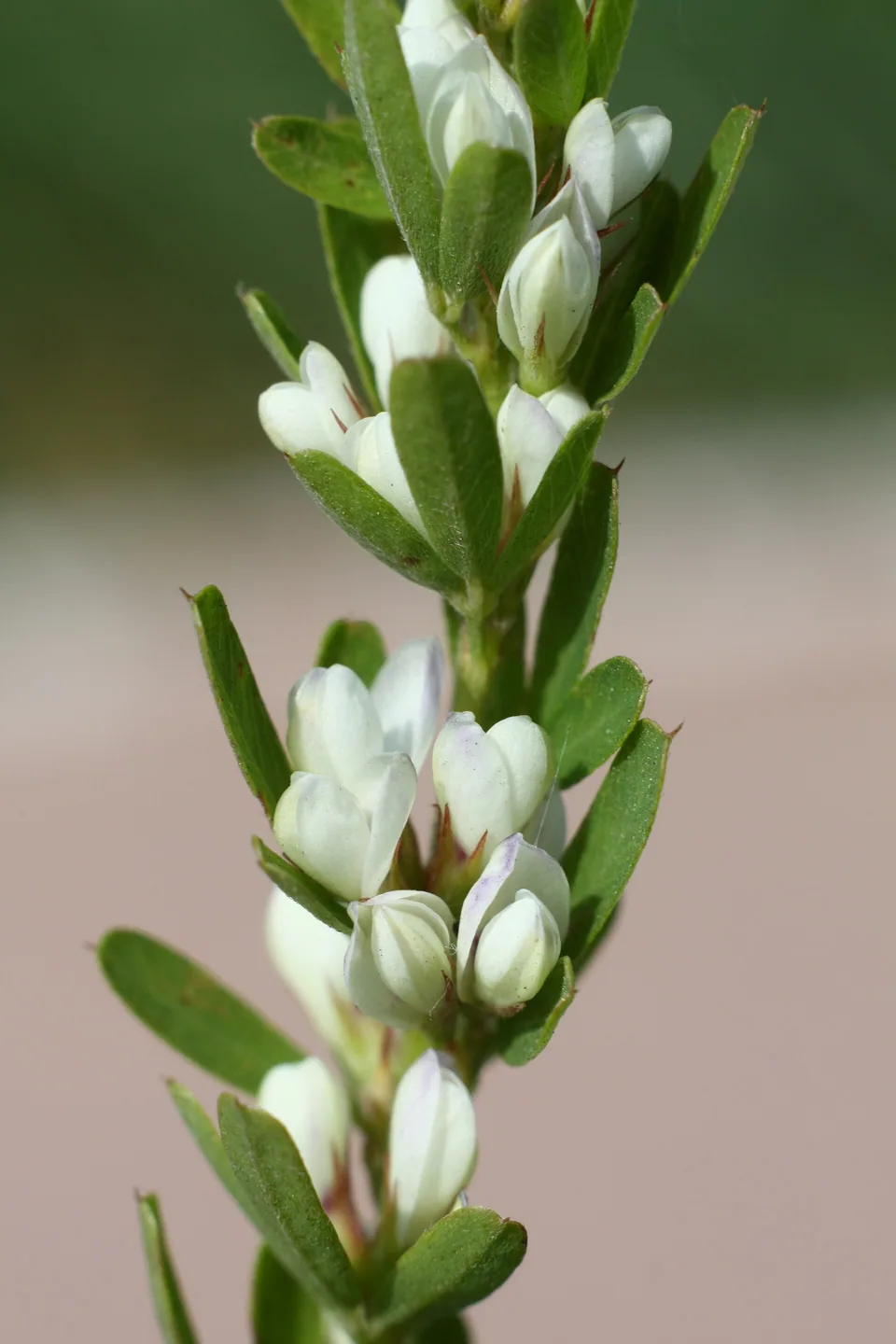


How to Grow and Care for Sericea
Lespedeza cuneata
Written by Emilio Marruso · last checked
At a glance
Sericea lespedeza is a tough, long-lived perennial that loves full sun and shrugs off drought. Grown from seed, it can be cut for hay when it reaches 15–24 inches tall, giving at least three cuts a year. Plant it with care, though: it spreads easily and builds up a large store of seeds in the soil.
- Sun
Full sun
What the sources say (2)
Light: Full sun
This plant prefers full sun and deep, well-drained, medium to coarse-textured acidic soils.
— Lespedeza cuneata (Chinese Bushclover, Chinese Lespedeza, Sericea, Sericea Lespedeza) | North Carolina Extension Gardener Plant Toolbox [1] Light: Full sun (6 or more hours of direct sunlight a day)
— Lespedeza cuneata (Chinese Bushclover, Chinese Lespedeza, Sericea, Sericea Lespedeza) | North Carolina Extension Gardener Plant Toolbox [1] - Water
Handles drought well
What the sources say (1)
Watering: Drought tolerant
It is recognized for its tolerance of drought, acidity, and shallow soils of low fertility.
— Sericea Lespedeza | K-State | Kansas State University [7] - Cold
Survives winters down to −30 °F (−34.4 °C)
Very hardy · USDA 4a · RHS H7 · Z4
What the sources say (2)
Hardiness, coldest zone: 4a [winter low −34.4 to −31.7 °C (−30 to −25 °F)]
USDA Plant Hardiness Zone: 4a, 4b, 5a, 5b, 6a, 6b, 7a, 7b, 8a, 8b, 9a, 9b
— Lespedeza cuneata (Chinese Bushclover, Chinese Lespedeza, Sericea, Sericea Lespedeza) | North Carolina Extension Gardener Plant Toolbox [1] Hardiness, warmest zone: 9b [winter low −3.9 to −1.1 °C (25 to 30 °F)]
USDA Plant Hardiness Zone: 4a, 4b, 5a, 5b, 6a, 6b, 7a, 7b, 8a, 8b, 9a, 9b
— Lespedeza cuneata (Chinese Bushclover, Chinese Lespedeza, Sericea, Sericea Lespedeza) | North Carolina Extension Gardener Plant Toolbox [1] - Feeding
Feed with a potassium fertilizer
What the sources say (1)
Mineral fertilizers: Potassium fertilizer
Fertilization: Well adapted to low fertility with good response to K fertilization.
— Sericea Lespedeza (Lespedeza cuneata) | Mississippi State University Extension Service [2] - Harvest
For hay, cut when plants are 15–24 inches tall; at least 3 cuts a year
What the sources say (1)
Harvest: For hay, cut when plants are between 15 and 24 inches [38–61 cm] high; at least 3 cuts per year can be obtained
Biomass for hay production should be cut when plants are between 15 and 24 inches high and at least 3 cuts per year can be obtained.
— Sericea Lespedeza (Lespedeza cuneata) | Mississippi State University Extension Service [2] - Pests
Fall armyworms and grasshoppers chew the leaves
What the sources say (1)
Pests: fall armyworms, grasshoppers
Fall armyworms and grasshoppers can cause damage in the leaves and reduce stand longevity.
— Sericea Lespedeza (Lespedeza cuneata) | Mississippi State University Extension Service [2] - Watch out
Invasive: it takes over large areas; mowing in flower for 2–3 years in a row helps control it
- Propagation
Grows from seed
What the sources say (1)
Propagation: Seed
Life cycle: Perennial reproducing by seed.
— Sericea lespedeza | Integrated Crop Management [3]
Overview
Sericea lespedeza is an erect perennial legume introduced to the United States for erosion control and livestock forage. [1] It is considered invasive in many areas, forms extensive monocultures and builds a long-lived seed bank. [1] It prefers full sun and deep, well-drained soils and tolerates drought and acidity. [1][7]
Sericea care
Measurements in square brackets are our conversion into the other unit system; the quoted text is unchanged.
How to water Sericea
Drought tolerant
What the sources say (1)
It is recognized for its tolerance of drought, acidity, and shallow soils of low fertility.How much light Sericea needs
Full sun
What the sources say (2)
This plant prefers full sun and deep, well-drained, medium to coarse-textured acidic soils.Light:
Full sun (6 or more hours of direct sunlight a day)How much cold Sericea can take
Hardiness, coldest zone
4a [winter low −34.4 to −31.7 °C (−30 to −25 °F)]
What the sources say (1)
USDA Plant Hardiness Zone:
4a, 4b, 5a, 5b, 6a, 6b, 7a, 7b, 8a, 8b, 9a, 9bHardiness, warmest zone
9b [winter low −3.9 to −1.1 °C (25 to 30 °F)]
What the sources say (1)
USDA Plant Hardiness Zone:
4a, 4b, 5a, 5b, 6a, 6b, 7a, 7b, 8a, 8b, 9a, 9bBest soil for Sericea
The sources give different values depending on region, zone or growing conditions.
What each source says
According to NC State Extension: 6.0
According to Mississippi State University Extension: 6.5
According to K-State: 6.5
What the sources say (3)
According to NC State Extension: Soil pH:
Acid (<6.0)According to Mississippi State University Extension: Sericea is tolerant to acid soils with high Al, but is best adapted to a pH of 6.0 to 6.5According to K-State: It will tolerate soils ranging from very acidic to slightly alkaline, but is best adapted to a pH of 6.0 to 6.5.How to propagate Sericea
Seed
What the sources say (1)
Life cycle: Perennial reproducing by seed.How to grow Sericea
The plant
Life cycle
perennial
What the sources say (1)
Chinese bush clover is a broadleaf herbaceous perennial weed in the legume family (Fabaceae) from Asia and Australia.Family
Fabaceae
What the sources say (1)
Chinese bush clover is a broadleaf herbaceous perennial weed in the legume family (Fabaceae) from Asia and Australia.Pests and diseases
Pests
fall armyworms, grasshoppers
What the sources say (1)
Fall armyworms and grasshoppers can cause damage in the leaves and reduce stand longevity.Fertilizing
Mineral fertilizers
Potassium fertilizer
What the sources say (1)
Fertilization: Well adapted to low fertility with good response to K fertilization.Sericea pests and problems
Invasiveness
Symptom: Forms extensive monocultures and develops an extensive seed bank
What to do: Mowing plants in the flowering stage for two or three consecutive years may help control it
What the sources say (2)
Mowing plants in the flowering stage for two or three consecutive years may help control it.
— Lespedeza cuneata (Chinese Bushclover, Chinese Lespedeza, Sericea, Sericea Lespedeza) | North Carolina Extension Gardener Plant Toolbox [1] It forms extensive monocultures and develops an extensive seed bank in the soil, ensuring its long residence at a site.
— Lespedeza cuneata (Chinese Bushclover, Chinese Lespedeza, Sericea, Sericea Lespedeza) | North Carolina Extension Gardener Plant Toolbox [1] Fall armyworms and grasshoppers
Symptom: Damage in the leaves and reduced stand longevity
What the sources say (1)
Fall armyworms and grasshoppers can cause damage in the leaves and reduce stand longevity.
— Sericea Lespedeza (Lespedeza cuneata) | Mississippi State University Extension Service [2]
Remedies
Each remedy shows what official sources say about it; traditional remedies without an official source are marked as such. Harmful ones are listed so you know to avoid them.
Getting rid of it
invasive spread
repeated mowing Partly works
However, mowing will not kill sericea and may damage desirable grasses, depending on the timing and frequency of cutting.
— extension.okstate.edu [9] How: Mowing will reduce the vigor of sericea plants if they are cut closely multiple times each year. Plants should be mowed each time they reach a height of 12 to 18 inches.
Mowing will reduce the vigor of sericea plants if they are cut closely multiple times each year. Plants should be mowed each time they reach a height of 12 to 18 inches.
— extension.okstate.edu [9] What the evidence says Repeated mowing before it flowers can prevent seed production, but will not eradicate the plant.
— Invasive Sericea Lespedeza | Invasives | Illinois Extension | Illinois [4] hand pulling Not verified
Traditional remedy, not verified by an official source.
How: Because of its deep taproot, hand-pulling lespedeza is rarely effective unless the soil is moist and the plant is young.
goat grazing Partly works
Late-season grazing of sericea after seed-set mayonly spread the weed.
— extension.okstate.edu [9] How: Goats provide some control but also consume desirable native plants that may be needed for cattle or wildlife use.
Goats provide some control but also consume desirable native plants that may be needed for cattle or wildlife use.
— extension.okstate.edu [9] What the evidence says Goats provide some control but also consume desirable native plants that may be needed for cattle or wildlife use.
— extension.okstate.edu [9] burning Harmful
How: Fire in any season can increase seed germination by scarifying (cracking the seed coat) the seed, thus promoting the establishment of new plants.
Fire in any season can increase seed germination by scarifying (cracking the seed coat) the seed, thus promoting the establishment of new plants.
— extension.okstate.edu [9] What the evidence says Burning can cause a flush of new growth from the seedbank. These seedlings can then be treated with herbicide.
— Invasive Sericea Lespedeza | Invasives | Illinois Extension | Illinois [4]
Calendar
Harvest
For hay, cut when plants are between 15 and 24 inches [38–61 cm] high; at least 3 cuts per year can be obtained
What the sources say (1)
Biomass for hay production should be cut when plants are between 15 and 24 inches high and at least 3 cuts per year can be obtained.Months as given by the sources, which are mostly from the United States (northern hemisphere). In the southern hemisphere they shift by about six months.
Similar plants
- Bicolor Lespedeza Lespedeza bicolor
- Bush Clover Lespedeza thunbergii
- Bush Clover Lespedeza capitata
- Bush Clover Lespedeza virginica
- American hogpeanut Amphicarpaea bracteata
- Black Locust Robinia pseudoacacia
- Black Medick Medicago lupulina
- Bur Medick Medicago polymorpha
Sources
Every value above is quoted from these documents. Links lead to the original publisher.
- Lespedeza cuneata (Chinese Bushclover, Chinese Lespedeza, Sericea, Sericea Lespedeza) | North Carolina Extension Gardener Plant Toolbox · plants.ces.ncsu.edu, consulted
- Sericea Lespedeza (Lespedeza cuneata) | Mississippi State University Extension Service · extension.msstate.edu, consulted
- Sericea lespedeza | Integrated Crop Management · crops.extension.iastate.edu, consulted
- Invasive Sericea Lespedeza | Invasives | Illinois Extension | Illinois · extension.illinois.edu, consulted
- Sericea Lespedeza | Oklahoma State University · extension.okstate.edu, consulted
- Sericea Lespedeza: Villain or Savior? | UGA Forage Extension Team · site.extension.uga.edu, consulted
- Sericea Lespedeza | K-State | Kansas State University · agronomy.k-state.edu, consulted
- Lespedeza Identification and Control in Turfgrass | CAES Field Report · extension.uga.edu, consulted
- extension.okstate.edu · extension.okstate.edu
Written by Emilio Marruso · last checked