
How to Grow and Care for Bur Medick
Medicago polymorpha
Written by Emilio Marruso · last checked
At a glance
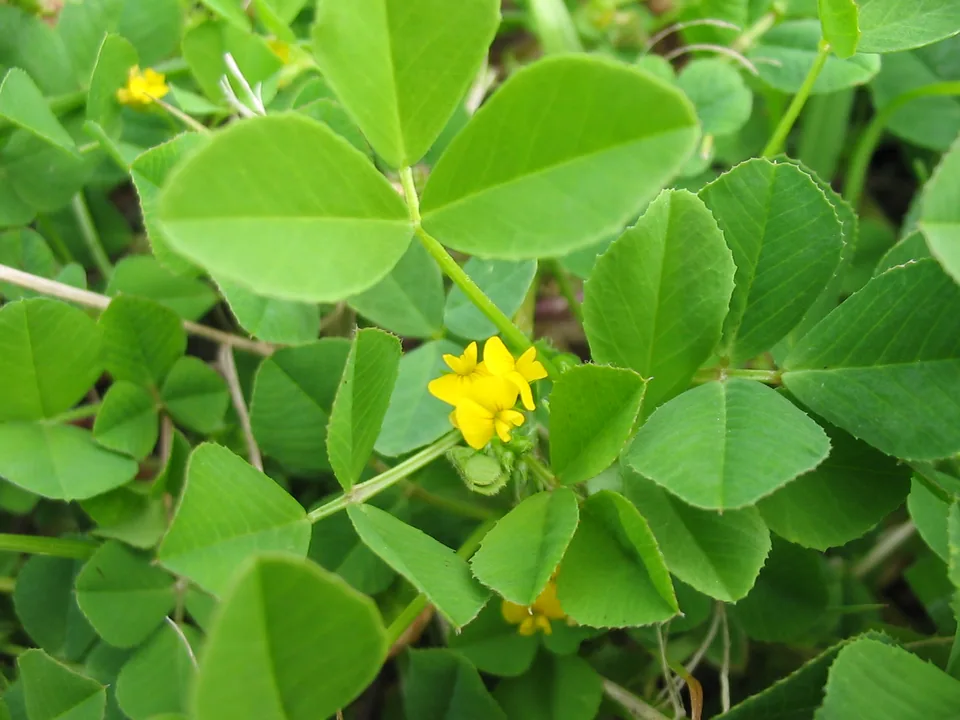
Bur clover is an easygoing annual or short-lived perennial that thrives in full sun or partial shade and adapts to most soils and moisture levels. It grows easily from seed and reaches 18–24 inches tall. In China the plant is even eaten as a vegetable. Just keep it in check, because it spreads aggressively and can take over lawns.
- Sun
Full sun to partial shade
What the sources say (1)
Light: Full sun to partial shade
Light: Full sun (6 or more hours of direct sunlight a day) Partial Shade (Direct sunlight only part of the day, 2-6 hours)
— Medicago polymorpha (Burclover, Bur Medick, California Burclover, Toothed Burclover, Toothed Medick) | North Carolina Extension Gardener Plant Toolbox [1] - Water
Easygoing: adapts to most soils and moisture levels
What the sources say (1)
Watering notes: Adaptable to most soil types and moisture levels
It is adaptable to most soil types and moisture levels.
— Medicago polymorpha (Burclover, Bur Medick, California Burclover, Toothed Burclover, Toothed Medick) | North Carolina Extension Gardener Plant Toolbox [1] - Cold
Survives winters down to −40 °F (−40 °C)
Very hardy · USDA 3a · RHS H7 · Z3
What the sources say (2)
Hardiness, coldest zone: 3a [winter low −40 to −37.2 °C (−40 to −35 °F)]
USDA Plant Hardiness Zone: 3a, 3b, 4a, 4b, 5a, 5b, 6a, 6b, 7a, 7b, 8a, 8b, 9a, 9b
— Medicago polymorpha (Burclover, Bur Medick, California Burclover, Toothed Burclover, Toothed Medick) | North Carolina Extension Gardener Plant Toolbox [1] Hardiness, warmest zone: 9b [winter low −3.9 to −1.1 °C (25 to 30 °F)]
USDA Plant Hardiness Zone: 3a, 3b, 4a, 4b, 5a, 5b, 6a, 6b, 7a, 7b, 8a, 8b, 9a, 9b
— Medicago polymorpha (Burclover, Bur Medick, California Burclover, Toothed Burclover, Toothed Medick) | North Carolina Extension Gardener Plant Toolbox [1] - Harvest
Edible: used as a vegetable in China; most livestock eat it, but not horses and mules
- Watch out
Spreads aggressively and can invade lawns; control it by pulling it up by hand and mowing
- Size
18–24 in tall and 6–30 in wide
What the sources say (2)
Mature height: 46-61 cm (1 ft 6 in - 2 ft)
Dimensions: Height: 1 ft. 6 in. - 2 ft. 0 in. Width: 0 ft. 6 in. - 2 ft. 6 in.
— Medicago polymorpha (Burclover, Bur Medick, California Burclover, Toothed Burclover, Toothed Medick) | North Carolina Extension Gardener Plant Toolbox [1] Mature width: 15-76 cm (6 in - 2 ft 6 in)
Height: 1 ft. 6 in. - 2 ft. 0 in. Width: 0 ft. 6 in. - 2 ft. 6 in.
— Medicago polymorpha (Burclover, Bur Medick, California Burclover, Toothed Burclover, Toothed Medick) | North Carolina Extension Gardener Plant Toolbox [1] - Propagation
Grows from seed
What the sources say (1)
Propagation: Seed
Recommended Propagation Strategy: Seed Country Or Region Of Origin:
— Medicago polymorpha (Burclover, Bur Medick, California Burclover, Toothed Burclover, Toothed Medick) | North Carolina Extension Gardener Plant Toolbox [1]
Overview
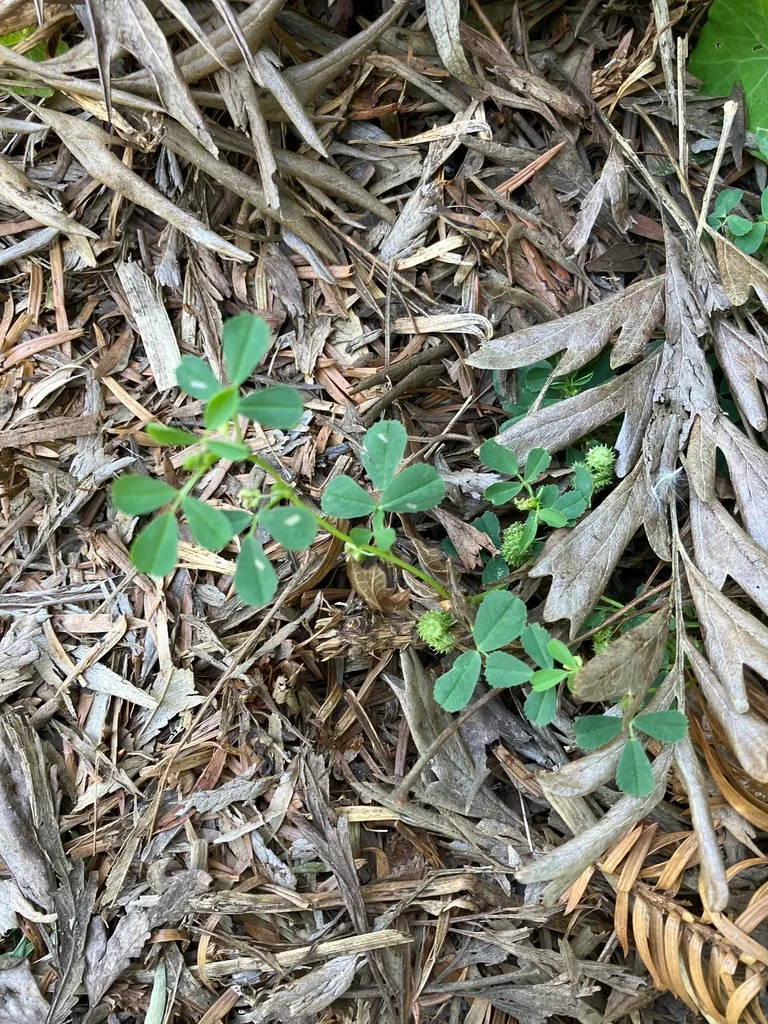
Bur medick is an annual or short-lived perennial legume native to the Mediterranean region that can spread aggressively. [1] It is used as a cover crop in orchards and as forage. [1]
Bur Medick care
How to water Bur Medick
Adaptable to most soil types and moisture levels
What the sources say (1)
It is adaptable to most soil types and moisture levels.How much light Bur Medick needs
Full sun to partial shade
What the sources say (1)
Light:
Full sun (6 or more hours of direct sunlight a day)
Partial Shade (Direct sunlight only part of the day, 2-6 hours)How much cold Bur Medick can take
Hardiness, coldest zone
3a [winter low −40 to −37.2 °C (−40 to −35 °F)]
What the sources say (1)
USDA Plant Hardiness Zone:
3a, 3b, 4a, 4b, 5a, 5b, 6a, 6b, 7a, 7b, 8a, 8b, 9a, 9bHardiness, warmest zone
9b [winter low −3.9 to −1.1 °C (25 to 30 °F)]
What the sources say (1)
USDA Plant Hardiness Zone:
3a, 3b, 4a, 4b, 5a, 5b, 6a, 6b, 7a, 7b, 8a, 8b, 9a, 9bHow to propagate Bur Medick
Seed
What the sources say (1)
Recommended Propagation Strategy:
Seed
Country Or Region Of Origin:How to grow Bur Medick
The plant
Life cycle
annual or short-lived perennial
What the sources say (1)
Bur medick is an annual or short-lived perennial, flowering, shallow-rooted legume in the bean family native to the countries bordering the Mediterranean Sea.Family
Fabaceae
What the sources say (1)
Genus:
Medicago
Species:
polymorpha
Family:
FabaceaeMature height
46-61 cm (1 ft 6 in - 2 ft)
What the sources say (1)
Dimensions:
Height: 1 ft. 6 in. - 2 ft. 0 in.
Width: 0 ft. 6 in. - 2 ft. 6 in.Mature width
15-76 cm (6 in - 2 ft 6 in)
What the sources say (1)
Height: 1 ft. 6 in. - 2 ft. 0 in.
Width: 0 ft. 6 in. - 2 ft. 6 in.Bur Medick pests and problems
Lawn weed
Symptom: Spreads aggressively and can become invasive
What to do: Controlled by hand pulling, mowing and herbicides
What the sources say (1)
As a lawn weed, it can be controlled by hand pulling, mowing and herbicides.
— Medicago polymorpha (Burclover, Bur Medick, California Burclover, Toothed Burclover, Toothed Medick) | North Carolina Extension Gardener Plant Toolbox [1]
Remedies
Each remedy shows what official sources say about it; traditional remedies without an official source are marked as such. Harmful ones are listed so you know to avoid them.
Getting rid of it
burr medic weed
hand pulling Works
How: Pull the plants out by hand.
As a lawn weed, it can be controlled by hand pulling, mowing and herbicides.
— Medicago polymorpha (Burclover, Bur Medick, California Burclover, Toothed Burclover, Toothed Medick) | North Carolina Extension Gardener Plant Toolbox [1] What the evidence says As a lawn weed, it can be controlled by hand pulling, mowing and herbicides.
— Medicago polymorpha (Burclover, Bur Medick, California Burclover, Toothed Burclover, Toothed Medick) | North Carolina Extension Gardener Plant Toolbox [1] mowing Works
How: Mow it as part of lawn care.
As a lawn weed, it can be controlled by hand pulling, mowing and herbicides.
— Medicago polymorpha (Burclover, Bur Medick, California Burclover, Toothed Burclover, Toothed Medick) | North Carolina Extension Gardener Plant Toolbox [1] What the evidence says As a lawn weed, it can be controlled by hand pulling, mowing and herbicides.
— Medicago polymorpha (Burclover, Bur Medick, California Burclover, Toothed Burclover, Toothed Medick) | North Carolina Extension Gardener Plant Toolbox [1] boiling water Not verified
Traditional remedy, not verified by an official source.
Neither of these, however, will kill the burrs that are left behind in the lawn or garden.
— gardeningknowhow.com [2] How: Boiling water can help kill the plant, but it does not kill the burrs left behind.
dragging a woolen blanket over the area Not verified
Traditional remedy, not verified by an official source.
How: Drag an old woolen blanket over the area first to snag the burrs.
corn gluten meal Not verified
Traditional remedy, not verified by an official source.
How: Treat the area with corn gluten meal as a pre-emergent to prevent germination of remaining seeds, late summer or early fall.
amending soil with compost Not verified
Traditional remedy, not verified by an official source.
How: After eradication, amend the soil with organic matter or compost to minimize its return.
Edibility
Reported by the source, quoted verbatim. Do not eat a plant on the basis of this page alone: identification mistakes can be dangerous.
Similar plants
- Black Medick Medicago lupulina
- Moon trefoil Medicago arborea
- American Groundnut Apios americana
- American hogpeanut Amphicarpaea bracteata
- Bicolor Lespedeza Lespedeza bicolor
- Black Locust Robinia pseudoacacia
- Bristly Locust Robinia hispida
- Bush Clover Lespedeza thunbergii
Sources
Every value above is quoted from these documents. Links lead to the original publisher.
- Medicago polymorpha (Burclover, Bur Medick, California Burclover, Toothed Burclover, Toothed Medick) | North Carolina Extension Gardener Plant Toolbox · plants.ces.ncsu.edu, consulted
- gardeningknowhow.com · gardeningknowhow.com
Written by Emilio Marruso · last checked