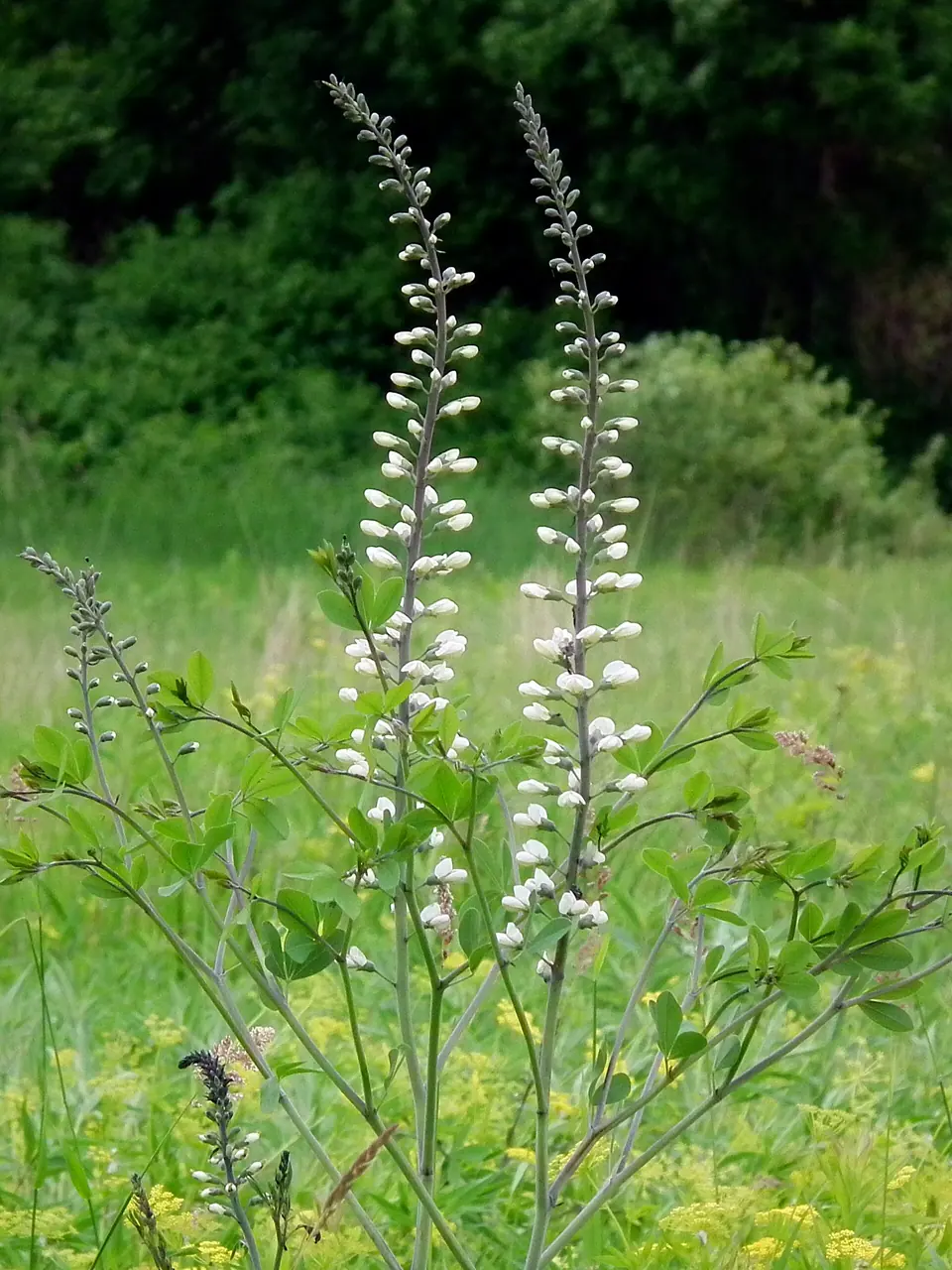


How to Grow and Care for White Wild Indigo
Baptisia alba
Written by Emilio Marruso · last checked
Toxic to: Livestock, People · Why
At a glance
White wild indigo is a tough perennial for full sun to light shade. It shrugs off drought and, as a nitrogen-fixing legume, grows happily even in poor soils with no feeding at all. Fresh seed sprouts within 2 weeks, and the plant can spread up to 4 feet wide, filling your garden with an easygoing presence.
- Sun
Full sun to light shade
What the sources say (1)
Light: Full sun to light shade
It prefers full sun to light shade in acidic sandy or rocky soil but will tolerate clay soil.
— Baptisia alba (False Indigo, Thin-Pod White Wild Indigo, White False Indigo, White Indigo, White Wild Indigo, Wild Indigo, Wild White Indigo) | North Carolina Extension Gardener Plant Toolbox [1] - Water
Handles drought well: little watering needed
What the sources say (1)
Watering: Drought tolerant
Deer damage; tolerates drought, poor soils, dry soil, and erosion
— Baptisia alba (False Indigo, Thin-Pod White Wild Indigo, White False Indigo, White Indigo, White Wild Indigo, Wild Indigo, Wild White Indigo) | North Carolina Extension Gardener Plant Toolbox [1] - Cold
Survives winters down to −20 °F (−28.9 °C)
Very hardy · USDA 5a · RHS H7 · Z5
What the sources say (2)
Hardiness, coldest zone: 5a [winter low −28.9 to −26.1 °C (−20 to −15 °F)]
USDA Plant Hardiness Zone: 5a, 5b, 6a, 6b, 7a, 7b, 8a, 8b
— Baptisia alba (False Indigo, Thin-Pod White Wild Indigo, White False Indigo, White Indigo, White Wild Indigo, Wild Indigo, Wild White Indigo) | North Carolina Extension Gardener Plant Toolbox [1] Hardiness, warmest zone: 8b [winter low −9.4 to −6.7 °C (15 to 20 °F)]
USDA Plant Hardiness Zone: 5a, 5b, 6a, 6b, 7a, 7b, 8a, 8b
— Baptisia alba (False Indigo, Thin-Pod White Wild Indigo, White False Indigo, White Indigo, White Wild Indigo, Wild Indigo, Wild White Indigo) | North Carolina Extension Gardener Plant Toolbox [1] - Soil
Soil pH up to 6.0; in very alkaline soil the leaves turn yellow-green
What the sources say (2)
Soil pH, maximum: 6.0
Soil pH: Acid (<6.0)
— Baptisia alba (False Indigo, Thin-Pod White Wild Indigo, White False Indigo, White Indigo, White Wild Indigo, Wild Indigo, Wild White Indigo) | North Carolina Extension Gardener Plant Toolbox [1] Signs of deficiency: Chlorotic, yellow-green foliage in highly alkaline soils
Minor (mainly cosmetic) fungal diseases include leaf spots and powdery mildew. In highly alkaline soils, plant foliage may be chlorotic (yellow-green).
— Growing Baptisia (False Indigo) in Iowa | Yard and Garden [8] - Feeding
Usually no feeding needed: it grows even in poor soils
What the sources say (1)
How often: Generally not needed in fertile soils: as a nitrogen-fixing legume it grows in nutrient-poor soils
False indigos are a nitrogen-fixing legume. This ability allows them to grow in nutrient poor soils. In fertile soils, fertilization is generally not necessary.
— Growing Baptisia (False Indigo) in Iowa | Yard and Garden [8] - Pests
Weevils can damage the seeds
What the sources say (1)
Pests: weevil (damages seed)
A weevil commonly damages seed, but does not affect the appearance of the plant.
— Baptisia (False or Wild Indigo) | Home & Garden Information Center [5] - Watch out
It can escape into pastures and hayfields, harming livestock, and regrows from the roots
- Size
Up to 4 feet wide
What the sources say (1)
Mature width: up to 121.92 cm (up to 4 ft)
This large clump-forming long-lived plant will grow 2-6 feet and up to 4 feet wide.
— Baptisia alba (False Indigo, Thin-Pod White Wild Indigo, White False Indigo, White Indigo, White Wild Indigo, Wild Indigo, Wild White Indigo) | North Carolina Extension Gardener Plant Toolbox [1] - Propagation
From seed, stem cuttings, root cuttings or by dividing the roots
What the sources say (2)
Propagation: Seed; stem cuttings; root cuttings; root division
They can be propagated by seed, stem or root cuttings.
— Baptisia alba (False Indigo, Thin-Pod White Wild Indigo, White False Indigo, White Indigo, White Wild Indigo, Wild Indigo, Wild White Indigo) | North Carolina Extension Gardener Plant Toolbox [1] White wild indigo is propagated by root division, stem cuttings, and seed.
— Controlling White Wild Indigo (Baptisia alba) in Forages | Mississippi State University Extension Service [2] - Sowing
Sow fresh seed ¼ inch deep; it sprouts in 2 weeks. Collect seed when pods darken and split
What the sources say (3)
Sowing depth: 0.64 cm [0.3 in] (¼ in)
Plant seed ¼” deep. Fresh seed usually germinates within 2 weeks.
— Baptisia (False or Wild Indigo) | Home & Garden Information Center [5] Days to germination: 14 (fresh seed, within 2 weeks)
Plant seed ¼” deep. Fresh seed usually germinates within 2 weeks.
— Baptisia (False or Wild Indigo) | Home & Garden Information Center [5] Saving seeds: Collect seed when the pods darken and begin to split.
Collect seed when the pods darken and begin to split. Inspect seed for small holes made by weevils and discard damaged seeds.
— Baptisia (False or Wild Indigo) | Home & Garden Information Center [5] - Safety
All parts are mildly poisonous if eaten: nausea, vomiting, diarrhea; risky for grazing animals
Overview
Baptisia alba is a clump-forming herbaceous perennial legume native to the eastern and central United States with white to cream flower spikes in spring. [1] It prefers full sun to light shade and has deep roots that make it difficult to transplant. [1] All parts are poisonous if eaten, and it is regarded as a weed in pasture and livestock production because of its toxicity to grazing livestock. [1][2]
This record is incomplete: the sources we read do not cover every field yet.
Not yet covered by our sources: Pruning
White Wild Indigo care
How to water White Wild Indigo
Drought tolerant
What the sources say (1)
Deer damage; tolerates drought, poor soils, dry soil, and erosionHow much light White Wild Indigo needs
Full sun to light shade
What the sources say (1)
It prefers full sun to light shade in acidic sandy or rocky soil but will tolerate clay soil.How much cold White Wild Indigo can take
Hardiness, coldest zone
5a [winter low −28.9 to −26.1 °C (−20 to −15 °F)]
What the sources say (1)
USDA Plant Hardiness Zone:
5a, 5b, 6a, 6b, 7a, 7b, 8a, 8bHardiness, warmest zone
8b [winter low −9.4 to −6.7 °C (15 to 20 °F)]
What the sources say (1)
USDA Plant Hardiness Zone:
5a, 5b, 6a, 6b, 7a, 7b, 8a, 8bBest soil for White Wild Indigo
6.0
What the sources say (1)
Soil pH:
Acid (<6.0)How to propagate White Wild Indigo
Seed; stem cuttings; root cuttings; root division
What the sources say (2)
They can be propagated by seed, stem or root cuttings.White wild indigo is propagated by root division, stem cuttings, and seed.How to grow White Wild Indigo
The plant
Life cycle
perennial
What the sources say (1)
Wild white indigo is a herbaceous perennial plant in the pea family (Fabaceae) native to eastern and central United States.Family
Fabaceae
What the sources say (1)
Wild white indigo is a herbaceous perennial plant in the pea family (Fabaceae) native to eastern and central United States.Mature height
Mature width
up to 121.92 cm (up to 4 ft)
What the sources say (1)
This large clump-forming long-lived plant will grow 2-6 feet and up to 4 feet wide.Sowing and growth
Days to germination
14 (fresh seed, within 2 weeks)
What the sources say (1)
Plant seed ¼” deep. Fresh seed usually germinates within 2 weeks.Sowing depth
0.64 cm [0.3 in] (¼ in)
What the sources say (1)
Plant seed ¼” deep. Fresh seed usually germinates within 2 weeks.Harvest and storage
Saving seeds
Collect seed when the pods darken and begin to split.
What the sources say (1)
Collect seed when the pods darken and begin to split. Inspect seed for small holes made by weevils and discard damaged seeds.Pests and diseases
Pests
weevil (damages seed)
What the sources say (1)
A weevil commonly damages seed, but does not affect the appearance of the plant.Fertilizing
How often
Generally not needed in fertile soils: as a nitrogen-fixing legume it grows in nutrient-poor soils
What the sources say (1)
False indigos are a nitrogen-fixing legume. This ability allows them to grow in nutrient poor soils. In fertile soils, fertilization is generally not necessary.Signs of deficiency
Chlorotic, yellow-green foliage in highly alkaline soils
What the sources say (1)
Minor (mainly cosmetic) fungal diseases include leaf spots and powdery mildew. In highly alkaline soils, plant foliage may be chlorotic (yellow-green).White Wild Indigo pests and problems
Weed in pastures and hayfields
Symptom: Plants escape from ornamental use and establish in pastures and hayfields, where they are a threat to livestock
What to do: Mechanical control with rotary mowers removes vegetation but regrowth from roots is likely; chemical control is successful in forage and pastures
What the sources say (3)
plants may escape and establish in unwanted areas such as pastures and hayfields, where they become a threat to livestock.
— Controlling White Wild Indigo (Baptisia alba) in Forages | Mississippi State University Extension Service [2] Mechanical control with rotary mowers and similar equipment removes vegetation, but regrowth from roots is likely
— Controlling White Wild Indigo (Baptisia alba) in Forages | Mississippi State University Extension Service [2] Chemical control measures have proven successful, and multiple options are available in forage and pastures.
— Controlling White Wild Indigo (Baptisia alba) in Forages | Mississippi State University Extension Service [2]
Remedies
Each remedy shows what official sources say about it; traditional remedies without an official source are marked as such. Harmful ones are listed so you know to avoid them.
First aid
First aid: not a substitute for a doctor
swallowed plant
rinsing the mouth Official source, not independently tested
Do not induce vomiting and do not give them anything to drink.
— missouripoisoncenter.org [9] Call 911 if the person is unconscious, having seizures, or has trouble breathing.
— missouripoisoncenter.org [9] If the person is awake and alert, call the Missouri Poison Center at 1-800-222-1222 for further treatment advice.
— missouripoisoncenter.org [9] How: Wipe out the mouth with a damp cloth or let the person rinse the mouth with water.
Wipe out their mouth with a damp cloth and or let them rinse their mouth out with water.
— missouripoisoncenter.org [9]
Treating the plant
powdery mildew
trimming affected leaves Official source, not independently tested
How: Trim away any affected leaves and dispose of them; keep plenty of spacing around and within the plant.
Trim away any affected leaves and dispose of them. Keep plenty of spacing around and within your plant.
— ask.extension.org [10]
leaf spots
avoiding sprinkler irrigation Official source, not independently tested
How: Avoid sprinkler irrigation.
Dark brown spots spread to engulf the entire leaf. | Cercospora, Marssonina, Septoria, Stagonospora | Avoid sprinkler irrigation.
— extension.psu.edu [11]
Getting rid of it
white wild indigo in pastures
mowing with rotary mowers Partly works
How: Mechanical control with rotary mowers removes vegetation; make sure plants do not reach seed maturity.
Mechanical control with rotary mowers and similar equipment removes vegetation, but regrowth from roots is likely, especially if the plant’s life cycle is incomplete.
— Controlling White Wild Indigo (Baptisia alba) in Forages | Mississippi State University Extension Service [2] What the evidence says Mechanical control with rotary mowers and similar equipment removes vegetation, but regrowth from roots is likely, especially if the plant’s life cycle is incomplete.
— Controlling White Wild Indigo (Baptisia alba) in Forages | Mississippi State University Extension Service [2]
Is White Wild Indigo toxic to pets?
Reported by the source, quoted verbatim. This is not medical or veterinary advice: if a person or an animal may have eaten this plant, contact a poison control centre or a veterinarian.
Animals
Because of its toxic properties, white wild indigo in pastures or hay fields poses health risks to grazing livestock.
[2]
People
THIS PLANT CAUSES ONLY LOW TOXICITY IF EATEN. Poisonous through ingestion. All parts are poisonous. Symptoms include nausea, vomiting, and diarrhea.
[1]
Calendar
Pruning
Not stated in the sources we read.
Months as given by the sources, which are mostly from the United States (northern hemisphere). In the southern hemisphere they shift by about six months.
Relative to frost
Less precise estimate: there is no weather station within 300 km.
Find frost dates by ZIP code or city
Transplant: around the last frost
New seedlings can be planted outside after last frost date in spring, but will require extra care during the first year of establishment.
— Baptisia (False or Wild Indigo) | Home & Garden Information Center [5]
Count from the average frost dates where you live.
Indicative values
Values from a secondary source, not checked word for word like the rest of this page. Use them as a starting point.
- Hours of sun
- 6-8 hoursIndicative value, adapt it to your climate · Secondary source
- Drought tolerant
- yesIndicative value, adapt it to your climate · Secondary source
- Care level
- MediumIndicative value, adapt it to your climate · Secondary source
- Growth rate
- LowIndicative value, adapt it to your climate · Secondary source
- Pruning
- March, April, May, June, July, AugustIndicative value, adapt it to your climate · Secondary source
Similar plants
- Blue False Indigo Baptisia australis
- Wild Indigo Baptisia tinctoria
- Afghan Redbud Cercis griffithii
- American hogpeanut Amphicarpaea bracteata
- Amur Maackia Maackia amurensis
- Bauhinia Bauhinia blakeana
- Bean Phaseolus vulgaris
- Bicolor Lespedeza Lespedeza bicolor
Sources
Every value above is quoted from these documents. Links lead to the original publisher.
- Baptisia alba (False Indigo, Thin-Pod White Wild Indigo, White False Indigo, White Indigo, White Wild Indigo, Wild Indigo, Wild White Indigo) | North Carolina Extension Gardener Plant Toolbox · plants.ces.ncsu.edu, consulted
- Controlling White Wild Indigo (Baptisia alba) in Forages | Mississippi State University Extension Service · extension.msstate.edu, consulted
- Baptisia (Baptisia, False Indigo, Wild Indigo) | North Carolina Extension Gardener Plant Toolbox · plants.ces.ncsu.edu, consulted
- False Indigo - Baptisia alba | North Carolina Extension Gardener Plant Toolbox · plants.ces.ncsu.edu, consulted
- Baptisia (False or Wild Indigo) | Home & Garden Information Center · hgic.clemson.edu, consulted
- White Wild Indigo (Baptisia leucantha (Baptisia alba var. macrophylla))-Hort Answers - University of Illinois Extension · web.extension.illinois.edu, consulted
- Baptisia: Bold, beautiful, and underused native perennials | Good Growing | Illinois Extension | Illinois · extension.illinois.edu, consulted
- Growing Baptisia (False Indigo) in Iowa | Yard and Garden · yardandgarden.extension.iastate.edu, consulted
- missouripoisoncenter.org · missouripoisoncenter.org
- ask.extension.org · ask.extension.org
- extension.psu.edu · extension.psu.edu
Written by Emilio Marruso · last checked