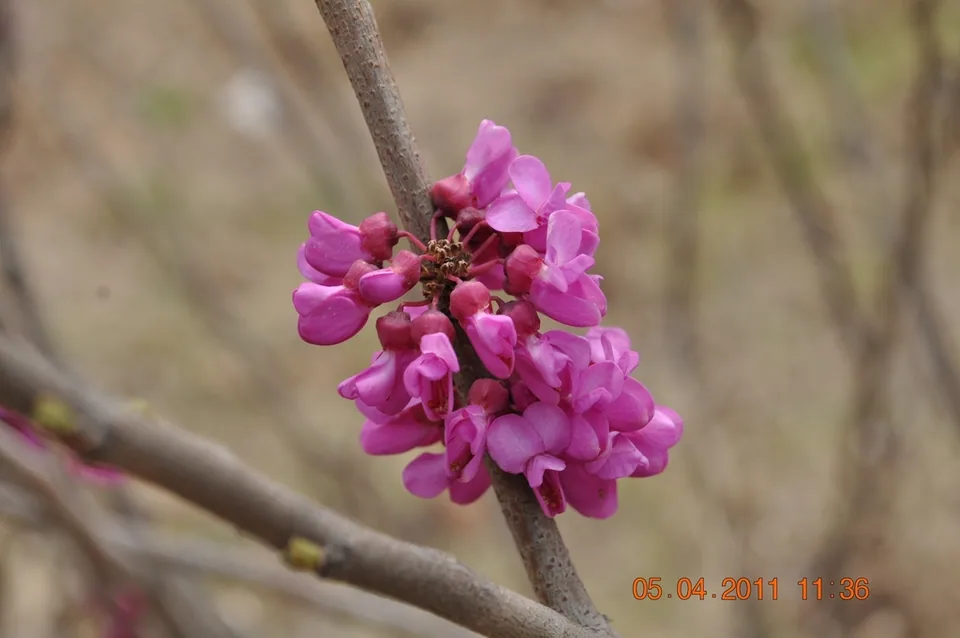
How to Grow and Care for Chinese Redbud
Cercis chinensis
Written by Emilio Marruso · last checked
At a glance
Chinese redbud grows happily in full sun or partial shade, reaching 8 to 15 feet tall, and it can even live in a container. Give it well-drained soil with medium moisture, shade from the afternoon sun in hot climates and some protection from hard frost, and it will reward your care season after season.
- Sun
Full sun to partial shade; in hot climates, shade it from afternoon sun
What the sources say (2)
Light: Full sun to partial shade
PH adaptable; tolerant of full sun or part shade; tolerant of clay or sandy soil; intolerant of heat/drought stress; intolerant of wet soils;
— Cercis chinensis (Chinese Redbud) | North Carolina Extension Gardener Plant Toolbox [1] Light: Full sun (6 or more hours of direct sunlight a day) Partial Shade (Direct sunlight only part of the day, 2-6 hours)
— Cercis chinensis (Chinese Redbud) | North Carolina Extension Gardener Plant Toolbox [1] - Water
Keep the soil medium moist: it dislikes both drought and soggy soil
What the sources say (2)
Watering notes: Plant in well-drained soil with medium moisture; intolerant of heat/drought stress and of wet soils
Plant in well-drained soil with medium moisture and not too much clay.
— Cercis chinensis (Chinese Redbud) | North Carolina Extension Gardener Plant Toolbox [1] PH adaptable; tolerant of full sun or part shade; tolerant of clay or sandy soil; intolerant of heat/drought stress; intolerant of wet soils;
— Cercis chinensis (Chinese Redbud) | North Carolina Extension Gardener Plant Toolbox [1] - Cold
Survives winters down to −10 °F (−23.3 °C)
Very hardy · USDA 6a · RHS H7 · Z6
What the sources say (2)
Hardiness, coldest zone: 6a [winter low −23.3 to −20.6 °C (−10 to −5 °F)]
USDA Plant Hardiness Zone: 6a, 6b, 7a, 7b, 8a, 8b, 9a, 9b
— Cercis chinensis (Chinese Redbud) | North Carolina Extension Gardener Plant Toolbox [1] Hardiness, warmest zone: 9b [winter low −3.9 to −1.1 °C (25 to 30 °F)]
USDA Plant Hardiness Zone: 6a, 6b, 7a, 7b, 8a, 8b, 9a, 9b
— Cercis chinensis (Chinese Redbud) | North Carolina Extension Gardener Plant Toolbox [1] - Soil
Well-drained soil
What the sources say (2)
Watering notes: Plant in well-drained soil with medium moisture; intolerant of heat/drought stress and of wet soils
Plant in well-drained soil with medium moisture and not too much clay.
— Cercis chinensis (Chinese Redbud) | North Carolina Extension Gardener Plant Toolbox [1] PH adaptable; tolerant of full sun or part shade; tolerant of clay or sandy soil; intolerant of heat/drought stress; intolerant of wet soils;
— Cercis chinensis (Chinese Redbud) | North Carolina Extension Gardener Plant Toolbox [1] - Watch out
A hard frost can make it die back: give it winter protection
- Size
8 to 15 ft tall
What the sources say (1)
Mature height: 243.84-457.2 cm (8-15 ft)
due to differing conditions in the United States it generally grows as an open shrub that will reach 8 to 15 feet in height
— Cercis chinensis (Chinese Redbud) | North Carolina Extension Gardener Plant Toolbox [1] - Containers
Grows in containers too
What the sources say (1)
In containers: Yes
It can also be grown in a larger container and withstands the demands of being planted in a lawn
— Cercis chinensis (Chinese Redbud) | North Carolina Extension Gardener Plant Toolbox [1]
Overview
Chinese redbud is a deciduous shrub or small tree from central and southern China that tolerates full sun or part shade. [1] It needs well-drained soil with medium moisture and is intolerant of heat and drought stress and of wet soils. [1] It has a deep tap root that makes it difficult to relocate, and it can die back after a hard frost. [1]
This record is incomplete: the sources we read do not cover every field yet.
Not yet covered by our sources: Watering, Pruning, Propagation
Chinese Redbud care
How to water Chinese Redbud
Watering
Not stated in the sources we read.
Watering notes
Plant in well-drained soil with medium moisture; intolerant of heat/drought stress and of wet soils
What the sources say (2)
Plant in well-drained soil with medium moisture and not too much clay.PH adaptable; tolerant of full sun or part shade; tolerant of clay or sandy soil; intolerant of heat/drought stress; intolerant of wet soils;How much light Chinese Redbud needs
Full sun to partial shade
What the sources say (2)
PH adaptable; tolerant of full sun or part shade; tolerant of clay or sandy soil; intolerant of heat/drought stress; intolerant of wet soils;Light:
Full sun (6 or more hours of direct sunlight a day)
Partial Shade (Direct sunlight only part of the day, 2-6 hours)How much cold Chinese Redbud can take
Hardiness, coldest zone
6a [winter low −23.3 to −20.6 °C (−10 to −5 °F)]
What the sources say (1)
USDA Plant Hardiness Zone:
6a, 6b, 7a, 7b, 8a, 8b, 9a, 9bHardiness, warmest zone
9b [winter low −3.9 to −1.1 °C (25 to 30 °F)]
What the sources say (1)
USDA Plant Hardiness Zone:
6a, 6b, 7a, 7b, 8a, 8b, 9a, 9bWhere to grow Chinese Redbud
Yes
What the sources say (1)
It can also be grown in a larger container and withstands the demands of being planted in a lawnHow to propagate Chinese Redbud
Not stated in the sources we read.
How to grow Chinese Redbud
The plant
Family
Fabaceae
What the sources say (1)
Family name Fabaceae (Leguminosae)
Quick ID Hints :
- Multi-stemmed shrub with heart-shaped leavesMature height
243.84-457.2 cm (8-15 ft)
What the sources say (1)
due to differing conditions in the United States it generally grows as an open shrub that will reach 8 to 15 feet in heightChinese Redbud pests and problems
Frost dieback
Symptom: Not winter hardy; can die back after a hard frost
What to do: Prefers protection from afternoon sun in hot climates
What the sources say (1)
It is not winter hardy and can die back after a hard frost. Prefers protection from afternoon sun in hot climates.
— Cercis chinensis (Chinese Redbud) | North Carolina Extension Gardener Plant Toolbox [1]
Remedies
Each remedy shows what official sources say about it; traditional remedies without an official source are marked as such. Harmful ones are listed so you know to avoid them.
Treating the plant
canker
pruning out infected wood Partly works
How: Prune infected material well back of any discoloration in the wood.
Pruning infected material well back of any discoloration in the wood may prevent further spread. Fertilize trees in the spring and water during dry weather to maintain tree vigor.
— portal.ct.gov [3] What the evidence says Pruning infected material well back of any discoloration in the wood may prevent further spread. Fertilize trees in the spring and water during dry weather to maintain tree vigor.
— portal.ct.gov [3]
leaf spot
raking and disposing of fallen leaves Partly works
How: Rake and dispose of fallen leaves.
Rake and dispose of fallen leaves to reduce the chance of infection in the following season.
— portal.ct.gov [3] What the evidence says Rake and dispose of fallen leaves to reduce the chance of infection in the following season.
— portal.ct.gov [3]
spider mites
insecticidal soap spray Works
Special care should be taken with soap or oil to obtain thorough spray coverage, because they only work on contact.
— portal.ct.gov [3] How: Spray with insecticidal soap at least twice at 7-10 day intervals, with thorough coverage.
Spraying with insecticidal soap will give sufficient control if applied at least twice at 7 - 10 day intervals.
— portal.ct.gov [3] What the evidence says Spraying with insecticidal soap will give sufficient control if applied at least twice at 7 - 10 day intervals.
— portal.ct.gov [3]
Calendar
Pruning
Not stated in the sources we read.
Months as given by the sources, which are mostly from the United States (northern hemisphere). In the southern hemisphere they shift by about six months.
Indicative values
Values from a secondary source, not checked word for word like the rest of this page. Use them as a starting point.
- Life cycle
- PerennialIndicative value, adapt it to your climate · Secondary source
- Hours of sun
- 6-8 hoursIndicative value, adapt it to your climate · Secondary source
- Watering
- AverageIndicative value, adapt it to your climate · Secondary source
- Drought tolerant
- yesIndicative value, adapt it to your climate · Secondary source
- Soil pH
- 6-7.5Indicative value, adapt it to your climate · Secondary source
- Care level
- MediumIndicative value, adapt it to your climate · Secondary source
- Growth rate
- LowIndicative value, adapt it to your climate · Secondary source
- Pruning
- February, March, AprilIndicative value, adapt it to your climate · Secondary source
- Propagation
- Grafting Propagation, Cutting, Air Layering Propagation, Seed PropagationIndicative value, adapt it to your climate · Secondary source
Similar plants
- Afghan Redbud Cercis griffithii
- Chain-flowered Redbud Cercis racemosa
- Mediterranean Redbud Cercis siliquastrum
- Redbud Cercis canadensis
- Western Redbud Cercis orbiculata
- American Groundnut Apios americana
- Amur Maackia Maackia amurensis
- Bauhinia Bauhinia blakeana
Sources
Every value above is quoted from these documents. Links lead to the original publisher.
- Cercis chinensis (Chinese Redbud) | North Carolina Extension Gardener Plant Toolbox · plants.ces.ncsu.edu, consulted
- Chinese Redbud - Cercis chingii | North Carolina Extension Gardener Plant Toolbox · plants.ces.ncsu.edu, consulted
- portal.ct.gov · portal.ct.gov
Written by Emilio Marruso · last checked