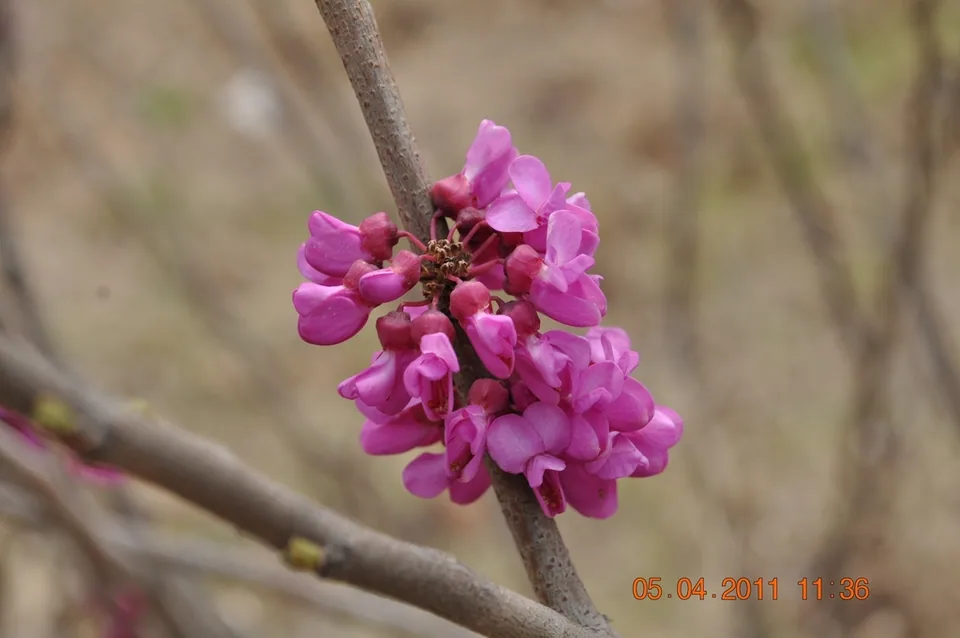
Cómo cultivar y cuidar Chinese Redbud
Cercis chinensis
Escrito por Emilio Marruso · última revisión
De un vistazo
El ciclamor chino crece a gusto a pleno sol o en semisombra, alcanza de 2,4 a 4,6 m de alto e incluso puede vivir en maceta. Dale un suelo con buen drenaje y humedad media, sombra por la tarde en climas cálidos y algo de protección frente a las heladas fuertes, y te recompensará temporada tras temporada.
- Sol
Sol pleno o semisombra; en climas cálidos, protégelo del sol de la tarde
Qué dicen las fuentes (2)
Luz: Pleno sol a semisombra
PH adaptable; tolerant of full sun or part shade; tolerant of clay or sandy soil; intolerant of heat/drought stress; intolerant of wet soils;
— Cercis chinensis (Chinese Redbud) | North Carolina Extension Gardener Plant Toolbox [1] Light: Full sun (6 or more hours of direct sunlight a day) Partial Shade (Direct sunlight only part of the day, 2-6 hours)
— Cercis chinensis (Chinese Redbud) | North Carolina Extension Gardener Plant Toolbox [1] - Riego
Mantén la tierra con humedad media: no le gustan ni la sequía ni el encharcamiento
Qué dicen las fuentes (2)
Notas sobre el riego: Planta en suelo bien drenado con humedad media; no tolera el estrés por calor/sequía ni los suelos húmedos
Plant in well-drained soil with medium moisture and not too much clay.
— Cercis chinensis (Chinese Redbud) | North Carolina Extension Gardener Plant Toolbox [1] PH adaptable; tolerant of full sun or part shade; tolerant of clay or sandy soil; intolerant of heat/drought stress; intolerant of wet soils;
— Cercis chinensis (Chinese Redbud) | North Carolina Extension Gardener Plant Toolbox [1] - Frío
Aguanta inviernos de hasta −23,3 °C (−10 °F)
Muy rústica · USDA 6a · RHS H7 · Z6
Qué dicen las fuentes (2)
Rusticidad, zona más fría: 6a [mínima invernal de −23,3 a −20,6 °C (de −10 a −5 °F)]
USDA Plant Hardiness Zone: 6a, 6b, 7a, 7b, 8a, 8b, 9a, 9b
— Cercis chinensis (Chinese Redbud) | North Carolina Extension Gardener Plant Toolbox [1] Rusticidad, zona más cálida: 9b [mínima invernal de −3,9 a −1,1 °C (de 25 a 30 °F)]
USDA Plant Hardiness Zone: 6a, 6b, 7a, 7b, 8a, 8b, 9a, 9b
— Cercis chinensis (Chinese Redbud) | North Carolina Extension Gardener Plant Toolbox [1] - Suelo
Suelo con buen drenaje
Qué dicen las fuentes (2)
Notas sobre el riego: Planta en suelo bien drenado con humedad media; no tolera el estrés por calor/sequía ni los suelos húmedos
Plant in well-drained soil with medium moisture and not too much clay.
— Cercis chinensis (Chinese Redbud) | North Carolina Extension Gardener Plant Toolbox [1] PH adaptable; tolerant of full sun or part shade; tolerant of clay or sandy soil; intolerant of heat/drought stress; intolerant of wet soils;
— Cercis chinensis (Chinese Redbud) | North Carolina Extension Gardener Plant Toolbox [1] - Atención
Una helada fuerte puede secar sus ramas: protégelo en invierno
- Tamaño
De 2,4 a 4,6 m de alto
Qué dicen las fuentes (1)
Altura adulta: 243.84-457.2 cm (8-15 pies)
due to differing conditions in the United States it generally grows as an open shrub that will reach 8 to 15 feet in height
— Cercis chinensis (Chinese Redbud) | North Carolina Extension Gardener Plant Toolbox [1] - Maceta
Crece también en maceta
Qué dicen las fuentes (1)
En maceta: Sí
It can also be grown in a larger container and withstands the demands of being planted in a lawn
— Cercis chinensis (Chinese Redbud) | North Carolina Extension Gardener Plant Toolbox [1]
Resumen
El árbol del amor chino es un arbusto o árbol pequeño caducifolio del centro y sur de China que tolera pleno sol o semisombra. [1] Necesita suelo bien drenado con humedad media y es intolerante al calor y al estrés por sequía y a los suelos húmedos. [1] Tiene una raíz pivotante profunda que dificulta su trasplante, y puede morir después de una helada fuerte. [1]
Citado en inglés, como en la fuente.
Esta ficha está incompleta: las fuentes consultadas aún no cubren todos los campos.
Aún no cubierto por nuestras fuentes: Riego, Poda, Propagación
Cuidados
Riego
Riego
No figura en las fuentes consultadas.
Notas sobre el riego
Planta en suelo bien drenado con humedad media; no tolera el estrés por calor/sequía ni los suelos húmedos
Qué dicen las fuentes (2)
Plant in well-drained soil with medium moisture and not too much clay.PH adaptable; tolerant of full sun or part shade; tolerant of clay or sandy soil; intolerant of heat/drought stress; intolerant of wet soils;Luz
Pleno sol a semisombra
Qué dicen las fuentes (2)
PH adaptable; tolerant of full sun or part shade; tolerant of clay or sandy soil; intolerant of heat/drought stress; intolerant of wet soils;Light:
Full sun (6 or more hours of direct sunlight a day)
Partial Shade (Direct sunlight only part of the day, 2-6 hours)Clima y frío
Rusticidad, zona más fría
6a [mínima invernal de −23,3 a −20,6 °C (de −10 a −5 °F)]
Qué dicen las fuentes (1)
USDA Plant Hardiness Zone:
6a, 6b, 7a, 7b, 8a, 8b, 9a, 9bRusticidad, zona más cálida
9b [mínima invernal de −3,9 a −1,1 °C (de 25 a 30 °F)]
Qué dicen las fuentes (1)
USDA Plant Hardiness Zone:
6a, 6b, 7a, 7b, 8a, 8b, 9a, 9bDónde cultivarla
Sí
Qué dicen las fuentes (1)
It can also be grown in a larger container and withstands the demands of being planted in a lawnPropagación
No figura en las fuentes consultadas.
Cultivo
La planta
Familia
Fabáceas
Qué dicen las fuentes (1)
Family name Fabaceae (Leguminosae)
Quick ID Hints :
- Multi-stemmed shrub with heart-shaped leavesAltura adulta
243.84-457.2 cm (8-15 pies)
Qué dicen las fuentes (1)
due to differing conditions in the United States it generally grows as an open shrub that will reach 8 to 15 feet in heightProblemas
Muerte regresiva por heladas.
Síntoma: No resistente al invierno; puede morir después de una helada fuerte.
Qué hacer: Prefiere protección del sol de la tarde en climas cálidos.
Qué dicen las fuentes (1)
It is not winter hardy and can die back after a hard frost. Prefers protection from afternoon sun in hot climates.
— Cercis chinensis (Chinese Redbud) | North Carolina Extension Gardener Plant Toolbox [1]
Remedios
Cada remedio indica qué dicen las fuentes oficiales; los remedios tradicionales sin fuente oficial aparecen marcados. Los perjudiciales están para que sepas evitarlos.
Cuidar la planta
cancro
poda de madera infectada Funciona en parte
Cómo: Poda el material infectado bien más atrás de cualquier decoloración en la madera.
Pruning infected material well back of any discoloration in the wood may prevent further spread. Fertilize trees in the spring and water during dry weather to maintain tree vigor.
— portal.ct.gov [3] Qué dicen las pruebas Pruning infected material well back of any discoloration in the wood may prevent further spread. Fertilize trees in the spring and water during dry weather to maintain tree vigor.
— portal.ct.gov [3]
mancha foliar
Rastrilla y desecha las hojas caídas. Funciona en parte
Cómo: Rastrilla y desecha las hojas caídas.
Rake and dispose of fallen leaves to reduce the chance of infection in the following season.
— portal.ct.gov [3] Qué dicen las pruebas Rake and dispose of fallen leaves to reduce the chance of infection in the following season.
— portal.ct.gov [3]
ácaros araña
spray de jabón insecticida Funciona
Special care should be taken with soap or oil to obtain thorough spray coverage, because they only work on contact.
— portal.ct.gov [3] Cómo: Rocía con jabón insecticida al menos dos veces, con intervalos de 7 a 10 días y una cobertura completa.
Spraying with insecticidal soap will give sufficient control if applied at least twice at 7 - 10 day intervals.
— portal.ct.gov [3] Qué dicen las pruebas Spraying with insecticidal soap will give sufficient control if applied at least twice at 7 - 10 day intervals.
— portal.ct.gov [3]
Calendario
Poda
No figura en las fuentes consultadas.
Meses tal como los dan las fuentes, en su mayoría de Estados Unidos (hemisferio norte). En el hemisferio sur se desplazan unos seis meses.
Valores orientativos
Valores de una fuente secundaria, no comprobados palabra por palabra como el resto de esta página. Úselos como punto de partida.
- Ciclo de vida
- PerenneValor orientativo, adáptalo a tu clima · Fuente secundaria
- Horas de sol
- 6-8 horasValor orientativo, adáptalo a tu clima · Fuente secundaria
- Riego
- PromedioValor orientativo, adáptalo a tu clima · Fuente secundaria
- Resiste la sequía
- SíValor orientativo, adáptalo a tu clima · Fuente secundaria
- pH del suelo
- 6-7.5Valor orientativo, adáptalo a tu clima · Fuente secundaria
- Nivel de cuidado
- MedioValor orientativo, adáptalo a tu clima · Fuente secundaria
- Crecimiento
- BajoValor orientativo, adáptalo a tu clima · Fuente secundaria
- Poda
- Febrero, marzo, abrilValor orientativo, adáptalo a tu clima · Fuente secundaria
- Propagación
- Propagación por injerto, esqueje, propagación por acodo aéreo, propagación por semillaValor orientativo, adáptalo a tu clima · Fuente secundaria
Plantas similares
- Afghan Redbud Cercis griffithii
- Chain-flowered Redbud Cercis racemosa
- Árbol del amor Cercis siliquastrum
- Amor del Canadá Cercis canadensis
- Western Redbud Cercis orbiculata
- Papa de la India Apios americana
- Amur Maackia Maackia amurensis
- Bauhinia Bauhinia blakeana
Fuentes
Cada valor anterior se cita de estos documentos. Los enlaces llevan al editor original.
- Cercis chinensis (Chinese Redbud) | North Carolina Extension Gardener Plant Toolbox · plants.ces.ncsu.edu, consultado
- Chinese Redbud - Cercis chingii | North Carolina Extension Gardener Plant Toolbox · plants.ces.ncsu.edu, consultado
- portal.ct.gov · portal.ct.gov
Escrito por Emilio Marruso · última revisión