

Cómo cultivar y cuidar Amor del Canadá
Cercis canadensis
Escrito por Emilio Marruso · última revisión
De un vistazo
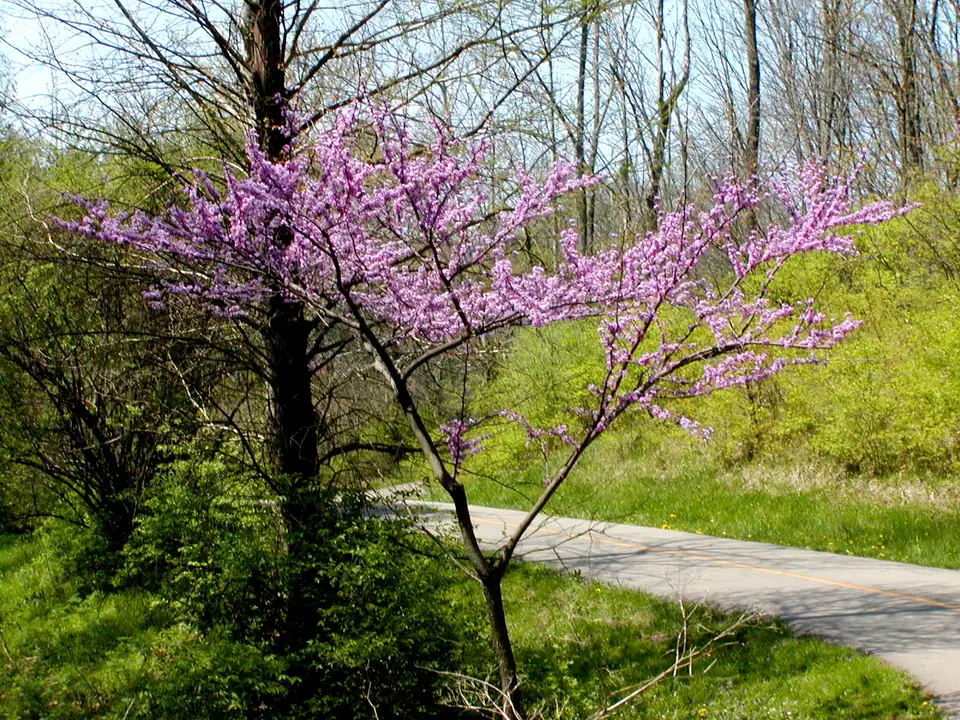
El ciclamor canadiense es un árbol de 6 a 9 m que crece a pleno sol o en semisombra, y florece mejor a pleno sol. Sus flores incluso se comen: saben a guisantes y quedan muy bien en ensaladas o fritas. Riégalo bien hasta que arraigue y pódalo de joven para darle una estructura fuerte.
- Sol
Pleno sol o semisombra; florece mejor a pleno sol
Qué dicen las fuentes (5)
Luz: Pleno sol a semisombra
Según University of Wisconsin Extension: Eastern redbud can be grown in full sun to partial shade , although the best flowering occurs in full sun.
— Eastern Redbud, Cercis canadensis – Wisconsin Horticulture [2] Carolina del Sur (Clemson HGIC): It grows well in full sun but prefers some shade in the heat of summer.
— Redbud | Home & Garden Information Center [5] Según University of Arkansas Extension: They are best in full sun or light shade and have good drought tolerance once established.
— Cercis canadensis, Rising Sun Redbud [7] Eastern redbud can be grown in full sun to partial shade , although the best flowering occurs in full sun.
— Eastern Redbud, Cercis canadensis – Wisconsin Horticulture [2] It grows best in full sun to part shade and evenly moist, well-drained soils, but is adaptable to most soils as long as drainage is good.
— Eastern Redbud: A Superb Tree for Almost Any Landscape [6] - Riego
Riégalo bien hasta que arraigue
Qué dicen las fuentes (1)
Notas sobre el riego: Las plantas deben mantenerse bien regadas hasta que se establezcan
plants should be placed in their permanent positions as soon as possible and should be kept well-watered until established.
— Cercis canadensis (American Judas Tree, American Redbud, Eastern Redbud, Redbud) | North Carolina Extension Gardener Plant Toolbox [1] - Frío
Aguanta inviernos de hasta −34,4 °C (−30 °F)
Muy rústica · USDA 4a · RHS H7 · Z4
Qué dicen las fuentes (10)
Rusticidad, zona más fría: 4a [mínima invernal de −34,4 a −31,7 °C (de −30 a −25 °F)]
Según NC State Extension: 4a, 4b, 5a, 5b, 6a, 6b, 7a, 7b, 8a, 8b, 9a, 9b
— Cercis canadensis (American Judas Tree, American Redbud, Eastern Redbud, Redbud) | North Carolina Extension Gardener Plant Toolbox [1] Según University of Wisconsin Extension: regularly used as an ornamental in gardens and landscaping in zones 4a to 9b
— Eastern Redbud, Cercis canadensis – Wisconsin Horticulture [2] Según Penn State Extension: Eastern redbud is hardy in USDA Plant Hardiness Zones 4–9.
— Eastern Redbud: A Superb Tree for Almost Any Landscape [6] Según University of Illinois Extension: USDA Hardiness Zone 5 - 8
— Eastern Redbud (Cercis canadensis)-Hort Answers - University of Illinois Extension [3] USDA Plant Hardiness Zone: 4a, 4b, 5a, 5b, 6a, 6b, 7a, 7b, 8a, 8b, 9a, 9b
— Cercis canadensis (American Judas Tree, American Redbud, Eastern Redbud, Redbud) | North Carolina Extension Gardener Plant Toolbox [1] Rusticidad, zona más cálida: 9b [mínima invernal de −3,9 a −1,1 °C (de 25 a 30 °F)]
Según NC State Extension: 4a, 4b, 5a, 5b, 6a, 6b, 7a, 7b, 8a, 8b, 9a, 9b
— Cercis canadensis (American Judas Tree, American Redbud, Eastern Redbud, Redbud) | North Carolina Extension Gardener Plant Toolbox [1] Según University of Wisconsin Extension: regularly used as an ornamental in gardens and landscaping in zones 4a to 9b
— Eastern Redbud, Cercis canadensis – Wisconsin Horticulture [2] Según Penn State Extension: Eastern redbud is hardy in USDA Plant Hardiness Zones 4–9.
— Eastern Redbud: A Superb Tree for Almost Any Landscape [6] Según University of Illinois Extension: USDA Hardiness Zone 5 - 8
— Eastern Redbud (Cercis canadensis)-Hort Answers - University of Illinois Extension [3] USDA Plant Hardiness Zone: 4a, 4b, 5a, 5b, 6a, 6b, 7a, 7b, 8a, 8b, 9a, 9b
— Cercis canadensis (American Judas Tree, American Redbud, Eastern Redbud, Redbud) | North Carolina Extension Gardener Plant Toolbox [1] - Abonado
Abono de liberación lenta para árboles y arbustos cada seis semanas en primavera
Qué dicen las fuentes (3)
Cuándo: Primavera
Water the plants well weekly. Fertilize them during the spring at six- week intervals with a slow-release tree & shrub fertilizer.
— Redbud | Home & Garden Information Center [5] Frecuencia: Cada seis semanas durante la primavera
Water the plants well weekly. Fertilize them during the spring at six- week intervals with a slow-release tree & shrub fertilizer.
— Redbud | Home & Garden Information Center [5] Abonos minerales: Fertilizante de liberación lenta para árboles y arbustos
Water the plants well weekly. Fertilize them during the spring at six- week intervals with a slow-release tree & shrub fertilizer.
— Redbud | Home & Garden Information Center [5] - Poda
Pódalo de joven para darle buena forma y una estructura fuerte
Qué dicen las fuentes (1)
Poda: Cuando es joven, para desarrollar una buena forma y estructura fuerte
It requires pruning when young to develop a good shape and strong structure.
— Eastern Redbud, Cercis canadensis – Wisconsin Horticulture [2] - Cosecha
Las flores se comen y saben a guisantes; pruébalas en ensalada o fritas
- Plagas
Cicadélidos, barrenadores, escarabajo japonés y cochinillas; el chancro puede secar ramas de golpe
Qué dicen las fuentes (4)
Plagas: chicharritas, orugas, barrenadores, escarabajos japoneses, membrácidos, cochinillas, gusanos de telaraña, escarabajo ambrosia granulado, barrenador de ramas negras
Insects, Diseases, and Other Plant Problems: Insect pests include leafhoppers, caterpillars, borers, Japanese beetles, treehoppers, scale, and webworms.
— Cercis canadensis (American Judas Tree, American Redbud, Eastern Redbud, Redbud) | North Carolina Extension Gardener Plant Toolbox [1] Insects such as granulate ambrosia beetle, black twig borer, treehoppers, caterpillars, scales and leafhoppers can also cause damage.
— Redbud | Home & Garden Information Center [5] Enfermedades: cancros, muerte regresiva, manchas foliares, marchitez por verticillium, tizones, mildiu, cancro por Botryosphaeria
Possible diseases include canker, dieback, leaf spots, verticillium wilt, blights, and mildew. It can be a short-lived plant, typically living less than 75 years.
— Cercis canadensis (American Judas Tree, American Redbud, Eastern Redbud, Redbud) | North Carolina Extension Gardener Plant Toolbox [1] Redbuds are very susceptible to Botryosphaeria canker and dieback on the branches. This is a fungal disease that enters twigs and branches, feeds on the living tissue below the bark, and spreads around the stem.
— Redbud | Home & Garden Information Center [5] - Atención
Con sequía enferma más de chancro: riega cada semana y corta y tira las ramas enfermas
- Tamaño
De 6 a 9 m de alto
Qué dicen las fuentes (3)
Altura adulta: 610-914 cm (20 a 30 pies)
Height: 20 ft. 0 in. - 30 ft. 0 in. Width: 25 ft. 0 in. - 35 ft. 0 in.
— Cercis canadensis (American Judas Tree, American Redbud, Eastern Redbud, Redbud) | North Carolina Extension Gardener Plant Toolbox [1] Eastern redbud grows 20 to 30 feet tall and 25 to 35 feet wide, making it a suitable choice for small landscapes.
— Eastern Redbud: A Superb Tree for Almost Any Landscape [6] Redbuds always remain small, maturing at 20 to 30 feet in height and 15 to 35 feet in width.
— Redbud | Home & Garden Information Center [5] - Multiplicación
Por semilla; las variedades, por injerto de yema o esquejes de verano
Qué dicen las fuentes (4)
Propagación: Semilla para la especie; injerto de yema o esquejes de verano para los cultivares
Según University of Wisconsin Extension: species: The species is easily propagated from seed, but the cultivars must be budded onto seedling rootstock or propagated by summer cuttings.
— Eastern Redbud, Cercis canadensis – Wisconsin Horticulture [2] Según NC State Extension: Recommended Propagation Strategy: Seed
— Cercis canadensis (American Judas Tree, American Redbud, Eastern Redbud, Redbud) | North Carolina Extension Gardener Plant Toolbox [1] The species can be propagated from seed, but cuttings or bud grafting is done for the cultivars.
— Eastern Redbud, Cercis canadensis – Wisconsin Horticulture [2] The species is easily propagated from seed, but the cultivars must be budded onto seedling rootstock or propagated by summer cuttings.
— Eastern Redbud, Cercis canadensis – Wisconsin Horticulture [2] - Siembra
Siembra semilla fresca en otoño; la seca, raspada o en agua caliente y luego 5–8 semanas en frío húmedo
Qué dicen las fuentes (1)
Siembra: Otoño (semilla fresca sembrada directamente en el campo); las semillas secas necesitan escarificación o inmersión en agua caliente seguida de estratificación en frío y húmedo durante 5 a 8 semanas
Fresh seed can be sown directly into the field in the fall, but mechanical scarification or hot water immersion followed by cold, moist stratification for 5 to 8 weeks is required for germination of dried seeds.
— Eastern Redbud, Cercis canadensis – Wisconsin Horticulture [2]
Resumen
El redbud oriental es un pequeño árbol ornamental de hoja caduca que florece a principios de primavera antes de que aparezcan las hojas. [1] Crece a pleno sol o semisombra y se desarrolla mejor en suelo húmedo y bien drenado con riego regular. [2] Es susceptible al cancro y a la muerte regresiva, y tiende a tener una vida corta. [5][1]
Citado en inglés, como en la fuente.
Cuidados
Riego
Riego
Las fuentes dan valores distintos según la región, la zona o las condiciones de cultivo.
Lo que dice cada fuente
Según University of Wisconsin Extension: Tolera la sequía pero le va mejor con riego regular
Según NC State Extension: No tolera el calor ni la sequía
Carolina del Sur (Clemson HGIC): Tolera períodos moderados de sequía; le va mejor si se riega durante los períodos secos del verano
Según University of Arkansas Extension: Buena tolerancia a la sequía una vez establecida
Según University of Illinois Extension: Suelo húmedo y bien drenado; los árboles a pleno sol pueden necesitar más agua
Qué dicen las fuentes (7)
Según University of Wisconsin Extension: It can tolerate drought but does better with regular watering.Según NC State Extension: It does not tolerate heat or drought, which can stress the tree, or wet soils.Carolina del Sur (Clemson HGIC): Redbuds tolerate moderate dry spells, but do better when irrigated in summer dry spells.Según University of Arkansas Extension: They
are best in full sun or light shade and have good drought tolerance once established.Según University of Illinois Extension: Full sun to partial shade; moist, well-drained soil (trees in full sun may need more water)It can tolerate drought but does better with regular watering.Regular watering, fertilization, and pruning out dead branches as needed will keep the tree vigorous.Notas sobre el riego
Las plantas deben mantenerse bien regadas hasta que se establezcan
Qué dicen las fuentes (1)
plants should be placed in their permanent positions as soon as possible and should be kept well-watered until established.Luz
Pleno sol a semisombra
Lo que dice cada fuente
Según University of Wisconsin Extension: Pleno sol a semisombra; mejor floración a pleno sol
Carolina del Sur (Clemson HGIC): Pleno sol, prefiriendo algo de sombra en el calor del verano
Según University of Arkansas Extension: Pleno sol o sombra ligera
Qué dicen las fuentes (5)
Según University of Wisconsin Extension: Eastern redbud can be grown in full sun to partial shade , although the best flowering occurs in full sun.Carolina del Sur (Clemson HGIC): It grows well in full sun but prefers some shade in the heat of summer.Según University of Arkansas Extension: They
are best in full sun or light shade and have good drought tolerance once established.Eastern redbud can be grown in full sun to partial shade , although the best flowering occurs in full sun.It grows best in full sun to part shade and evenly moist, well-drained soils, but is adaptable to most soils as long as drainage is good.Clima y frío
Rusticidad, zona más fría
4a [mínima invernal de −34,4 a −31,7 °C (de −30 a −25 °F)]
Lo que dice cada fuente
Según NC State Extension: 4a [mínima invernal de −34,4 a −31,7 °C (de −30 a −25 °F)]
Según University of Wisconsin Extension: 4a [mínima invernal de −34,4 a −31,7 °C (de −30 a −25 °F)]
Según Penn State Extension: 4 [mínima invernal de −34,4 a −28,9 °C (de −30 a −20 °F)]
Según University of Illinois Extension: 5 [mínima invernal de −28,9 a −23,3 °C (de −20 a −10 °F)]
Qué dicen las fuentes (5)
Según NC State Extension: 4a, 4b, 5a, 5b, 6a, 6b, 7a, 7b, 8a, 8b, 9a, 9bSegún University of Wisconsin Extension: regularly used as an ornamental in gardens and landscaping in zones 4a to 9bSegún Penn State Extension: Eastern redbud is hardy in USDA Plant Hardiness Zones 4–9.Según University of Illinois Extension: USDA Hardiness Zone
5 - 8USDA Plant Hardiness Zone:
4a, 4b, 5a, 5b, 6a, 6b, 7a, 7b, 8a, 8b, 9a, 9bRusticidad, zona más cálida
9b [mínima invernal de −3,9 a −1,1 °C (de 25 a 30 °F)]
Lo que dice cada fuente
Según NC State Extension: 9b [mínima invernal de −3,9 a −1,1 °C (de 25 a 30 °F)]
Según University of Wisconsin Extension: 9b [mínima invernal de −3,9 a −1,1 °C (de 25 a 30 °F)]
Según Penn State Extension: 9 [mínima invernal de −6,7 a −1,1 °C (de 20 a 30 °F)]
Según University of Illinois Extension: 8 [mínima invernal de −12,2 a −6,7 °C (de 10 a 20 °F)]
Qué dicen las fuentes (5)
Según NC State Extension: 4a, 4b, 5a, 5b, 6a, 6b, 7a, 7b, 8a, 8b, 9a, 9bSegún University of Wisconsin Extension: regularly used as an ornamental in gardens and landscaping in zones 4a to 9bSegún Penn State Extension: Eastern redbud is hardy in USDA Plant Hardiness Zones 4–9.Según University of Illinois Extension: USDA Hardiness Zone
5 - 8USDA Plant Hardiness Zone:
4a, 4b, 5a, 5b, 6a, 6b, 7a, 7b, 8a, 8b, 9a, 9bPropagación
Semilla para la especie; injerto de yema o esquejes de verano para los cultivares
Lo que dice cada fuente
Según University of Wisconsin Extension: species: Semilla
Según NC State Extension: Semilla
Qué dicen las fuentes (4)
Según University of Wisconsin Extension: species: The species is easily propagated from seed, but the cultivars must be budded onto seedling rootstock or propagated by summer cuttings.Según NC State Extension: Recommended Propagation Strategy:
SeedThe species can be propagated from seed, but cuttings or bud grafting is done for the cultivars.The species is easily propagated from seed, but the cultivars must be budded onto seedling rootstock or propagated by summer cuttings.Cultivo
La planta
Ciclo de vida
leñoso
Qué dicen las fuentes (1)
Life Cycle:
Woody
Recommended Propagation Strategy:
Seed
Country Or Region Of Origin:Familia
Fabáceas
Qué dicen las fuentes (2)
Eastern redbud is a deciduous, ornamental tree in the bean family (Fabaceae). It is native to eastern North America and may grow up to 20 to 30 feet tall and 20 to 35 feet wide.Commonly called eastern redbud, this deciduous tree in the legume family (Fabaceae) is regularly used as an ornamental in gardens and landscaping in zones 4a to 9b .Altura adulta
610-914 cm (20 a 30 pies)
Qué dicen las fuentes (3)
Height: 20 ft. 0 in. - 30 ft. 0 in.
Width: 25 ft. 0 in. - 35 ft. 0 in.Eastern redbud grows 20 to 30 feet tall and 25 to 35 feet wide, making it a suitable choice for small landscapes.Redbuds always remain small, maturing at 20 to 30 feet in height and 15 to 35 feet in width.Anchura adulta
Las fuentes no coinciden:
Height: 20 ft. 0 in. - 30 ft. 0 in. Width: 25 ft. 0 in. - 35 ft. 0 in.
[1]Redbuds always remain small, maturing at 20 to 30 feet in height and 15 to 35 feet in width.
[5]Eastern redbud is a deciduous, ornamental tree in the bean family (Fabaceae). It is native to eastern North America and may grow up to 20 to 30 feet tall and 20 to 35 feet wide.
[1]
Plagas y enfermedades
Plagas
chicharritas, orugas, barrenadores, escarabajos japoneses, membrácidos, cochinillas, gusanos de telaraña, escarabajo ambrosia granulado, barrenador de ramas negras
Qué dicen las fuentes (2)
Insects, Diseases, and Other Plant Problems: Insect pests include leafhoppers, caterpillars, borers, Japanese beetles, treehoppers, scale, and webworms.Insects such as granulate ambrosia beetle, black twig borer, treehoppers, caterpillars, scales and leafhoppers can also cause damage.Enfermedades
cancros, muerte regresiva, manchas foliares, marchitez por verticillium, tizones, mildiu, cancro por Botryosphaeria
Qué dicen las fuentes (2)
Possible diseases include canker, dieback, leaf spots, verticillium wilt, blights, and mildew. It can be a short-lived plant, typically living less than 75 years.Redbuds are very susceptible to Botryosphaeria canker and dieback on the branches. This is a fungal disease that enters twigs and branches, feeds on the living tissue below the bark, and spreads around the stem.Abonado
Cuándo
Primavera
Qué dicen las fuentes (1)
Water the plants well weekly. Fertilize them during the spring at six- week intervals with a slow-release tree & shrub fertilizer.Frecuencia
Cada seis semanas durante la primavera
Qué dicen las fuentes (1)
Water the plants well weekly. Fertilize them during the spring at six- week intervals with a slow-release tree & shrub fertilizer.Abonos minerales
Fertilizante de liberación lenta para árboles y arbustos
Qué dicen las fuentes (1)
Water the plants well weekly. Fertilize them during the spring at six- week intervals with a slow-release tree & shrub fertilizer.Problemas
Cáncer de Botryosphaeria y muerte regresiva
Síntoma: Enfermedad fúngica que entra en ramitas y ramas; la rama se marchita y muere repentinamente. Los árboles bajo estrés por sequía sucumben más fácilmente.
Qué hacer: Poda las ramas enfermas y desecha los recortes; cubre con mantillo hasta la línea de goteo; riega semanalmente; evita heridas. No hay fungicidas que lo controlen.
Qué dicen las fuentes (2)
Redbuds are very susceptible to Botryosphaeria canker and dieback on the branches.
— Redbud | Home & Garden Information Center [5] Pruning out the diseased branches and disposing of the cuttings will significantly help to reduce disease.
— Redbud | Home & Garden Information Center [5] Insectos plaga
Síntoma: Chicharritas, orugas, barrenadores, escarabajos japoneses, membrácidos, cochinillas y gusanos cortadores.
Qué hacer: No se proporciona manejo.
Qué dicen las fuentes (1)
Insect pests include leafhoppers, caterpillars, borers, Japanese beetles, treehoppers, scale, and webworms.
— Cercis canadensis (American Judas Tree, American Redbud, Eastern Redbud, Redbud) | North Carolina Extension Gardener Plant Toolbox [1] Otras enfermedades
Síntoma: Cancro, muerte regresiva, manchas foliares, marchitez por verticilosis, tizones y mildiu.
Qué hacer: No se proporciona manejo.
Qué dicen las fuentes (1)
Possible diseases include canker, dieback, leaf spots, verticillium wilt, blights, and mildew.
— Cercis canadensis (American Judas Tree, American Redbud, Eastern Redbud, Redbud) | North Carolina Extension Gardener Plant Toolbox [1] Vida corta
Síntoma: Puede ser una planta de vida corta, que generalmente vive menos de 75 años.
Qué hacer: No se proporciona manejo.
Qué dicen las fuentes (1)
It can be a short-lived plant, typically living less than 75 years.
— Cercis canadensis (American Judas Tree, American Redbud, Eastern Redbud, Redbud) | North Carolina Extension Gardener Plant Toolbox [1]
Remedios
Cada remedio indica qué dicen las fuentes oficiales; los remedios tradicionales sin fuente oficial aparecen marcados. Los perjudiciales están para que sepas evitarlos.
Cuidar la planta
cancro por botryosphaeria
Poda las ramas enfermas Funciona
Wounds created by pruning or mechanical injury serve as entry points for the fungus that infects the wood and causes cankers. Avoid wounding to minimize susceptibility to this disease.
— Redbud | Home & Garden Information Center [5] Cómo: Poda las ramas enfermas y deshazte de los recortes. Poda cuando los tallos y el follaje estén secos; corta el tallo de 6 a 8 pulgadas por debajo de cualquier área hundida, agrietada o enferma, y desinfecta las podadoras entre cortes con un rociado de alcohol isopropílico.
Pruning out the diseased branches and disposing of the cuttings will significantly help to reduce disease.
— Redbud | Home & Garden Information Center [5] Qué dicen las pruebas Pruning out the diseased branches and disposing of the cuttings will significantly help to reduce disease.
— Redbud | Home & Garden Information Center [5]
orugas
eliminación y destrucción de los nidos de huevos a mano No verificado
Remedio tradicional, no verificado por una fuente oficial.
Cómo: Retira y destruye los nidos visibles de orugas de la corteza del árbol, y retira y destruye las partes afectadas de la planta.
cochinillas y orugas
liberando enemigos naturales No verificado
Remedio tradicional, no verificado por una fuente oficial.
Cómo: Libera enemigos naturales como avispas parasitoides y crisopas depredadoras, que brindan control tanto para problemas de cochinillas como de orugas.
Calendario
Siembra
Otoño (semilla fresca sembrada directamente en el campo); las semillas secas necesitan escarificación o inmersión en agua caliente seguida de estratificación en frío y húmedo durante 5 a 8 semanas
Qué dicen las fuentes (1)
Fresh seed can be sown directly into the field in the fall, but mechanical scarification or hot water immersion followed by cold, moist stratification for 5 to 8 weeks is required for germination of dried seeds.Poda
Cuando es joven, para desarrollar una buena forma y estructura fuerte
Qué dicen las fuentes (1)
It requires pruning when young to develop a good shape and strong structure.Meses tal como los dan las fuentes, en su mayoría de Estados Unidos (hemisferio norte). En el hemisferio sur se desplazan unos seis meses.
Comestibilidad
Según la fuente, citada textualmente. No comas una planta basándote solo en esta página: los errores de identificación pueden ser peligrosos.
Valores orientativos
Valores de una fuente secundaria, no comprobados palabra por palabra como el resto de esta página. Úselos como punto de partida.
- Horas de sol
- 6-8 horasValor orientativo, adáptalo a tu clima · Fuente secundaria
- Resiste la sequía
- SíValor orientativo, adáptalo a tu clima · Fuente secundaria
- Suelo
- Rico en humus, Bien drenadoValor orientativo, adáptalo a tu clima · Fuente secundaria
- pH del suelo
- 6-8Valor orientativo, adáptalo a tu clima · Fuente secundaria
- Crecimiento
- ModeradoValor orientativo, adáptalo a tu clima · Fuente secundaria
Plantas similares
- Afghan Redbud Cercis griffithii
- Chain-flowered Redbud Cercis racemosa
- Chinese Redbud Cercis chinensis
- Árbol del amor Cercis siliquastrum
- Western Redbud Cercis orbiculata
- Papa de la India Apios americana
- Amur Maackia Maackia amurensis
- Bauhinia Bauhinia blakeana
Fuentes
Cada valor anterior se cita de estos documentos. Los enlaces llevan al editor original.
- Cercis canadensis (American Judas Tree, American Redbud, Eastern Redbud, Redbud) | North Carolina Extension Gardener Plant Toolbox · plants.ces.ncsu.edu, consultado
- Eastern Redbud, Cercis canadensis – Wisconsin Horticulture · hort.extension.wisc.edu, consultado
- Eastern Redbud (Cercis canadensis)-Hort Answers - University of Illinois Extension · web.extension.illinois.edu, consultado
- Eastern Redbud - Cercis canadensis | North Carolina Extension Gardener Plant Toolbox · plants.ces.ncsu.edu, consultado
- Redbud | Home & Garden Information Center · hgic.clemson.edu, consultado
- Eastern Redbud: A Superb Tree for Almost Any Landscape · extension.psu.edu, consultado
- Cercis canadensis, Rising Sun Redbud · uaex.uada.edu, consultado
Escrito por Emilio Marruso · última revisión