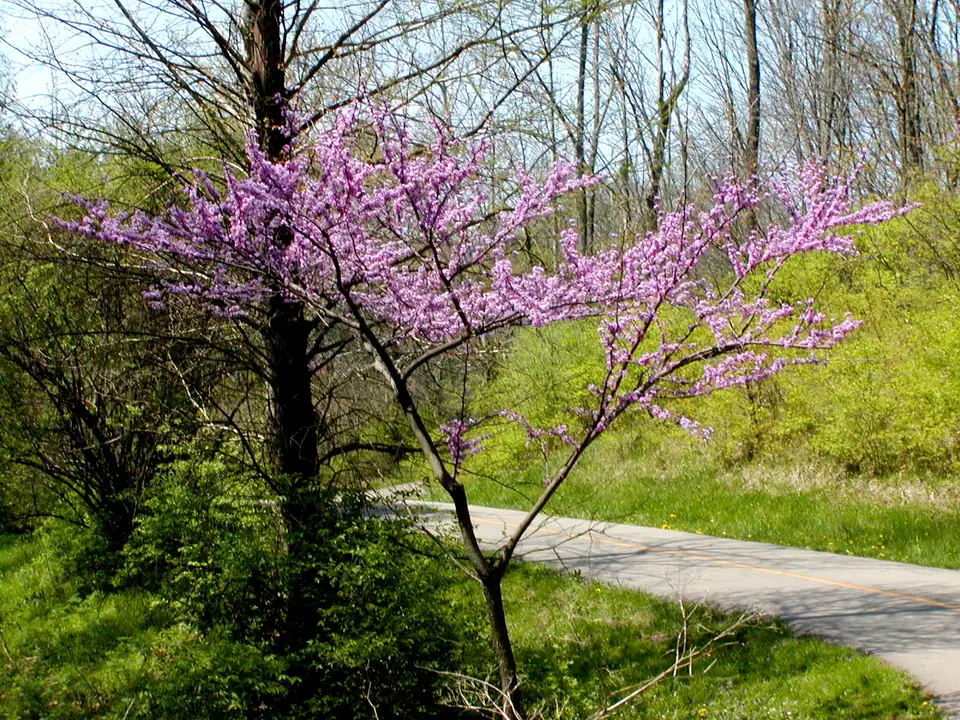


How to Grow and Care for Redbud
Cercis canadensis
Written by Emilio Marruso · last checked
At a glance
The eastern redbud is a tree that grows 20 to 30 feet tall in full sun to partial shade, and it flowers best in full sun. Its flowers are even edible: they taste like peas and are lovely in salads or fried. Keep it well watered until it settles in, and shape it while young for a strong structure.
- Sun
Full sun to partial shade; it flowers best in full sun
What the sources say (5)
Light: Full sun to partial shade
According to University of Wisconsin Extension: Eastern redbud can be grown in full sun to partial shade , although the best flowering occurs in full sun.
— Eastern Redbud, Cercis canadensis – Wisconsin Horticulture [2] South Carolina (Clemson HGIC): It grows well in full sun but prefers some shade in the heat of summer.
— Redbud | Home & Garden Information Center [5] According to University of Arkansas Extension: They are best in full sun or light shade and have good drought tolerance once established.
— Cercis canadensis, Rising Sun Redbud [7] Eastern redbud can be grown in full sun to partial shade , although the best flowering occurs in full sun.
— Eastern Redbud, Cercis canadensis – Wisconsin Horticulture [2] It grows best in full sun to part shade and evenly moist, well-drained soils, but is adaptable to most soils as long as drainage is good.
— Eastern Redbud: A Superb Tree for Almost Any Landscape [6] - Water
Keep it well watered until it settles in
What the sources say (1)
Watering notes: Plants should be kept well-watered until established
plants should be placed in their permanent positions as soon as possible and should be kept well-watered until established.
— Cercis canadensis (American Judas Tree, American Redbud, Eastern Redbud, Redbud) | North Carolina Extension Gardener Plant Toolbox [1] - Cold
Survives winters down to −30 °F (−34.4 °C)
Very hardy · USDA 4a · RHS H7 · Z4
What the sources say (10)
Hardiness, coldest zone: 4a [winter low −34.4 to −31.7 °C (−30 to −25 °F)]
According to NC State Extension: 4a, 4b, 5a, 5b, 6a, 6b, 7a, 7b, 8a, 8b, 9a, 9b
— Cercis canadensis (American Judas Tree, American Redbud, Eastern Redbud, Redbud) | North Carolina Extension Gardener Plant Toolbox [1] According to University of Wisconsin Extension: regularly used as an ornamental in gardens and landscaping in zones 4a to 9b
— Eastern Redbud, Cercis canadensis – Wisconsin Horticulture [2] According to Penn State Extension: Eastern redbud is hardy in USDA Plant Hardiness Zones 4–9.
— Eastern Redbud: A Superb Tree for Almost Any Landscape [6] According to University of Illinois Extension: USDA Hardiness Zone 5 - 8
— Eastern Redbud (Cercis canadensis)-Hort Answers - University of Illinois Extension [3] USDA Plant Hardiness Zone: 4a, 4b, 5a, 5b, 6a, 6b, 7a, 7b, 8a, 8b, 9a, 9b
— Cercis canadensis (American Judas Tree, American Redbud, Eastern Redbud, Redbud) | North Carolina Extension Gardener Plant Toolbox [1] Hardiness, warmest zone: 9b [winter low −3.9 to −1.1 °C (25 to 30 °F)]
According to NC State Extension: 4a, 4b, 5a, 5b, 6a, 6b, 7a, 7b, 8a, 8b, 9a, 9b
— Cercis canadensis (American Judas Tree, American Redbud, Eastern Redbud, Redbud) | North Carolina Extension Gardener Plant Toolbox [1] According to University of Wisconsin Extension: regularly used as an ornamental in gardens and landscaping in zones 4a to 9b
— Eastern Redbud, Cercis canadensis – Wisconsin Horticulture [2] According to Penn State Extension: Eastern redbud is hardy in USDA Plant Hardiness Zones 4–9.
— Eastern Redbud: A Superb Tree for Almost Any Landscape [6] According to University of Illinois Extension: USDA Hardiness Zone 5 - 8
— Eastern Redbud (Cercis canadensis)-Hort Answers - University of Illinois Extension [3] USDA Plant Hardiness Zone: 4a, 4b, 5a, 5b, 6a, 6b, 7a, 7b, 8a, 8b, 9a, 9b
— Cercis canadensis (American Judas Tree, American Redbud, Eastern Redbud, Redbud) | North Carolina Extension Gardener Plant Toolbox [1] - Feeding
Slow-release tree and shrub fertilizer every six weeks in spring
What the sources say (3)
When: Spring
Water the plants well weekly. Fertilize them during the spring at six- week intervals with a slow-release tree & shrub fertilizer.
— Redbud | Home & Garden Information Center [5] How often: Every six weeks during spring
Water the plants well weekly. Fertilize them during the spring at six- week intervals with a slow-release tree & shrub fertilizer.
— Redbud | Home & Garden Information Center [5] Mineral fertilizers: Slow-release tree and shrub fertilizer
Water the plants well weekly. Fertilize them during the spring at six- week intervals with a slow-release tree & shrub fertilizer.
— Redbud | Home & Garden Information Center [5] - Pruning
Prune while young to give it a good shape and strong structure
What the sources say (1)
Pruning: When young, to develop a good shape and strong structure
It requires pruning when young to develop a good shape and strong structure.
— Eastern Redbud, Cercis canadensis – Wisconsin Horticulture [2] - Harvest
The flowers are edible and taste like peas; try them in salads or fried
- Pests
Leafhoppers, borers, Japanese beetles and scale; canker can suddenly kill branches
What the sources say (4)
Pests: leafhoppers, caterpillars, borers, Japanese beetles, treehoppers, scale, webworms, granulate ambrosia beetle, black twig borer
Insects, Diseases, and Other Plant Problems: Insect pests include leafhoppers, caterpillars, borers, Japanese beetles, treehoppers, scale, and webworms.
— Cercis canadensis (American Judas Tree, American Redbud, Eastern Redbud, Redbud) | North Carolina Extension Gardener Plant Toolbox [1] Insects such as granulate ambrosia beetle, black twig borer, treehoppers, caterpillars, scales and leafhoppers can also cause damage.
— Redbud | Home & Garden Information Center [5] Diseases: canker, dieback, leaf spots, verticillium wilt, blights, mildew, Botryosphaeria canker
Possible diseases include canker, dieback, leaf spots, verticillium wilt, blights, and mildew. It can be a short-lived plant, typically living less than 75 years.
— Cercis canadensis (American Judas Tree, American Redbud, Eastern Redbud, Redbud) | North Carolina Extension Gardener Plant Toolbox [1] Redbuds are very susceptible to Botryosphaeria canker and dieback on the branches. This is a fungal disease that enters twigs and branches, feeds on the living tissue below the bark, and spreads around the stem.
— Redbud | Home & Garden Information Center [5] - Watch out
Dry trees catch canker more easily: water weekly and cut out and throw away sick branches
- Size
20 to 30 ft tall
What the sources say (3)
Mature height: 610-914 cm (20 to 30 ft)
Height: 20 ft. 0 in. - 30 ft. 0 in. Width: 25 ft. 0 in. - 35 ft. 0 in.
— Cercis canadensis (American Judas Tree, American Redbud, Eastern Redbud, Redbud) | North Carolina Extension Gardener Plant Toolbox [1] Eastern redbud grows 20 to 30 feet tall and 25 to 35 feet wide, making it a suitable choice for small landscapes.
— Eastern Redbud: A Superb Tree for Almost Any Landscape [6] Redbuds always remain small, maturing at 20 to 30 feet in height and 15 to 35 feet in width.
— Redbud | Home & Garden Information Center [5] - Propagation
From seed; named varieties by bud grafting or summer cuttings
What the sources say (4)
Propagation: Seed for the species; bud grafting or summer cuttings for cultivars
According to University of Wisconsin Extension: species: The species is easily propagated from seed, but the cultivars must be budded onto seedling rootstock or propagated by summer cuttings.
— Eastern Redbud, Cercis canadensis – Wisconsin Horticulture [2] According to NC State Extension: Recommended Propagation Strategy: Seed
— Cercis canadensis (American Judas Tree, American Redbud, Eastern Redbud, Redbud) | North Carolina Extension Gardener Plant Toolbox [1] The species can be propagated from seed, but cuttings or bud grafting is done for the cultivars.
— Eastern Redbud, Cercis canadensis – Wisconsin Horticulture [2] The species is easily propagated from seed, but the cultivars must be budded onto seedling rootstock or propagated by summer cuttings.
— Eastern Redbud, Cercis canadensis – Wisconsin Horticulture [2] - Sowing
Sow fresh seed outdoors in fall; dried seed needs scratching or hot water, then 5–8 weeks cold and moist
What the sources say (1)
Sowing: Fall (fresh seed sown directly into the field); dried seeds need scarification or hot water immersion followed by cold, moist stratification for 5 to 8 weeks
Fresh seed can be sown directly into the field in the fall, but mechanical scarification or hot water immersion followed by cold, moist stratification for 5 to 8 weeks is required for germination of dried seeds.
— Eastern Redbud, Cercis canadensis – Wisconsin Horticulture [2]
Overview
Eastern redbud is a small deciduous ornamental tree that blooms in early spring before the leaves appear. [1] It grows in full sun to partial shade and does best in moist, well-drained soil with regular watering. [2] It is susceptible to canker and dieback, and it tends to be short-lived. [5][1]
Redbud care
How to water Redbud
Watering
The sources give different values depending on region, zone or growing conditions.
What each source says
According to University of Wisconsin Extension: Tolerates drought but does better with regular watering
According to NC State Extension: Does not tolerate heat or drought
South Carolina (Clemson HGIC): Tolerates moderate dry spells; does better when irrigated in summer dry spells
According to University of Arkansas Extension: Good drought tolerance once established
According to University of Illinois Extension: Moist, well-drained soil; trees in full sun may need more water
What the sources say (7)
According to University of Wisconsin Extension: It can tolerate drought but does better with regular watering.According to NC State Extension: It does not tolerate heat or drought, which can stress the tree, or wet soils.South Carolina (Clemson HGIC): Redbuds tolerate moderate dry spells, but do better when irrigated in summer dry spells.According to University of Arkansas Extension: They
are best in full sun or light shade and have good drought tolerance once established.According to University of Illinois Extension: Full sun to partial shade; moist, well-drained soil (trees in full sun may need more water)It can tolerate drought but does better with regular watering.Regular watering, fertilization, and pruning out dead branches as needed will keep the tree vigorous.Watering notes
Plants should be kept well-watered until established
What the sources say (1)
plants should be placed in their permanent positions as soon as possible and should be kept well-watered until established.How much light Redbud needs
Full sun to partial shade
What each source says
According to University of Wisconsin Extension: Full sun to partial shade; best flowering in full sun
South Carolina (Clemson HGIC): Full sun, preferring some shade in the heat of summer
According to University of Arkansas Extension: Full sun or light shade
What the sources say (5)
According to University of Wisconsin Extension: Eastern redbud can be grown in full sun to partial shade , although the best flowering occurs in full sun.South Carolina (Clemson HGIC): It grows well in full sun but prefers some shade in the heat of summer.According to University of Arkansas Extension: They
are best in full sun or light shade and have good drought tolerance once established.Eastern redbud can be grown in full sun to partial shade , although the best flowering occurs in full sun.It grows best in full sun to part shade and evenly moist, well-drained soils, but is adaptable to most soils as long as drainage is good.How much cold Redbud can take
Hardiness, coldest zone
4a [winter low −34.4 to −31.7 °C (−30 to −25 °F)]
What each source says
According to NC State Extension: 4a [winter low −34.4 to −31.7 °C (−30 to −25 °F)]
According to University of Wisconsin Extension: 4a [winter low −34.4 to −31.7 °C (−30 to −25 °F)]
According to Penn State Extension: 4 [winter low −34.4 to −28.9 °C (−30 to −20 °F)]
According to University of Illinois Extension: 5 [winter low −28.9 to −23.3 °C (−20 to −10 °F)]
What the sources say (5)
According to NC State Extension: 4a, 4b, 5a, 5b, 6a, 6b, 7a, 7b, 8a, 8b, 9a, 9bAccording to University of Wisconsin Extension: regularly used as an ornamental in gardens and landscaping in zones 4a to 9bAccording to Penn State Extension: Eastern redbud is hardy in USDA Plant Hardiness Zones 4–9.According to University of Illinois Extension: USDA Hardiness Zone
5 - 8USDA Plant Hardiness Zone:
4a, 4b, 5a, 5b, 6a, 6b, 7a, 7b, 8a, 8b, 9a, 9bHardiness, warmest zone
9b [winter low −3.9 to −1.1 °C (25 to 30 °F)]
What each source says
According to NC State Extension: 9b [winter low −3.9 to −1.1 °C (25 to 30 °F)]
According to University of Wisconsin Extension: 9b [winter low −3.9 to −1.1 °C (25 to 30 °F)]
According to Penn State Extension: 9 [winter low −6.7 to −1.1 °C (20 to 30 °F)]
According to University of Illinois Extension: 8 [winter low −12.2 to −6.7 °C (10 to 20 °F)]
What the sources say (5)
According to NC State Extension: 4a, 4b, 5a, 5b, 6a, 6b, 7a, 7b, 8a, 8b, 9a, 9bAccording to University of Wisconsin Extension: regularly used as an ornamental in gardens and landscaping in zones 4a to 9bAccording to Penn State Extension: Eastern redbud is hardy in USDA Plant Hardiness Zones 4–9.According to University of Illinois Extension: USDA Hardiness Zone
5 - 8USDA Plant Hardiness Zone:
4a, 4b, 5a, 5b, 6a, 6b, 7a, 7b, 8a, 8b, 9a, 9bHow to propagate Redbud
Seed for the species; bud grafting or summer cuttings for cultivars
What each source says
According to University of Wisconsin Extension: species: Seed
According to NC State Extension: Seed
What the sources say (4)
According to University of Wisconsin Extension: species: The species is easily propagated from seed, but the cultivars must be budded onto seedling rootstock or propagated by summer cuttings.According to NC State Extension: Recommended Propagation Strategy:
SeedThe species can be propagated from seed, but cuttings or bud grafting is done for the cultivars.The species is easily propagated from seed, but the cultivars must be budded onto seedling rootstock or propagated by summer cuttings.How to grow Redbud
The plant
Life cycle
woody
What the sources say (1)
Life Cycle:
Woody
Recommended Propagation Strategy:
Seed
Country Or Region Of Origin:Family
Fabaceae
What the sources say (2)
Eastern redbud is a deciduous, ornamental tree in the bean family (Fabaceae). It is native to eastern North America and may grow up to 20 to 30 feet tall and 20 to 35 feet wide.Commonly called eastern redbud, this deciduous tree in the legume family (Fabaceae) is regularly used as an ornamental in gardens and landscaping in zones 4a to 9b .Mature height
610-914 cm (20 to 30 ft)
What the sources say (3)
Height: 20 ft. 0 in. - 30 ft. 0 in.
Width: 25 ft. 0 in. - 35 ft. 0 in.Eastern redbud grows 20 to 30 feet tall and 25 to 35 feet wide, making it a suitable choice for small landscapes.Redbuds always remain small, maturing at 20 to 30 feet in height and 15 to 35 feet in width.Mature width
The sources disagree:
Height: 20 ft. 0 in. - 30 ft. 0 in. Width: 25 ft. 0 in. - 35 ft. 0 in.
[1]Redbuds always remain small, maturing at 20 to 30 feet in height and 15 to 35 feet in width.
[5]Eastern redbud is a deciduous, ornamental tree in the bean family (Fabaceae). It is native to eastern North America and may grow up to 20 to 30 feet tall and 20 to 35 feet wide.
[1]
Pests and diseases
Pests
leafhoppers, caterpillars, borers, Japanese beetles, treehoppers, scale, webworms, granulate ambrosia beetle, black twig borer
What the sources say (2)
Insects, Diseases, and Other Plant Problems: Insect pests include leafhoppers, caterpillars, borers, Japanese beetles, treehoppers, scale, and webworms.Insects such as granulate ambrosia beetle, black twig borer, treehoppers, caterpillars, scales and leafhoppers can also cause damage.Diseases
canker, dieback, leaf spots, verticillium wilt, blights, mildew, Botryosphaeria canker
What the sources say (2)
Possible diseases include canker, dieback, leaf spots, verticillium wilt, blights, and mildew. It can be a short-lived plant, typically living less than 75 years.Redbuds are very susceptible to Botryosphaeria canker and dieback on the branches. This is a fungal disease that enters twigs and branches, feeds on the living tissue below the bark, and spreads around the stem.Fertilizing
When
Spring
What the sources say (1)
Water the plants well weekly. Fertilize them during the spring at six- week intervals with a slow-release tree & shrub fertilizer.How often
Every six weeks during spring
What the sources say (1)
Water the plants well weekly. Fertilize them during the spring at six- week intervals with a slow-release tree & shrub fertilizer.Mineral fertilizers
Slow-release tree and shrub fertilizer
What the sources say (1)
Water the plants well weekly. Fertilize them during the spring at six- week intervals with a slow-release tree & shrub fertilizer.Redbud pests and problems
Botryosphaeria canker and dieback
Symptom: Fungal disease entering twigs and branches; the branch suddenly wilts and dies. Trees under drought stress succumb more easily.
What to do: Prune out diseased branches and dispose of the cuttings; mulch to the drip line; water weekly; avoid wounding. No fungicides control it.
What the sources say (2)
Redbuds are very susceptible to Botryosphaeria canker and dieback on the branches.
— Redbud | Home & Garden Information Center [5] Pruning out the diseased branches and disposing of the cuttings will significantly help to reduce disease.
— Redbud | Home & Garden Information Center [5] Insect pests
Symptom: Leafhoppers, caterpillars, borers, Japanese beetles, treehoppers, scale and webworms.
What to do: No management given.
What the sources say (1)
Insect pests include leafhoppers, caterpillars, borers, Japanese beetles, treehoppers, scale, and webworms.
— Cercis canadensis (American Judas Tree, American Redbud, Eastern Redbud, Redbud) | North Carolina Extension Gardener Plant Toolbox [1] Other diseases
Symptom: Canker, dieback, leaf spots, verticillium wilt, blights and mildew.
What to do: No management given.
What the sources say (1)
Possible diseases include canker, dieback, leaf spots, verticillium wilt, blights, and mildew.
— Cercis canadensis (American Judas Tree, American Redbud, Eastern Redbud, Redbud) | North Carolina Extension Gardener Plant Toolbox [1] Short lifespan
Symptom: Can be a short-lived plant, typically living less than 75 years.
What to do: No management given.
What the sources say (1)
It can be a short-lived plant, typically living less than 75 years.
— Cercis canadensis (American Judas Tree, American Redbud, Eastern Redbud, Redbud) | North Carolina Extension Gardener Plant Toolbox [1]
Remedies
Each remedy shows what official sources say about it; traditional remedies without an official source are marked as such. Harmful ones are listed so you know to avoid them.
Treating the plant
botryosphaeria canker
pruning out diseased branches Works
Wounds created by pruning or mechanical injury serve as entry points for the fungus that infects the wood and causes cankers. Avoid wounding to minimize susceptibility to this disease.
— Redbud | Home & Garden Information Center [5] How: Prune out the diseased branches and dispose of the cuttings. Prune when stems and foliage are dry; cut the stem 6 to 8 inches below any sunken, cracked or diseased area, and disinfect the pruners between cuts with a spray of rubbing alcohol.
Pruning out the diseased branches and disposing of the cuttings will significantly help to reduce disease.
— Redbud | Home & Garden Information Center [5] What the evidence says Pruning out the diseased branches and disposing of the cuttings will significantly help to reduce disease.
— Redbud | Home & Garden Information Center [5]
caterpillars
removing and destroying egg nests by hand Not verified
Traditional remedy, not verified by an official source.
How: Remove and destroy visible caterpillar egg nests from the tree bark, and remove and destroy affected plant parts.
scale and caterpillars
releasing natural enemies Not verified
Traditional remedy, not verified by an official source.
How: Release natural enemies such as parasitic wasps and predatory lacewings, which provide control for both scale and caterpillar problems.
Calendar
Sowing
Fall (fresh seed sown directly into the field); dried seeds need scarification or hot water immersion followed by cold, moist stratification for 5 to 8 weeks
What the sources say (1)
Fresh seed can be sown directly into the field in the fall, but mechanical scarification or hot water immersion followed by cold, moist stratification for 5 to 8 weeks is required for germination of dried seeds.Pruning
When young, to develop a good shape and strong structure
What the sources say (1)
It requires pruning when young to develop a good shape and strong structure.Months as given by the sources, which are mostly from the United States (northern hemisphere). In the southern hemisphere they shift by about six months.
Edibility
Reported by the source, quoted verbatim. Do not eat a plant on the basis of this page alone: identification mistakes can be dangerous.
Indicative values
Values from a secondary source, not checked word for word like the rest of this page. Use them as a starting point.
- Hours of sun
- 6-8 hoursIndicative value, adapt it to your climate · Secondary source
- Drought tolerant
- yesIndicative value, adapt it to your climate · Secondary source
- Soil
- Humus rich, Well-drainedIndicative value, adapt it to your climate · Secondary source
- Soil pH
- 6-8Indicative value, adapt it to your climate · Secondary source
- Growth rate
- ModerateIndicative value, adapt it to your climate · Secondary source
Similar plants
- Afghan Redbud Cercis griffithii
- Chain-flowered Redbud Cercis racemosa
- Chinese Redbud Cercis chinensis
- Mediterranean Redbud Cercis siliquastrum
- Western Redbud Cercis orbiculata
- American Groundnut Apios americana
- Amur Maackia Maackia amurensis
- Bauhinia Bauhinia blakeana
Sources
Every value above is quoted from these documents. Links lead to the original publisher.
- Cercis canadensis (American Judas Tree, American Redbud, Eastern Redbud, Redbud) | North Carolina Extension Gardener Plant Toolbox · plants.ces.ncsu.edu, consulted
- Eastern Redbud, Cercis canadensis – Wisconsin Horticulture · hort.extension.wisc.edu, consulted
- Eastern Redbud (Cercis canadensis)-Hort Answers - University of Illinois Extension · web.extension.illinois.edu, consulted
- Eastern Redbud - Cercis canadensis | North Carolina Extension Gardener Plant Toolbox · plants.ces.ncsu.edu, consulted
- Redbud | Home & Garden Information Center · hgic.clemson.edu, consulted
- Eastern Redbud: A Superb Tree for Almost Any Landscape · extension.psu.edu, consulted
- Cercis canadensis, Rising Sun Redbud · uaex.uada.edu, consulted
Written by Emilio Marruso · last checked