
How to Grow and Care for Sage
Salvia officinalis
Written by Emilio Marruso · last checked
At a glance
Sage is a tough, generous perennial herb that thrives in hot, dry spots and tolerates drought once established. Give it sun and very well-drained soil, and 75 days after planting you can start picking fragrant leaves for tea, meat, vegetable and egg dishes. Its flowers are edible too, and it grows happily in a pot or even indoors.
- Sun
Full sun to partial shade
What the sources say (1)
Light: Full sun to partial shade
Light: Full sun (6 or more hours of direct sunlight a day) Partial Shade (Direct sunlight only part of the day, 2-6 hours)
— Salvia officinalis (Common Sage, Culinary Sage, Garden Sage, Sage) | North Carolina Extension Gardener Plant Toolbox [1] - Water
Water deeply but rarely, letting the soil dry in between; water new plants in dry spells
What the sources say (6)
Watering: Tolerates drought and poor soils; produces better with consistent water; water deeply but infrequently, allowing the soil to dry out between waterings
It is intolerant of wet or poorly drained soils. It will tolerate drought and poor soils.
— Salvia officinalis (Common Sage, Culinary Sage, Garden Sage, Sage) | North Carolina Extension Gardener Plant Toolbox [1] It will tolerate drought and poor soil fertility but will produce better with consistent water.
— Sage, Salvia officinalis – Wisconsin Horticulture [2] Water deeply but infrequently, allowing the soil to dry out between waterings to prevent root rot.
— Spice Up You Life: A Beginners Guide to Growing Sage - UF/IFAS Extension Pasco County [7] Drought: Drought tolerant once established: in the ground it should not need extra watering, though it produces better with consistent water. Water new plants during dry spells in the first year.
Sage is drought tolerant once established and shouldn’t need additional watering when growing in the ground.
— [9] It will tolerate drought and poor soil fertility but will produce better with consistent water.
— Sage, Salvia officinalis – Wisconsin Horticulture [2] Water newly planted sage during dry spells in the first year after planting.
— [9] - Cold
Survives winters down to −30 °F (−34.4 °C)
Very hardy · USDA 4a · RHS H7 · Z4
What the sources say (5)
Hardiness, coldest zone: 4a [winter low −34.4 to −31.7 °C (−30 to −25 °F)]
USDA Plant Hardiness Zone: 4a, 4b, 5a, 5b, 6a, 6b, 7a, 7b, 8a, 8b
— Salvia officinalis (Common Sage, Culinary Sage, Garden Sage, Sage) | North Carolina Extension Gardener Plant Toolbox [1] Hardiness, warmest zone: 8b [winter low −9.4 to −6.7 °C (15 to 20 °F)]
According to NC State Extension: USDA Plant Hardiness Zone: 4a, 4b, 5a, 5b, 6a, 6b, 7a, 7b, 8a, 8b
— Salvia officinalis (Common Sage, Culinary Sage, Garden Sage, Sage) | North Carolina Extension Gardener Plant Toolbox [1] According to UW-Madison Extension: It is hardy in zones 4a to 10b.
— Sage, Salvia officinalis – Wisconsin Horticulture [2] According to Clemson HGIC: It is a woody, evergreen shrub that is hardy in USDA planting zones 4 to 8.
— Sage: The Wisest Herb | Home & Garden Information Center [4] USDA Plant Hardiness Zone: 4a, 4b, 5a, 5b, 6a, 6b, 7a, 7b, 8a, 8b
— Salvia officinalis (Common Sage, Culinary Sage, Garden Sage, Sage) | North Carolina Extension Gardener Plant Toolbox [1] - Soil
Very well-drained soil, pH 6.0–7.0
What the sources say (5)
Soil pH, minimum: 6.0
Sage thrives in well-draining, slightly alkaline soil with a pH of 6.0 to 7.0.
— Spice Up You Life: A Beginners Guide to Growing Sage - UF/IFAS Extension Pasco County [7] Soil pH, maximum: 7.0
Sage thrives in well-draining, slightly alkaline soil with a pH of 6.0 to 7.0.
— Spice Up You Life: A Beginners Guide to Growing Sage - UF/IFAS Extension Pasco County [7] Watering notes: Needs very well drained soil, especially over winter; avoid overwatering in cooler weather; apply only a thin layer of mulch
For sage to perform as a perennial, it must have very well drained soil especially over the winter.
— Sage | Herbs | Illinois Extension | Illinois [8] Avoid overwatering sage during periods of cooler weather to prevent root rot.
— Spice Up You Life: A Beginners Guide to Growing Sage - UF/IFAS Extension Pasco County [7] Apply a thin layer of mulch around sage plants to conserve moisture and suppress weeds.
— Spice Up You Life: A Beginners Guide to Growing Sage - UF/IFAS Extension Pasco County [7] - Spacing
18–24 in between plants
What the sources say (2)
Spacing: 45.7-61.0 cm (18-24 in)
Space plants 18 to 24 inches apart and divide every few years to rejuvenate the plants.
— Sage, Salvia officinalis – Wisconsin Horticulture [2] Plant sage 18 to 24 inches apart to allow air circulation between the plants as they mature.
— Spice Up You Life: A Beginners Guide to Growing Sage - UF/IFAS Extension Pasco County [7] - Planting
In warm climates, plant in fall or early spring from nursery plants or cuttings
What the sources say (2)
Planting: Fall or early spring, using nursery-grown plants or cuttings (Central Florida)
Central Florida: Start sage from nursery-grown plants or cuttings in the fall or early spring to establish robust root systems before the onset of summer heat.
— Spice Up You Life: A Beginners Guide to Growing Sage - UF/IFAS Extension Pasco County [7] Start sage from nursery-grown plants or cuttings in the fall or early spring to establish robust root systems before the onset of summer heat.
— Spice Up You Life: A Beginners Guide to Growing Sage - UF/IFAS Extension Pasco County [7] - Feeding
Compost at planting is enough; too much feeding gives leggy plants and less tasty leaves
What the sources say (5)
Natural fertilizers: Compost worked into the soil at planting; little further fertilizer is needed
Sage prefers a full sun location in soils that are well prepared with compost.
— Sage | Herbs | Illinois Extension | Illinois [8] Many perennial salvias will grow well without supplemental fertility if sited in a well-prepared soil containing compost.
— Salvia | Home & Garden Information Center [6] Sage is relatively low-maintenance and does not require much fertilization.
— Spice Up You Life: A Beginners Guide to Growing Sage - UF/IFAS Extension Pasco County [7] Avoid: Over-fertilizing: it gives leggy growth and less flavorful leaves, and excess fertilizer increases fungal diseases
Sage is relatively low-maintenance and does not require much fertilization. Avoid over-fertilization, which can lead to leggy growth and less flavor in the leaves.
— Spice Up You Life: A Beginners Guide to Growing Sage - UF/IFAS Extension Pasco County [7] Excessive water and fertilizer can increase fungal disease problems for salvias.
— Salvia | Home & Garden Information Center [6] - Pruning
Trim in spring and a few times in the season; don't cut into old woody stems
What the sources say (2)
Pruning: In the spring and a few times through the growing season
Prune the plant in the spring and a few times through the growing season to encourage young shoots with a strong flavor
— Sage, Salvia officinalis – Wisconsin Horticulture [2] Prune plants back in the spring just as new growth resumes.
— Sage | Herbs | Illinois Extension | Illinois [8] - Harvest
From 75 days after planting; pick before flowering, never more than half the plant
What the sources say (4)
Harvest: Spring and summer, as needed through the growing season and before flowering; light harvest in the first year; about 75 days from planting to first harvest
The leaves may be harvested in the spring and summer. For new plantings, it is best to harvest lightly the first year.
— Salvia officinalis (Common Sage, Culinary Sage, Garden Sage, Sage) | North Carolina Extension Gardener Plant Toolbox [1] Harvest sage leaves as needed throughout the growing season, and one final time before flowering.
— Spice Up You Life: A Beginners Guide to Growing Sage - UF/IFAS Extension Pasco County [7] Sage takes about 75 days from planting to first harvest.
— Sage, Salvia officinalis – Wisconsin Horticulture [2] How to harvest: Cut 6-8 in (15-20 cm) from the top of the plants at least twice per season; pick leaves as desired without cutting back more than half the plant; harvest before flowering
At least twice during the growing season, cut 6 to 8 inches from the top of the plants. Pick the leaves as desired as long as you don’t cut back more than half the plant or it will stop producing. Harvest before the plant flowers.
— Sage, Salvia officinalis – Wisconsin Horticulture [2] - Pests
Slugs, spider mites, leafhoppers and spittlebugs; root rot and powdery mildew
What the sources say (2)
Pests: leafhoppers, slugs, spider mites, spittlebugs
Insects, Diseases, and Other Plant Problems: Possible insects include leaf hoppers, slugs, spider mites, and spittlebugs. Root rot, powdery mildew, and verticillium wilt can occur.
— Salvia officinalis (Common Sage, Culinary Sage, Garden Sage, Sage) | North Carolina Extension Gardener Plant Toolbox [1] Diseases: root rot, powdery mildew, verticillium wilt
Insects, Diseases, and Other Plant Problems: Possible insects include leaf hoppers, slugs, spider mites, and spittlebugs. Root rot, powdery mildew, and verticillium wilt can occur.
— Salvia officinalis (Common Sage, Culinary Sage, Garden Sage, Sage) | North Carolina Extension Gardener Plant Toolbox [1] - Watch out
Hates wet soil, especially in winter: don't overwater in cool weather and use only thin mulch
What the sources say (3)
Watering notes: Needs very well drained soil, especially over winter; avoid overwatering in cooler weather; apply only a thin layer of mulch
For sage to perform as a perennial, it must have very well drained soil especially over the winter.
— Sage | Herbs | Illinois Extension | Illinois [8] Avoid overwatering sage during periods of cooler weather to prevent root rot.
— Spice Up You Life: A Beginners Guide to Growing Sage - UF/IFAS Extension Pasco County [7] Apply a thin layer of mulch around sage plants to conserve moisture and suppress weeds.
— Spice Up You Life: A Beginners Guide to Growing Sage - UF/IFAS Extension Pasco County [7] - Size
Up to 2 ft tall and 2–3 ft wide
What the sources say (2)
Mature height: up to 61 cm (2 ft)
The species can grow up to 2 feet tall and 2 to 3 feet wide. Many cultivars may be shorter.
— Salvia officinalis (Common Sage, Culinary Sage, Garden Sage, Sage) | North Carolina Extension Gardener Plant Toolbox [1] Mature width: 61-91 cm (2-3 ft)
The species can grow up to 2 feet tall and 2 to 3 feet wide. Many cultivars may be shorter.
— Salvia officinalis (Common Sage, Culinary Sage, Garden Sage, Sage) | North Carolina Extension Gardener Plant Toolbox [1] - Propagation
Seed, cuttings, layering or division; named varieties only from cuttings
What the sources say (5)
Propagation: Seed, stem cuttings, layering, division
Sage can also reproduced by layering, division, or cuttings .
— Sage, Salvia officinalis – Wisconsin Horticulture [2] Recommended Propagation Strategy: Layering Seed Stem Cutting Country Or Region Of Origin: Northern Mediterranean
— Salvia officinalis (Common Sage, Culinary Sage, Garden Sage, Sage) | North Carolina Extension Gardener Plant Toolbox [1] Cuttings: Softwood stem cuttings from new growth, taken in late spring or summer and rooted in moist, well-drained potting mix; rooting hormone is generally not necessary. Named varieties are propagated vegetatively because they do not come true from seed.
Softwood stem cuttings taken in summer can be rooted in moist, well-drained potting mix . Rooting hormone is generally not necessary.
— Sage, Salvia officinalis – Wisconsin Horticulture [2] Softwood cuttings taken from new growth in late spring or early summer
— [9] Sage is easy to start from seed , although most named varieties are propagated vegetatively.
— Sage, Salvia officinalis – Wisconsin Horticulture [2] - Sowing
Sow outdoors at the last frost date or indoors 6–8 weeks before; sprouts in two weeks
What the sources say (6)
Sowing: Directly in the garden on the average date of last frost, or indoors 6 to 8 weeks before then
To grow from seed, either plant directly in the garden on the average date of last frost or start indoors 6 to 8 weeks before then.
— Sage, Salvia officinalis – Wisconsin Horticulture [2] Germination: Sow indoors in spring in moist seed compost, covered with a thin layer of fine compost, in a propagator or under polythene on a warm windowsill; seeds germinate in two weeks. Seed-grown plants may take several years to reach harvestable size.
USA (Wisconsin): To grow from seed, either plant directly in the garden on the average date of last frost or start indoors 6 to 8 weeks before then.
— Sage, Salvia officinalis – Wisconsin Horticulture [2] Sow into small pots or modular trays of moist peat-free seed compost and cover with a thin layer of fine compost
— [9] Place in a propagator or cover with a polythene bag on a warm windowsill.
— [9] Seeds should take about two weeks to germinate. Pot on the seedlings into larger modules or pots as they grow
— [9] Cuttings are preferred as seeds may take several years to produce harvestable plants.
— Sage | Herbs | Illinois Extension | Illinois [8] - Containers
Grows in a pot at least 12 in wide and deep, even indoors
What the sources say (7)
In containers: Yes
Sage is also useful as an ornamental plant in containers or in the garden.
— Sage | Herbs | Illinois Extension | Illinois [8] The smaller varieties can also be grown as container plants to be brought inside for a supply of fresh sage through the cold winter months.
— Sage, Salvia officinalis – Wisconsin Horticulture [2] Indoors: Yes
Cuttings taken in the summer can easily be rooted and potted for use indoors during the winter.
— Sage | Herbs | Illinois Extension | Illinois [8] Between plants: 46-61 cm [18–24 in] between plants.
United Kingdom: Allow at least 30cm (12in) from neighbouring plants Planting in a container – choose one that’s at least 30cm (12in) wide and deep
— [9] in containers: Allow at least 30cm (12in) from neighbouring plants Planting in a container – choose one that’s at least 30cm (12in) wide and deep
— [9] Space plants 18 to 24 inches apart and divide every few years to rejuvenate the plants.
— Sage, Salvia officinalis – Wisconsin Horticulture [2] Plant sage 18 to 24 inches apart to allow air circulation between the plants as they mature.
— Spice Up You Life: A Beginners Guide to Growing Sage - UF/IFAS Extension Pasco County [7]
Overview
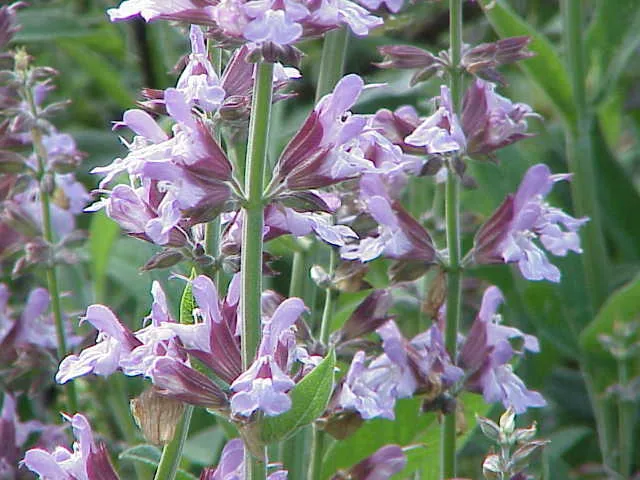
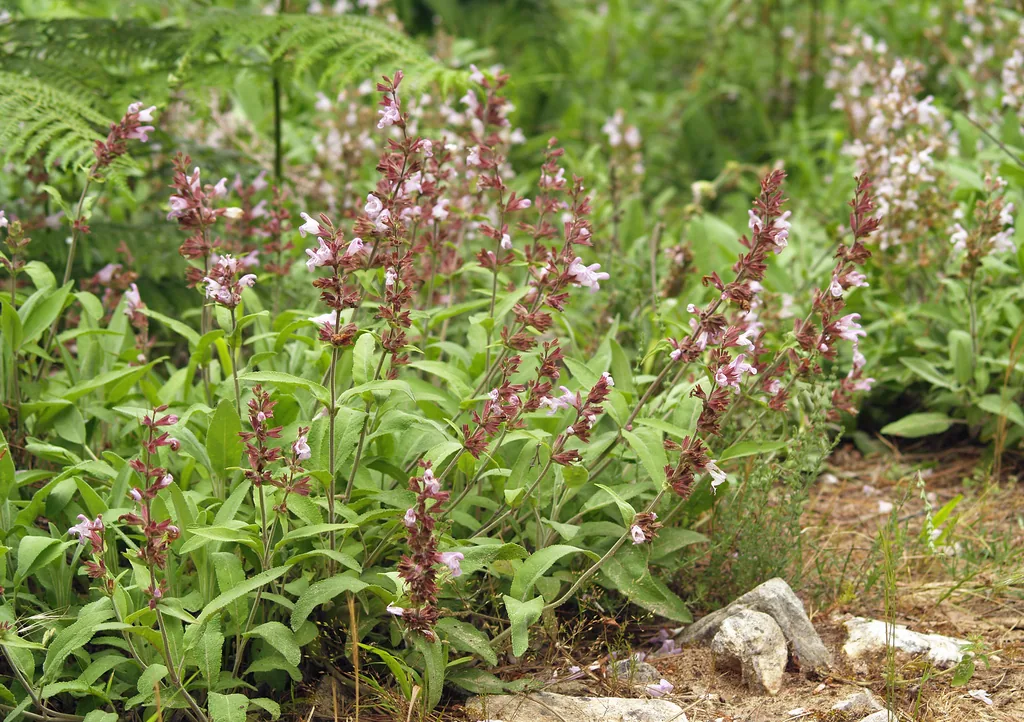
Common sage is an aromatic, edible, short-lived, semi-woody perennial shrub in the mint family. [1] It prefers full sun and well-drained, medium to dry soils and is intolerant of wet or poorly drained soils. [1] Its leaves are used fresh, dried or cooked. [1]
Sage care
How to water Sage
Watering
Tolerates drought and poor soils; produces better with consistent water; water deeply but infrequently, allowing the soil to dry out between waterings
What the sources say (3)
It is intolerant of wet or poorly drained soils. It will tolerate drought and poor soils.It will tolerate drought and poor soil fertility but will produce better with consistent water.Water deeply but infrequently, allowing the soil to dry out between waterings to prevent root rot.Watering notes
Needs very well drained soil, especially over winter; avoid overwatering in cooler weather; apply only a thin layer of mulch
What the sources say (3)
For sage to perform as a perennial, it must have very well drained soil especially over the winter.Avoid overwatering sage during periods of cooler weather to prevent root rot.Apply a thin layer of mulch around sage plants to conserve moisture and suppress weeds.How much light Sage needs
Full sun to partial shade
What the sources say (1)
Light:
Full sun (6 or more hours of direct sunlight a day)
Partial Shade (Direct sunlight only part of the day, 2-6 hours)How much cold Sage can take
Hardiness, coldest zone
4a [winter low −34.4 to −31.7 °C (−30 to −25 °F)]
What the sources say (1)
USDA Plant Hardiness Zone:
4a, 4b, 5a, 5b, 6a, 6b, 7a, 7b, 8a, 8bHardiness, warmest zone
8b [winter low −9.4 to −6.7 °C (15 to 20 °F)]
What each source says
According to NC State Extension: 8b [winter low −9.4 to −6.7 °C (15 to 20 °F)]
According to UW-Madison Extension: 10b [winter low 1.7 to 4.4 °C (35 to 40 °F)]
According to Clemson HGIC: 8 [winter low −12.2 to −6.7 °C (10 to 20 °F)]
What the sources say (4)
According to NC State Extension: USDA Plant Hardiness Zone:
4a, 4b, 5a, 5b, 6a, 6b, 7a, 7b, 8a, 8bAccording to UW-Madison Extension: It is hardy in zones 4a to 10b.According to Clemson HGIC: It is a woody, evergreen shrub that is hardy in USDA planting zones 4 to 8.USDA Plant Hardiness Zone:
4a, 4b, 5a, 5b, 6a, 6b, 7a, 7b, 8a, 8bBest soil for Sage
Soil pH, minimum
6.0
What the sources say (1)
Sage thrives in well-draining, slightly alkaline soil with a pH of 6.0 to 7.0.Soil pH, maximum
7.0
What the sources say (1)
Sage thrives in well-draining, slightly alkaline soil with a pH of 6.0 to 7.0.Where to grow Sage
Indoors
Yes
What the sources say (1)
Cuttings taken in the summer can easily be rooted and potted for use indoors during the winter.In containers
Yes
What the sources say (2)
Sage is also useful as an ornamental plant in containers or in the garden.The smaller varieties can also be grown as container plants to be brought inside for a supply of fresh sage through the cold winter months.Spacing
45.7-61.0 cm (18-24 in)
What the sources say (2)
Space plants 18 to 24 inches apart and divide every few years to rejuvenate the plants.Plant sage 18 to 24 inches apart to allow air circulation between the plants as they mature.How to propagate Sage
Seed, stem cuttings, layering, division
What the sources say (2)
Sage can also reproduced by layering, division, or cuttings .Recommended Propagation Strategy:
Layering
Seed
Stem Cutting
Country Or Region Of Origin:
Northern MediterraneanHow to grow Sage
The plant
Life cycle
perennial
What the sources say (1)
Common sage is an aromatic, edible, short-lived, bushy, spreading, semi-woody perennial shrub. It is a member of the mint family (Lamiaceae).Family
Lamiaceae
What the sources say (1)
Common sage is an aromatic, edible, short-lived, bushy, spreading, semi-woody perennial shrub. It is a member of the mint family (Lamiaceae).Mature height
up to 61 cm (2 ft)
What the sources say (1)
The species can grow up to 2 feet tall and 2 to 3 feet wide. Many cultivars may be shorter.Mature width
61-91 cm (2-3 ft)
What the sources say (1)
The species can grow up to 2 feet tall and 2 to 3 feet wide. Many cultivars may be shorter.Sowing and growth
Days to maturity
75 days from planting to first harvest
What the sources say (1)
Sage takes about 75 days from planting to first harvest. At least twice during the growing season, cut 6 to 8 inches from the top of the plants.Harvest and storage
How to harvest
Cut 6-8 in (15-20 cm) from the top of the plants at least twice per season; pick leaves as desired without cutting back more than half the plant; harvest before flowering
What the sources say (1)
At least twice during the growing season, cut 6 to 8 inches from the top of the plants. Pick the leaves as desired as long as you don’t cut back more than half the plant or it will stop producing. Harvest before the plant flowers.Storage
Dried leaves keep up to two weeks loosely packed in plastic in the refrigerator; for long-term storage freeze in ice cube trays
What the sources say (2)
Sage can keep for up to two weeks when dry leaves are loosely packed in plastic and stored in the refrigerator.For long term storage, freeze sage in ice cube trays and defrost as needed.Pests and diseases
Pests
leafhoppers, slugs, spider mites, spittlebugs
What the sources say (1)
Insects, Diseases, and Other Plant Problems: Possible insects include leaf hoppers, slugs, spider mites, and spittlebugs. Root rot, powdery mildew, and verticillium wilt can occur.Diseases
root rot, powdery mildew, verticillium wilt
What the sources say (1)
Insects, Diseases, and Other Plant Problems: Possible insects include leaf hoppers, slugs, spider mites, and spittlebugs. Root rot, powdery mildew, and verticillium wilt can occur.Fertilizing
Natural fertilizers
Compost worked into the soil at planting; little further fertilizer is needed
What the sources say (3)
Sage prefers a full sun location in soils that are well prepared with compost.Many perennial salvias will grow well without supplemental fertility if sited in a well-prepared soil containing compost.Sage is relatively low-maintenance and does not require much fertilization.Avoid
Over-fertilizing: it gives leggy growth and less flavorful leaves, and excess fertilizer increases fungal diseases
What the sources say (2)
Sage is relatively low-maintenance and does not require much fertilization. Avoid over-fertilization, which can lead to leggy growth and less flavor in the leaves.Excessive water and fertilizer can increase fungal disease problems for salvias.Signs of excess
Leggy growth and leaves with less flavor
What the sources say (1)
Sage is relatively low-maintenance and does not require much fertilization. Avoid over-fertilization, which can lead to leggy growth and less flavor in the leaves.Spacing
Between plants
46-61 cm [18–24 in] between plants.
What each source says
United Kingdom: At least 30 cm [12 in] from neighbouring plants
in containers: Container at least 30 cm [12 in] wide and deep
What the sources say (4)
United Kingdom: Allow at least 30cm (12in) from neighbouring plants Planting in a container – choose one that’s at least 30cm (12in) wide and deepin containers: Allow at least 30cm (12in) from neighbouring plants Planting in a container – choose one that’s at least 30cm (12in) wide and deepSpace plants 18 to 24 inches apart and divide every few years to rejuvenate the plants.Plant sage 18 to 24 inches apart to allow air circulation between the plants as they mature.Propagation
Germination
Sow indoors in spring in moist seed compost, covered with a thin layer of fine compost, in a propagator or under polythene on a warm windowsill; seeds germinate in two weeks. Seed-grown plants may take several years to reach harvestable size.
What each source says
USA (Wisconsin): Sow directly in the garden at the average last frost date, or indoors 6 to 8 weeks before
What the sources say (5)
USA (Wisconsin): To grow from seed, either plant directly in the garden on the average date of last frost or start indoors 6 to 8 weeks before then.Sow into small pots or modular trays of moist peat-free seed compost and cover with a thin layer of fine compostPlace in a propagator or cover with a polythene bag on a warm windowsill.Seeds should take about two weeks to germinate. Pot on the seedlings into larger modules or pots as they growCuttings are preferred as seeds may take several years to produce harvestable plants.Cuttings
Softwood stem cuttings from new growth, taken in late spring or summer and rooted in moist, well-drained potting mix; rooting hormone is generally not necessary. Named varieties are propagated vegetatively because they do not come true from seed.
What the sources say (3)
Softwood stem cuttings taken in summer can be rooted in moist, well-drained potting mix . Rooting hormone is generally not necessary.Softwood cuttings taken from new growth in late spring or early summerSage is easy to start from seed , although most named varieties are propagated vegetatively.After harvest
Storage
Fresh leaves keep up to two weeks in the refrigerator, loosely packed in plastic. Fully dried leaves are stored in an airtight jar; chopped leaves can be frozen in ice-cube trays.
What the sources say (3)
Sage can keep for up to two weeks when dry leaves are loosely packed in plastic and stored in the refrigerator.When fully dried, store the leaves in an air-tight jar.Freeze chopped sage leaves in an ice-cube tray, then simply add the cubes to your cooking whenever needed.Heat and drought
Heat
Thrives in hot, dry areas.
What each source says
cultivar 'Berggarten': Tolerant of heat and humidity
What the sources say (2)
cultivar 'Berggarten': ‘Berggarten’ has very wide, silvery-gray leaves and is tolerant of heat and humidity.common sage is a small evergreen shrub with gray-green leaves and bluish-purple flowers in spring. It thrives in hot, dry areas.Drought
Drought tolerant once established: in the ground it should not need extra watering, though it produces better with consistent water. Water new plants during dry spells in the first year.
What the sources say (3)
Sage is drought tolerant once established and shouldn’t need additional watering when growing in the ground.It will tolerate drought and poor soil fertility but will produce better with consistent water.Water newly planted sage during dry spells in the first year after planting.Sage pests and problems
Root rot, powdery mildew, verticillium wilt
Symptom: Root rot, powdery mildew and verticillium wilt can occur; insects include leaf hoppers, slugs, spider mites and spittlebugs.
What to do: Provide well-drained soil and good air circulation.
What the sources say (1)
Providing well-drained soil and good air circulation will reduce the possibility of pests and foliar diseases.
— Salvia officinalis (Common Sage, Culinary Sage, Garden Sage, Sage) | North Carolina Extension Gardener Plant Toolbox [1] Leggy growth
Symptom: The plant becomes leggy and twiggy and goes to flower.
What to do: Prune in spring and through the growing season; do not prune into mature woody stems.
What the sources say (1)
Do not prune into mature woody stems, as these seldom sprout new growth.
— Salvia officinalis (Common Sage, Culinary Sage, Garden Sage, Sage) | North Carolina Extension Gardener Plant Toolbox [1]
Remedies
Each remedy shows what official sources say about it; traditional remedies without an official source are marked as such. Harmful ones are listed so you know to avoid them.
Treating the plant
aphids
strong water jet Works
How: Use a strong jet of water to dislodge aphids from the plant.
Use a strong jet of water to dislodge aphids from the plant. Spraying insecticidal soap or neem oil will help control their numbers.
— Spice Up You Life: A Beginners Guide to Growing Sage - UF/IFAS Extension Pasco County [7] What the evidence says Use a strong jet of water to dislodge aphids from the plant. Spraying insecticidal soap or neem oil will help control their numbers.
— Spice Up You Life: A Beginners Guide to Growing Sage - UF/IFAS Extension Pasco County [7] insecticidal soap spray Works
While insecticidal soap is less apt to affect other organisms, certain plants might be sensitive to the soap and can suffer leaf burn.
— foodgardening.mequoda.com [10] When “oils and soaps” are mentioned in UC IPM publications, we are referring to commercially available oils and soaps that are formulated specifically for use as pesticides- not household oils and soaps meant for cooking, cleaning, or other purposes.
— ucanr.edu [11] How: Mix the soap with water to create your solution, and apply directly to insects on any plants.
Insecticidal soaps are particularly effective on smaller pests such as aphids, spider mites, and black and red flat mites. Mix the soap with water to create your solution, and apply directly to insects on any plants.
— foodgardening.mequoda.com [10] What the evidence says Use a strong jet of water to dislodge aphids from the plant. Spraying insecticidal soap or neem oil will help control their numbers.
— Spice Up You Life: A Beginners Guide to Growing Sage - UF/IFAS Extension Pasco County [7]
spider mites
neem oil spray Works
Always follow the label instructions on the product to prevent plant injury.
— Spice Up You Life: A Beginners Guide to Growing Sage - UF/IFAS Extension Pasco County [7] Apply these natural sprays in the early morning or late evening, when sunlight is less intense, to prevent leaf burn and allow thorough drying.
— cultivatedearth.com [12] How: For more persistent problems, spray plants with insecticidal soap or neem oil, coating the undersides of leaves; apply in the early morning or late evening.
For more persistent problems, try spraying plants with insecticidal soap or neem oil, making sure to coat the undersides of leaves where pests tend to hide.
— cultivatedearth.com [12] What the evidence says Use a strong jet of water to dislodge aphids from the plant. Spraying insecticidal soap or neem oil will help control their numbers.
— Spice Up You Life: A Beginners Guide to Growing Sage - UF/IFAS Extension Pasco County [7]
slugs
handpicking Not verified
Traditional remedy, not verified by an official source.
How: Remove the pests by hand wearing garden gloves, then drown them in a bucket of soapy water or crush them; works well with larger pests such as slugs and caterpillars.
grapefruit trap Not verified
Traditional remedy, not verified by an official source.
How: Leave out a slice of grapefruit as a trap, then remove the slugs in the morning.
beer trap Not verified
Traditional remedy, not verified by an official source.
How: Bury shallow containers filled with beer at soil level.
diatomaceous earth Not verified
Traditional remedy, not verified by an official source.
How: Sprinkle diatomaceous earth around vulnerable plants.
scale insects
rubbing alcohol swab Not verified
Traditional remedy, not verified by an official source.
How: Dab the insects with a cotton swab dipped in rubbing alcohol.
powdery mildew
baking soda and oil spray Not verified
Traditional remedy, not verified by an official source.
For example, spraying home remedies that contain dish detergent on plants on a sunny day can injure the plant, essentially burning it.
— extension.psu.edu [13] How: Mix 1 tablespoon of baking soda, 1/2 teaspoon of a mild dish detergent, and 2 1/2 tablespoons of olive oil in a gallon of water; shake well and repeat every week.
insect pests
companion planting with rosemary or thyme Not verified
Traditional remedy, not verified by an official source.
How: Grow sage near rosemary or thyme.
Calendar
Sowing
Directly in the garden on the average date of last frost, or indoors 6 to 8 weeks before then
What the sources say (1)
To grow from seed, either plant directly in the garden on the average date of last frost or start indoors 6 to 8 weeks before then.Planting
Fall or early spring, using nursery-grown plants or cuttings (Central Florida)
What each source says
Central Florida: Fall or early spring, using nursery-grown plants or cuttings
What the sources say (2)
Central Florida: Start sage from nursery-grown plants or cuttings in the fall or early spring to establish robust root systems before the onset of summer heat.Start sage from nursery-grown plants or cuttings in the fall or early spring to establish robust root systems before the onset of summer heat.Harvest
Spring and summer, as needed through the growing season and before flowering; light harvest in the first year; about 75 days from planting to first harvest
What the sources say (3)
The leaves may be harvested in the spring and summer. For new plantings, it is best to harvest lightly the first year.Harvest sage leaves as needed throughout the growing season, and one final time before flowering.Sage takes about 75 days from planting to first harvest.Pruning
In the spring and a few times through the growing season
What the sources say (2)
Prune the plant in the spring and a few times through the growing season to encourage young shoots with a strong flavorPrune plants back in the spring just as new growth resumes.Months as given by the sources, which are mostly from the United States (northern hemisphere). In the southern hemisphere they shift by about six months.
Relative to frost
Less precise estimate: there is no weather station within 300 km.
Find frost dates by ZIP code or city
Sow outdoors: around the last frost
To grow from seed, either plant directly in the garden on the average date of last frost or start indoors 6 to 8 weeks before then.
— Sage, Salvia officinalis – Wisconsin Horticulture [2] Sow indoors: 6 to 8 weeks before the last frost
To grow from seed, either plant directly in the garden on the average date of last frost or start indoors 6 to 8 weeks before then.
— Sage, Salvia officinalis – Wisconsin Horticulture [2]
Count from the average frost dates where you live.
Edibility
Reported by the source, quoted verbatim. Do not eat a plant on the basis of this page alone: identification mistakes can be dangerous.
Indicative values
Values from a secondary source, not checked word for word like the rest of this page. Use them as a starting point.
- Hours of sun
- 4-5 hoursIndicative value, adapt it to your climate · Secondary source
- Drought tolerant
- yesIndicative value, adapt it to your climate · Secondary source
- Care level
- MediumIndicative value, adapt it to your climate · Secondary source
- Growth rate
- LowIndicative value, adapt it to your climate · Secondary source
Similar plants
- Anise Sage Salvia guaranitica
- Arrowleaf Sage Salvia sagittata
- Autumn Sage Salvia greggii
- Blue Sage Salvia azurea
- Bog Sage Salvia uliginosa
- Cedar Sage Salvia roemeriana
- Clary Sage Salvia sclarea
- Little Leaf Sage Salvia microphylla
Sources
Every value above is quoted from these documents. Links lead to the original publisher.
- Salvia officinalis (Common Sage, Culinary Sage, Garden Sage, Sage) | North Carolina Extension Gardener Plant Toolbox · plants.ces.ncsu.edu, consulted
- Sage, Salvia officinalis – Wisconsin Horticulture · hort.extension.wisc.edu, consulted
- Salvia (Sage, Salvia) | North Carolina Extension Gardener Plant Toolbox · plants.ces.ncsu.edu, consulted
- Sage: The Wisest Herb | Home & Garden Information Center · hgic.clemson.edu, consulted
- Salvias for the Sage Gardener - Extension Gardener | NC State Extension · extensiongardener.ces.ncsu.edu, consulted
- Salvia | Home & Garden Information Center · hgic.clemson.edu, consulted
- Spice Up You Life: A Beginners Guide to Growing Sage - UF/IFAS Extension Pasco County · blogs.ifas.ufl.edu, consulted
- Sage | Herbs | Illinois Extension | Illinois · extension.illinois.edu, consulted
- rhs.org.uk · rhs.org.uk
- foodgardening.mequoda.com · foodgardening.mequoda.com
- ucanr.edu · ucanr.edu
- cultivatedearth.com · cultivatedearth.com
- extension.psu.edu · extension.psu.edu
Written by Emilio Marruso · last checked