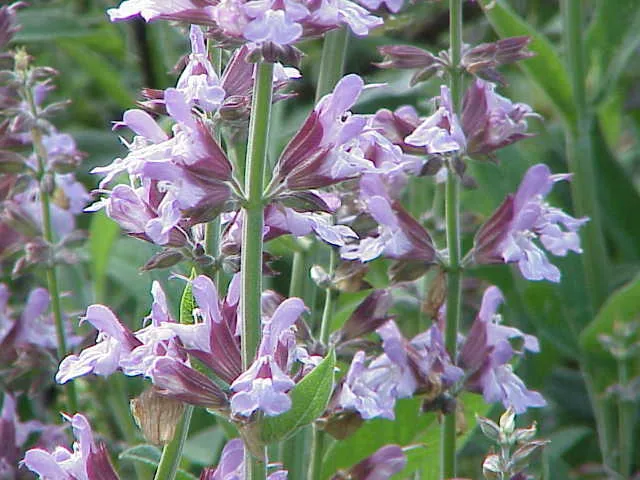
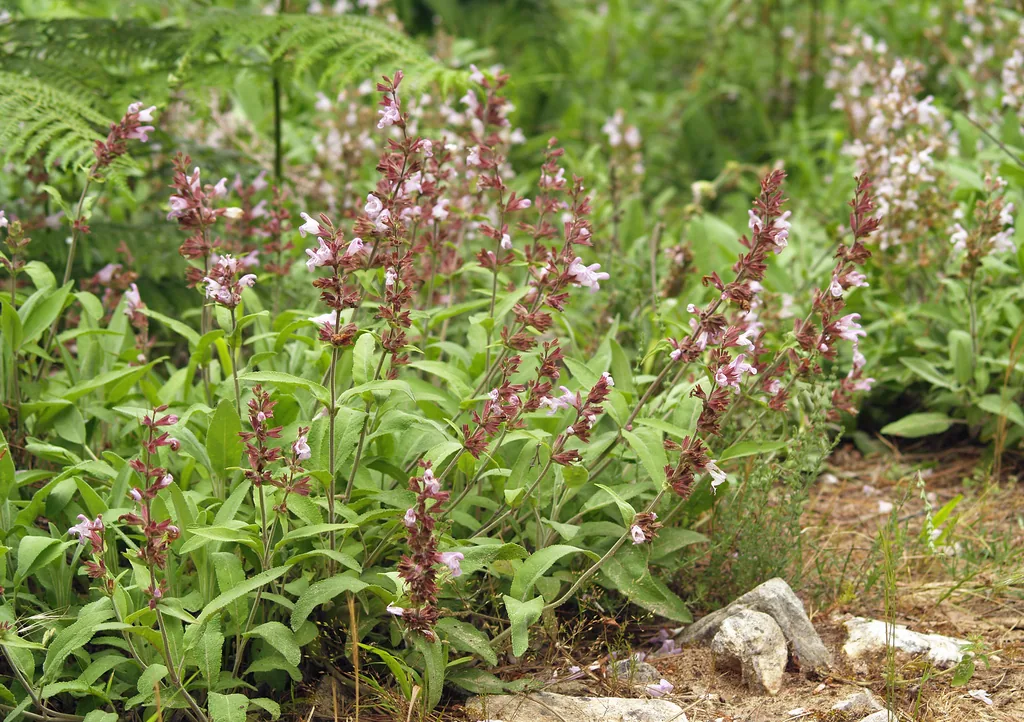

Cómo cultivar y cuidar Salvia
Salvia officinalis
Escrito por Emilio Marruso · última revisión
De un vistazo
La salvia es una aromática perenne, resistente y generosa, que disfruta en lugares cálidos y secos y aguanta la sequía una vez asentada. Dale sol y un suelo con muy buen drenaje, y a los 75 días de plantarla empezarás a cortar hojas fragantes para infusiones, carnes, verduras y huevos. Sus flores también se comen, y crece feliz en maceta o incluso en interior.
- Sol
Sol pleno o semisombra
Qué dicen las fuentes (1)
Luz: Pleno sol a semisombra
Light: Full sun (6 or more hours of direct sunlight a day) Partial Shade (Direct sunlight only part of the day, 2-6 hours)
— Salvia officinalis (Common Sage, Culinary Sage, Garden Sage, Sage) | North Carolina Extension Gardener Plant Toolbox [1] - Riego
Riega a fondo pero poco, deja secar la tierra entre riegos; riega las plantas nuevas si hay sequía
Qué dicen las fuentes (6)
Riego: Tolera la sequía y los suelos pobres; produce mejor con riego constante; riega profundamente pero con poca frecuencia, dejando que el suelo se seque entre riegos
It is intolerant of wet or poorly drained soils. It will tolerate drought and poor soils.
— Salvia officinalis (Common Sage, Culinary Sage, Garden Sage, Sage) | North Carolina Extension Gardener Plant Toolbox [1] It will tolerate drought and poor soil fertility but will produce better with consistent water.
— Sage, Salvia officinalis – Wisconsin Horticulture [2] Water deeply but infrequently, allowing the soil to dry out between waterings to prevent root rot.
— Spice Up You Life: A Beginners Guide to Growing Sage - UF/IFAS Extension Pasco County [7] Sequía: Resistente a la sequía una vez establecida: en el suelo no debería necesitar riego adicional, aunque produce mejor con agua constante. Riega las plantas nuevas durante los períodos secos del primer año.
Sage is drought tolerant once established and shouldn’t need additional watering when growing in the ground.
— [9] It will tolerate drought and poor soil fertility but will produce better with consistent water.
— Sage, Salvia officinalis – Wisconsin Horticulture [2] Water newly planted sage during dry spells in the first year after planting.
— [9] - Frío
Aguanta inviernos de hasta −34,4 °C (−30 °F)
Muy rústica · USDA 4a · RHS H7 · Z4
Qué dicen las fuentes (5)
Rusticidad, zona más fría: 4a [mínima invernal de −34,4 a −31,7 °C (de −30 a −25 °F)]
USDA Plant Hardiness Zone: 4a, 4b, 5a, 5b, 6a, 6b, 7a, 7b, 8a, 8b
— Salvia officinalis (Common Sage, Culinary Sage, Garden Sage, Sage) | North Carolina Extension Gardener Plant Toolbox [1] Rusticidad, zona más cálida: 8b [mínima invernal de −9,4 a −6,7 °C (de 15 a 20 °F)]
Según NC State Extension: USDA Plant Hardiness Zone: 4a, 4b, 5a, 5b, 6a, 6b, 7a, 7b, 8a, 8b
— Salvia officinalis (Common Sage, Culinary Sage, Garden Sage, Sage) | North Carolina Extension Gardener Plant Toolbox [1] Según UW-Madison Extension: It is hardy in zones 4a to 10b.
— Sage, Salvia officinalis – Wisconsin Horticulture [2] Según Clemson HGIC: It is a woody, evergreen shrub that is hardy in USDA planting zones 4 to 8.
— Sage: The Wisest Herb | Home & Garden Information Center [4] USDA Plant Hardiness Zone: 4a, 4b, 5a, 5b, 6a, 6b, 7a, 7b, 8a, 8b
— Salvia officinalis (Common Sage, Culinary Sage, Garden Sage, Sage) | North Carolina Extension Gardener Plant Toolbox [1] - Suelo
Suelo con muy buen drenaje, pH 6,0–7,0
Qué dicen las fuentes (5)
pH del suelo, mínimo: 6.0
Sage thrives in well-draining, slightly alkaline soil with a pH of 6.0 to 7.0.
— Spice Up You Life: A Beginners Guide to Growing Sage - UF/IFAS Extension Pasco County [7] pH del suelo, máximo: 7.0
Sage thrives in well-draining, slightly alkaline soil with a pH of 6.0 to 7.0.
— Spice Up You Life: A Beginners Guide to Growing Sage - UF/IFAS Extension Pasco County [7] Notas sobre el riego: Necesita un suelo con muy buen drenaje, especialmente durante el invierno; evita el riego excesivo en climas más frescos; aplica solo una capa fina de mantillo
For sage to perform as a perennial, it must have very well drained soil especially over the winter.
— Sage | Herbs | Illinois Extension | Illinois [8] Avoid overwatering sage during periods of cooler weather to prevent root rot.
— Spice Up You Life: A Beginners Guide to Growing Sage - UF/IFAS Extension Pasco County [7] Apply a thin layer of mulch around sage plants to conserve moisture and suppress weeds.
— Spice Up You Life: A Beginners Guide to Growing Sage - UF/IFAS Extension Pasco County [7] - Distancia
45–60 cm entre plantas
Qué dicen las fuentes (2)
Distancia de plantación: 45.7-61.0 cm (18-24 pulgadas)
Space plants 18 to 24 inches apart and divide every few years to rejuvenate the plants.
— Sage, Salvia officinalis – Wisconsin Horticulture [2] Plant sage 18 to 24 inches apart to allow air circulation between the plants as they mature.
— Spice Up You Life: A Beginners Guide to Growing Sage - UF/IFAS Extension Pasco County [7] - Plantación
En climas cálidos, planta en otoño o a principios de primavera, con plantas de vivero o esquejes
Qué dicen las fuentes (2)
Plantación: Otoño o principios de primavera, usando plantas cultivadas en vivero o esquejes (Florida Central)
Florida central: Start sage from nursery-grown plants or cuttings in the fall or early spring to establish robust root systems before the onset of summer heat.
— Spice Up You Life: A Beginners Guide to Growing Sage - UF/IFAS Extension Pasco County [7] Start sage from nursery-grown plants or cuttings in the fall or early spring to establish robust root systems before the onset of summer heat.
— Spice Up You Life: A Beginners Guide to Growing Sage - UF/IFAS Extension Pasco County [7] - Abonado
Basta con compost al plantar; el exceso de abono da plantas larguiruchas y hojas con menos sabor
Qué dicen las fuentes (5)
Abonos naturales: Compost incorporado al suelo al plantar; se necesita poco fertilizante adicional
Sage prefers a full sun location in soils that are well prepared with compost.
— Sage | Herbs | Illinois Extension | Illinois [8] Many perennial salvias will grow well without supplemental fertility if sited in a well-prepared soil containing compost.
— Salvia | Home & Garden Information Center [6] Sage is relatively low-maintenance and does not require much fertilization.
— Spice Up You Life: A Beginners Guide to Growing Sage - UF/IFAS Extension Pasco County [7] Evitar: Exceso de fertilización: produce crecimiento débil y hojas con menos sabor, y el exceso de fertilizante aumenta las enfermedades fúngicas
Sage is relatively low-maintenance and does not require much fertilization. Avoid over-fertilization, which can lead to leggy growth and less flavor in the leaves.
— Spice Up You Life: A Beginners Guide to Growing Sage - UF/IFAS Extension Pasco County [7] Excessive water and fertilizer can increase fungal disease problems for salvias.
— Salvia | Home & Garden Information Center [6] - Poda
Pódala en primavera y varias veces en la temporada; no cortes los tallos viejos y leñosos
Qué dicen las fuentes (2)
Poda: En primavera y algunas veces durante la temporada de crecimiento
Prune the plant in the spring and a few times through the growing season to encourage young shoots with a strong flavor
— Sage, Salvia officinalis – Wisconsin Horticulture [2] Prune plants back in the spring just as new growth resumes.
— Sage | Herbs | Illinois Extension | Illinois [8] - Cosecha
Desde los 75 días tras plantarla; corta antes de la floración y nunca más de media planta
Qué dicen las fuentes (4)
Cosecha: Primavera y verano, según sea necesario durante la temporada de crecimiento y antes de la floración; cosecha ligera en el primer año; aproximadamente 75 días desde la siembra hasta la primera cosecha
The leaves may be harvested in the spring and summer. For new plantings, it is best to harvest lightly the first year.
— Salvia officinalis (Common Sage, Culinary Sage, Garden Sage, Sage) | North Carolina Extension Gardener Plant Toolbox [1] Harvest sage leaves as needed throughout the growing season, and one final time before flowering.
— Spice Up You Life: A Beginners Guide to Growing Sage - UF/IFAS Extension Pasco County [7] Sage takes about 75 days from planting to first harvest.
— Sage, Salvia officinalis – Wisconsin Horticulture [2] Cómo cosechar: Corta 6-8 pulgadas (15-20 cm) desde la parte superior de las plantas al menos dos veces por temporada; recoge las hojas como desees sin cortar más de la mitad de la planta; cosecha antes de la floración
At least twice during the growing season, cut 6 to 8 inches from the top of the plants. Pick the leaves as desired as long as you don’t cut back more than half the plant or it will stop producing. Harvest before the plant flowers.
— Sage, Salvia officinalis – Wisconsin Horticulture [2] - Plagas
Babosas, araña roja, cigarrillas y espumaderas; podredumbre de raíz y oídio
Qué dicen las fuentes (2)
Plagas: saltahojas, babosas, arañitas rojas, salivazos
Insects, Diseases, and Other Plant Problems: Possible insects include leaf hoppers, slugs, spider mites, and spittlebugs. Root rot, powdery mildew, and verticillium wilt can occur.
— Salvia officinalis (Common Sage, Culinary Sage, Garden Sage, Sage) | North Carolina Extension Gardener Plant Toolbox [1] Enfermedades: podredumbre de raíz, mildiu polvoriento, marchitez por verticillium
Insects, Diseases, and Other Plant Problems: Possible insects include leaf hoppers, slugs, spider mites, and spittlebugs. Root rot, powdery mildew, and verticillium wilt can occur.
— Salvia officinalis (Common Sage, Culinary Sage, Garden Sage, Sage) | North Carolina Extension Gardener Plant Toolbox [1] - Atención
No soporta la tierra encharcada, sobre todo en invierno: no riegues de más con frío y acolcha poco
Qué dicen las fuentes (3)
Notas sobre el riego: Necesita un suelo con muy buen drenaje, especialmente durante el invierno; evita el riego excesivo en climas más frescos; aplica solo una capa fina de mantillo
For sage to perform as a perennial, it must have very well drained soil especially over the winter.
— Sage | Herbs | Illinois Extension | Illinois [8] Avoid overwatering sage during periods of cooler weather to prevent root rot.
— Spice Up You Life: A Beginners Guide to Growing Sage - UF/IFAS Extension Pasco County [7] Apply a thin layer of mulch around sage plants to conserve moisture and suppress weeds.
— Spice Up You Life: A Beginners Guide to Growing Sage - UF/IFAS Extension Pasco County [7] - Tamaño
Hasta 60 cm de alto y 60–90 cm de ancho
Qué dicen las fuentes (2)
Altura adulta: hasta 61 cm (2 pies)
The species can grow up to 2 feet tall and 2 to 3 feet wide. Many cultivars may be shorter.
— Salvia officinalis (Common Sage, Culinary Sage, Garden Sage, Sage) | North Carolina Extension Gardener Plant Toolbox [1] Anchura adulta: 61-91 cm (2-3 pies)
The species can grow up to 2 feet tall and 2 to 3 feet wide. Many cultivars may be shorter.
— Salvia officinalis (Common Sage, Culinary Sage, Garden Sage, Sage) | North Carolina Extension Gardener Plant Toolbox [1] - Multiplicación
Por semilla, esqueje, acodo o división; las variedades con nombre, solo por esqueje
Qué dicen las fuentes (5)
Propagación: Semilla, esquejes de tallo, acodo, división
Sage can also reproduced by layering, division, or cuttings .
— Sage, Salvia officinalis – Wisconsin Horticulture [2] Recommended Propagation Strategy: Layering Seed Stem Cutting Country Or Region Of Origin: Northern Mediterranean
— Salvia officinalis (Common Sage, Culinary Sage, Garden Sage, Sage) | North Carolina Extension Gardener Plant Toolbox [1] Esquejes: Esquejes de tallo de madera blanda tomados del crecimiento nuevo, a fines de primavera o en verano, y enraizados en una mezcla para macetas húmeda y bien drenada; generalmente no es necesario usar hormona de enraizamiento. Las variedades nombradas se propagan vegetativamente porque no reproducen fielmente las características de la planta madre a partir de semilla.
Softwood stem cuttings taken in summer can be rooted in moist, well-drained potting mix . Rooting hormone is generally not necessary.
— Sage, Salvia officinalis – Wisconsin Horticulture [2] Softwood cuttings taken from new growth in late spring or early summer
— [9] Sage is easy to start from seed , although most named varieties are propagated vegetatively.
— Sage, Salvia officinalis – Wisconsin Horticulture [2] - Siembra
Siembra fuera en la fecha de la última helada o dentro 6–8 semanas antes; brota en dos semanas
Qué dicen las fuentes (6)
Siembra: Directamente en el jardín en la fecha promedio de la última helada, o en interiores de 6 a 8 semanas antes
To grow from seed, either plant directly in the garden on the average date of last frost or start indoors 6 to 8 weeks before then.
— Sage, Salvia officinalis – Wisconsin Horticulture [2] Germinación: Siembra en interiores en primavera en compost de semillas húmedo, cubierto con una capa fina de compost fino, en un propagador o bajo polietileno en un alféizar cálido; las semillas germinan en dos semanas. Las plantas cultivadas a partir de semillas pueden tardar varios años en alcanzar un tamaño cosechable.
EE. UU. (Wisconsin): To grow from seed, either plant directly in the garden on the average date of last frost or start indoors 6 to 8 weeks before then.
— Sage, Salvia officinalis – Wisconsin Horticulture [2] Sow into small pots or modular trays of moist peat-free seed compost and cover with a thin layer of fine compost
— [9] Place in a propagator or cover with a polythene bag on a warm windowsill.
— [9] Seeds should take about two weeks to germinate. Pot on the seedlings into larger modules or pots as they grow
— [9] Cuttings are preferred as seeds may take several years to produce harvestable plants.
— Sage | Herbs | Illinois Extension | Illinois [8] - Maceta
Crece en una maceta de al menos 30 cm de ancho y de hondo, incluso en interior
Qué dicen las fuentes (7)
En maceta: Sí
Sage is also useful as an ornamental plant in containers or in the garden.
— Sage | Herbs | Illinois Extension | Illinois [8] The smaller varieties can also be grown as container plants to be brought inside for a supply of fresh sage through the cold winter months.
— Sage, Salvia officinalis – Wisconsin Horticulture [2] En interior: Sí
Cuttings taken in the summer can easily be rooted and potted for use indoors during the winter.
— Sage | Herbs | Illinois Extension | Illinois [8] Entre plantas: 46-61 cm [18–24 in] entre plantas.
Reino Unido: Allow at least 30cm (12in) from neighbouring plants Planting in a container – choose one that’s at least 30cm (12in) wide and deep
— [9] en contenedores: Allow at least 30cm (12in) from neighbouring plants Planting in a container – choose one that’s at least 30cm (12in) wide and deep
— [9] Space plants 18 to 24 inches apart and divide every few years to rejuvenate the plants.
— Sage, Salvia officinalis – Wisconsin Horticulture [2] Plant sage 18 to 24 inches apart to allow air circulation between the plants as they mature.
— Spice Up You Life: A Beginners Guide to Growing Sage - UF/IFAS Extension Pasco County [7]
Resumen
La salvia común es un arbusto perenne aromático, comestible, de vida corta y semileñoso de la familia de la menta. [1] Prefiere pleno sol y suelos bien drenados, de medianos a secos, y es intolerante a suelos húmedos o con mal drenaje. [1] Sus hojas se usan frescas, secas o cocidas. [1]
Citado en inglés, como en la fuente.
Cuidados
Riego
Riego
Tolera la sequía y los suelos pobres; produce mejor con riego constante; riega profundamente pero con poca frecuencia, dejando que el suelo se seque entre riegos
Qué dicen las fuentes (3)
It is intolerant of wet or poorly drained soils. It will tolerate drought and poor soils.It will tolerate drought and poor soil fertility but will produce better with consistent water.Water deeply but infrequently, allowing the soil to dry out between waterings to prevent root rot.Notas sobre el riego
Necesita un suelo con muy buen drenaje, especialmente durante el invierno; evita el riego excesivo en climas más frescos; aplica solo una capa fina de mantillo
Qué dicen las fuentes (3)
For sage to perform as a perennial, it must have very well drained soil especially over the winter.Avoid overwatering sage during periods of cooler weather to prevent root rot.Apply a thin layer of mulch around sage plants to conserve moisture and suppress weeds.Luz
Pleno sol a semisombra
Qué dicen las fuentes (1)
Light:
Full sun (6 or more hours of direct sunlight a day)
Partial Shade (Direct sunlight only part of the day, 2-6 hours)Clima y frío
Rusticidad, zona más fría
4a [mínima invernal de −34,4 a −31,7 °C (de −30 a −25 °F)]
Qué dicen las fuentes (1)
USDA Plant Hardiness Zone:
4a, 4b, 5a, 5b, 6a, 6b, 7a, 7b, 8a, 8bRusticidad, zona más cálida
8b [mínima invernal de −9,4 a −6,7 °C (de 15 a 20 °F)]
Lo que dice cada fuente
Según NC State Extension: 8b [mínima invernal de −9,4 a −6,7 °C (de 15 a 20 °F)]
Según UW-Madison Extension: 10b [mínima invernal de 1,7 a 4,4 °C (de 35 a 40 °F)]
Según Clemson HGIC: 8 [mínima invernal de −12,2 a −6,7 °C (de 10 a 20 °F)]
Qué dicen las fuentes (4)
Según NC State Extension: USDA Plant Hardiness Zone:
4a, 4b, 5a, 5b, 6a, 6b, 7a, 7b, 8a, 8bSegún UW-Madison Extension: It is hardy in zones 4a to 10b.Según Clemson HGIC: It is a woody, evergreen shrub that is hardy in USDA planting zones 4 to 8.USDA Plant Hardiness Zone:
4a, 4b, 5a, 5b, 6a, 6b, 7a, 7b, 8a, 8bSuelo
pH del suelo, mínimo
6.0
Qué dicen las fuentes (1)
Sage thrives in well-draining, slightly alkaline soil with a pH of 6.0 to 7.0.pH del suelo, máximo
7.0
Qué dicen las fuentes (1)
Sage thrives in well-draining, slightly alkaline soil with a pH of 6.0 to 7.0.Dónde cultivarla
En interior
Sí
Qué dicen las fuentes (1)
Cuttings taken in the summer can easily be rooted and potted for use indoors during the winter.En maceta
Sí
Qué dicen las fuentes (2)
Sage is also useful as an ornamental plant in containers or in the garden.The smaller varieties can also be grown as container plants to be brought inside for a supply of fresh sage through the cold winter months.Distancia de plantación
45.7-61.0 cm (18-24 pulgadas)
Qué dicen las fuentes (2)
Space plants 18 to 24 inches apart and divide every few years to rejuvenate the plants.Plant sage 18 to 24 inches apart to allow air circulation between the plants as they mature.Propagación
Semilla, esquejes de tallo, acodo, división
Qué dicen las fuentes (2)
Sage can also reproduced by layering, division, or cuttings .Recommended Propagation Strategy:
Layering
Seed
Stem Cutting
Country Or Region Of Origin:
Northern MediterraneanCultivo
La planta
Ciclo de vida
perenne
Qué dicen las fuentes (1)
Common sage is an aromatic, edible, short-lived, bushy, spreading, semi-woody perennial shrub. It is a member of the mint family (Lamiaceae).Familia
Lamiaceae
Qué dicen las fuentes (1)
Common sage is an aromatic, edible, short-lived, bushy, spreading, semi-woody perennial shrub. It is a member of the mint family (Lamiaceae).Altura adulta
hasta 61 cm (2 pies)
Qué dicen las fuentes (1)
The species can grow up to 2 feet tall and 2 to 3 feet wide. Many cultivars may be shorter.Anchura adulta
61-91 cm (2-3 pies)
Qué dicen las fuentes (1)
The species can grow up to 2 feet tall and 2 to 3 feet wide. Many cultivars may be shorter.Siembra y crecimiento
Días hasta la madurez
75 días desde la siembra hasta la primera cosecha
Qué dicen las fuentes (1)
Sage takes about 75 days from planting to first harvest. At least twice during the growing season, cut 6 to 8 inches from the top of the plants.Cosecha y conservación
Cómo cosechar
Corta 6-8 pulgadas (15-20 cm) desde la parte superior de las plantas al menos dos veces por temporada; recoge las hojas como desees sin cortar más de la mitad de la planta; cosecha antes de la floración
Qué dicen las fuentes (1)
At least twice during the growing season, cut 6 to 8 inches from the top of the plants. Pick the leaves as desired as long as you don’t cut back more than half the plant or it will stop producing. Harvest before the plant flowers.Conservación
Las hojas secas se conservan hasta dos semanas en el refrigerador en bolsas de plástico con cierre holgado; para almacenamiento a largo plazo, congélalas en bandejas de cubitos de hielo
Qué dicen las fuentes (2)
Sage can keep for up to two weeks when dry leaves are loosely packed in plastic and stored in the refrigerator.For long term storage, freeze sage in ice cube trays and defrost as needed.Plagas y enfermedades
Plagas
saltahojas, babosas, arañitas rojas, salivazos
Qué dicen las fuentes (1)
Insects, Diseases, and Other Plant Problems: Possible insects include leaf hoppers, slugs, spider mites, and spittlebugs. Root rot, powdery mildew, and verticillium wilt can occur.Enfermedades
podredumbre de raíz, mildiu polvoriento, marchitez por verticillium
Qué dicen las fuentes (1)
Insects, Diseases, and Other Plant Problems: Possible insects include leaf hoppers, slugs, spider mites, and spittlebugs. Root rot, powdery mildew, and verticillium wilt can occur.Abonado
Abonos naturales
Compost incorporado al suelo al plantar; se necesita poco fertilizante adicional
Qué dicen las fuentes (3)
Sage prefers a full sun location in soils that are well prepared with compost.Many perennial salvias will grow well without supplemental fertility if sited in a well-prepared soil containing compost.Sage is relatively low-maintenance and does not require much fertilization.Evitar
Exceso de fertilización: produce crecimiento débil y hojas con menos sabor, y el exceso de fertilizante aumenta las enfermedades fúngicas
Qué dicen las fuentes (2)
Sage is relatively low-maintenance and does not require much fertilization. Avoid over-fertilization, which can lead to leggy growth and less flavor in the leaves.Excessive water and fertilizer can increase fungal disease problems for salvias.Signos de exceso
Crecimiento débil y hojas con menos sabor
Qué dicen las fuentes (1)
Sage is relatively low-maintenance and does not require much fertilization. Avoid over-fertilization, which can lead to leggy growth and less flavor in the leaves.Distancias
Entre plantas
46-61 cm [18–24 in] entre plantas.
Lo que dice cada fuente
Reino Unido: Al menos 30 cm [12 in] de las plantas vecinas
en contenedores: Contenedor de al menos 30 cm [12 in] de ancho y profundidad
Qué dicen las fuentes (4)
Reino Unido: Allow at least 30cm (12in) from neighbouring plants Planting in a container – choose one that’s at least 30cm (12in) wide and deepen contenedores: Allow at least 30cm (12in) from neighbouring plants Planting in a container – choose one that’s at least 30cm (12in) wide and deepSpace plants 18 to 24 inches apart and divide every few years to rejuvenate the plants.Plant sage 18 to 24 inches apart to allow air circulation between the plants as they mature.Propagación
Germinación
Siembra en interiores en primavera en compost de semillas húmedo, cubierto con una capa fina de compost fino, en un propagador o bajo polietileno en un alféizar cálido; las semillas germinan en dos semanas. Las plantas cultivadas a partir de semillas pueden tardar varios años en alcanzar un tamaño cosechable.
Lo que dice cada fuente
EE. UU. (Wisconsin): Siembra directamente en el jardín en la fecha promedio de la última helada, o en interiores de 6 a 8 semanas antes
Qué dicen las fuentes (5)
EE. UU. (Wisconsin): To grow from seed, either plant directly in the garden on the average date of last frost or start indoors 6 to 8 weeks before then.Sow into small pots or modular trays of moist peat-free seed compost and cover with a thin layer of fine compostPlace in a propagator or cover with a polythene bag on a warm windowsill.Seeds should take about two weeks to germinate. Pot on the seedlings into larger modules or pots as they growCuttings are preferred as seeds may take several years to produce harvestable plants.Esquejes
Esquejes de tallo de madera blanda tomados del crecimiento nuevo, a fines de primavera o en verano, y enraizados en una mezcla para macetas húmeda y bien drenada; generalmente no es necesario usar hormona de enraizamiento. Las variedades nombradas se propagan vegetativamente porque no reproducen fielmente las características de la planta madre a partir de semilla.
Qué dicen las fuentes (3)
Softwood stem cuttings taken in summer can be rooted in moist, well-drained potting mix . Rooting hormone is generally not necessary.Softwood cuttings taken from new growth in late spring or early summerSage is easy to start from seed , although most named varieties are propagated vegetatively.Tras la cosecha
Conservación
Las hojas frescas se conservan hasta dos semanas en el refrigerador, en un envase de plástico con cierre holgado. Las hojas completamente secas se guardan en un frasco hermético; las hojas picadas se pueden congelar en bandejas de cubitos de hielo.
Qué dicen las fuentes (3)
Sage can keep for up to two weeks when dry leaves are loosely packed in plastic and stored in the refrigerator.When fully dried, store the leaves in an air-tight jar.Freeze chopped sage leaves in an ice-cube tray, then simply add the cubes to your cooking whenever needed.Calor y sequía
Calor
Prospera en zonas cálidas y secas.
Lo que dice cada fuente
cultivar 'Berggarten': Tolerante al calor y la humedad
Qué dicen las fuentes (2)
cultivar 'Berggarten': ‘Berggarten’ has very wide, silvery-gray leaves and is tolerant of heat and humidity.common sage is a small evergreen shrub with gray-green leaves and bluish-purple flowers in spring. It thrives in hot, dry areas.Sequía
Resistente a la sequía una vez establecida: en el suelo no debería necesitar riego adicional, aunque produce mejor con agua constante. Riega las plantas nuevas durante los períodos secos del primer año.
Qué dicen las fuentes (3)
Sage is drought tolerant once established and shouldn’t need additional watering when growing in the ground.It will tolerate drought and poor soil fertility but will produce better with consistent water.Water newly planted sage during dry spells in the first year after planting.Problemas
Pudrición de la raíz, mildiu polvoriento, marchitez por verticillium
Síntoma: Pueden ocurrir pudrición de la raíz, mildiu polvoriento y marchitez por verticillium; los insectos incluyen chicharritas, babosas, arañitas rojas y espumitas.
Qué hacer: Proporciona tierra bien drenada y buena circulación de aire.
Qué dicen las fuentes (1)
Providing well-drained soil and good air circulation will reduce the possibility of pests and foliar diseases.
— Salvia officinalis (Common Sage, Culinary Sage, Garden Sage, Sage) | North Carolina Extension Gardener Plant Toolbox [1] Crecimiento larguirucho
Síntoma: La planta se vuelve larguirucha y ramificada y florece.
Qué hacer: Poda en primavera y durante la temporada de crecimiento; no podes tallos leñosos maduros.
Qué dicen las fuentes (1)
Do not prune into mature woody stems, as these seldom sprout new growth.
— Salvia officinalis (Common Sage, Culinary Sage, Garden Sage, Sage) | North Carolina Extension Gardener Plant Toolbox [1]
Remedios
Cada remedio indica qué dicen las fuentes oficiales; los remedios tradicionales sin fuente oficial aparecen marcados. Los perjudiciales están para que sepas evitarlos.
Cuidar la planta
pulgones
chorro de agua fuerte Funciona
Cómo: Usa un chorro fuerte de agua para desprender los pulgones de la planta.
Use a strong jet of water to dislodge aphids from the plant. Spraying insecticidal soap or neem oil will help control their numbers.
— Spice Up You Life: A Beginners Guide to Growing Sage - UF/IFAS Extension Pasco County [7] Qué dicen las pruebas Use a strong jet of water to dislodge aphids from the plant. Spraying insecticidal soap or neem oil will help control their numbers.
— Spice Up You Life: A Beginners Guide to Growing Sage - UF/IFAS Extension Pasco County [7] spray de jabón insecticida Funciona
While insecticidal soap is less apt to affect other organisms, certain plants might be sensitive to the soap and can suffer leaf burn.
— foodgardening.mequoda.com [10] When “oils and soaps” are mentioned in UC IPM publications, we are referring to commercially available oils and soaps that are formulated specifically for use as pesticides- not household oils and soaps meant for cooking, cleaning, or other purposes.
— ucanr.edu [11] Cómo: Mezcla el jabón con agua para crear tu solución y aplícala directamente sobre los insectos en cualquier planta.
Insecticidal soaps are particularly effective on smaller pests such as aphids, spider mites, and black and red flat mites. Mix the soap with water to create your solution, and apply directly to insects on any plants.
— foodgardening.mequoda.com [10] Qué dicen las pruebas Use a strong jet of water to dislodge aphids from the plant. Spraying insecticidal soap or neem oil will help control their numbers.
— Spice Up You Life: A Beginners Guide to Growing Sage - UF/IFAS Extension Pasco County [7]
ácaros araña
spray de aceite de neem Funciona
Always follow the label instructions on the product to prevent plant injury.
— Spice Up You Life: A Beginners Guide to Growing Sage - UF/IFAS Extension Pasco County [7] Apply these natural sprays in the early morning or late evening, when sunlight is less intense, to prevent leaf burn and allow thorough drying.
— cultivatedearth.com [12] Cómo: Para problemas más persistentes, rocía las plantas con jabón insecticida o aceite de neem, cubriendo el envés de las hojas; aplica por la mañana temprano o al atardecer.
For more persistent problems, try spraying plants with insecticidal soap or neem oil, making sure to coat the undersides of leaves where pests tend to hide.
— cultivatedearth.com [12] Qué dicen las pruebas Use a strong jet of water to dislodge aphids from the plant. Spraying insecticidal soap or neem oil will help control their numbers.
— Spice Up You Life: A Beginners Guide to Growing Sage - UF/IFAS Extension Pasco County [7]
babosas
recolección manual No verificado
Remedio tradicional, no verificado por una fuente oficial.
Cómo: Retira las plagas a mano con guantes de jardinería y luego ahógalas en un cubo de agua jabonosa o aplástalas; funciona bien con plagas más grandes como babosas y orugas.
trampa de toronja No verificado
Remedio tradicional, no verificado por una fuente oficial.
Cómo: Deja una rebanada de toronja como trampa y luego retira las babosas por la mañana.
trampa de cerveza No verificado
Remedio tradicional, no verificado por una fuente oficial.
Cómo: Entierra recipientes poco profundos llenos de cerveza a nivel del suelo.
tierra de diatomeas No verificado
Remedio tradicional, no verificado por una fuente oficial.
Cómo: Espolvorea tierra de diatomeas alrededor de las plantas vulnerables.
cochinillas
hisopo con alcohol isopropílico No verificado
Remedio tradicional, no verificado por una fuente oficial.
Cómo: Toca los insectos con un hisopo de algodón empapado en alcohol isopropílico.
mildiu polvoriento
bicarbonato de sodio y spray de aceite No verificado
Remedio tradicional, no verificado por una fuente oficial.
For example, spraying home remedies that contain dish detergent on plants on a sunny day can injure the plant, essentially burning it.
— extension.psu.edu [13] Cómo: Mezcla 1 cucharada de bicarbonato de sodio, 1/2 cucharadita de un jabón suave para platos y 2 1/2 cucharadas de aceite de oliva en un galón de agua; agita bien y repite cada semana.
plagas de insectos
siembra complementaria con romero o tomillo No verificado
Remedio tradicional, no verificado por una fuente oficial.
Cómo: Cultiva salvia cerca del romero o del tomillo.
Calendario
Siembra
Directamente en el jardín en la fecha promedio de la última helada, o en interiores de 6 a 8 semanas antes
Qué dicen las fuentes (1)
To grow from seed, either plant directly in the garden on the average date of last frost or start indoors 6 to 8 weeks before then.Plantación
Otoño o principios de primavera, usando plantas cultivadas en vivero o esquejes (Florida Central)
Lo que dice cada fuente
Florida central: Otoño o principios de primavera, usando plantas cultivadas en vivero o esquejes
Qué dicen las fuentes (2)
Florida central: Start sage from nursery-grown plants or cuttings in the fall or early spring to establish robust root systems before the onset of summer heat.Start sage from nursery-grown plants or cuttings in the fall or early spring to establish robust root systems before the onset of summer heat.Cosecha
Primavera y verano, según sea necesario durante la temporada de crecimiento y antes de la floración; cosecha ligera en el primer año; aproximadamente 75 días desde la siembra hasta la primera cosecha
Qué dicen las fuentes (3)
The leaves may be harvested in the spring and summer. For new plantings, it is best to harvest lightly the first year.Harvest sage leaves as needed throughout the growing season, and one final time before flowering.Sage takes about 75 days from planting to first harvest.Poda
En primavera y algunas veces durante la temporada de crecimiento
Qué dicen las fuentes (2)
Prune the plant in the spring and a few times through the growing season to encourage young shoots with a strong flavorPrune plants back in the spring just as new growth resumes.Meses tal como los dan las fuentes, en su mayoría de Estados Unidos (hemisferio norte). En el hemisferio sur se desplazan unos seis meses.
Respecto a las heladas
Estimación menos precisa: no hay ninguna estación meteorológica a menos de 300 km.
Busca las fechas de heladas por código postal o ciudad
Siembra al aire libre: hacia la última helada
To grow from seed, either plant directly in the garden on the average date of last frost or start indoors 6 to 8 weeks before then.
— Sage, Salvia officinalis – Wisconsin Horticulture [2] Siembra en interior: de 6 a 8 semanas antes de la última helada
To grow from seed, either plant directly in the garden on the average date of last frost or start indoors 6 to 8 weeks before then.
— Sage, Salvia officinalis – Wisconsin Horticulture [2]
Cuenta desde las fechas medias de las heladas de tu zona.
Comestibilidad
Según la fuente, citada textualmente. No comas una planta basándote solo en esta página: los errores de identificación pueden ser peligrosos.
Valores orientativos
Valores de una fuente secundaria, no comprobados palabra por palabra como el resto de esta página. Úselos como punto de partida.
- Horas de sol
- 4-5 horasValor orientativo, adáptalo a tu clima · Fuente secundaria
- Resiste la sequía
- SíValor orientativo, adáptalo a tu clima · Fuente secundaria
- Nivel de cuidado
- MedioValor orientativo, adáptalo a tu clima · Fuente secundaria
- Crecimiento
- BajoValor orientativo, adáptalo a tu clima · Fuente secundaria
Plantas similares
- Anise Sage Salvia guaranitica
- Salvia real Salvia sagittata
- Autumn Sage Salvia greggii
- Blue Sage Salvia azurea
- Bog Sage Salvia uliginosa
- Cedar Sage Salvia roemeriana
- Esclarea Salvia sclarea
- Little Leaf Sage Salvia microphylla
Fuentes
Cada valor anterior se cita de estos documentos. Los enlaces llevan al editor original.
- Salvia officinalis (Common Sage, Culinary Sage, Garden Sage, Sage) | North Carolina Extension Gardener Plant Toolbox · plants.ces.ncsu.edu, consultado
- Sage, Salvia officinalis – Wisconsin Horticulture · hort.extension.wisc.edu, consultado
- Salvia (Sage, Salvia) | North Carolina Extension Gardener Plant Toolbox · plants.ces.ncsu.edu, consultado
- Sage: The Wisest Herb | Home & Garden Information Center · hgic.clemson.edu, consultado
- Salvias for the Sage Gardener - Extension Gardener | NC State Extension · extensiongardener.ces.ncsu.edu, consultado
- Salvia | Home & Garden Information Center · hgic.clemson.edu, consultado
- Spice Up You Life: A Beginners Guide to Growing Sage - UF/IFAS Extension Pasco County · blogs.ifas.ufl.edu, consultado
- Sage | Herbs | Illinois Extension | Illinois · extension.illinois.edu, consultado
- rhs.org.uk · rhs.org.uk
- foodgardening.mequoda.com · foodgardening.mequoda.com
- ucanr.edu · ucanr.edu
- cultivatedearth.com · cultivatedearth.com
- extension.psu.edu · extension.psu.edu
Escrito por Emilio Marruso · última revisión