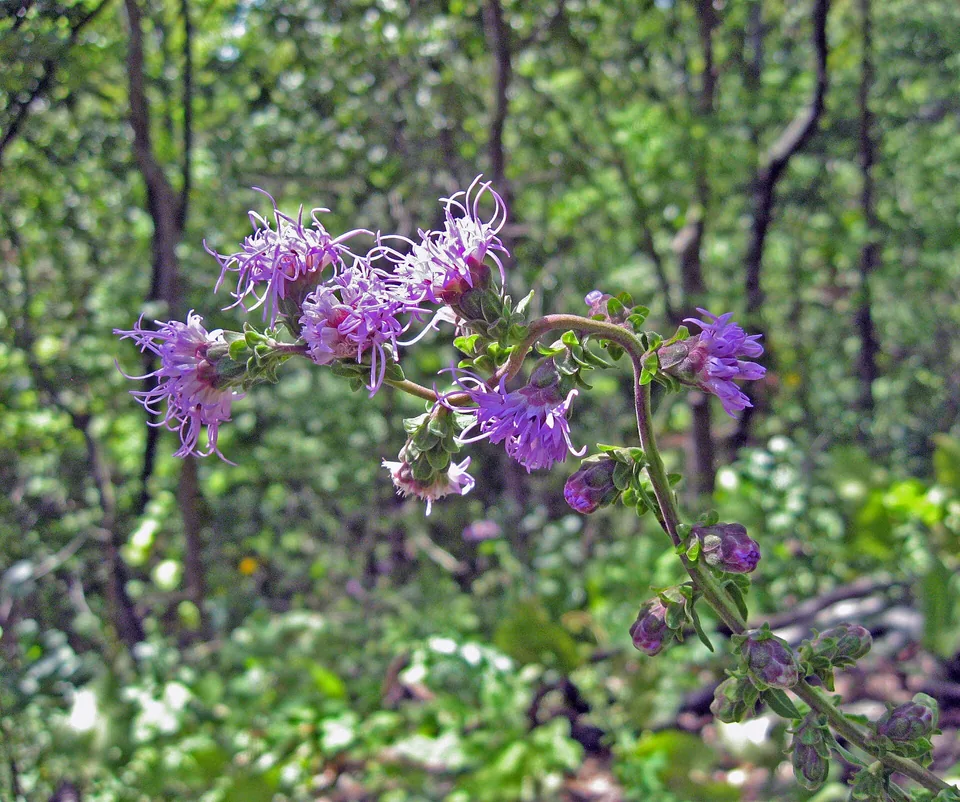


How to Grow and Care for Appalachian Blazing Star
Liatris squarrulosa
Written by Emilio Marruso · last checked
At a glance
This liatris is a tough perennial from the daisy family that comes back year after year. It grows happily in full sun or partial shade, shrugs off drought and loves soil that drains well, even on the dry side. Reaching 2 to 6 feet tall, it brings height to a bed, and you can make new plants simply by dividing it.
- Sun
Full sun to partial shade
What the sources say (1)
Light: Full sun to partial shade
Plant it in full sun to partial shade in medium to dry soils with good drainage.
— Liatris squarrulosa (Appalachian Blazing Star, Appalachian Gay Feather, Appalachian Liatris) | North Carolina Extension Gardener Plant Toolbox [1] - Water
Handles drought; keep the soil medium to dry
What the sources say (1)
Watering: Medium to dry soils with good drainage; drought tolerant
Plant it in full sun to partial shade in medium to dry soils with good drainage.
— Liatris squarrulosa (Appalachian Blazing Star, Appalachian Gay Feather, Appalachian Liatris) | North Carolina Extension Gardener Plant Toolbox [1] - Cold
Survives winters down to −10 °F (−23.3 °C)
Very hardy · USDA 6a · RHS H7 · Z6
What the sources say (2)
Hardiness, coldest zone: 6a [winter low −23.3 to −20.6 °C (−10 to −5 °F)]
USDA Plant Hardiness Zone: 6a, 6b, 7a, 7b, 8a, 8b, 9a, 9b
— Liatris squarrulosa (Appalachian Blazing Star, Appalachian Gay Feather, Appalachian Liatris) | North Carolina Extension Gardener Plant Toolbox [1] Hardiness, warmest zone: 9b [winter low −3.9 to −1.1 °C (25 to 30 °F)]
USDA Plant Hardiness Zone: 6a, 6b, 7a, 7b, 8a, 8b, 9a, 9b
— Liatris squarrulosa (Appalachian Blazing Star, Appalachian Gay Feather, Appalachian Liatris) | North Carolina Extension Gardener Plant Toolbox [1] - Soil
Needs soil that drains well; dry soil is fine
What the sources say (2)
Watering notes: Soil drainage: good drainage, occasionally dry, very dry
Soil Drainage: Good Drainage Occasionally Dry Very Dry
— Liatris squarrulosa (Appalachian Blazing Star, Appalachian Gay Feather, Appalachian Liatris) | North Carolina Extension Gardener Plant Toolbox [1] Watering: Medium to dry soils with good drainage; drought tolerant
Plant it in full sun to partial shade in medium to dry soils with good drainage.
— Liatris squarrulosa (Appalachian Blazing Star, Appalachian Gay Feather, Appalachian Liatris) | North Carolina Extension Gardener Plant Toolbox [1] - Size
2 to 6 ft tall and 1 to 2 ft wide
What the sources say (2)
Mature height: 60.96-182.88 cm (2-6 ft)
Dimensions: Height: 2 ft. 0 in. - 6 ft. 0 in. Width: 1 ft. 0 in. - 2 ft. 0 in.
— Liatris squarrulosa (Appalachian Blazing Star, Appalachian Gay Feather, Appalachian Liatris) | North Carolina Extension Gardener Plant Toolbox [1] Mature width: 30.48-60.96 cm (1-2 ft)
Dimensions: Height: 2 ft. 0 in. - 6 ft. 0 in. Width: 1 ft. 0 in. - 2 ft. 0 in.
— Liatris squarrulosa (Appalachian Blazing Star, Appalachian Gay Feather, Appalachian Liatris) | North Carolina Extension Gardener Plant Toolbox [1] - Propagation
Make new plants by dividing it
What the sources say (1)
Propagation: Division
Recommended Propagation Strategy: Division Country Or Region Of Origin: Central and southeastern U.S.A.
— Liatris squarrulosa (Appalachian Blazing Star, Appalachian Gay Feather, Appalachian Liatris) | North Carolina Extension Gardener Plant Toolbox [1]
Overview
Appalachian blazing star is a native herbaceous perennial in the daisy family found in meadows and prairies of the central and southeastern United States. [1] It grows in full sun to partial shade in medium to dry, well-drained soils and tolerates drought and poor soils. [1] It was selected as the 1998 NC Wildflower of the Year. [1]
This record is incomplete: the sources we read do not cover every field yet.
Not yet covered by our sources: Pruning
Appalachian Blazing Star care
How to water Appalachian Blazing Star
Watering
Medium to dry soils with good drainage; drought tolerant
What the sources say (1)
Plant it in full sun to partial shade in medium to dry soils with good drainage.Watering notes
Soil drainage: good drainage, occasionally dry, very dry
What the sources say (1)
Soil Drainage:
Good Drainage
Occasionally Dry
Very DryHow much light Appalachian Blazing Star needs
Full sun to partial shade
What the sources say (1)
Plant it in full sun to partial shade in medium to dry soils with good drainage.How much cold Appalachian Blazing Star can take
Hardiness, coldest zone
6a [winter low −23.3 to −20.6 °C (−10 to −5 °F)]
What the sources say (1)
USDA Plant Hardiness Zone:
6a, 6b, 7a, 7b, 8a, 8b, 9a, 9bHardiness, warmest zone
9b [winter low −3.9 to −1.1 °C (25 to 30 °F)]
What the sources say (1)
USDA Plant Hardiness Zone:
6a, 6b, 7a, 7b, 8a, 8b, 9a, 9bHow to propagate Appalachian Blazing Star
Division
What the sources say (1)
Recommended Propagation Strategy:
Division
Country Or Region Of Origin:
Central and southeastern U.S.A.How to grow Appalachian Blazing Star
The plant
Life cycle
perennial
What the sources say (1)
Appalachian blazing star is a native herbaceous perennial plant in the Asteraceae (daisy) family.Family
Asteraceae
What the sources say (1)
Appalachian blazing star is a native herbaceous perennial plant in the Asteraceae (daisy) family.Mature height
60.96-182.88 cm (2-6 ft)
What the sources say (1)
Dimensions:
Height: 2 ft. 0 in. - 6 ft. 0 in.
Width: 1 ft. 0 in. - 2 ft. 0 in.Mature width
30.48-60.96 cm (1-2 ft)
What the sources say (1)
Dimensions:
Height: 2 ft. 0 in. - 6 ft. 0 in.
Width: 1 ft. 0 in. - 2 ft. 0 in.Fertilizing
When
The sources give different values depending on region, zone or growing conditions.
What each source says
Liatris in general: Before new growth begins in spring
Liatris in general: Before new growth begins in spring
What the sources say (2)
Liatris in general: Fertilize before new growth begins in the spring using a commercial fertilizer that you can purchase at a local garden center.Liatris in general: Plants will rot if the soil is too moist. Fertilize before new growth begins in spring.Avoid
The sources give different values depending on region, zone or growing conditions.
What each source says
Liatris in general: Overfertilizing: in overly fertile soil the flower spikes of some varieties flop over
What the sources say (1)
Liatris in general: DO NOT overfertilize (check the label of the fertilizer that you select to determine an appropriate amount); in some varieties, flower spikes will flop over if plants are grown in overly fertile soils.Signs of excess
The sources give different values depending on region, zone or growing conditions.
What each source says
Liatris in general: Flower spikes flop over in some varieties
What the sources say (1)
Liatris in general: DO NOT overfertilize (check the label of the fertilizer that you select to determine an appropriate amount); in some varieties, flower spikes will flop over if plants are grown in overly fertile soils.Remedies
Each remedy shows what official sources say about it; traditional remedies without an official source are marked as such. Harmful ones are listed so you know to avoid them.
Treating the plant
stem rot
removing and destroying all infected plant parts and the topsoil around the plant Official source, not independently tested
How: Remove and destroy all infected plant parts and remove the topsoil around the plant; new soil may replace sclerotia-filled soil.
Control may include removing and destroying all infected plant parts and removal of topsoil around the plant. New soil may replace sclerotia-filled soil.
— portal.ct.gov [7]
verticillium wilt
removing infected plants with their roots and soil Official source, not independently tested
How: Remove infected plants and associated roots and soil, disposing of them without spreading the pathogen.
Wilt control involves removal of infected plants and associated roots and soil. The pathogens survive in soil and plant debris for long times, so disposal of plants and soil without spread is important.
— portal.ct.gov [7]
Calendar
Pruning
Not stated in the sources we read.
Months as given by the sources, which are mostly from the United States (northern hemisphere). In the southern hemisphere they shift by about six months.
Similar plants
- Blazing Star Liatris scariosa
- Dwarf Blazing Star Liatris microcephala
- Gayfeather Liatris spicata
- Meadow Blazing Star Liatris ligulistylis
- Prairie Blazing Star Liatris pycnostachya
- Rough Blazing-star Liatris aspera
- Sandhills Blazing Star Liatris pilosa
- Scaly Blazing Star Liatris squarrosa
Sources
Every value above is quoted from these documents. Links lead to the original publisher.
- Liatris squarrulosa (Appalachian Blazing Star, Appalachian Gay Feather, Appalachian Liatris) | North Carolina Extension Gardener Plant Toolbox · plants.ces.ncsu.edu, consulted
- Appalachian Gay Feather - Liatris squarrulosa | North Carolina Extension Gardener Plant Toolbox · plants.ces.ncsu.edu, consulted
- Appalachian Blazing Star - Liatris squarrulosa | North Carolina Extension Gardener Plant Toolbox · plants.ces.ncsu.edu, consulted
- Liatris (Blazing Stars, Gay Feather) | North Carolina Extension Gardener Plant Toolbox · plants.ces.ncsu.edu, consulted
- blogs.ifas.ufl.edu · blogs.ifas.ufl.edu
- hort.extension.wisc.edu · hort.extension.wisc.edu
- portal.ct.gov · portal.ct.gov
Written by Emilio Marruso · last checked