
How to Grow and Care for Gayfeather
Liatris spicata
Written by Emilio Marruso · last checked
At a glance
Liatris is a perennial that thrives in full sun to partial shade and, once established, shrugs off drought. Give it moist, well-drained soil (good drainage matters most over winter) and a little feeding before new growth starts in spring. You can grow more from seed or by dividing the corms, so one plant can turn into many.
- Sun
Full sun to partial shade
What the sources say (1)
Light: Full sun to partial shade
It grows well in full sun to partial shade and also tolerates summer heat and humidity.
— Liatris spicata (Blazing Star, Blazing Stars, Dense Blazing Star, Dense Button Snakeroot, Gayfeather, Marsh Blazing Star, Sessile-headed Blazing Star, Snakeroot, Spike Gayfeather) | North Carolina Extension Gardener Plant Toolbox [1] - Water
Likes moist soil but handles drought once settled; never let it sit wet in winter
What the sources say (3)
Watering: Prefers moist, well-drained soil; drought tolerant once established
Moist well-drained soil in a full sun location. Good drainage is critical in maintaining the plant. Drought tolerant once established.
— Spike Gayfeather (Liatris spicata)-Hort Answers - University of Illinois Extension [4] L. spicata prefers moisture but can also tolerate some drought.
— Dense Blazing Star [3] Watering notes: Good drainage is critical, especially over the winter
Good drainage is critical especially over the winter. May need staking. Attracts butterflies and hummingbirds. Reported to be deer resistant.
— Spike Gayfeather (Liatris spicata)-Hort Answers - University of Illinois Extension [4] - Soil
Well-drained soil with a pH up to 6.8
What the sources say (5)
Watering: Prefers moist, well-drained soil; drought tolerant once established
Moist well-drained soil in a full sun location. Good drainage is critical in maintaining the plant. Drought tolerant once established.
— Spike Gayfeather (Liatris spicata)-Hort Answers - University of Illinois Extension [4] L. spicata prefers moisture but can also tolerate some drought.
— Dense Blazing Star [3] Watering notes: Good drainage is critical, especially over the winter
Good drainage is critical especially over the winter. May need staking. Attracts butterflies and hummingbirds. Reported to be deer resistant.
— Spike Gayfeather (Liatris spicata)-Hort Answers - University of Illinois Extension [4] - Feeding
Feed in spring, before new growth begins
What the sources say (1)
When: Before new growth begins in spring
Plants will rot if the soil is too moist. Fertilize before new growth begins in spring.
— Liatris – Wisconsin Horticulture [7] - Pests
Leaf spot, rust, powdery mildew and gray mold; mildew comes in hot weather when plants stay wet overnight
What the sources say (2)
Diseases: leaf spot, rust, stem rot, powdery mildew, wilt, gray mold, verticillium wilt
There are some disease issues that might cause problems: two varieties of leaf spot and two varieties of rust, one variety of stem rot, and one each of powdery mildew and wilt.
— Dense Blazing Star [3] Gray Mold [Annuals and Herbaceous Perennials] ( Botrytis cinerea & paeoniae )
— Spike Gayfeather (Liatris spicata)-Hort Answers - University of Illinois Extension [4] - Watch out
Taller stems can flop over: give them a stake
- Size
3 to 18 inches wide
What the sources say (1)
Mature width: 8-46 cm (3 in - 1 ft 6 in)
Dimensions: Height: 3 ft. 0 in. - 6 ft. 0 in. Width: 0 ft. 3 in. - 1 ft. 6 in.
— Liatris spicata (Blazing Star, Blazing Stars, Dense Blazing Star, Dense Button Snakeroot, Gayfeather, Marsh Blazing Star, Sessile-headed Blazing Star, Snakeroot, Spike Gayfeather) | North Carolina Extension Gardener Plant Toolbox [1] - Propagation
Grow new plants from seed or by dividing the corms
What the sources say (2)
Propagation: Seed; division of corms
The plant has corms with shallow fibrous roots and can produce new colonies from its corms, though it most often propagates by seed.
— Liatris spicata (Blazing Star, Blazing Stars, Dense Blazing Star, Dense Button Snakeroot, Gayfeather, Marsh Blazing Star, Sessile-headed Blazing Star, Snakeroot, Spike Gayfeather) | North Carolina Extension Gardener Plant Toolbox [1] Liatris is easily divided to increase plant numbers or share with friends; just be careful when digging to keep the underground corms attached.
— Dense Blazing Star [3]
Overview
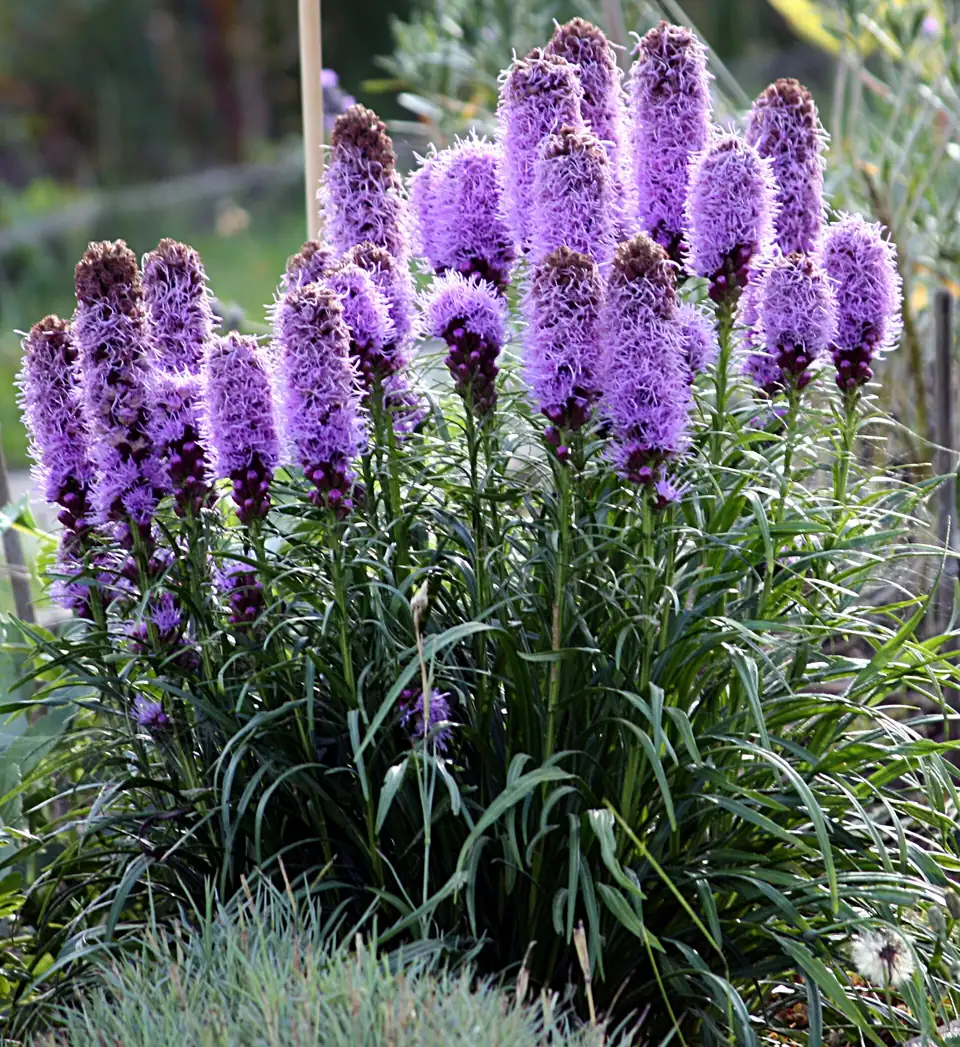
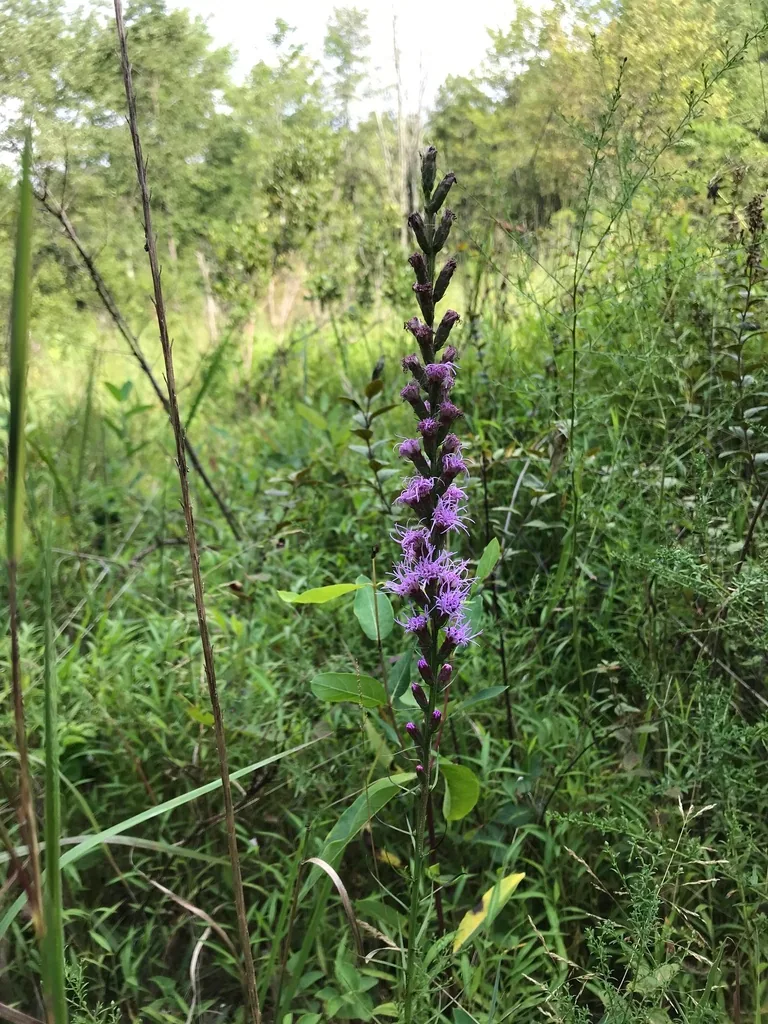
Spike gayfeather is a clump-forming perennial with tall flower spikes that bloom from the top down. [1] It grows in full sun to partial shade and prefers moist, well-drained soil. [1] It propagates most often by seed and can be divided through its corms. [3]
This record is incomplete: the sources we read do not cover every field yet.
Not yet covered by our sources: Pruning
Gayfeather care
How to water Gayfeather
Watering
Prefers moist, well-drained soil; drought tolerant once established
What the sources say (2)
Moist well-drained soil in a full sun location. Good drainage is critical in maintaining the plant. Drought tolerant once established.L. spicata prefers moisture but can also tolerate some drought.Watering notes
Good drainage is critical, especially over the winter
What the sources say (1)
Good drainage is critical especially over the winter. May need staking. Attracts butterflies and hummingbirds. Reported to be deer resistant.How much light Gayfeather needs
Full sun to partial shade
What the sources say (1)
It grows well in full sun to partial shade and also tolerates summer heat and humidity.How much cold Gayfeather can take
Hardiness, coldest zone
The sources give different values depending on region, zone or growing conditions.
What each source says
According to NC State Extension: 3a [winter low −40 to −37.2 °C (−40 to −35 °F)]
According to Penn State Extension (Dense Blazing Star): 5 [winter low −28.9 to −23.3 °C (−20 to −10 °F)]
According to Penn State Extension (Rain Garden Plants): 3 [winter low −40 to −34.4 °C (−40 to −30 °F)]
According to University of Illinois Extension: 3 [winter low −40 to −34.4 °C (−40 to −30 °F)]
What the sources say (4)
According to NC State Extension: USDA Plant Hardiness Zone:
3a, 3b, 4a, 4b, 5a, 5b, 6a, 6b, 7a, 7b, 8a, 8bAccording to Penn State Extension (Dense Blazing Star): This plant is hardy in zones 5 through 10 and found growing in New Jersey and west to Illinois and Michigan, and south to Florida and Louisiana.According to Penn State Extension (Rain Garden Plants): Bloom time: July to September
Hardiness zone: 3 to 9
Salt tolerance: N/AAccording to University of Illinois Extension: Mature Height
2-3 Feet
Size
Medium
USDA Hardiness Zone
3 - 9Hardiness, warmest zone
The sources give different values depending on region, zone or growing conditions.
What each source says
According to NC State Extension: 8b [winter low −9.4 to −6.7 °C (15 to 20 °F)]
According to Penn State Extension (Rain Garden Plants): 9 [winter low −6.7 to −1.1 °C (20 to 30 °F)]
According to Penn State Extension (Dense Blazing Star): 10 [winter low −1.1 to 4.4 °C (30 to 40 °F)]
According to University of Illinois Extension: 9 [winter low −6.7 to −1.1 °C (20 to 30 °F)]
What the sources say (4)
According to NC State Extension: USDA Plant Hardiness Zone:
3a, 3b, 4a, 4b, 5a, 5b, 6a, 6b, 7a, 7b, 8a, 8bAccording to Penn State Extension (Rain Garden Plants): Height: 24 to 36 inches
Bloom color: Purple
Bloom time: July to September
Hardiness zone: 3 to 9According to Penn State Extension (Dense Blazing Star): This plant is hardy in zones 5 through 10 and found growing in New Jersey and west to Illinois and Michigan, and south to Florida and Louisiana.According to University of Illinois Extension: Mature Height
2-3 Feet
Size
Medium
USDA Hardiness Zone
3 - 9Best soil for Gayfeather
How to propagate Gayfeather
Seed; division of corms
What the sources say (2)
The plant has corms with shallow fibrous roots and can produce new colonies from its corms, though it most often propagates by seed.Liatris is easily divided to increase plant numbers or share with friends; just be careful when digging to keep the underground corms attached.How to grow Gayfeather
The plant
Life cycle
perennial
What the sources say (2)
Marsh blazing star, in the Asteraceae (daisy) family, is a clump-forming perennial that typically grows 3 to 6 feet tall.Liatris spicata, known as Dense Blazing Star or Gayfeather, is an erect, slender, long-lived perennial lasting often as long as 20 years.Family
Asteraceae
What the sources say (2)
Marsh blazing star, in the Asteraceae (daisy) family, is a clump-forming perennial that typically grows 3 to 6 feet tall.Liatris spicata is a member of the Asteraceae Family.Mature height
Mature width
8-46 cm (3 in - 1 ft 6 in)
What the sources say (1)
Dimensions: Height: 3 ft. 0 in. - 6 ft. 0 in. Width: 0 ft. 3 in. - 1 ft. 6 in.Sowing and growth
Days to germination
The sources give different values depending on region, zone or growing conditions.
What each source says
genus Liatris (page not specific to L. spicata): 20-45 days:
What the sources say (1)
genus Liatris (page not specific to L. spicata): 20-45 days: Seeds should germinate in 20-45 days.Harvest and storage
How to harvest
The sources give different values depending on region, zone or growing conditions.
What each source says
genus Liatris (cut flowers for drying; page not specific to L. spicata):
What the sources say (1)
genus Liatris (cut flowers for drying; page not specific to L. spicata): For dried flowers, harvest the spikes when one-half to two-thirds of the flowers are open.Pests and diseases
Diseases
leaf spot, rust, stem rot, powdery mildew, wilt, gray mold, verticillium wilt
What the sources say (2)
There are some disease issues that might cause problems: two varieties of leaf spot and two varieties of rust, one variety of stem rot, and one each of powdery mildew and wilt.Gray Mold [Annuals and Herbaceous Perennials] ( Botrytis cinerea & paeoniae )Fertilizing
When
Before new growth begins in spring
What the sources say (1)
Plants will rot if the soil is too moist. Fertilize before new growth begins in spring.Gayfeather pests and problems
Floppy stems
Symptom: Taller stems can flop over.
What to do: Staking.
What the sources say (1)
Sometimes taller stems can flop over and may require staking.
— Liatris spicata (Blazing Star, Blazing Stars, Dense Blazing Star, Dense Button Snakeroot, Gayfeather, Marsh Blazing Star, Sessile-headed Blazing Star, Snakeroot, Spike Gayfeather) | North Carolina Extension Gardener Plant Toolbox [1] Powdery mildew
Symptom: A powdery look on the green leaves, appearing to leave the flowers alone.
What to do: Not specified in the source; it occurred in very hot weather with wet plants going into the night.
What the sources say (1)
The result was a powdery look to the green leaves, but it appeared to leave the flowers alone.
— Dense Blazing Star [3]
Remedies
Each remedy shows what official sources say about it; traditional remedies without an official source are marked as such. Harmful ones are listed so you know to avoid them.
Treating the plant
powdery mildew
milk and water spray Not verified
Traditional remedy, not verified by an official source.
How: Improve air circulation and treat affected plants with a 40/60 milk-and-water spray or an organic fungicide.
insect pests
insecticidal soap Works
How: Encourage good bugs, and only use insecticidal soap if you really need it.
Encourage good bugs , and only use insecticidal soap if you really need it.
— plantnative.org [9] What the evidence says For example, insecticidal soap is a safe, effective organic insecticide with minimal environmental impact.
— extension.psu.edu [10]
Calendar
Pruning
Not stated in the sources we read.
Months as given by the sources, which are mostly from the United States (northern hemisphere). In the southern hemisphere they shift by about six months.
Indicative values
Values from a secondary source, not checked word for word like the rest of this page. Use them as a starting point.
- Drought tolerant
- yesIndicative value, adapt it to your climate · Secondary source
- Soil
- Sandy LoamyIndicative value, adapt it to your climate · Secondary source
- Care level
- MediumIndicative value, adapt it to your climate · Secondary source
- Growth rate
- HighIndicative value, adapt it to your climate · Secondary source
- Pruning
- March, April, May, June, July, AugustIndicative value, adapt it to your climate · Secondary source
- Pests
- Slugs, snails, Pest resistant, Disease resistant, Drought resistantIndicative value, adapt it to your climate · Secondary source
Similar plants
- Appalachian Blazing Star Liatris squarrulosa
- Blazing Star Liatris scariosa
- Dwarf Blazing Star Liatris microcephala
- Meadow Blazing Star Liatris ligulistylis
- Prairie Blazing Star Liatris pycnostachya
- Rough Blazing-star Liatris aspera
- Sandhills Blazing Star Liatris pilosa
- Scaly Blazing Star Liatris squarrosa
Sources
Every value above is quoted from these documents. Links lead to the original publisher.
- Liatris spicata (Blazing Star, Blazing Stars, Dense Blazing Star, Dense Button Snakeroot, Gayfeather, Marsh Blazing Star, Sessile-headed Blazing Star, Snakeroot, Spike Gayfeather) | North Carolina Extension Gardener Plant Toolbox · plants.ces.ncsu.edu, consulted
- Rain Garden Plants: Blazing Star (Liatris spicata) · extension.psu.edu, consulted
- Dense Blazing Star · extension.psu.edu, consulted
- Spike Gayfeather (Liatris spicata)-Hort Answers - University of Illinois Extension · web.extension.illinois.edu, consulted
- Blazing Star (Liatris spicata)-Hort Answers - University of Illinois Extension · web.extension.illinois.edu, consulted
- Spike Gayfeather - Liatris spicata | North Carolina Extension Gardener Plant Toolbox · plants.ces.ncsu.edu, consulted
- Liatris – Wisconsin Horticulture · hort.extension.wisc.edu, consulted
- Liatris – Gardening Solutions · gardeningsolutions.ifas.ufl.edu, consulted
- plantnative.org · plantnative.org
- extension.psu.edu · extension.psu.edu
Written by Emilio Marruso · last checked