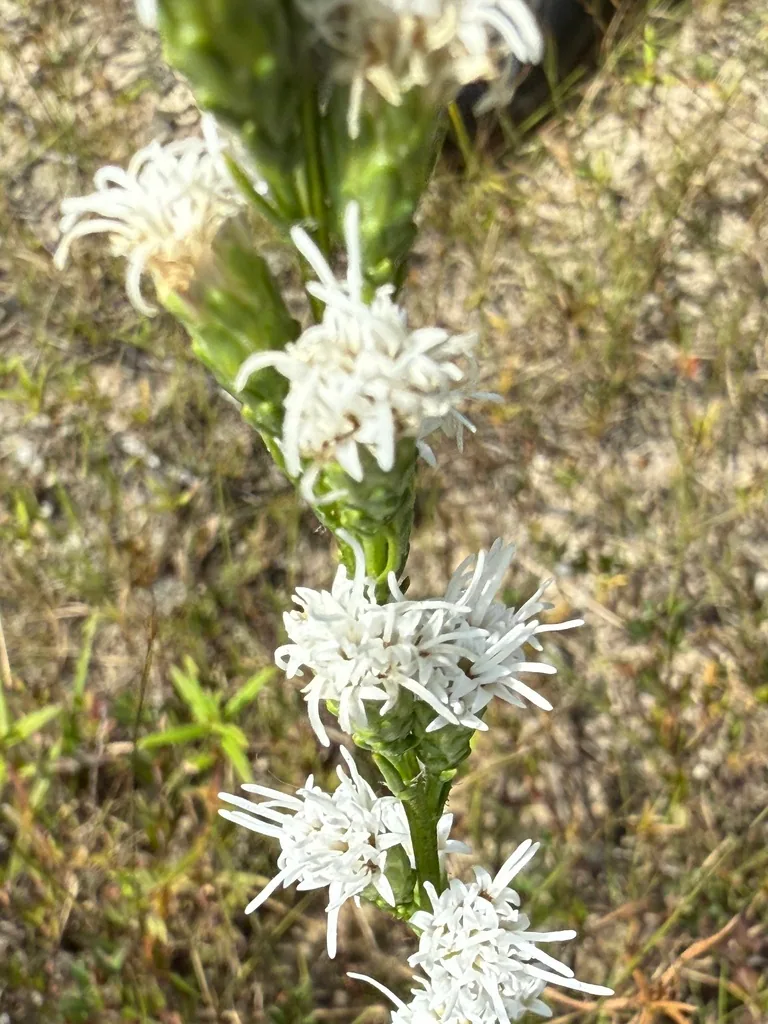
How to Grow and Care for Sandhills Blazing Star
Liatris pilosa
Written by Emilio Marruso · last checked
At a glance
This liatris is a tough perennial that thrives where many plants struggle: full sun, heat and drought don't bother it. Give it dry, well-drained soil and it grows 1 to 3 feet tall, year after year. You can start it from seed or from corms, so it's an easy, rewarding choice for a sunny, dry corner of the garden.
- Sun
Full sun
What the sources say (2)
Light: Full sun
It prefers full sun and dry, sandy, or rocky soil with good drainage and tolerates heat and drought.
— Liatris pilosa (Grass-leaf Blazing Star, Sandhills Blazing Star, Shaggy Blazing Star) | North Carolina Extension Gardener Plant Toolbox [1] Light: Full sun (6 or more hours of direct sunlight a day)
— Liatris pilosa (Grass-leaf Blazing Star, Sandhills Blazing Star, Shaggy Blazing Star) | North Carolina Extension Gardener Plant Toolbox [1] - Water
Likes dry soil and handles drought; never let the soil stay wet
What the sources say (2)
Watering: Prefers dry soil with good drainage; tolerates heat and drought
It prefers full sun and dry, sandy, or rocky soil with good drainage and tolerates heat and drought.
— Liatris pilosa (Grass-leaf Blazing Star, Sandhills Blazing Star, Shaggy Blazing Star) | North Carolina Extension Gardener Plant Toolbox [1] Watering notes: Intolerant of wet soil
Intolerant of wet soil and becomes lanky in shade.
— Liatris pilosa (Grass-leaf Blazing Star, Sandhills Blazing Star, Shaggy Blazing Star) | North Carolina Extension Gardener Plant Toolbox [1] - Cold
Survives winters down to −10 °F (−23.3 °C)
Very hardy · USDA 6a · RHS H7 · Z6
What the sources say (2)
Hardiness, coldest zone: 6a [winter low −23.3 to −20.6 °C (−10 to −5 °F)]
USDA Plant Hardiness Zone: 6a, 6b, 7a, 7b, 8a, 8b, 9a, 9b
— Liatris pilosa (Grass-leaf Blazing Star, Sandhills Blazing Star, Shaggy Blazing Star) | North Carolina Extension Gardener Plant Toolbox [1] Hardiness, warmest zone: 9b [winter low −3.9 to −1.1 °C (25 to 30 °F)]
USDA Plant Hardiness Zone: 6a, 6b, 7a, 7b, 8a, 8b, 9a, 9b
— Liatris pilosa (Grass-leaf Blazing Star, Sandhills Blazing Star, Shaggy Blazing Star) | North Carolina Extension Gardener Plant Toolbox [1] - Soil
Well-drained soil with a pH of 6.0 or lower
What the sources say (2)
Watering: Prefers dry soil with good drainage; tolerates heat and drought
It prefers full sun and dry, sandy, or rocky soil with good drainage and tolerates heat and drought.
— Liatris pilosa (Grass-leaf Blazing Star, Sandhills Blazing Star, Shaggy Blazing Star) | North Carolina Extension Gardener Plant Toolbox [1] Soil pH, maximum: 6.0
Soil Texture: Sand Soil pH: Acid (<6.0) Soil Drainage:
— Liatris pilosa (Grass-leaf Blazing Star, Sandhills Blazing Star, Shaggy Blazing Star) | North Carolina Extension Gardener Plant Toolbox [1] - Watch out
Wet soil harms it, and in shade it grows tall and floppy
What the sources say (1)
Watering notes: Intolerant of wet soil
Intolerant of wet soil and becomes lanky in shade.
— Liatris pilosa (Grass-leaf Blazing Star, Sandhills Blazing Star, Shaggy Blazing Star) | North Carolina Extension Gardener Plant Toolbox [1] - Size
1 to 3 ft tall and 1 to 2 ft wide
What the sources say (2)
Mature height: 30-91 cm (1-3 ft)
Dimensions: Height: 1 ft. 0 in. - 3 ft. 0 in. Width: 1 ft. 0 in. - 2 ft. 0 in.
— Liatris pilosa (Grass-leaf Blazing Star, Sandhills Blazing Star, Shaggy Blazing Star) | North Carolina Extension Gardener Plant Toolbox [1] Mature width: 30-61 cm (1-2 ft)
Dimensions: Height: 1 ft. 0 in. - 3 ft. 0 in. Width: 1 ft. 0 in. - 2 ft. 0 in.
— Liatris pilosa (Grass-leaf Blazing Star, Sandhills Blazing Star, Shaggy Blazing Star) | North Carolina Extension Gardener Plant Toolbox [1] - Propagation
Grow new plants from seed or from corms
What the sources say (1)
Propagation: Seed, corm
It can be grown from seeds or corms, however seeds can take longer to establish.
— Liatris pilosa (Grass-leaf Blazing Star, Sandhills Blazing Star, Shaggy Blazing Star) | North Carolina Extension Gardener Plant Toolbox [1]
Overview
Sandhills blazing star is a slender, upright herbaceous perennial native to the eastern United States. [1] It prefers full sun and dry, well-drained soil and tolerates heat and drought. [1] It can be grown from seeds or corms, and seeds take longer to establish. [1]
This record is incomplete: the sources we read do not cover every field yet.
Not yet covered by our sources: Pruning
Sandhills Blazing Star care
How to water Sandhills Blazing Star
Watering
Prefers dry soil with good drainage; tolerates heat and drought
What the sources say (1)
It prefers full sun and dry, sandy, or rocky soil with good drainage and tolerates heat and drought.Watering notes
Intolerant of wet soil
What the sources say (1)
Intolerant of wet soil and becomes lanky in shade.How much light Sandhills Blazing Star needs
Full sun
What the sources say (2)
It prefers full sun and dry, sandy, or rocky soil with good drainage and tolerates heat and drought.Light:
Full sun (6 or more hours of direct sunlight a day)How much cold Sandhills Blazing Star can take
Hardiness, coldest zone
6a [winter low −23.3 to −20.6 °C (−10 to −5 °F)]
What the sources say (1)
USDA Plant Hardiness Zone:
6a, 6b, 7a, 7b, 8a, 8b, 9a, 9bHardiness, warmest zone
9b [winter low −3.9 to −1.1 °C (25 to 30 °F)]
What the sources say (1)
USDA Plant Hardiness Zone:
6a, 6b, 7a, 7b, 8a, 8b, 9a, 9bBest soil for Sandhills Blazing Star
6.0
What the sources say (1)
Soil Texture:
Sand
Soil pH:
Acid (<6.0)
Soil Drainage:How to propagate Sandhills Blazing Star
Seed, corm
What the sources say (1)
It can be grown from seeds or corms, however seeds can take longer to establish.How to grow Sandhills Blazing Star
The plant
Life cycle
perennial
What the sources say (1)
Sandhills Blazing Star, a member of the Asteraceae (daisy) family is a slender, herbaceous, upright perennial native to the Eastern United States.Family
Asteraceae
What the sources say (1)
Sandhills Blazing Star, a member of the Asteraceae (daisy) family is a slender, herbaceous, upright perennial native to the Eastern United States.Mature height
30-91 cm (1-3 ft)
What the sources say (1)
Dimensions:
Height: 1 ft. 0 in. - 3 ft. 0 in.
Width: 1 ft. 0 in. - 2 ft. 0 in.Mature width
30-61 cm (1-2 ft)
What the sources say (1)
Dimensions:
Height: 1 ft. 0 in. - 3 ft. 0 in.
Width: 1 ft. 0 in. - 2 ft. 0 in.Fertilizing
When
The sources give different values depending on region, zone or growing conditions.
What each source says
Liatris in general: Before new growth begins in spring
Liatris in general: Before new growth begins in spring
What the sources say (2)
Liatris in general: Fertilize before new growth begins in the spring using a commercial fertilizer that you can purchase at a local garden center.Liatris in general: Plants will rot if the soil is too moist. Fertilize before new growth begins in spring.Avoid
The sources give different values depending on region, zone or growing conditions.
What each source says
Liatris in general: Overfertilizing: in overly fertile soil the flower spikes of some varieties flop over
What the sources say (1)
Liatris in general: DO NOT overfertilize (check the label of the fertilizer that you select to determine an appropriate amount); in some varieties, flower spikes will flop over if plants are grown in overly fertile soils.Signs of excess
The sources give different values depending on region, zone or growing conditions.
What each source says
Liatris in general: Flower spikes flop over in some varieties
What the sources say (1)
Liatris in general: DO NOT overfertilize (check the label of the fertilizer that you select to determine an appropriate amount); in some varieties, flower spikes will flop over if plants are grown in overly fertile soils.Sandhills Blazing Star pests and problems
Wet soil and shade
Symptom: Intolerant of wet soil and becomes lanky in shade.
What the sources say (1)
Intolerant of wet soil and becomes lanky in shade.
— Liatris pilosa (Grass-leaf Blazing Star, Sandhills Blazing Star, Shaggy Blazing Star) | North Carolina Extension Gardener Plant Toolbox [1]
Remedies
Each remedy shows what official sources say about it; traditional remedies without an official source are marked as such. Harmful ones are listed so you know to avoid them.
Treating the plant
root rot
good drainage and aeration Official source, not independently tested
How: Plant in well-drained soil; good drainage and aeration let the plant survive wet winters, and plants rot if the soil is too moist.
Good drainage and aeration will enable the plant to survive wet winters. Plants will rot if the soil is too moist.
— hort.extension.wisc.edu [7]
fungal diseases
wide plant spacing Official source, not independently tested
How: Space plants to allow sufficient sunlight and air circulation.
Spacing plants to allow for sufficient sunlight and air circulation helps minimize disease problems.
— hort.extension.wisc.edu [7]
stem rot
removing infected plant parts and replacing soil Official source, not independently tested
How: Remove and destroy all infected plant parts and the topsoil around the plant; new soil may replace soil filled with sclerotia.
Control may include removing and destroying all infected plant parts and removal of topsoil around the plant. New soil may replace sclerotia-filled soil.
— portal.ct.gov [8]
wilt
removing infected plants with roots and soil Official source, not independently tested
How: Remove infected plants with the associated roots and soil, and dispose of them without spreading the pathogen.
Wilt control involves removal of infected plants and associated roots and soil.
— portal.ct.gov [8]
Calendar
Pruning
Not stated in the sources we read.
Months as given by the sources, which are mostly from the United States (northern hemisphere). In the southern hemisphere they shift by about six months.
Indicative values
Values from a secondary source, not checked word for word like the rest of this page. Use them as a starting point.
- Drought tolerant
- yesIndicative value, adapt it to your climate · Secondary source
- Care level
- MediumIndicative value, adapt it to your climate · Secondary source
- Growth rate
- LowIndicative value, adapt it to your climate · Secondary source
- Pruning
- February, March, AprilIndicative value, adapt it to your climate · Secondary source
Similar plants
- Appalachian Blazing Star Liatris squarrulosa
- Blazing Star Liatris scariosa
- Dwarf Blazing Star Liatris microcephala
- Gayfeather Liatris spicata
- Meadow Blazing Star Liatris ligulistylis
- Prairie Blazing Star Liatris pycnostachya
- Rough Blazing-star Liatris aspera
- Scaly Blazing Star Liatris squarrosa
Sources
Every value above is quoted from these documents. Links lead to the original publisher.
- Liatris pilosa (Grass-leaf Blazing Star, Sandhills Blazing Star, Shaggy Blazing Star) | North Carolina Extension Gardener Plant Toolbox · plants.ces.ncsu.edu, consulted
- Grass-leaf Blazing Star - Liatris pilosa | North Carolina Extension Gardener Plant Toolbox · plants.ces.ncsu.edu, consulted
- Shaggy Blazing Star - Liatris pilosa | North Carolina Extension Gardener Plant Toolbox · plants.ces.ncsu.edu, consulted
- Liatris (Blazing Stars, Gay Feather) | North Carolina Extension Gardener Plant Toolbox · plants.ces.ncsu.edu, consulted
- Blazing Stars - Liatris | North Carolina Extension Gardener Plant Toolbox · plants.ces.ncsu.edu, consulted
- blogs.ifas.ufl.edu · blogs.ifas.ufl.edu
- hort.extension.wisc.edu · hort.extension.wisc.edu
- portal.ct.gov · portal.ct.gov
Written by Emilio Marruso · last checked