

How to Grow and Care for Meadow Blazing Star
Liatris ligulistylis
Written by Emilio Marruso · last checked
At a glance
This tough perennial loves full sun and shrugs off summer heat and humidity, growing 1 to 3 feet tall. It asks for little: feed it before new growth begins in spring, but don't overdo it, since too rich a soil makes the flower spikes flop over. Just keep its soil from staying wet in winter, and you can multiply it by dividing the corms or sowing seed.
- Sun
Full sun
What the sources say (1)
Light: Full sun
Light: Full sun (6 or more hours of direct sunlight a day)
— Liatris ligulistylis (Meadow Blazing Star, Meadow Gayfeather, Meadow Liatris, Northern Plains Blazing Star, Rocky Mountain Blazing Star, Rocky Mountain Gayfeather, Rocky Mountain Liatris) | North Carolina Extension Gardener Plant Toolbox [1] - Water
Never let the soil stay wet in winter; it handles summer heat and humidity
What the sources say (1)
Watering notes: Will not tolerate wet soils in winter; tolerates summer heat and humidity
This plant will not tolerate wet soils in the winter but tolerates summer heat and humidity.
— Liatris ligulistylis (Meadow Blazing Star, Meadow Gayfeather, Meadow Liatris, Northern Plains Blazing Star, Rocky Mountain Blazing Star, Rocky Mountain Gayfeather, Rocky Mountain Liatris) | North Carolina Extension Gardener Plant Toolbox [1] - Feeding
Feed before new growth begins in spring; too much makes the flower spikes flop over
What the sources say (3)
When: Before new growth begins in spring
Fertilize before new growth begins in the spring using a commercial fertilizer that you can purchase at a local garden center.
— Fact sheet: Liatris - UF/IFAS Extension Nassau County [7] Avoid: Overfertilizing: in some varieties grown in overly fertile soils the flower spikes flop over
DO NOT overfertilize (check the label of the fertilizer that you select to determine an appropriate amount); in some varieties, flower spikes will flop over if plants are grown in overly fertile soils.
— Fact sheet: Liatris - UF/IFAS Extension Nassau County [7] Signs of excess: Flower spikes flop over
DO NOT overfertilize (check the label of the fertilizer that you select to determine an appropriate amount); in some varieties, flower spikes will flop over if plants are grown in overly fertile soils.
— Fact sheet: Liatris - UF/IFAS Extension Nassau County [7] - Pests
Flea beetles in some places; leaf spots, rust, powdery mildew, white mold and wilt
What the sources say (3)
Pests: flea beetles (in some locations)
Liatris does not have any significant insect problems (other than flea beetles in some locations),
— Fact sheet: Liatris - UF/IFAS Extension Nassau County [7] Diseases: leaf spots, rusts, powdery mildew, white mold, Verticillium wilt
but is subject to several diseases, including leaf spots (caused by Phyllosticta liatridis and Septoria liatridis ), rusts (caused by Coleosporium laciniariae and Puccinia liatridis ), powdery mildew (caused by Erysiphe cichoracearum
— Fact sheet: Liatris - UF/IFAS Extension Nassau County [7] white mold (caused by Sclerotinia sclerotiorum – see University of Wisconsin Garden Facts XHT1115 ), and Verticillium wilt ( Verticillium albo-atrum )
— Fact sheet: Liatris - UF/IFAS Extension Nassau County [7] - Size
1 to 3 ft tall and 6 in to 2 ft wide
What the sources say (2)
Mature height: 30.48-91.44 cm (1-3 ft)
Dimensions: Height: 1 ft. 0 in. - 3 ft. 0 in. Width: 0 ft. 6 in. - 2 ft. 0 in.
— Liatris ligulistylis (Meadow Blazing Star, Meadow Gayfeather, Meadow Liatris, Northern Plains Blazing Star, Rocky Mountain Blazing Star, Rocky Mountain Gayfeather, Rocky Mountain Liatris) | North Carolina Extension Gardener Plant Toolbox [1] Mature width: 15.24-60.96 cm (0.5-2 ft)
Dimensions: Height: 1 ft. 0 in. - 3 ft. 0 in. Width: 0 ft. 6 in. - 2 ft. 0 in.
— Liatris ligulistylis (Meadow Blazing Star, Meadow Gayfeather, Meadow Liatris, Northern Plains Blazing Star, Rocky Mountain Blazing Star, Rocky Mountain Gayfeather, Rocky Mountain Liatris) | North Carolina Extension Gardener Plant Toolbox [1] - Propagation
Divide the corms or sow seed
What the sources say (2)
Propagation: Division of corms, seed
Propagation is best done by dividing the corms.
— Liatris ligulistylis (Meadow Blazing Star, Meadow Gayfeather, Meadow Liatris, Northern Plains Blazing Star, Rocky Mountain Blazing Star, Rocky Mountain Gayfeather, Rocky Mountain Liatris) | North Carolina Extension Gardener Plant Toolbox [1] Recommended Propagation Strategy: Division Seed
— Liatris ligulistylis (Meadow Blazing Star, Meadow Gayfeather, Meadow Liatris, Northern Plains Blazing Star, Rocky Mountain Blazing Star, Rocky Mountain Gayfeather, Rocky Mountain Liatris) | North Carolina Extension Gardener Plant Toolbox [1]
Overview
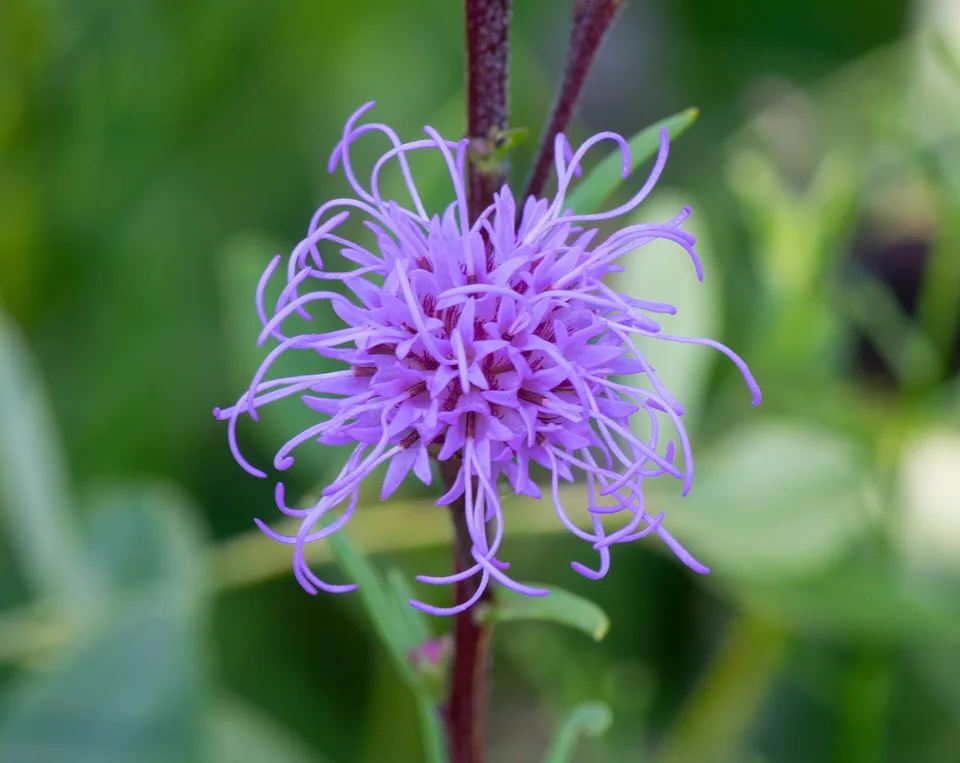
Meadow blazing star is a clump-forming perennial native to the central and mid-western areas of North America. [1] It is easily grown in dry to medium, well-drained soils in full sun and does not tolerate wet soils in winter. [1] The pinkish-purple flowers attract butterflies and hummingbirds. [1]
This record is incomplete: the sources we read do not cover every field yet.
Not yet covered by our sources: Watering, Pruning
Meadow Blazing Star care
How to water Meadow Blazing Star
Watering
Not stated in the sources we read.
Watering notes
Will not tolerate wet soils in winter; tolerates summer heat and humidity
What the sources say (1)
This plant will not tolerate wet soils in the winter but tolerates summer heat and humidity.How much light Meadow Blazing Star needs
Full sun
What the sources say (1)
Light:
Full sun (6 or more hours of direct sunlight a day)How much cold Meadow Blazing Star can take
Hardiness, coldest zone
The sources give different values depending on region, zone or growing conditions.
What each source says
According to NC State Extension: 3a [winter low −40 to −37.2 °C (−40 to −35 °F)]
According to UF/IFAS Extension: 4 [winter low −34.4 to −28.9 °C (−30 to −20 °F)]
What the sources say (2)
According to NC State Extension: USDA Plant Hardiness Zone:
3a, 3b, 4a, 4b, 5a, 5b, 6a, 6b, 7a, 7b, 8a, 8bAccording to UF/IFAS Extension: L. ligulistylis (meadow blazing star) prefers moderately moist to moist sites, naturally inhabiting prairies, meadows and stream banks. This species is hardy to zone 4Hardiness, warmest zone
8b [winter low −9.4 to −6.7 °C (15 to 20 °F)]
What the sources say (1)
USDA Plant Hardiness Zone:
3a, 3b, 4a, 4b, 5a, 5b, 6a, 6b, 7a, 7b, 8a, 8bHow to propagate Meadow Blazing Star
Division of corms, seed
What the sources say (2)
Propagation is best done by dividing the corms.Recommended Propagation Strategy:
Division
SeedHow to grow Meadow Blazing Star
The plant
Life cycle
perennial
What the sources say (1)
Genus:
Liatris
Species:
ligulistylis
Family:
Asteraceae
Life Cycle:
PerennialFamily
Asteraceae
What the sources say (1)
Genus:
Liatris
Species:
ligulistylis
Family:
Asteraceae
Life Cycle:
PerennialMature height
30.48-91.44 cm (1-3 ft)
What the sources say (1)
Dimensions:
Height: 1 ft. 0 in. - 3 ft. 0 in.
Width: 0 ft. 6 in. - 2 ft. 0 in.Mature width
15.24-60.96 cm (0.5-2 ft)
What the sources say (1)
Dimensions:
Height: 1 ft. 0 in. - 3 ft. 0 in.
Width: 0 ft. 6 in. - 2 ft. 0 in.Pests and diseases
Pests
flea beetles (in some locations)
What the sources say (1)
Liatris does not have any significant insect problems (other than flea beetles in some locations),Diseases
leaf spots, rusts, powdery mildew, white mold, Verticillium wilt
What the sources say (2)
but is subject to several diseases, including leaf spots (caused by Phyllosticta liatridis and Septoria liatridis ), rusts (caused by Coleosporium laciniariae and Puccinia liatridis ), powdery mildew (caused by Erysiphe cichoracearumwhite mold (caused by Sclerotinia sclerotiorum – see University of Wisconsin Garden Facts XHT1115 ), and Verticillium wilt ( Verticillium albo-atrum )Fertilizing
When
Before new growth begins in spring
What the sources say (1)
Fertilize before new growth begins in the spring using a commercial fertilizer that you can purchase at a local garden center.Avoid
Overfertilizing: in some varieties grown in overly fertile soils the flower spikes flop over
What the sources say (1)
DO NOT overfertilize (check the label of the fertilizer that you select to determine an appropriate amount); in some varieties, flower spikes will flop over if plants are grown in overly fertile soils.Signs of excess
Flower spikes flop over
What the sources say (1)
DO NOT overfertilize (check the label of the fertilizer that you select to determine an appropriate amount); in some varieties, flower spikes will flop over if plants are grown in overly fertile soils.Remedies
Each remedy shows what official sources say about it; traditional remedies without an official source are marked as such. Harmful ones are listed so you know to avoid them.
Treating the plant
voles
hardware cloth Works
How: When planting, line the bottom and sides of the planting hole with hardware cloth with openings of 1/4 inch or less.
When planting bulbs, line the bottom and sides of the planting hole with hardware cloth. This metal barrier prevents voles from reaching the bulbs while still allowing the roots to grow through.
— beaufort.ces.ncsu.edu [8] What the evidence says One of the most effective ways to protect bulbs from voles is to create physical barriers using wire mesh or hardware cloth.
— beaufort.ces.ncsu.edu [8] planting daffodils and alliums Works
How: Plant daffodils, alliums, garlic and fritillarias around the perimeter of the bed.
Planting these around the perimeter of your bulb beds can create a deterrent. Plants like daffodils, alliums, garlic, and fritillarias are not only beautiful but also serve as a natural defense against voles.
— beaufort.ces.ncsu.edu [8] What the evidence says Plants like daffodils, alliums, garlic, and fritillarias are not only beautiful but also serve as a natural defense against voles. These plants are less appealing to voles,
— beaufort.ces.ncsu.edu [8]
stem rot
removing and destroying infected plant parts Official source, not independently tested
How: Remove and destroy all infected plant parts and remove the topsoil around the plant; new soil may replace sclerotia-filled soil.
Control may include removing and destroying all infected plant parts and removal of topsoil around the plant. New soil may replace sclerotia-filled soil.
— portal.ct.gov [9]
verticillium wilt
removal of infected plants Official source, not independently tested
How: Remove infected plants and the associated roots and soil, disposing of them without spreading the pathogen.
Wilt control involves removal of infected plants and associated roots and soil.
— portal.ct.gov [9]
Calendar
Pruning
Not stated in the sources we read.
Months as given by the sources, which are mostly from the United States (northern hemisphere). In the southern hemisphere they shift by about six months.
Indicative values
Values from a secondary source, not checked word for word like the rest of this page. Use them as a starting point.
- Watering
- MinimumIndicative value, adapt it to your climate · Secondary source
- Soil pH
- 6-7.5Indicative value, adapt it to your climate · Secondary source
- Care level
- MediumIndicative value, adapt it to your climate · Secondary source
- Growth rate
- LowIndicative value, adapt it to your climate · Secondary source
- Pruning
- MayIndicative value, adapt it to your climate · Secondary source
Similar plants
- Appalachian Blazing Star Liatris squarrulosa
- Blazing Star Liatris scariosa
- Dwarf Blazing Star Liatris microcephala
- Gayfeather Liatris spicata
- Prairie Blazing Star Liatris pycnostachya
- Rough Blazing-star Liatris aspera
- Sandhills Blazing Star Liatris pilosa
- Scaly Blazing Star Liatris squarrosa
Sources
Every value above is quoted from these documents. Links lead to the original publisher.
- Liatris ligulistylis (Meadow Blazing Star, Meadow Gayfeather, Meadow Liatris, Northern Plains Blazing Star, Rocky Mountain Blazing Star, Rocky Mountain Gayfeather, Rocky Mountain Liatris) | North Carolina Extension Gardener Plant Toolbox · plants.ces.ncsu.edu, consulted
- Meadow Liatris - Liatris ligulistylis | North Carolina Extension Gardener Plant Toolbox · plants.ces.ncsu.edu, consulted
- Meadow Gayfeather - Liatris ligulistylis | North Carolina Extension Gardener Plant Toolbox · plants.ces.ncsu.edu, consulted
- Rocky Mountain Gayfeather - Liatris ligulistylis | North Carolina Extension Gardener Plant Toolbox · plants.ces.ncsu.edu, consulted
- Rocky Mountain Blazing Star - Liatris ligulistylis | North Carolina Extension Gardener Plant Toolbox · plants.ces.ncsu.edu, consulted
- Northern Plains Blazing Star - Liatris ligulistylis | North Carolina Extension Gardener Plant Toolbox · plants.ces.ncsu.edu, consulted
- Fact sheet: Liatris - UF/IFAS Extension Nassau County · blogs.ifas.ufl.edu, consulted
- beaufort.ces.ncsu.edu · beaufort.ces.ncsu.edu
- portal.ct.gov · portal.ct.gov
Written by Emilio Marruso · last checked