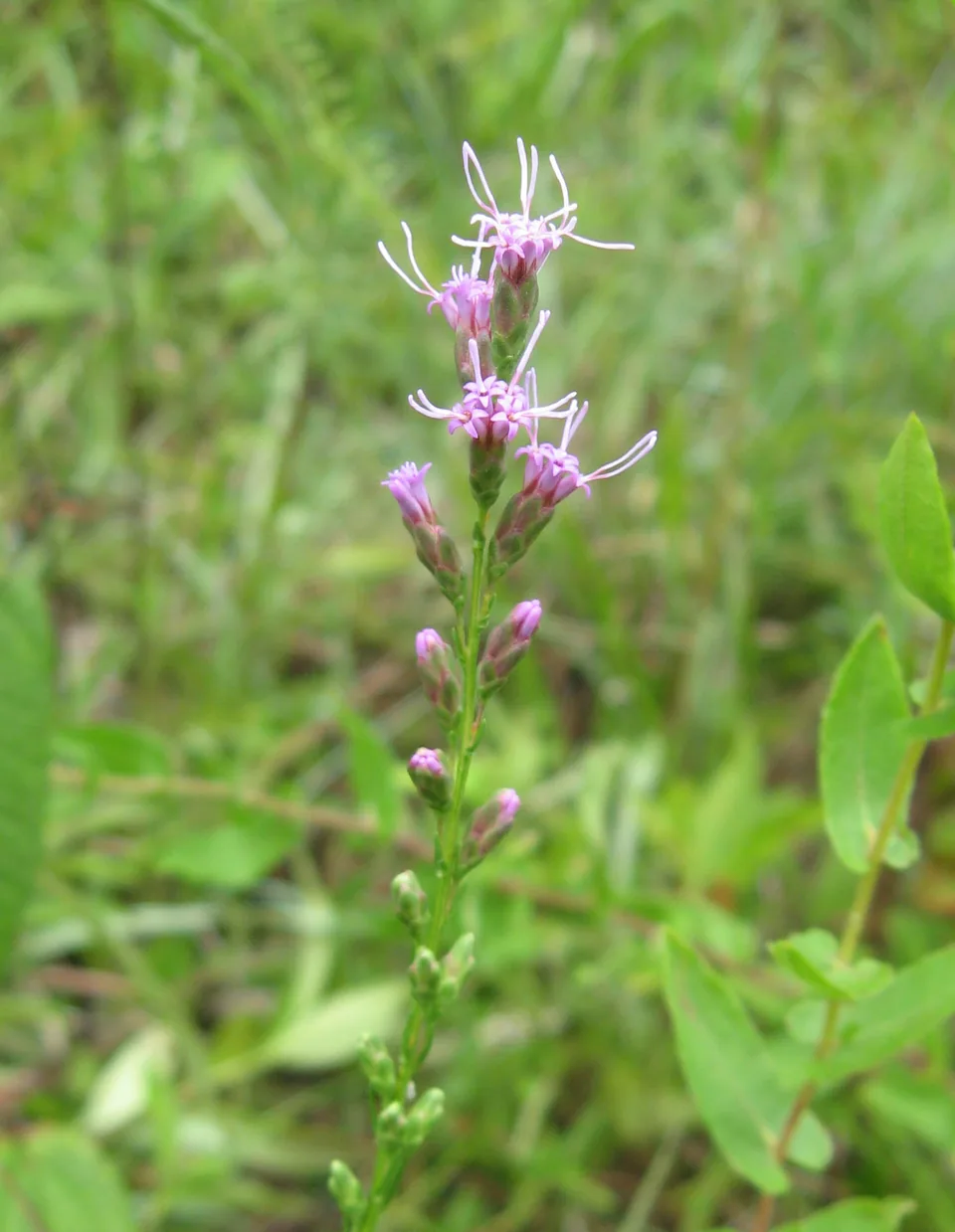


How to Grow and Care for Dwarf Blazing Star
Liatris microcephala
Written by Emilio Marruso · last checked
At a glance
This easygoing perennial loves full sun and shrugs off dry spells, so it asks very little of you. It grows 1.5–2 ft tall and stays slim, up to 1 ft wide, fitting neatly into a sunny bed. Give it well-drained soil, skip the extra watering, and you can divide it in spring or fall to share with friends.
- Sun
Full sun
What the sources say (1)
Light: Full sun
Light: Full sun (6 or more hours of direct sunlight a day) Soil Texture:
— Liatris microcephala (Appalachian Blazing Star, Button Snake Root, Dwarf Blazing Star, Smallhead Blazing Star, Smallhead Gayfeather, Smallhead Liatris) | North Carolina Extension Gardener Plant Toolbox [1] - Water
Tolerates drought; don't overwater
What the sources say (1)
Watering: Tolerates drought
It tolerates heat, humidity, drought, and poor soils.
— Liatris microcephala (Appalachian Blazing Star, Button Snake Root, Dwarf Blazing Star, Smallhead Blazing Star, Smallhead Gayfeather, Smallhead Liatris) | North Carolina Extension Gardener Plant Toolbox [1] - Cold
Survives winters down to −10 °F (−23.3 °C)
Very hardy · USDA 6a · RHS H7 · Z6
What the sources say (2)
Hardiness, coldest zone: 6a [winter low −23.3 to −20.6 °C (−10 to −5 °F)]
USDA Plant Hardiness Zone: 6a, 6b, 7a, 7b, 8a, 8b, 9a, 9b
— Liatris microcephala (Appalachian Blazing Star, Button Snake Root, Dwarf Blazing Star, Smallhead Blazing Star, Smallhead Gayfeather, Smallhead Liatris) | North Carolina Extension Gardener Plant Toolbox [1] Hardiness, warmest zone: 9b [winter low −3.9 to −1.1 °C (25 to 30 °F)]
USDA Plant Hardiness Zone: 6a, 6b, 7a, 7b, 8a, 8b, 9a, 9b
— Liatris microcephala (Appalachian Blazing Star, Button Snake Root, Dwarf Blazing Star, Smallhead Blazing Star, Smallhead Gayfeather, Smallhead Liatris) | North Carolina Extension Gardener Plant Toolbox [1] - Soil
Well-drained soil with a pH up to 6.0
What the sources say (3)
Soil pH, maximum: 6.0
Soil pH: Acid (<6.0) Soil Drainage: Good Drainage
— Liatris microcephala (Appalachian Blazing Star, Button Snake Root, Dwarf Blazing Star, Smallhead Blazing Star, Smallhead Gayfeather, Smallhead Liatris) | North Carolina Extension Gardener Plant Toolbox [1] Watering notes: In wet winter areas plant in well-drained soil to prevent the corms from rotting; increase drainage with rocks and gravel
In wet winter areas, be sure to plant in well-drained soil to prevent the corms from rotting.
— Liatris microcephala (Appalachian Blazing Star, Button Snake Root, Dwarf Blazing Star, Smallhead Blazing Star, Smallhead Gayfeather, Smallhead Liatris) | North Carolina Extension Gardener Plant Toolbox [1] Add a lot of rocks and gravel to the soil, too, and increase the water drainage.
— Dense Blazing Star [2] - Pruning
Prune in late winter or early spring
What the sources say (1)
Pruning: Late winter or early spring
Deadhead spent flowers and cut back foliage in late winter or early spring.
— Liatris microcephala (Appalachian Blazing Star, Button Snake Root, Dwarf Blazing Star, Smallhead Blazing Star, Smallhead Gayfeather, Smallhead Liatris) | North Carolina Extension Gardener Plant Toolbox [1] - Pests
Watch for aphids; too much water causes root rot
What the sources say (2)
Pests: aphids
Generally no significant insect pests or diseases. Monitor for aphids.
— Liatris microcephala (Appalachian Blazing Star, Button Snake Root, Dwarf Blazing Star, Smallhead Blazing Star, Smallhead Gayfeather, Smallhead Liatris) | North Carolina Extension Gardener Plant Toolbox [1] Diseases: root rot
Overwatering or poorly drained soils can cause root rot.
— Liatris microcephala (Appalachian Blazing Star, Button Snake Root, Dwarf Blazing Star, Smallhead Blazing Star, Smallhead Gayfeather, Smallhead Liatris) | North Carolina Extension Gardener Plant Toolbox [1] - Watch out
In wet winters the corms can rot: add rocks and gravel to improve drainage
What the sources say (2)
Watering notes: In wet winter areas plant in well-drained soil to prevent the corms from rotting; increase drainage with rocks and gravel
In wet winter areas, be sure to plant in well-drained soil to prevent the corms from rotting.
— Liatris microcephala (Appalachian Blazing Star, Button Snake Root, Dwarf Blazing Star, Smallhead Blazing Star, Smallhead Gayfeather, Smallhead Liatris) | North Carolina Extension Gardener Plant Toolbox [1] Add a lot of rocks and gravel to the soil, too, and increase the water drainage.
— Dense Blazing Star [2] - Size
1.5–2 ft tall and up to 1 ft wide
What the sources say (2)
Mature height: 45.72-60.96 cm (1.5-2 ft)
This plant grows 1.5-2 feet tall and up to 1 foot wide and has a woody corm.
— Liatris microcephala (Appalachian Blazing Star, Button Snake Root, Dwarf Blazing Star, Smallhead Blazing Star, Smallhead Gayfeather, Smallhead Liatris) | North Carolina Extension Gardener Plant Toolbox [1] Mature width: up to 30.48 cm (1 ft)
This plant grows 1.5-2 feet tall and up to 1 foot wide and has a woody corm.
— Liatris microcephala (Appalachian Blazing Star, Button Snake Root, Dwarf Blazing Star, Smallhead Blazing Star, Smallhead Gayfeather, Smallhead Liatris) | North Carolina Extension Gardener Plant Toolbox [1] - Propagation
Divide the plant in spring or fall
What the sources say (1)
Propagation: Division, in spring or fall
Propagated by division in either the spring or fall.
— Liatris microcephala (Appalachian Blazing Star, Button Snake Root, Dwarf Blazing Star, Smallhead Blazing Star, Smallhead Gayfeather, Smallhead Liatris) | North Carolina Extension Gardener Plant Toolbox [1]
Overview
Dwarf blazing star is a small, upright, mounding herbaceous perennial wildflower native to the southeastern United States. [1] It prefers full sun and well-drained soils and tolerates heat, humidity, drought and poor soils. [1] It is propagated by division in spring or fall. [1]
Dwarf Blazing Star care
How to water Dwarf Blazing Star
Watering
Tolerates drought
What the sources say (1)
It tolerates heat, humidity, drought, and poor soils.Watering notes
In wet winter areas plant in well-drained soil to prevent the corms from rotting; increase drainage with rocks and gravel
What the sources say (2)
In wet winter areas, be sure to plant in well-drained soil to prevent the corms from rotting.Add a lot of rocks and gravel to the soil, too, and increase the water drainage.How much light Dwarf Blazing Star needs
Full sun
What the sources say (1)
Light:
Full sun (6 or more hours of direct sunlight a day)
Soil Texture:How much cold Dwarf Blazing Star can take
Hardiness, coldest zone
6a [winter low −23.3 to −20.6 °C (−10 to −5 °F)]
What the sources say (1)
USDA Plant Hardiness Zone:
6a, 6b, 7a, 7b, 8a, 8b, 9a, 9bHardiness, warmest zone
9b [winter low −3.9 to −1.1 °C (25 to 30 °F)]
What the sources say (1)
USDA Plant Hardiness Zone:
6a, 6b, 7a, 7b, 8a, 8b, 9a, 9bBest soil for Dwarf Blazing Star
6.0
What the sources say (1)
Soil pH:
Acid (<6.0)
Soil Drainage:
Good DrainageHow to propagate Dwarf Blazing Star
Division, in spring or fall
What the sources say (1)
Propagated by division in either the spring or fall.How to grow Dwarf Blazing Star
The plant
Life cycle
perennial
What the sources say (1)
Dwarf blazing star is a small, upright, mounding, herbaceous perennial wildflower native to the Southeastern United States, found along the southern Appalachians.Family
Asteraceae
What the sources say (1)
Dwarf blazing star is a member of the daisy family (Asteraceae).Mature height
45.72-60.96 cm (1.5-2 ft)
What the sources say (1)
This plant grows 1.5-2 feet tall and up to 1 foot wide and has a woody corm.Mature width
up to 30.48 cm (1 ft)
What the sources say (1)
This plant grows 1.5-2 feet tall and up to 1 foot wide and has a woody corm.Pests and diseases
Pests
aphids
What the sources say (1)
Generally no significant insect pests or diseases. Monitor for aphids.Diseases
root rot
What the sources say (1)
Overwatering or poorly drained soils can cause root rot.Fertilizing
When
The sources give different values depending on region, zone or growing conditions.
What each source says
Liatris in general: Before new growth begins in spring
Liatris in general: Before new growth begins in spring
What the sources say (2)
Liatris in general: Fertilize before new growth begins in the spring using a commercial fertilizer that you can purchase at a local garden center.Liatris in general: Plants will rot if the soil is too moist. Fertilize before new growth begins in spring.Avoid
The sources give different values depending on region, zone or growing conditions.
What each source says
Liatris in general: Overfertilizing: in overly fertile soil the flower spikes of some varieties flop over
What the sources say (1)
Liatris in general: DO NOT overfertilize (check the label of the fertilizer that you select to determine an appropriate amount); in some varieties, flower spikes will flop over if plants are grown in overly fertile soils.Signs of excess
The sources give different values depending on region, zone or growing conditions.
What each source says
Liatris in general: Flower spikes flop over in some varieties
What the sources say (1)
Liatris in general: DO NOT overfertilize (check the label of the fertilizer that you select to determine an appropriate amount); in some varieties, flower spikes will flop over if plants are grown in overly fertile soils.Dwarf Blazing Star pests and problems
Root rot
Symptom: Rot of the roots and corms
What to do: Plant in well-drained soil and avoid overwatering
What the sources say (1)
Overwatering or poorly drained soils can cause root rot.
— Liatris microcephala (Appalachian Blazing Star, Button Snake Root, Dwarf Blazing Star, Smallhead Blazing Star, Smallhead Gayfeather, Smallhead Liatris) | North Carolina Extension Gardener Plant Toolbox [1] Aphids
Symptom: Not described in the source
What to do: Monitor for aphids
What the sources say (1)
Generally no significant insect pests or diseases. Monitor for aphids.
— Liatris microcephala (Appalachian Blazing Star, Button Snake Root, Dwarf Blazing Star, Smallhead Blazing Star, Smallhead Gayfeather, Smallhead Liatris) | North Carolina Extension Gardener Plant Toolbox [1]
Remedies
Each remedy shows what official sources say about it; traditional remedies without an official source are marked as such. Harmful ones are listed so you know to avoid them.
Treating the plant
stem rot
removing infected plant parts and topsoil Official source, not independently tested
How: Remove and destroy all infected plant parts and remove the topsoil around the plant; new soil may replace sclerotia-filled soil.
Control may include removing and destroying all infected plant parts and removal of topsoil around the plant. New soil may replace sclerotia-filled soil.
— portal.ct.gov [6]
wilt
removing infected plants and soil Official source, not independently tested
How: Remove infected plants with the associated roots and soil, and dispose of them without spreading the pathogen.
Wilt control involves removal of infected plants and associated roots and soil.
— portal.ct.gov [6]
Calendar
Pruning
Late winter or early spring
What the sources say (1)
Deadhead spent flowers and cut back foliage in late winter or early spring.Months as given by the sources, which are mostly from the United States (northern hemisphere). In the southern hemisphere they shift by about six months.
Indicative values
Values from a secondary source, not checked word for word like the rest of this page. Use them as a starting point.
- Hours of sun
- 6-8 hoursIndicative value, adapt it to your climate · Secondary source
- Care level
- LowIndicative value, adapt it to your climate · Secondary source
- Growth rate
- LowIndicative value, adapt it to your climate · Secondary source
Similar plants
- Appalachian Blazing Star Liatris squarrulosa
- Blazing Star Liatris scariosa
- Gayfeather Liatris spicata
- Meadow Blazing Star Liatris ligulistylis
- Prairie Blazing Star Liatris pycnostachya
- Rough Blazing-star Liatris aspera
- Sandhills Blazing Star Liatris pilosa
- Scaly Blazing Star Liatris squarrosa
Sources
Every value above is quoted from these documents. Links lead to the original publisher.
- Liatris microcephala (Appalachian Blazing Star, Button Snake Root, Dwarf Blazing Star, Smallhead Blazing Star, Smallhead Gayfeather, Smallhead Liatris) | North Carolina Extension Gardener Plant Toolbox · plants.ces.ncsu.edu, consulted
- Dense Blazing Star · extension.psu.edu, consulted
- Liatris (Blazing Stars, Gay Feather) | North Carolina Extension Gardener Plant Toolbox · plants.ces.ncsu.edu, consulted
- blogs.ifas.ufl.edu · blogs.ifas.ufl.edu
- hort.extension.wisc.edu · hort.extension.wisc.edu
- portal.ct.gov · portal.ct.gov
Written by Emilio Marruso · last checked