
How to Grow and Care for Angel's-tears
Brugmansia suaveolens
Written by Emilio Marruso · last checked
At a glance
This generous plant can grow up to 16 feet tall and is happy in full sun or partial shade, in the garden, in a container or even indoors. Water it regularly, letting the soil dry out in between, and give it the humid air it loves. Feed it through the growing season, then switch to a high-potassium fertilizer once the buds form.
- Sun
Full sun to partial shade
What the sources say (1)
Light: Full sun to semi-shade
Brugmansia suaveolens can grow in full sun and semi-shade exposures . In winter the temperature should not be less than 5 ºC (41 ºF)
— Brugmansia suaveolens or Snowy angel's trumpet | Care and Growing [6] - Water
Water regularly, letting the soil dry out in between; it loves humid air
What the sources say (2)
Watering: Water regularly, waiting for the soil to dry out
Water regularly waiting for the soil to dry out.
— Brugmansia suaveolens or Snowy angel's trumpet | Care and Growing [6] Watering notes: Tolerates soggy soils better than other Brugmansia species; loves high humidity
Loves high humidity | Tolerates soggy soils better than other species
— Brugmansia suaveolens [4] - Feeding
Feed through the growing season, high-potassium once buds form; little or none in winter
What the sources say (6)
When: Throughout the growing season; little or no fertilizer in winter
kept growing indoors in winter: Plants will flower year-round if they get enough light and temperatures are above about 60 °F. Provide moderate amounts of fertilizer and as day length increases, more flowers will appear.
— [7] Brugmansia is a very heavy feeder and benefit from regular fertilization – as often as twice a week during the growing season
— [7] The plants will need much less water and fertilizer in the winter (little water and no fertilizer if allowed to go dormant).
— [7] Mineral fertilizers: Balanced fertilizer with equal nitrogen, phosphorus and potassium to spur initial growth; a flowering or high-potassium fertilizer once buds form and in summer
To spur initial growth, use a balanced fertilizer, with equal amounts of nitrogen, phosphorus, and potassium. After it produces buds, use any fertilizer made for flowers.
— [9] To encourage flowering, apply a high-potassium fertiliser, such as tomato food, in summer, following the dose rate and frequency recommended on the packaging.
— [8] Avoid: Fertilizing dormant plants in winter
The plants will need much less water and fertilizer in the winter (little water and no fertilizer if allowed to go dormant).
— [7] - Pruning
Prune after flowering
What the sources say (1)
Pruning: After flowering
Prune after flowering to cause more flower production the following year and to maintain a compact appearance.
— Brugmansia suaveolens or Snowy angel's trumpet | Care and Growing [6] - Pests
Whiteflies, mealybugs, aphids, caterpillars and mites; may drop leaves in very hot weather
- Size
Up to 16 ft tall
What the sources say (1)
Mature height: up to 500 cm (5 m)
can grow as either a shrub or a tree, reaching up to 5m in height.
— Brugmansia suaveolens - Cambridge University Botanic Garden [2] - Propagation
Semi-ripe cuttings in summer, or seed
What the sources say (1)
Propagation: Semi-mature cuttings in summer; seed
Snowy angel's trumpet propagates by semi-mature cuttings in summer or by seeds sown in spring.
— Brugmansia suaveolens or Snowy angel's trumpet | Care and Growing [6] - Sowing
Sow in spring
What the sources say (1)
Sowing: Spring
Snowy angel's trumpet propagates by semi-mature cuttings in summer or by seeds sown in spring.
— Brugmansia suaveolens or Snowy angel's trumpet | Care and Growing [6] - Containers
Grows in containers and indoors too
What the sources say (2)
In containers: Yes
Angel's tears is used in large pots for patios, indoors or greenhouses in cold winters regions; in regions without frost it cultivates as isolated specimens
— Brugmansia suaveolens or Snowy angel's trumpet | Care and Growing [6] Indoors: Yes
Angel's tears is used in large pots for patios, indoors or greenhouses in cold winters regions; in regions without frost it cultivates as isolated specimens
— Brugmansia suaveolens or Snowy angel's trumpet | Care and Growing [6]
Overview
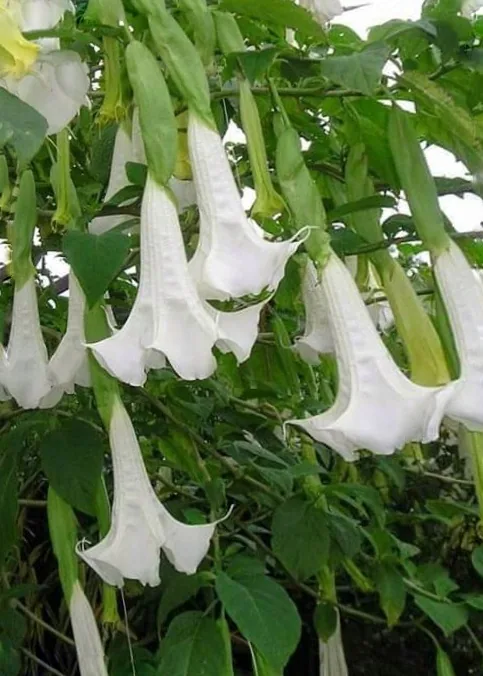
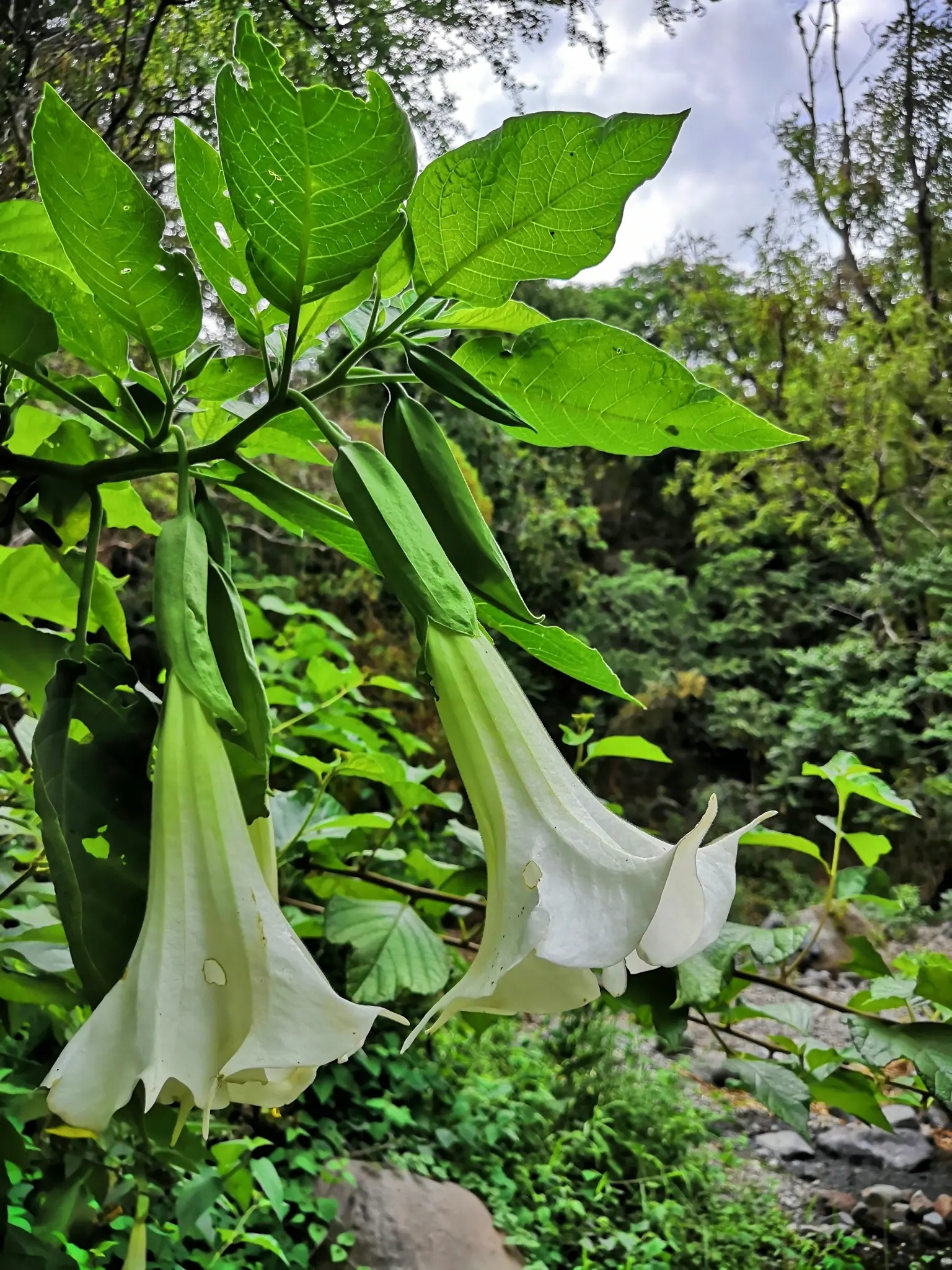
Brugmansia suaveolens is a shrub or small tree from Brazil that needs frost protection in winter in the United Kingdom. [2] It grows in full sun and semi-shade, in well-drained soil rich in organic matter, and is often grown in large pots. [6]
This record is incomplete: the sources we read do not cover every field yet.
Not yet covered by our sources: Hardiness, coldest zone, Hardiness, warmest zone
Angel's-tears care
How to water Angel's-tears
Watering
Water regularly, waiting for the soil to dry out
What the sources say (1)
Water regularly waiting for the soil to dry out.Watering notes
Tolerates soggy soils better than other Brugmansia species; loves high humidity
What the sources say (1)
Loves high humidity
| Tolerates soggy soils
better than other speciesHow much light Angel's-tears needs
Full sun to semi-shade
What the sources say (1)
Brugmansia suaveolens can grow in full sun and semi-shade exposures . In winter the temperature should not be less than 5 ºC (41 ºF)How much cold Angel's-tears can take
Hardiness, coldest zone
Not stated in the sources we read.
Hardiness, warmest zone
Not stated in the sources we read.
Where to grow Angel's-tears
Indoors
Yes
What the sources say (1)
Angel's tears is used in large pots for patios, indoors or greenhouses in cold winters regions; in regions without frost it cultivates as isolated specimensIn containers
Yes
What the sources say (1)
Angel's tears is used in large pots for patios, indoors or greenhouses in cold winters regions; in regions without frost it cultivates as isolated specimensHow to propagate Angel's-tears
Semi-mature cuttings in summer; seed
What the sources say (1)
Snowy angel's trumpet propagates by semi-mature cuttings in summer or by seeds sown in spring.How to grow Angel's-tears
The plant
Family
Solanaceae
What the sources say (1)
Family
SOLANACEAE
Genus
Brugmansia
Species
Brugmansia suaveolens (Humb.Mature height
up to 500 cm (5 m)
What the sources say (1)
can grow as either a shrub or a tree, reaching up to 5m in height.Fertilizing
When
Throughout the growing season; little or no fertilizer in winter
What each source says
kept growing indoors in winter: moderate amounts of fertilizer
What the sources say (3)
kept growing indoors in winter: Plants will flower year-round if they get enough light and temperatures are above about 60 °F. Provide moderate amounts of fertilizer and as day length increases, more flowers will appear.Brugmansia is a very heavy feeder and benefit from regular fertilization – as often as twice a week during the growing seasonThe plants will need much less water and fertilizer in the winter (little water and no fertilizer if allowed to go dormant).How often
The sources disagree:
What each source says
plants not flowering: weekly from late spring onwards
What the sources say (1)
plants not flowering: If your plant isn't flowering:
- Feed weekly from late spring onwards with a high-potassium fertiliser, such as tomato feedNatural fertilizers
Organic liquid seaweed feed in spring; plenty of compost in the planting soil
Mineral fertilizers
Balanced fertilizer with equal nitrogen, phosphorus and potassium to spur initial growth; a flowering or high-potassium fertilizer once buds form and in summer
What the sources say (2)
To spur initial growth, use a balanced fertilizer, with equal amounts of nitrogen, phosphorus, and potassium. After it produces buds, use any fertilizer made for flowers.To encourage flowering, apply a high-potassium fertiliser, such as tomato food, in summer, following the dose rate and frequency recommended on the packaging.Avoid
Fertilizing dormant plants in winter
What the sources say (1)
The plants will need much less water and fertilizer in the winter (little water and no fertilizer if allowed to go dormant).Signs of deficiency
Leaves discolour or drop
What the sources say (1)
However, if the leaves start to discolour or drop, it is usually a sign of:
- overwatering or waterlogging – so reduce watering, especially in winter, and/or improve drainage
- nutrient deficiencyAngel's-tears pests and problems
Pests
Symptom: Can be attacked by whiteflies, mealybugs, aphids, caterpillars or mites; may lose leaves in very hot weather.
What the sources say (1)
If it's very hot they can lose leaves; Brazil's white angel trumpet can also be attacked by whiteflies, mealybugs, aphids, caterpillars or mites .
— Brugmansia suaveolens or Snowy angel's trumpet | Care and Growing [6]
Remedies
Each remedy shows what official sources say about it; traditional remedies without an official source are marked as such. Harmful ones are listed so you know to avoid them.
First aid
First aid: not a substitute for a doctor
plant poisoning, skin contact
remove clothing and flush skin with water Official source, not independently tested
DO NOT make a person throw up unless told to do so by poison control or a health care professional.
— medlineplus.gov [10] The local poison control center can be reached directly by calling the national toll-free Poison Help hotline (1-800-222-1222) from anywhere in the United States.
— medlineplus.gov [10] How: If the poison has spilled on the person's clothes, remove the clothing and flush the skin with water.
If the poison has spilled on the person's clothes, remove the clothing and flush the skin with water.
— medlineplus.gov [10]
Calendar
Sowing
Spring
What the sources say (1)
Snowy angel's trumpet propagates by semi-mature cuttings in summer or by seeds sown in spring.Pruning
After flowering
What the sources say (1)
Prune after flowering to cause more flower production the following year and to maintain a compact appearance.Months as given by the sources, which are mostly from the United States (northern hemisphere). In the southern hemisphere they shift by about six months.
Indicative values
Values from a secondary source, not checked word for word like the rest of this page. Use them as a starting point.
- Life cycle
- PerennialIndicative value, adapt it to your climate · Secondary source
- Hours of sun
- 6-8 hoursIndicative value, adapt it to your climate · Secondary source
- Soil pH
- 6-7Indicative value, adapt it to your climate · Secondary source
- USDA hardiness zones
- 8-10 [winter low −12.2 to 4.4 °C (10 to 40 °F)]Indicative value, adapt it to your climate · Secondary source
- Care level
- HighIndicative value, adapt it to your climate · Secondary source
- Growth rate
- LowIndicative value, adapt it to your climate · Secondary source
Similar plants
- Ashwagandha Withania somnifera
- Bladder cherry Alkekengi officinarum
- Brazilian nightshade Solanum seaforthianum
- Brunfelsia Brunfelsia pauciflora
- Cayenne Pepper Capsicum annuum
- Clammy Ground Cherry Physalis heterophylla
- Cupflower Nierembergia linariifolia
- Downy Thorn-Apple Datura innoxia
Sources
Every value above is quoted from these documents. Links lead to the original publisher.
- Brugmansia suaveolens / [Species detail] / Plant Atlas · florida.plantatlas.usf.edu, consulted
- Brugmansia suaveolens - Cambridge University Botanic Garden · botanic.cam.ac.uk, consulted
- Flora of New Zealand | Taxon Profile | Brugmansia suaveolens · nzflora.info, consulted
- Brugmansia suaveolens · abads.net, consulted
- Brugmansia - Fine Gardening · finegardening.com, consulted
- Brugmansia suaveolens or Snowy angel's trumpet | Care and Growing · consultaplantas.com, consulted
- hort.extension.wisc.edu · hort.extension.wisc.edu
- rhs.org.uk · rhs.org.uk
- ucanr.edu · ucanr.edu
- medlineplus.gov · medlineplus.gov
Written by Emilio Marruso · last checked