
How to Grow and Care for Bladder cherry
Alkekengi officinarum
Written by Emilio Marruso · last checked
Toxic to: People · Why
At a glance
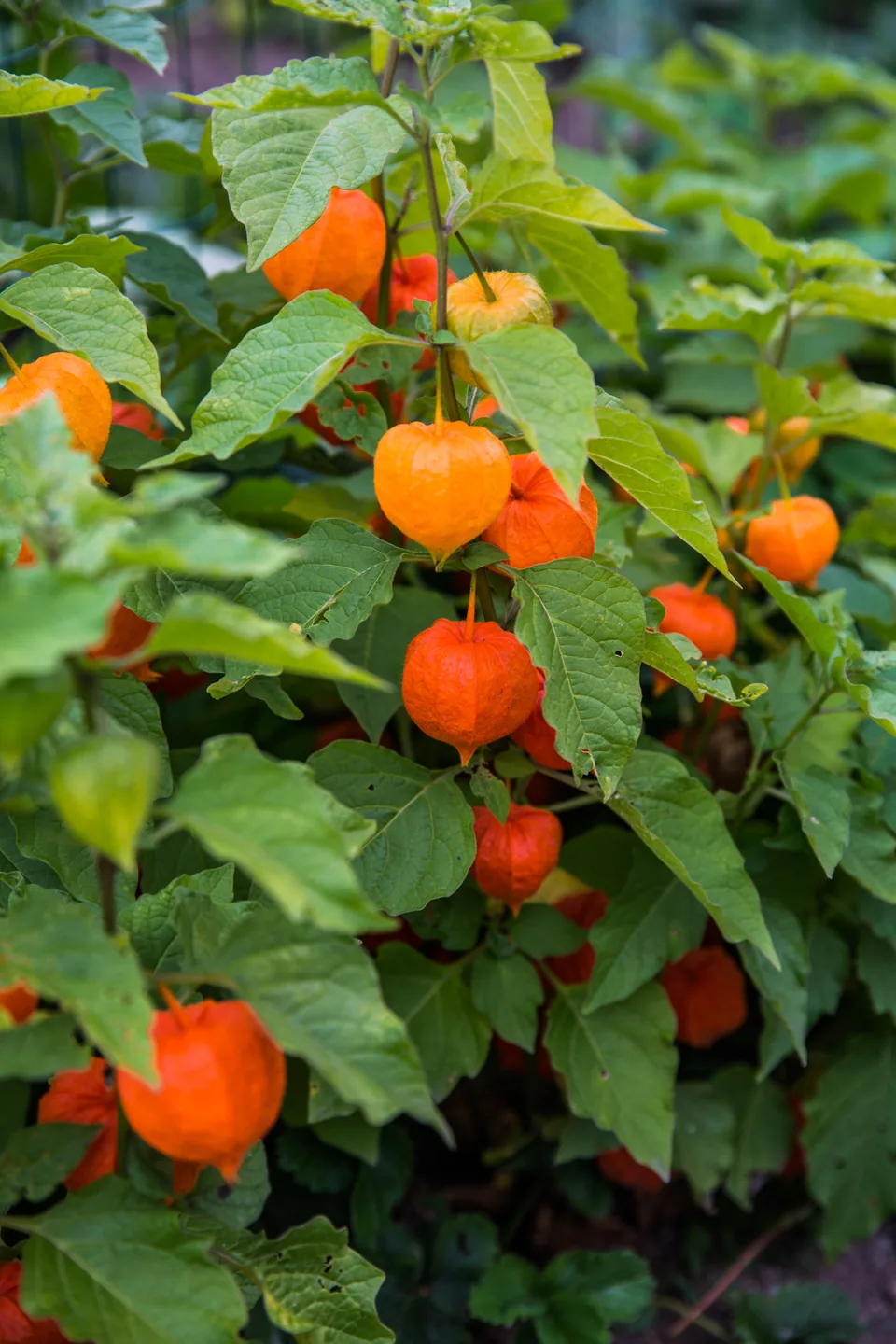
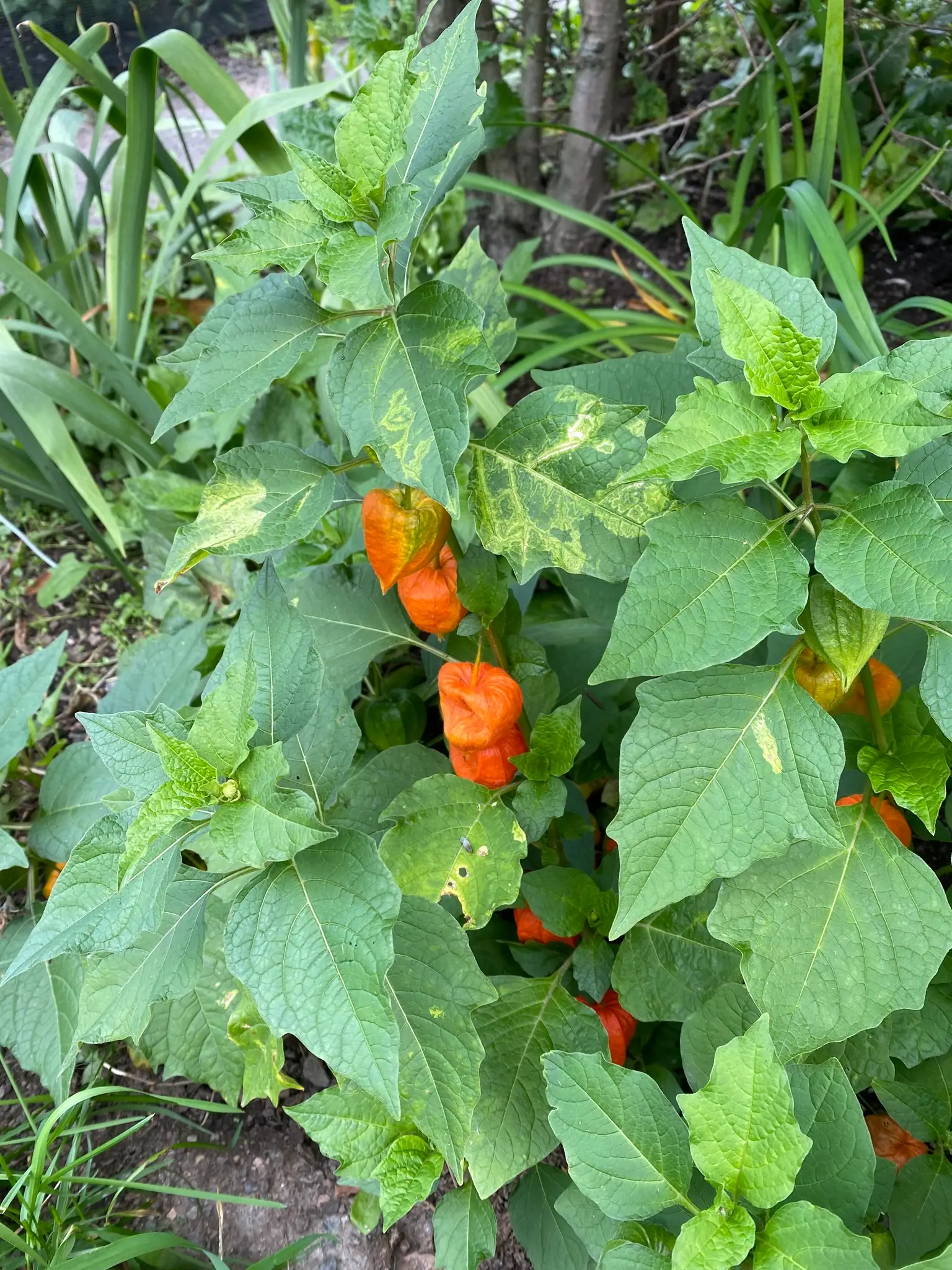
This charming plant fills the garden with lanterns that turn orange in late summer or early fall, and you can cut the stems to enjoy them. It grows in full sun or partial shade and asks only for moderately moist soil, 1 inch of water a week. Grow it in a buried pot to keep it in check, and the show is all yours.
- Sun
Full sun to partial shade
What the sources say (2)
Light: Full sun to partial shade
Bladder cherry grows best in full sun but can tolerate partial shade as well.
— How to Grow and Care for Chinese Lantern (Alkekengi officinarum) [5] Grow Chinese lantern in moist but well-drained soil, in sun or partial shade.
— Chinese Lantern Plant | BBC Gardeners World Magazine [3] - Water
1 inch of water a week, rain included; water deeply, keep moist but never soggy
What the sources say (4)
Watering: Keep the soil moderately moist; about 1 inch (2.5 cm) of water per week, rain included
Bladder cherry likes soil that is moderately moist. While plants are getting established, they will need at least one inch of water per week.
— How to Grow and Care for Chinese Lantern (Alkekengi officinarum) [5] Keep the soil moist at all times. Water when there is less than an inch (2.5 cm.) of rainfall in a week
— Chinese Lantern Information: How To Care For A Chinese Lantern | Gardening Know How [6] Watering notes: Water thoroughly and deeply, avoid soggy conditions, mulch to conserve moisture; potted plants need more frequent watering than plants in the ground
Water thoroughly and deeply rather than lightly and more frequently.
— How to Grow and Care for Chinese Lantern (Alkekengi officinarum) [5] It will require more frequent watering in a pot compared with one that’s growing in the ground.
— How to Grow and Care for Chinese Lantern (Alkekengi officinarum) [5] - Cold
Survives winters down to −40 °F (−40 °C)
Very hardy · USDA 3 · RHS H7 · Z3
What the sources say (4)
Hardiness, coldest zone: 3 [winter low −40 to −34.4 °C (−40 to −30 °F)]
Plant type: Deciduous perennial Hardiness (USDA Zone): 3-9
— How to Grow and Care for Chinese Lantern (Alkekengi officinarum) [5] Chinese lantern is winter hardy in USDA plant hardiness zones 3 through 9.
— Chinese Lantern Information: How To Care For A Chinese Lantern | Gardening Know How [6] Hardiness, warmest zone: 9 [winter low −6.7 to −1.1 °C (20 to 30 °F)]
Plant type: Deciduous perennial Hardiness (USDA Zone): 3-9
— How to Grow and Care for Chinese Lantern (Alkekengi officinarum) [5] Chinese lantern is winter hardy in USDA plant hardiness zones 3 through 9.
— Chinese Lantern Information: How To Care For A Chinese Lantern | Gardening Know How [6] - Soil
Slightly acidic to slightly alkaline soil, pH 6.1–7.8
What the sources say (2)
Soil pH, minimum: 6.1
Soil pH: 6.1-7.8, slightly acidic to alkaline Time to maturity: 2 years
— How to Grow and Care for Chinese Lantern (Alkekengi officinarum) [5] Soil pH, maximum: 7.8
Soil pH: 6.1-7.8, slightly acidic to alkaline Time to maturity: 2 years
— How to Grow and Care for Chinese Lantern (Alkekengi officinarum) [5] - Pruning
Cut it back at the end of the season, once frost has killed the leaves
What the sources say (2)
Pruning: End of the season, after frost has killed the foliage
Cut the stems back after frost kills the foliage and apply a layer of mulch to protect the roots.
— How to Grow and Care for Chinese Lantern (Alkekengi officinarum) [5] Cut the plants back nearly to the ground at the end of the season.
— Chinese Lantern Information: How To Care For A Chinese Lantern | Gardening Know How [6] - Harvest
Cut the stems when the lanterns turn orange, in late summer or early fall
What the sources say (2)
Harvest: Lanterns: cut the stems when the lanterns have turned orange, in late summer or early autumn
To dry them, cut the stems soon as the lanterns have turned orange
— Chinese Lantern Plant | BBC Gardeners World Magazine [3] In late summer or early fall, the plant’s husks will turn from green to a bright reddish orange hue
— How to Grow and Care for Chinese Lantern (Alkekengi officinarum) [5] - Pests
Slugs eat the spring shoots, so protect it early; soggy soil invites fungal problems
- Watch out
Spreads underground and can turn invasive: plant it in a buried pot or with a root barrier
- Propagation
From seed, by dividing the underground stems, or from root or base cuttings
What the sources say (3)
Propagation: Seed, division of rhizomes, root cuttings, basal cuttings
Chinese lantern can be propagated either by sowing seeds, or by dividing rhizomes to start new plants.
— How to Grow and Care for Chinese Lantern (Alkekengi officinarum) [5] Alternatively, divide plants or take root cuttings in spring.
— Chinese Lantern Plant | BBC Gardeners World Magazine [3] Harvest the shoots with plenty of underground stem when they are about 8 - 10cm above the ground.
— Alkekengi officinarum - Useful Temperate Plants [4] - Sowing
Sow under cover late winter to mid spring, or outdoors in spring once frost danger has passed
What the sources say (8)
Sowing: Late winter to mid spring under cover; outdoors in spring once all danger of frost has passed
under cover (fonte: BBC Gardeners World): Sow seeds under cover in spring. The seeds need light to germinate, so leave them uncovered.
— Chinese Lantern Plant | BBC Gardeners World Magazine [3] greenhouse (fonte: Plants for a Future): Seed - sow early to mid spring in a greenhouse only just covering the seed.
— Alkekengi officinarum - Useful Temperate Plants [4] indoors (fonte: Gardening Know How): Start them indoors in late winter or early spring.
— Chinese Lantern Information: How To Care For A Chinese Lantern | Gardening Know How [6] directly outdoors (fonte: Gardener's Path): To sow directly into your garden, wait until all danger of frost has passed in spring.
— How to Grow and Care for Chinese Lantern (Alkekengi officinarum) [5] Sow seeds under cover in spring. The seeds need light to germinate, so leave them uncovered.
— Chinese Lantern Plant | BBC Gardeners World Magazine [3] Seed - sow early to mid spring in a greenhouse only just covering the seed.
— Alkekengi officinarum - Useful Temperate Plants [4] Start them indoors in late winter or early spring.
— Chinese Lantern Information: How To Care For A Chinese Lantern | Gardening Know How [6] To sow directly into your garden, wait until all danger of frost has passed in spring.
— How to Grow and Care for Chinese Lantern (Alkekengi officinarum) [5] - Containers
Grows well in containers, but needs watering more often
What the sources say (4)
In containers: Yes
Keep the spreading roots in check by growing in a container.
— Chinese Lantern Plant | BBC Gardeners World Magazine [3] L'Alchechengi si adatta sia alla coltivazione in vaso sia alla piena terra .
— Guida alla cura dell'Alchechengi: 10 cose da sapere sulla lanterna cinese e i suoi frutti [7] Watering notes: Water thoroughly and deeply, avoid soggy conditions, mulch to conserve moisture; potted plants need more frequent watering than plants in the ground
Water thoroughly and deeply rather than lightly and more frequently.
— How to Grow and Care for Chinese Lantern (Alkekengi officinarum) [5] It will require more frequent watering in a pot compared with one that’s growing in the ground.
— How to Grow and Care for Chinese Lantern (Alkekengi officinarum) [5] - Safety
Only the fully ripe fruit is edible; leaves and unripe fruit are poisonous, so wear gloves
Overview
Chinese lantern (Alkekengi officinarum, formerly Physalis alkekengi) is a herbaceous perennial grown mainly for its orange papery calyces. [3][1] It grows in moist but well-drained soil in sun or partial shade and spreads by underground stems, so it is often grown in a container. [3] All parts of the plant except the ripe fruit are poisonous. [4]
Bladder cherry care
Measurements in square brackets are our conversion into the other unit system; the quoted text is unchanged.
How to water Bladder cherry
Watering
Keep the soil moderately moist; about 1 inch (2.5 cm) of water per week, rain included
What the sources say (2)
Bladder cherry likes soil that is moderately moist. While plants are getting established, they will need at least one inch of water per week.Keep the soil moist at all times. Water when there is less than an inch (2.5 cm.) of rainfall in a weekWatering notes
Water thoroughly and deeply, avoid soggy conditions, mulch to conserve moisture; potted plants need more frequent watering than plants in the ground
What the sources say (2)
Water thoroughly and deeply rather than lightly and more frequently.It will require more frequent watering in a pot compared with one that’s growing in the ground.How much light Bladder cherry needs
Full sun to partial shade
What the sources say (2)
Bladder cherry grows best in full sun but can tolerate partial shade as well.Grow Chinese lantern in moist but well-drained soil, in sun or partial shade.How much cold Bladder cherry can take
Hardiness, coldest zone
3 [winter low −40 to −34.4 °C (−40 to −30 °F)]
What the sources say (2)
Plant type: Deciduous perennial
Hardiness (USDA Zone): 3-9Chinese lantern is winter hardy in USDA plant hardiness zones 3 through 9.Hardiness, warmest zone
9 [winter low −6.7 to −1.1 °C (20 to 30 °F)]
What the sources say (2)
Plant type: Deciduous perennial
Hardiness (USDA Zone): 3-9Chinese lantern is winter hardy in USDA plant hardiness zones 3 through 9.Best soil for Bladder cherry
Soil pH, minimum
6.1
What the sources say (1)
Soil pH: 6.1-7.8, slightly acidic to alkaline
Time to maturity: 2 yearsSoil pH, maximum
7.8
What the sources say (1)
Soil pH: 6.1-7.8, slightly acidic to alkaline
Time to maturity: 2 yearsWhere to grow Bladder cherry
In containers
Yes
What the sources say (2)
Keep the spreading roots in check by growing in a container.L'Alchechengi si adatta sia alla coltivazione in vaso sia alla piena terra .Spacing
The sources give different values depending on region, zone or growing conditions.
What each source says
According to Gardener's Path: 45.7-61.0 cm (18-24 in)
According to BBC Gardeners World: 30 cm [12 in]
What the sources say (2)
According to Gardener's Path: Time to maturity: 2 years
Spacing : 18-24 inchesAccording to BBC Gardeners World: Plant out about 30cm apart in autumn, for flowers the following year.How to propagate Bladder cherry
Seed, division of rhizomes, root cuttings, basal cuttings
What the sources say (3)
Chinese lantern can be propagated either by sowing seeds, or by dividing rhizomes to start new plants.Alternatively, divide plants or take root cuttings in spring.Harvest the shoots with plenty of underground stem when they are about 8 - 10cm above the ground.How to grow Bladder cherry
The plant
Family
Solanaceae
What the sources say (1)
Order Solanales ( 1SOLO ) Family Solanaceae ( 1SOLF ) Genus Physalis ( 1PHYG ) Species Alkekengi officinarum ( PHYAL )Bladder cherry pests and problems
Slugs
Symptom: Slugs eat the new growth in spring and can destroy even large clumps
What to do: Protect the plant early in spring.
What the sources say (2)
Slugs can be a problem in spring before the plant starts growing rapidly – protect the plant early.
— Chinese Lantern Plant | BBC Gardeners World Magazine [3] Slugs are very fond of the new growth in spring and can destroy even quite large clumps
— Alkekengi officinarum - Useful Temperate Plants [4] Spreading by rhizomes
Symptom: Spreads by underground stems and can become invasive
What to do: Grow in a container, bury the container in the soil, or add a barrier around the roots.
What the sources say (2)
Chinese lantern spreads via underground stems, in a similar way to mint, and can be invasive if grown in the garden.
— Chinese Lantern Plant | BBC Gardeners World Magazine [3] you could bury the container in your garden soil, or add a barrier around the roots to stop them spreading.
— Chinese Lantern Plant | BBC Gardeners World Magazine [3] Fungal issues from overly wet conditions
Symptom: Overly wet conditions can increase the risk of fungal issues, especially if airflow is limited
What to do: Keep the soil evenly moist but not soggy.
What the sources say (1)
High humidity typically isn’t a concern, though overly wet conditions can increase the risk of fungal issues, especially if airflow is limited.
— How to Grow and Care for Chinese Lantern (Alkekengi officinarum) [5]
Remedies
Each remedy shows what official sources say about it; traditional remedies without an official source are marked as such. Harmful ones are listed so you know to avoid them.
Getting rid of it
spreading by rhizomes
digging out all the rhizomes Not verified
Traditional remedy, not verified by an official source.
Trying to manually remove it may leave behind even a tiny piece of root which is all this plant needs to regrow.
— gardeningknowhow.com [9] How: Dig well around the plants and follow each rhizome and root for complete removal.
solarizing under black plastic Not verified
Traditional remedy, not verified by an official source.
Trying to manually remove it may leave behind even a tiny piece of root which is all this plant needs to regrow.
— gardeningknowhow.com [9] How: Hold black plastic down with rocks or stakes and leave it in place for many months during the hottest part of the year.
starving the rhizomes by repeated mowing Not verified
Traditional remedy, not verified by an official source.
Trying to manually remove it may leave behind even a tiny piece of root which is all this plant needs to regrow.
— gardeningknowhow.com [9] How: Use a line trimmer or mower and consistently remove any developing shoots.
Is Bladder cherry poisonous?
Reported by the source, quoted verbatim. This is not medical or veterinary advice: if a person or an animal may have eaten this plant, contact a poison control centre or a veterinarian.
All parts of the plant, except the ripe fruit, are poisonous
[4]- Poisonous parts
All parts of the plant, except the ripe fruit, are poisonous
[4]- Toxic principle
The unripe fruits and foliage of Physalis species contain solanine and other solanidine alkaloids and are toxic if ingested in large quantities.
[4]- Severity
unripe fruits as well as the other parts of the plant are considered highly toxic if ingested.
[5]
Physalis alkekengi is a member of the nightshade family, and the leaves and unripe fruits are poisonous. Wear gloves when handling.
[3]- Poisonous parts
the leaves and unripe fruits are poisonous. Wear gloves when handling.
[3]
Calendar
Sowing
Late winter to mid spring under cover; outdoors in spring once all danger of frost has passed
What each source says
under cover (fonte: BBC Gardeners World): Spring
greenhouse (fonte: Plants for a Future): Early to mid spring
indoors (fonte: Gardening Know How): Late winter or early spring
directly outdoors (fonte: Gardener's Path): Spring, after all danger of frost has passed
What the sources say (8)
under cover (fonte: BBC Gardeners World): Sow seeds under cover in spring. The seeds need light to germinate, so leave them uncovered.greenhouse (fonte: Plants for a Future): Seed - sow early to mid spring in a greenhouse only just covering the seed.indoors (fonte: Gardening Know How): Start them indoors in late winter or early spring.directly outdoors (fonte: Gardener's Path): To sow directly into your garden, wait until all danger of frost has passed in spring.Sow seeds under cover in spring. The seeds need light to germinate, so leave them uncovered.Seed - sow early to mid spring in a greenhouse only just covering the seed.Start them indoors in late winter or early spring.To sow directly into your garden, wait until all danger of frost has passed in spring.Planting
The sources give different values depending on region, zone or growing conditions.
What each source says
According to BBC Gardeners World: Autumn, for flowers the following year
seedlings (fonte: Plants for a Future): Early summer
What the sources say (2)
According to BBC Gardeners World: Plant out about 30cm apart in autumn, for flowers the following year.seedlings (fonte: Plants for a Future): and plant them out in early summer. Diurnal temperature fluctuations assist germinationHarvest
Lanterns: cut the stems when the lanterns have turned orange, in late summer or early autumn
What the sources say (2)
To dry them, cut the stems soon as the lanterns have turned orangeIn late summer or early fall, the plant’s husks will turn from green to a bright reddish orange huePruning
End of the season, after frost has killed the foliage
What the sources say (2)
Cut the stems back after frost kills the foliage and apply a layer of mulch to protect the roots.Cut the plants back nearly to the ground at the end of the season.Months as given by the sources, which are mostly from the United States (northern hemisphere). In the southern hemisphere they shift by about six months.
Edibility
Reported by the source, quoted verbatim. Do not eat a plant on the basis of this page alone: identification mistakes can be dangerous.
Indicative values
Values from a secondary source, not checked word for word like the rest of this page. Use them as a starting point.
- Hours of sun
- 8-12 hoursIndicative value, adapt it to your climate · Secondary source
- Care level
- MediumIndicative value, adapt it to your climate · Secondary source
- Growth rate
- LowIndicative value, adapt it to your climate · Secondary source
Similar plants
- Angel's-tears Brugmansia suaveolens
- Ashwagandha Withania somnifera
- Belladonna Atropa belladonna
- Bittersweet Solanum dulcamara
- Brazilian nightshade Solanum seaforthianum
- Brunfelsia Brunfelsia pauciflora
- Cayenne Pepper Capsicum annuum
- Clammy Ground Cherry Physalis heterophylla
Sources
Every value above is quoted from these documents. Links lead to the original publisher.
- Alkekengi officinarum (PHYAL)[Overview]| EPPO Global Database · gd.eppo.int, consulted
- Acta Botanica Malacitana 45 (2020). 221-224 · revistas.uma.es, consulted
- Chinese Lantern Plant | BBC Gardeners World Magazine · gardenersworld.com, consulted
- Alkekengi officinarum - Useful Temperate Plants · temperate.theferns.info, consulted
- How to Grow and Care for Chinese Lantern (Alkekengi officinarum) · gardenerspath.com, consulted
- Chinese Lantern Information: How To Care For A Chinese Lantern | Gardening Know How · gardeningknowhow.com, consulted
- Guida alla cura dell'Alchechengi: 10 cose da sapere sulla lanterna cinese e i suoi frutti · ilmeteo.net, consulted
- Strawberry Groundcherry (Alkekengi officinarum) - bplant.org · bplant.org, consulted
- gardeningknowhow.com · gardeningknowhow.com
Written by Emilio Marruso · last checked