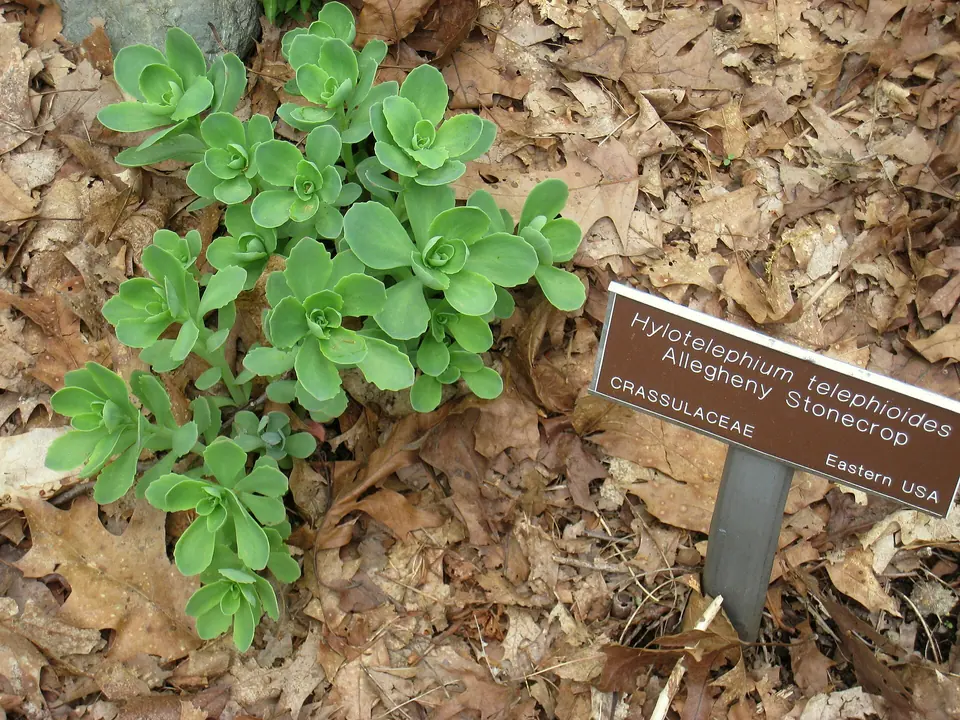
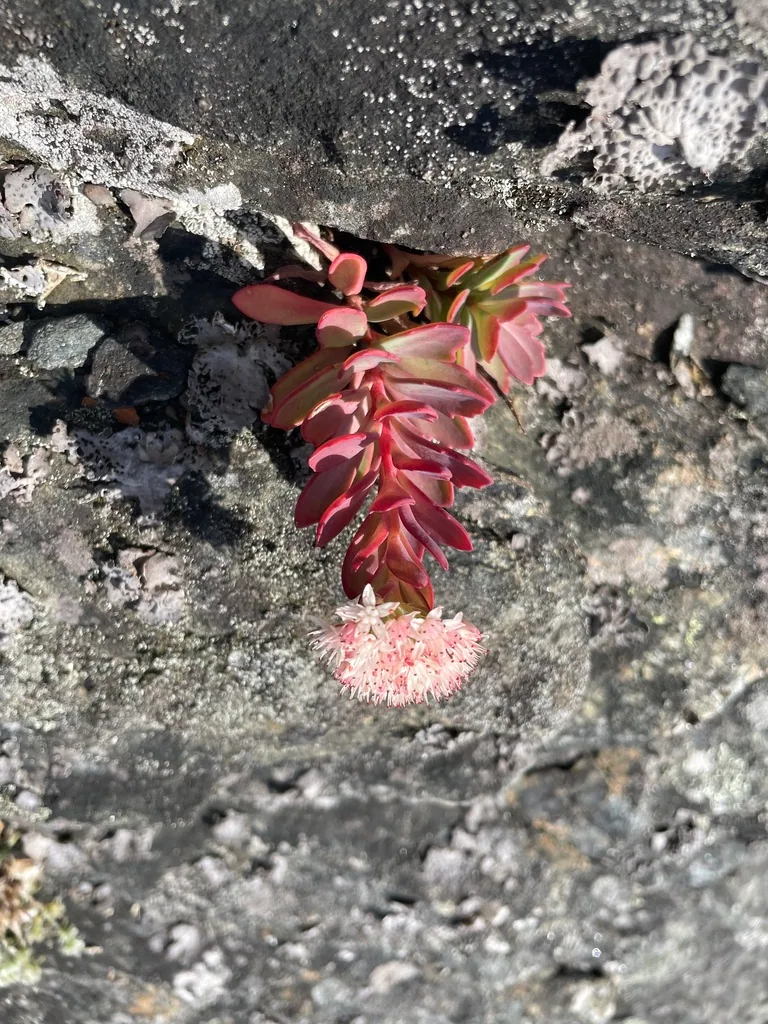

How to Grow and Care for Allegheny Stonecrop
Hylotelephium telephioides
Written by Emilio Marruso · last checked
At a glance
This tough perennial asks for very little: it takes drought in stride and feels at home in dry, rocky soil. Give it full sun or partial shade and it settles in, staying a tidy 12 to 15 inches tall. Want more plants? Just divide a clump or root a leaf cutting.
- Sun
Full sun to partial shade
What the sources say (1)
Light: Full sun to partial shade
Plant in full sun to partial shade in dry rocky soils.
— Hylotelephium telephioides (Allegheny Live-for-ever, Allegheny Stonecrop, American Orpine) | North Carolina Extension Gardener Plant Toolbox [1] - Water
Tolerates drought: it needs little water
What the sources say (1)
Watering: Drought tolerant
These plants are drought tolerant and work well in a border front, cottage, rock, or native garden.
— Hylotelephium telephioides (Allegheny Live-for-ever, Allegheny Stonecrop, American Orpine) | North Carolina Extension Gardener Plant Toolbox [1] - Soil
Dry, rocky soil
What the sources say (1)
Watering notes: Dry rocky soils
Plant in full sun to partial shade in dry rocky soils.
— Hylotelephium telephioides (Allegheny Live-for-ever, Allegheny Stonecrop, American Orpine) | North Carolina Extension Gardener Plant Toolbox [1] - Pests
Can suffer from root rot
What the sources say (1)
Diseases: root rot
Generally problem-free. May have root rot in poorly drained soils.
— Hylotelephium (Live-forever, Orpine, Sedum, Stonecrop) | North Carolina Extension Gardener Plant Toolbox [2] - Size
12–15 in tall
What the sources say (1)
Mature height: 30.48-38.1 cm (12-15 in)
They grow in clumps and their fleshy leaves along erect stems reach a height of 12 to 15 inches.
— Hylotelephium telephioides (Allegheny Live-for-ever, Allegheny Stonecrop, American Orpine) | North Carolina Extension Gardener Plant Toolbox [1] - Propagation
Divide the clump or root a leaf cutting
What the sources say (1)
Propagation: Division, leaf cutting
Recommended Propagation Strategy: Division Leaf Cutting Country Or Region Of Origin:
— Hylotelephium telephioides (Allegheny Live-for-ever, Allegheny Stonecrop, American Orpine) | North Carolina Extension Gardener Plant Toolbox [1]
Overview
Allegheny stonecrop is the only North American native Hylotelephium, a perennial of the stonecrop family. [1] It is drought tolerant and is planted in full sun to partial shade in dry rocky soils. [1]
This record is incomplete: the sources we read do not cover every field yet.
Not yet covered by our sources: Hardiness, coldest zone, Hardiness, warmest zone, Pruning
Allegheny Stonecrop care
How to water Allegheny Stonecrop
Watering
Drought tolerant
What the sources say (1)
These plants are drought tolerant and work well in a border front, cottage, rock, or native garden.Watering notes
Dry rocky soils
What the sources say (1)
Plant in full sun to partial shade in dry rocky soils.How much light Allegheny Stonecrop needs
Full sun to partial shade
What the sources say (1)
Plant in full sun to partial shade in dry rocky soils.How much cold Allegheny Stonecrop can take
Hardiness, coldest zone
Not stated in the sources we read.
Hardiness, warmest zone
Not stated in the sources we read.
How to propagate Allegheny Stonecrop
Division, leaf cutting
What the sources say (1)
Recommended Propagation Strategy:
Division
Leaf Cutting
Country Or Region Of Origin:How to grow Allegheny Stonecrop
The plant
Life cycle
perennial
What the sources say (1)
It is in the stonecrop family (Crassulaceae) family. This perennial plant is found growing mostly in the high-elevation areas of the Appalachian mountain range from North Carolina to PennsylvaniaFamily
Crassulaceae
What the sources say (1)
It is in the stonecrop family (Crassulaceae) family. This perennial plant is found growing mostly in the high-elevation areas of the Appalachian mountain range from North Carolina to PennsylvaniaMature height
30.48-38.1 cm (12-15 in)
What the sources say (1)
They grow in clumps and their fleshy leaves along erect stems reach a height of 12 to 15 inches.Pests and diseases
Diseases
root rot
What the sources say (1)
Generally problem-free. May have root rot in poorly drained soils.Fertilizing
How often
The sources give different values depending on region, zone or growing conditions.
What each source says
Hylotelephium in general: Little or no feeding needed in most garden soils
What the sources say (1)
Hylotelephium in general: Your hylotelephiums will need little or no feeding in most garden soils.Avoid
The sources give different values depending on region, zone or growing conditions.
What each source says
Hylotelephium in general: Too much plant food, especially nitrogen
What the sources say (1)
Hylotelephium in general: Your hylotelephiums will need little or no feeding in most garden soils. Too much plant food, particularly nitrogen (which is in most plant fertilisers), will lead to lush floppy growth that can be disease prone and flower poorly.Signs of excess
The sources give different values depending on region, zone or growing conditions.
What each source says
Hylotelephium in general: Lush, floppy growth that is disease prone and flowers poorly
What the sources say (1)
Hylotelephium in general: Your hylotelephiums will need little or no feeding in most garden soils. Too much plant food, particularly nitrogen (which is in most plant fertilisers), will lead to lush floppy growth that can be disease prone and flower poorly.Remedies
The sources we checked give no remedies for this plant.
Calendar
Pruning
Not stated in the sources we read.
Months as given by the sources, which are mostly from the United States (northern hemisphere). In the southern hemisphere they shift by about six months.
Similar plants
- Evergreen Orpine Hylotelephium anacampseros
- Stonecrop Hylotelephium cauticola
- Stonecrop Hylotelephium sieboldii
- Stonecrop Hylotelephium spectabile
- Stonecrop Hylotelephium telephium
- Carpet Sedum Sedum lineare
- Copper Rose Echeveria multicaulis
- Ghost Plant Graptopetalum paraguayense
Sources
Every value above is quoted from these documents. Links lead to the original publisher.
- Hylotelephium telephioides (Allegheny Live-for-ever, Allegheny Stonecrop, American Orpine) | North Carolina Extension Gardener Plant Toolbox · plants.ces.ncsu.edu, consulted
- Hylotelephium (Live-forever, Orpine, Sedum, Stonecrop) | North Carolina Extension Gardener Plant Toolbox · plants.ces.ncsu.edu, consulted
- rhs.org.uk · rhs.org.uk
Written by Emilio Marruso · last checked