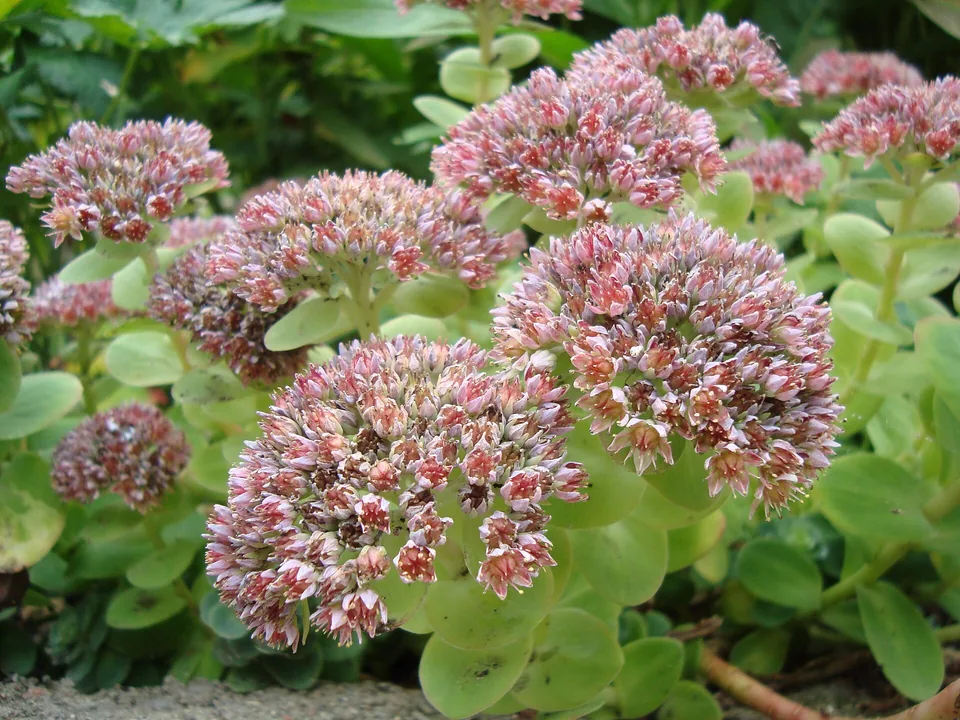


How to Grow and Care for Evergreen Orpine
Hylotelephium anacampseros
Written by Emilio Marruso · last checked
At a glance
This tough little perennial thrives in full sun or partial shade and, once established, handles dry spells with ease. It stays small, 6–10 inches tall and 8–12 inches wide, so it fits happily in a pot. Start it from seed in spring, or divide the clump or root stem cuttings to make more plants. Its leaves are even edible, raw or cooked.
- Sun
Full sun to partial shade
What the sources say (1)
Light: Full sun to partial shade
Light: Full sun (6 or more hours of direct sunlight a day) Partial Shade (Direct sunlight only part of the day, 2-6 hours)
— Hylotelephium anacampseros (Evergreen Orpine, Herb of Friendship, Love Restorer, Love-restoring Stonecrop) | North Carolina Extension Gardener Plant Toolbox [1] - Water
Handles dry spells once established
What the sources say (1)
Watering: Drought tolerant once established
It prefers well-drained soils and is drought tolerant once established.
— Hylotelephium anacampseros (Evergreen Orpine, Herb of Friendship, Love Restorer, Love-restoring Stonecrop) | North Carolina Extension Gardener Plant Toolbox [1] - Cold
Survives winters down to −30 °F (−34.4 °C)
Very hardy · USDA 4a · RHS H7 · Z4
What the sources say (2)
Hardiness, coldest zone: 4a [winter low −34.4 to −31.7 °C (−30 to −25 °F)]
USDA Plant Hardiness Zone: 4a, 4b, 5a, 5b, 6a, 6b, 7a, 7b, 8a, 8b, 9a, 9b
— Hylotelephium anacampseros (Evergreen Orpine, Herb of Friendship, Love Restorer, Love-restoring Stonecrop) | North Carolina Extension Gardener Plant Toolbox [1] Hardiness, warmest zone: 9b [winter low −3.9 to −1.1 °C (25 to 30 °F)]
USDA Plant Hardiness Zone: 4a, 4b, 5a, 5b, 6a, 6b, 7a, 7b, 8a, 8b, 9a, 9b
— Hylotelephium anacampseros (Evergreen Orpine, Herb of Friendship, Love Restorer, Love-restoring Stonecrop) | North Carolina Extension Gardener Plant Toolbox [1] - Soil
Likes soil that drains well
What the sources say (1)
Watering notes: Prefers well-drained soils
It prefers well-drained soils and is drought tolerant once established.
— Hylotelephium anacampseros (Evergreen Orpine, Herb of Friendship, Love Restorer, Love-restoring Stonecrop) | North Carolina Extension Gardener Plant Toolbox [1] - Harvest
The leaves are edible raw or cooked, but bitter
- Pests
Can suffer from root rot
What the sources say (1)
Diseases: root rot
Insects, Diseases, and Other Plant Problems: Generally problem-free. May have root rot in poorly drained soils.
— Hylotelephium (Live-forever, Orpine, Sedum, Stonecrop) | North Carolina Extension Gardener Plant Toolbox [2] - Size
6–10 in tall and 8–12 in wide
What the sources say (2)
Mature height: 15.24-25.4 cm (6-10 in)
Dimensions: Height: 0 ft. 6 in. - 0 ft. 10 in. Width: 0 ft. 8 in. - 1 ft. 0 in.
— Hylotelephium anacampseros (Evergreen Orpine, Herb of Friendship, Love Restorer, Love-restoring Stonecrop) | North Carolina Extension Gardener Plant Toolbox [1] Mature width: 20.32-30.48 cm (8-12 in)
Dimensions: Height: 0 ft. 6 in. - 0 ft. 10 in. Width: 0 ft. 8 in. - 1 ft. 0 in.
— Hylotelephium anacampseros (Evergreen Orpine, Herb of Friendship, Love Restorer, Love-restoring Stonecrop) | North Carolina Extension Gardener Plant Toolbox [1] - Propagation
Grow new plants from seeds, by dividing the clump or from stem cuttings
What the sources say (1)
Propagation: Seeds, division, stem cuttings
This plant is propagated by seeds, division, or stem cuttings. It is recommended to sow the seeds in spring.
— Hylotelephium anacampseros (Evergreen Orpine, Herb of Friendship, Love Restorer, Love-restoring Stonecrop) | North Carolina Extension Gardener Plant Toolbox [1] - Sowing
Sow in spring; to save seeds, let the seed heads dry on the plant
What the sources say (2)
Sowing: Spring
It is recommended to sow the seeds in spring.
— Hylotelephium anacampseros (Evergreen Orpine, Herb of Friendship, Love Restorer, Love-restoring Stonecrop) | North Carolina Extension Gardener Plant Toolbox [1] Saving seeds: Allow the seed heads to dry on the plant, then remove and collect the seeds
Allow the seed heads to dry on the plant, then remove and collect the seeds.
— Hylotelephium anacampseros (Evergreen Orpine, Herb of Friendship, Love Restorer, Love-restoring Stonecrop) | North Carolina Extension Gardener Plant Toolbox [1] - Containers
Grows in containers too
What the sources say (1)
In containers: Yes
Landscape Location: Container Rock Wall Landscape Theme: Butterfly Garden
— Hylotelephium anacampseros (Evergreen Orpine, Herb of Friendship, Love Restorer, Love-restoring Stonecrop) | North Carolina Extension Gardener Plant Toolbox [1]
Overview
Evergreen orpine is a herbaceous perennial succulent with bluish-green to grayish-green leaves. [1] It prefers well-drained soils and is drought tolerant once established. [1] It is propagated by seeds, division, or stem cuttings. [1]
This record is incomplete: the sources we read do not cover every field yet.
Not yet covered by our sources: Pruning
Evergreen Orpine care
How to water Evergreen Orpine
Watering
Drought tolerant once established
What the sources say (1)
It prefers well-drained soils and is drought tolerant once established.Watering notes
Prefers well-drained soils
What the sources say (1)
It prefers well-drained soils and is drought tolerant once established.How much light Evergreen Orpine needs
Full sun to partial shade
What the sources say (1)
Light:
Full sun (6 or more hours of direct sunlight a day)
Partial Shade (Direct sunlight only part of the day, 2-6 hours)How much cold Evergreen Orpine can take
Hardiness, coldest zone
4a [winter low −34.4 to −31.7 °C (−30 to −25 °F)]
What the sources say (1)
USDA Plant Hardiness Zone:
4a, 4b, 5a, 5b, 6a, 6b, 7a, 7b, 8a, 8b, 9a, 9bHardiness, warmest zone
9b [winter low −3.9 to −1.1 °C (25 to 30 °F)]
What the sources say (1)
USDA Plant Hardiness Zone:
4a, 4b, 5a, 5b, 6a, 6b, 7a, 7b, 8a, 8b, 9a, 9bWhere to grow Evergreen Orpine
Yes
What the sources say (1)
Landscape Location:
Container
Rock Wall
Landscape Theme:
Butterfly GardenHow to propagate Evergreen Orpine
Seeds, division, stem cuttings
What the sources say (1)
This plant is propagated by seeds, division, or stem cuttings. It is recommended to sow the seeds in spring.How to grow Evergreen Orpine
The plant
Life cycle
perennial
What the sources say (1)
Love Restorer is a herbaceous perennial and succulent whose stems radiate from the center with smooth spiraling, bluish-green to grayish-green leaves.Family
Crassulaceae
What the sources say (1)
Genus:
Hylotelephium
Species:
anacampseros
Family:
Crassulaceae
Uses (Ethnobotany):Mature height
15.24-25.4 cm (6-10 in)
What the sources say (1)
Dimensions:
Height: 0 ft. 6 in. - 0 ft. 10 in.
Width: 0 ft. 8 in. - 1 ft. 0 in.Mature width
20.32-30.48 cm (8-12 in)
What the sources say (1)
Dimensions:
Height: 0 ft. 6 in. - 0 ft. 10 in.
Width: 0 ft. 8 in. - 1 ft. 0 in.Harvest and storage
Saving seeds
Allow the seed heads to dry on the plant, then remove and collect the seeds
What the sources say (1)
Allow the seed heads to dry on the plant, then remove and collect the seeds.Pests and diseases
Diseases
root rot
What the sources say (1)
Insects, Diseases, and Other Plant Problems: Generally problem-free. May have root rot in poorly drained soils.Fertilizing
How often
The sources give different values depending on region, zone or growing conditions.
What each source says
Hylotelephium in general: Little or no feeding needed in most garden soils
What the sources say (1)
Hylotelephium in general: Your hylotelephiums will need little or no feeding in most garden soils.Avoid
The sources give different values depending on region, zone or growing conditions.
What each source says
Hylotelephium in general: Too much plant food, especially nitrogen
What the sources say (1)
Hylotelephium in general: Your hylotelephiums will need little or no feeding in most garden soils. Too much plant food, particularly nitrogen (which is in most plant fertilisers), will lead to lush floppy growth that can be disease prone and flower poorly.Signs of excess
The sources give different values depending on region, zone or growing conditions.
What each source says
Hylotelephium in general: Lush, floppy growth that is disease prone and flowers poorly
What the sources say (1)
Hylotelephium in general: Your hylotelephiums will need little or no feeding in most garden soils. Too much plant food, particularly nitrogen (which is in most plant fertilisers), will lead to lush floppy growth that can be disease prone and flower poorly.Remedies
Each remedy shows what official sources say about it; traditional remedies without an official source are marked as such. Harmful ones are listed so you know to avoid them.
Treating the plant
slugs
handpicking Works
Do not crush snails and slugs in the garden as the eggs remain in the carcass and will hatch even though the parent is dead.
— extension.usu.edu [6] How: Handpicking is done regularly: daily removal is most effective, then once a week after the population is reduced. Water in the afternoon so they come out after dark, then pick them up and seal them in a plastic bag or drop them in a bucket of soapy water.
Handpicking is a time consuming but effective method of controlling slugs and snails when done regularly. Daily removal is most effective but after initially reducing the population, handpicking once a week will keep the numbers down.
— extension.usu.edu [6] What the evidence says Handpicking is a time consuming but effective method of controlling slugs and snails when done regularly.
— extension.usu.edu [6] beer trap Official source, not independently tested
How: Use a pie plate with the edges buried at ground level so the pests crawl in and are drowned; fill the reservoir with beer or yeast water.
Bait traps using beer, yeast water or even plain water also attract slugs. Use a pie plate with the edges buried at ground level so the pests crawl in and are drowned.
— extension.usu.edu [6] salt on slugs Harmful
This is not recommended because salt is very damaging to plants and might build up in the soil.
— extension.usu.edu [6] How: Putting salt on slugs is an often promoted method.
One often promoted method of controlling the pests is to put salt on them. This is not recommended because salt is very damaging to plants and might build up in the soil.
— extension.usu.edu [6] What the evidence says This is not recommended because salt is very damaging to plants and might build up in the soil.
— extension.usu.edu [6]
Calendar
Sowing
Spring
What the sources say (1)
It is recommended to sow the seeds in spring.Pruning
Not stated in the sources we read.
Months as given by the sources, which are mostly from the United States (northern hemisphere). In the southern hemisphere they shift by about six months.
Edibility
Reported by the source, quoted verbatim. Do not eat a plant on the basis of this page alone: identification mistakes can be dangerous.
The plant leaves are reportedly edible but bitter. They can be served either raw or cooked.
[1]
Similar plants
- Allegheny Stonecrop Hylotelephium telephioides
- Stonecrop Hylotelephium cauticola
- Stonecrop Hylotelephium sieboldii
- Stonecrop Hylotelephium spectabile
- Stonecrop Hylotelephium telephium
- Carpet Sedum Sedum lineare
- Copper Rose Echeveria multicaulis
- Ghost Plant Graptopetalum paraguayense
Sources
Every value above is quoted from these documents. Links lead to the original publisher.
- Hylotelephium anacampseros (Evergreen Orpine, Herb of Friendship, Love Restorer, Love-restoring Stonecrop) | North Carolina Extension Gardener Plant Toolbox · plants.ces.ncsu.edu, consulted
- Hylotelephium (Live-forever, Orpine, Sedum, Stonecrop) | North Carolina Extension Gardener Plant Toolbox · plants.ces.ncsu.edu, consulted
- Orpine - Hylotelephium | North Carolina Extension Gardener Plant Toolbox · plants.ces.ncsu.edu, consulted
- Stonecrop - Hylotelephium | North Carolina Extension Gardener Plant Toolbox · plants.ces.ncsu.edu, consulted
- rhs.org.uk · rhs.org.uk
- extension.usu.edu · extension.usu.edu
Written by Emilio Marruso · last checked