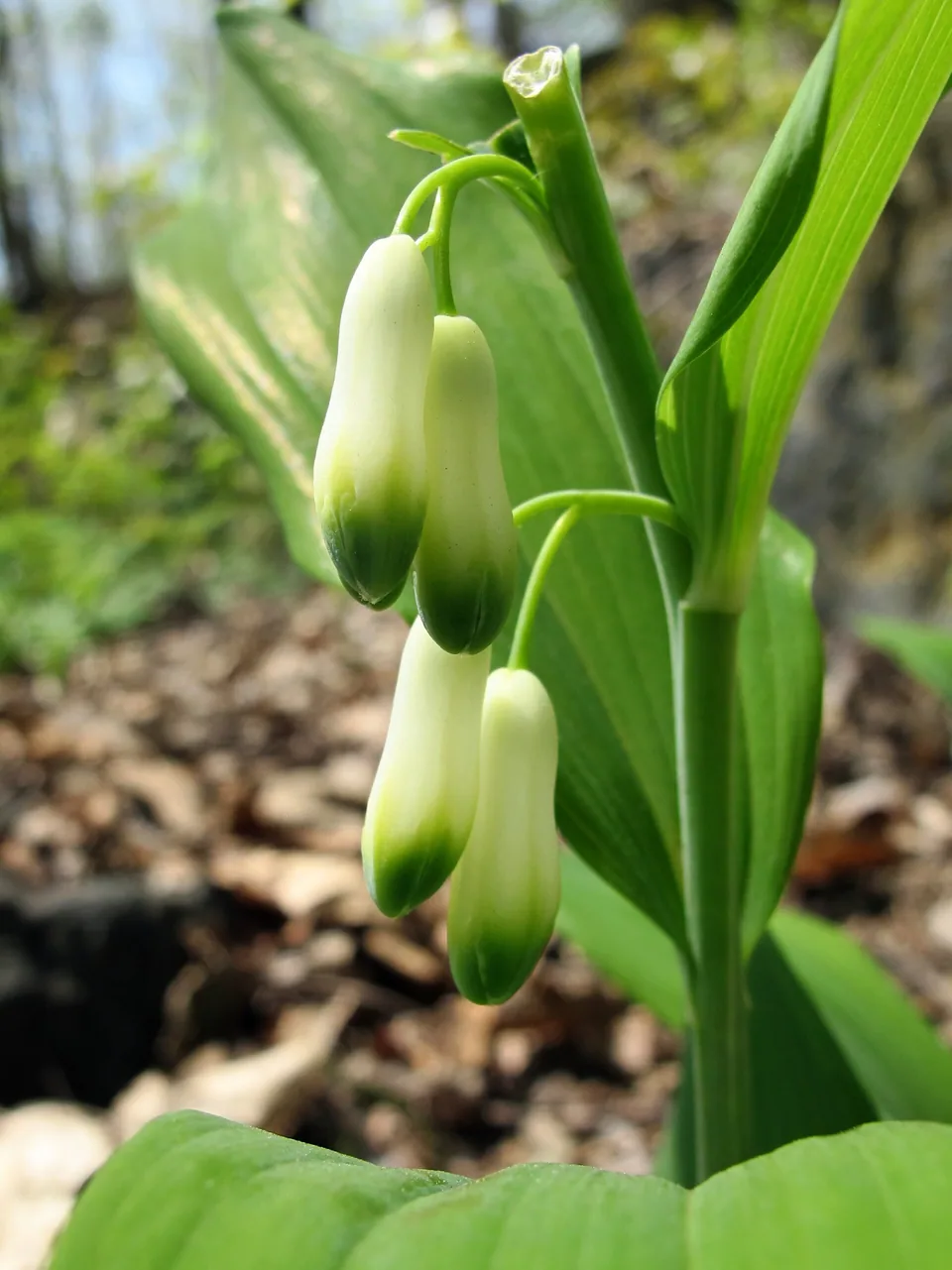


How to Grow and Care for Solomon's Seal
Polygonatum biflorum
Written by Emilio Marruso · last checked
Toxic to: People · Why
At a glance
Solomon's seal brings life to the shady corners of the garden, from partial to full shade. This long-lived perennial grows 3–6 ft tall and, once established, tolerates drought. Give it moist soil rich in organic matter, mulch it with fallen leaves, and enjoy its showy blue-black berries: they are just for looking, not for eating.
- Sun
Partial to full shade
What the sources say (2)
Light: Partial to full shade
According to University of Illinois Extension: Exposure/Light Requirements Full Shade
— Solomon's Seal (Polygonatum biflorum)-Hort Answers - University of Illinois Extension [3] Plant it in medium to wet average soil in partial to full shade, though it does best with some sun.
— Polygonatum biflorum (Great Solomon's Seal, Smooth Solomon's Seal, Solomon's Seal) | North Carolina Extension Gardener Plant Toolbox [1] - Water
Steady moisture, never soggy; water the soil, not the leaves; tolerates drought once established
What the sources say (4)
Watering: Consistent, not overly wet moisture; tolerates drought once established
This perennial prefers to grow in consistent, but not overly wet, moisture. Yet, once established, it tolerates drought.
— Shade Elegance with Solomon's Seal | University of Vermont… [4] Culture Shade; consistently moist soils.
— Solomon's Seal (Polygonatum biflorum)-Hort Answers - University of Illinois Extension [3] Watering notes: Prefers moist, well-drained soil rich in organic matter; avoid overhead irrigation because of foliar nematodes and leaf spot
Although it prefers a moist well-drained soil rich in organic matter, it is not fussy.
— Shade Elegance with Solomon's Seal | University of Vermont… [4] Do not use over-head irrigation on Solomon’s-seal, as the splashing of water may allow for the movement of the nematodes to additional leaves.
— Solomon’s-seals | Home & Garden Information Center [2] - Cold
Survives winters down to −40 °F (−40 °C)
Very hardy · USDA 3a · RHS H7 · Z3
What the sources say (2)
Hardiness, coldest zone: 3a [winter low −40 to −37.2 °C (−40 to −35 °F)]
USDA Plant Hardiness Zone: 3a, 3b, 4a, 4b, 5a, 5b, 6a, 6b, 7a, 7b, 8a, 8b, 9a, 9b
— Polygonatum biflorum (Great Solomon's Seal, Smooth Solomon's Seal, Solomon's Seal) | North Carolina Extension Gardener Plant Toolbox [1] Hardiness, warmest zone: 9b [winter low −3.9 to −1.1 °C (25 to 30 °F)]
USDA Plant Hardiness Zone: 3a, 3b, 4a, 4b, 5a, 5b, 6a, 6b, 7a, 7b, 8a, 8b, 9a, 9b
— Polygonatum biflorum (Great Solomon's Seal, Smooth Solomon's Seal, Solomon's Seal) | North Carolina Extension Gardener Plant Toolbox [1] - Soil
Moist, well-drained soil rich in organic matter
What the sources say (2)
Watering notes: Prefers moist, well-drained soil rich in organic matter; avoid overhead irrigation because of foliar nematodes and leaf spot
Although it prefers a moist well-drained soil rich in organic matter, it is not fussy.
— Shade Elegance with Solomon's Seal | University of Vermont… [4] Do not use over-head irrigation on Solomon’s-seal, as the splashing of water may allow for the movement of the nematodes to additional leaves.
— Solomon’s-seals | Home & Garden Information Center [2] - Spacing
18 in between root pieces
What the sources say (1)
Spacing: 45.7 cm (18 in) between rhizome sections
Place the sections horizontally in the soil, buds up, 18 inches apart and one inch deep.
— Shade Elegance with Solomon's Seal | University of Vermont… [4] - Feeding
Organic fertilizer in the planting hole; fallen leaves as mulch and compost
What the sources say (3)
When: At planting, in the planting hole
To improve the nutritionally quality of the soil and to give a boost to root growth, amend the planting holes for these and other perennials with an organic fertilizer
— Solomon’s-seals | Home & Garden Information Center [2] Natural fertilizers: Organic fertilizer in the planting hole, preferably one containing beneficial soil bacteria; fallen leaves as mulch and compost
amend the planting holes for these and other perennials with an organic fertilizer, especially one that is labeled to contain beneficial soil bacteria.
— Solomon’s-seals | Home & Garden Information Center [2] In addition, its sturdy stems do not require staking. Fallen leaves provide an ideal mulch and compost material for the plant.
— Shade Elegance with Solomon's Seal | University of Vermont… [4] - Harvest
Young shoots and roots are eaten only after boiling; the berries are not edible
- Pests
Slugs, snails, leaf nematodes and leaf spot; remove damaged leaves right away
What the sources say (3)
Pests: slugs, snails, foliar nematodes
No serious problems. Watch for slugs and snails.
— Polygonatum biflorum (Great Solomon's Seal, Smooth Solomon's Seal, Solomon's Seal) | North Carolina Extension Gardener Plant Toolbox [1] Foliar nematodes can severely damage the leaves of Solomon’s-seal.
— Solomon’s-seals | Home & Garden Information Center [2] Diseases: Phyllosticta cruenta leaf spot
Phyllosticta cruenta is a fungal foliar pathogen that makes small tan spots with reddish-brown halos on Solomon’s-seal leaves.
— Solomon’s-seals | Home & Garden Information Center [2] - Size
3 to 6 ft tall and 2 to 4 ft wide
What the sources say (2)
Mature height: 91.44-182.88 cm (3-6 ft)
Solomon's seal grows 3 to 6 feet in height. and 2 to 4 feet wide.
— Polygonatum biflorum (Great Solomon's Seal, Smooth Solomon's Seal, Solomon's Seal) | North Carolina Extension Gardener Plant Toolbox [1] Mature width: 60.96-121.92 cm (2-4 ft)
Solomon's seal grows 3 to 6 feet in height. and 2 to 4 feet wide.
— Polygonatum biflorum (Great Solomon's Seal, Smooth Solomon's Seal, Solomon's Seal) | North Carolina Extension Gardener Plant Toolbox [1] - Propagation
By division, root cuttings or seed
What the sources say (2)
Propagation: Division, root cutting, seed
Recommended Propagation Strategy: Division Root Cutting Seed
— Polygonatum biflorum (Great Solomon's Seal, Smooth Solomon's Seal, Solomon's Seal) | North Carolina Extension Gardener Plant Toolbox [1] Solomon’s seal is easily propagated by division when the plant is dormant in spring or fall.
— Shade Elegance with Solomon's Seal | University of Vermont… [4] - Sowing
Sow in September; the seeds need two months of cold and moisture to sprout
What the sources say (3)
Sowing: September (seed collected and sown)
The seed should be collected and sown in September.
— Polygonatum biflorum (Great Solomon's Seal, Smooth Solomon's Seal, Solomon's Seal) | North Carolina Extension Gardener Plant Toolbox [1] Saving seeds: collect the ripe blue fruit, remove the seeds and discard the pulp; the seeds need a cold, moist treatment for two months
Collect the ripe, blue fruit, remove the seeds, and discard the pulp.
— Solomon’s-seals | Home & Garden Information Center [2] Propagation by seed requires a cold, moist treatment for two months.
— Solomon’s-seals | Home & Garden Information Center [2] - Safety
Poisonous to people
Overview
Polygonatum biflorum is a native herbaceous perennial wildflower of moist forested areas in eastern North America. [1] It thrives in shade or part-shade in moist, well-drained, organically rich soil and tolerates drought once established. [4] Its berries are listed as poisonous with low severity, while cooked young shoots and rhizomes are edible. [1][4]
This record is incomplete: the sources we read do not cover every field yet.
Not yet covered by our sources: Pruning
Solomon's Seal care
How to water Solomon's Seal
Watering
Consistent, not overly wet moisture; tolerates drought once established
What the sources say (2)
This perennial prefers to grow in consistent, but not overly wet, moisture. Yet, once established, it tolerates drought.Culture
Shade; consistently moist soils.Watering notes
Prefers moist, well-drained soil rich in organic matter; avoid overhead irrigation because of foliar nematodes and leaf spot
What the sources say (2)
Although it prefers a moist well-drained soil rich in organic matter, it is not fussy.Do not use over-head irrigation on Solomon’s-seal, as the splashing of water may allow for the movement of the nematodes to additional leaves.How much light Solomon's Seal needs
Partial to full shade
What each source says
According to University of Illinois Extension: Full shade
What the sources say (2)
According to University of Illinois Extension: Exposure/Light Requirements
Full ShadePlant it in medium to wet average soil in partial to full shade, though it does best with some sun.How much cold Solomon's Seal can take
Hardiness, coldest zone
3a [winter low −40 to −37.2 °C (−40 to −35 °F)]
What the sources say (1)
USDA Plant Hardiness Zone:
3a, 3b, 4a, 4b, 5a, 5b, 6a, 6b, 7a, 7b, 8a, 8b, 9a, 9bHardiness, warmest zone
9b [winter low −3.9 to −1.1 °C (25 to 30 °F)]
What the sources say (1)
USDA Plant Hardiness Zone:
3a, 3b, 4a, 4b, 5a, 5b, 6a, 6b, 7a, 7b, 8a, 8b, 9a, 9bWhere to grow Solomon's Seal
45.7 cm (18 in) between rhizome sections
What the sources say (1)
Place the sections horizontally in the soil, buds up, 18 inches apart and one inch deep.How to propagate Solomon's Seal
Division, root cutting, seed
What the sources say (2)
Recommended Propagation Strategy:
Division
Root Cutting
SeedSolomon’s seal is easily propagated by division when the plant is dormant in spring or fall.How to grow Solomon's Seal
The plant
Life cycle
perennial
What the sources say (1)
Solomon's seal is a native herbaceous perennial wildflower found in moist forested areas and roadbanks in the eastern U.S.A. and Canada in the asparagus family (Asparagaceae).Family
The sources disagree:
Solomon's seal is a native herbaceous perennial wildflower found in moist forested areas and roadbanks in the eastern U.S.A. and Canada in the asparagus family (Asparagaceae).
[1]Solomon’s-seals belong to the plant family Ruscaceae, which also includes lily-of-the-valley, mondo grass, and liriope.
[2]
Mature height
91.44-182.88 cm (3-6 ft)
What the sources say (1)
Solomon's seal grows 3 to 6 feet in height. and 2 to 4 feet wide.Mature width
60.96-121.92 cm (2-4 ft)
What the sources say (1)
Solomon's seal grows 3 to 6 feet in height. and 2 to 4 feet wide.Harvest and storage
Saving seeds
collect the ripe blue fruit, remove the seeds and discard the pulp; the seeds need a cold, moist treatment for two months
Pests and diseases
Pests
slugs, snails, foliar nematodes
What the sources say (2)
No serious problems. Watch for slugs and snails.Foliar nematodes can severely damage the leaves of Solomon’s-seal.Diseases
Phyllosticta cruenta leaf spot
What the sources say (1)
Phyllosticta cruenta is a fungal foliar pathogen that makes small tan spots with reddish-brown halos on Solomon’s-seal leaves.Fertilizing
When
At planting, in the planting hole
What the sources say (1)
To improve the nutritionally quality of the soil and to give a boost to root growth, amend the planting holes for these and other perennials with an organic fertilizerNatural fertilizers
Organic fertilizer in the planting hole, preferably one containing beneficial soil bacteria; fallen leaves as mulch and compost
What the sources say (2)
amend the planting holes for these and other perennials with an organic fertilizer, especially one that is labeled to contain beneficial soil bacteria.In addition, its sturdy stems do not require staking. Fallen leaves provide an ideal mulch and compost material for the plant.Solomon's Seal pests and problems
Slugs and snails
Symptom: Listed as the pests to watch for.
What the sources say (1)
No serious problems. Watch for slugs and snails.
— Polygonatum biflorum (Great Solomon's Seal, Smooth Solomon's Seal, Solomon's Seal) | North Carolina Extension Gardener Plant Toolbox [1] Foliar nematodes
Symptom: Brown stripes between the parallel leaf veins.
What to do: Prompt removal and disposal of infested foliage; avoid overhead irrigation.
What the sources say (1)
There are no consumer pesticide treatments; therefore, prompt removal and disposal of infested foliage is the best means of control.
— Solomon’s-seals | Home & Garden Information Center [2] Phyllosticta cruenta leaf spot
Symptom: Small tan spots with reddish-brown halos; leaf centers may tear.
What to do: Prompt removal of infected foliage; avoid overhead irrigation.
What the sources say (1)
Prompt removal of the initially infected foliage may eliminate or slow the progression of the disease.
— Solomon’s-seals | Home & Garden Information Center [2]
Remedies
Each remedy shows what official sources say about it; traditional remedies without an official source are marked as such. Harmful ones are listed so you know to avoid them.
Treating the plant
solomon's seal sawfly
hand-picking larvae Official source, not independently tested
How: check plants regularly from late May onwards for larvae and remove them by hand where practical
Remove by hand if required and where practical
— rhs.org.uk [8] encouraging natural predators Not verified
Traditional remedy, not verified by an official source.
How: encourage ground-beetles (with mulching) and birds as natural predators instead of chemical control
slugs and snails
beer trap Not verified
Traditional remedy, not verified by an official source.
How: set shallow trays filled with beer in and around the problem areas; refresh the trays every three days or until slugs are under control
foliar nematodes
removing infested foliage Works
How: promptly remove and dispose of infested foliage; avoid overhead irrigation
There are no consumer pesticide treatments; therefore, prompt removal and disposal of infested foliage is the best means of control.
— Solomon’s-seals | Home & Garden Information Center [2] What the evidence says There are no consumer pesticide treatments; therefore, prompt removal and disposal of infested foliage is the best means of control.
— Solomon’s-seals | Home & Garden Information Center [2]
leaf spot
removing infected foliage Partly works
How: promptly remove the initially infected foliage; do not water with overhead irrigation
Prompt removal of the initially infected foliage may eliminate or slow the progression of the disease.
— Solomon’s-seals | Home & Garden Information Center [2] What the evidence says Prompt removal of the initially infected foliage may eliminate or slow the progression of the disease.
— Solomon’s-seals | Home & Garden Information Center [2]
Is Solomon's Seal poisonous?
Reported by the source, quoted verbatim. This is not medical or veterinary advice: if a person or an animal may have eaten this plant, contact a poison control centre or a veterinarian.
Calendar
September (seed collected and sown)
What the sources say (1)
The seed should be collected and sown in September.Not stated in the sources we read.
Months as given by the sources, which are mostly from the United States (northern hemisphere). In the southern hemisphere they shift by about six months.
Edibility
Reported by the source, quoted verbatim. Do not eat a plant on the basis of this page alone: identification mistakes can be dangerous.
Indicative values
Values from a secondary source, not checked word for word like the rest of this page. Use them as a starting point.
- Hours of sun
- 4-6 hoursIndicative value, adapt it to your climate · Secondary source
- Soil pH
- 5-7Indicative value, adapt it to your climate · Secondary source
- Care level
- MediumIndicative value, adapt it to your climate · Secondary source
- Growth rate
- HighIndicative value, adapt it to your climate · Secondary source
- Pruning
- February, March, April, MayIndicative value, adapt it to your climate · Secondary source
Similar plants
- Angular Solomon's seal Polygonatum odoratum
- Dwarf Solomon's Seal Polygonatum humile
- Hairy Solomon's Seal Polygonatum pubescens
- Solomon's Seal Polygonatum multiflorum
- Abraham Trachystemon orientalis
- African Marigold Tagetes erecta
- Alabama Croton Croton alabamensis
- Alpine Currant Ribes alpinum
Sources
Every value above is quoted from these documents. Links lead to the original publisher.
- Polygonatum biflorum (Great Solomon's Seal, Smooth Solomon's Seal, Solomon's Seal) | North Carolina Extension Gardener Plant Toolbox · plants.ces.ncsu.edu, consulted
- Solomon’s-seals | Home & Garden Information Center · hgic.clemson.edu, consulted
- Solomon's Seal (Polygonatum biflorum)-Hort Answers - University of Illinois Extension · web.extension.illinois.edu, consulted
- Shade Elegance with Solomon's Seal | University of Vermont… · uvm.edu, consulted
- Solomon's Seal, Giant · uaex.uada.edu, consulted
- Solomon’s Seal, Polygonatum spp. – Wisconsin Horticulture · hort.extension.wisc.edu, consulted
- Polygonatum (Solomon's Seal) | North Carolina Extension Gardener Plant Toolbox · plants.ces.ncsu.edu, consulted
- rhs.org.uk · rhs.org.uk
Written by Emilio Marruso · last checked