
How to Grow and Care for Dwarf Solomon's Seal
Polygonatum humile
Written by Emilio Marruso · last checked
Toxic to: People · Why
At a glance
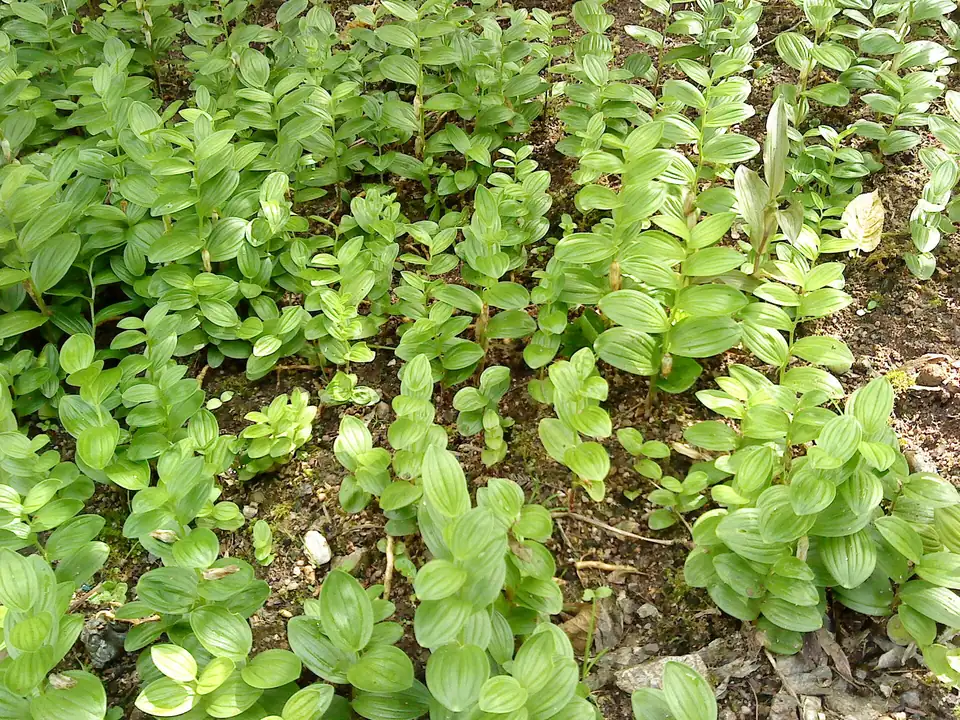
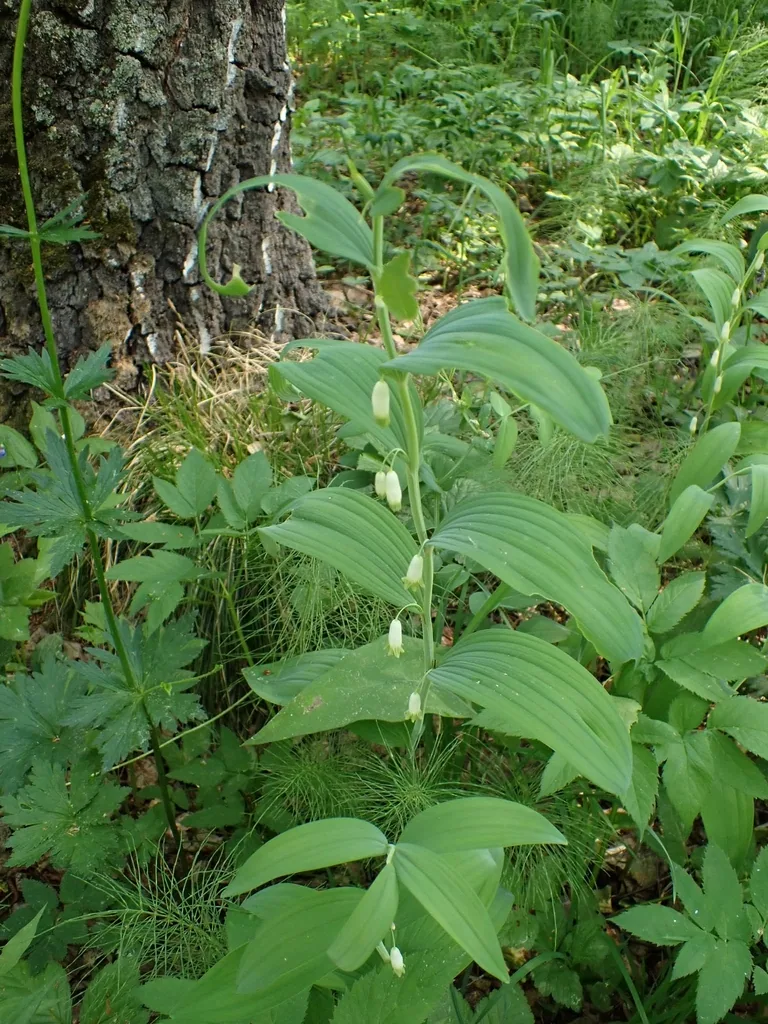
Looking for something to brighten a shady corner? This small perennial thrives in partial to full shade, staying just 6–9 inches tall while spreading 1–1.5 feet wide. Give it rich, moist soil and it settles in happily, even in a container. As a bonus, its shoots can be boiled for 10 minutes and served like asparagus.
- Sun
Partial to full shade
What the sources say (1)
Light: Partial to full shade
Plant it in organically rich moist soils in partial to full shade though it does best with some sun.
— Polygonatum humile (Dwarf Solomon's Seal) | North Carolina Extension Gardener Plant Toolbox [1] - Water
Keep the soil moist
What the sources say (1)
Watering: Organically rich, moist soils
Plant it in organically rich moist soils in partial to full shade though it does best with some sun.
— Polygonatum humile (Dwarf Solomon's Seal) | North Carolina Extension Gardener Plant Toolbox [1] - Cold
Survives winters down to −20 °F (−28.9 °C)
Very hardy · USDA 5a · RHS H7 · Z5
What the sources say (4)
Hardiness, coldest zone: 5a [winter low −28.9 to −26.1 °C (−20 to −15 °F)]
USDA Plant Hardiness Zone: 5a, 5b, 6a, 6b, 7a, 7b, 8a, 8b
— Polygonatum humile (Dwarf Solomon's Seal) | North Carolina Extension Gardener Plant Toolbox [1] It rarely grows more than 8 to 12 inches tall and is less hardy (zones 5a to 9b).
— Solomon’s Seal, Polygonatum spp. – Wisconsin Horticulture [3] Hardiness, warmest zone:
According to NC State Extension: USDA Plant Hardiness Zone: 5a, 5b, 6a, 6b, 7a, 7b, 8a, 8b
— Polygonatum humile (Dwarf Solomon's Seal) | North Carolina Extension Gardener Plant Toolbox [1] According to University of Wisconsin Extension: It rarely grows more than 8 to 12 inches tall and is less hardy (zones 5a to 9b).
— Solomon’s Seal, Polygonatum spp. – Wisconsin Horticulture [3] - Soil
Rich, moist soil full of organic matter
What the sources say (1)
Watering: Organically rich, moist soils
Plant it in organically rich moist soils in partial to full shade though it does best with some sun.
— Polygonatum humile (Dwarf Solomon's Seal) | North Carolina Extension Gardener Plant Toolbox [1] - Harvest
Boil the shoots for 10 minutes and serve them like asparagus
- Size
6–9 in tall and 1–1.5 ft wide
What the sources say (2)
Mature height: 15.24-22.86 cm (6-9 in)
Dimensions: Height: 0 ft. 6 in. - 0 ft. 9 in. Width: 1 ft. 0 in. - 1 ft. 6 in.
— Polygonatum humile (Dwarf Solomon's Seal) | North Carolina Extension Gardener Plant Toolbox [1] Mature width: 30.48-45.72 cm (1-1.5 ft)
Dimensions: Height: 0 ft. 6 in. - 0 ft. 9 in. Width: 1 ft. 0 in. - 1 ft. 6 in.
— Polygonatum humile (Dwarf Solomon's Seal) | North Carolina Extension Gardener Plant Toolbox [1] - Containers
Grows in containers too
What the sources say (1)
In containers: Yes
Landscape Location: Container Naturalized Area Slope/Bank Small Space Woodland
— Polygonatum humile (Dwarf Solomon's Seal) | North Carolina Extension Gardener Plant Toolbox [1] - Safety
Don't eat the berries: they are mildly poisonous
Overview
Dwarf Solomon's seal is a low growing herbaceous perennial native to Asia that spreads by shallow rhizomes. [1] It is planted in organically rich moist soils in partial to full shade. [1] The berries are poisonous if eaten but cause low toxicity. [1]
This record is incomplete: the sources we read do not cover every field yet.
Not yet covered by our sources: Pruning, Propagation
Dwarf Solomon's Seal care
How to water Dwarf Solomon's Seal
Organically rich, moist soils
What the sources say (1)
Plant it in organically rich moist soils in partial to full shade though it does best with some sun.How much light Dwarf Solomon's Seal needs
Partial to full shade
What the sources say (1)
Plant it in organically rich moist soils in partial to full shade though it does best with some sun.How much cold Dwarf Solomon's Seal can take
Hardiness, coldest zone
5a [winter low −28.9 to −26.1 °C (−20 to −15 °F)]
What the sources say (2)
USDA Plant Hardiness Zone:
5a, 5b, 6a, 6b, 7a, 7b, 8a, 8bIt rarely grows more than 8 to 12 inches tall and is less hardy (zones 5a to 9b).Hardiness, warmest zone
The sources give different values depending on region, zone or growing conditions.
What each source says
According to NC State Extension: 8b [winter low −9.4 to −6.7 °C (15 to 20 °F)]
According to University of Wisconsin Extension: 9b [winter low −3.9 to −1.1 °C (25 to 30 °F)]
What the sources say (2)
According to NC State Extension: USDA Plant Hardiness Zone:
5a, 5b, 6a, 6b, 7a, 7b, 8a, 8bAccording to University of Wisconsin Extension: It rarely grows more than 8 to 12 inches tall and is less hardy (zones 5a to 9b).Where to grow Dwarf Solomon's Seal
Yes
What the sources say (1)
Landscape Location:
Container
Naturalized Area
Slope/Bank
Small Space
WoodlandHow to propagate Dwarf Solomon's Seal
Not stated in the sources we read.
How to grow Dwarf Solomon's Seal
The plant
Life cycle
perennial
What the sources say (1)
Dwarf Solomon's Seal is a low growing herbaceous perennial in the Asparagaceae (asparagus) family native to Asia.Family
Asparagaceae
What the sources say (1)
Dwarf Solomon's Seal is a low growing herbaceous perennial in the Asparagaceae (asparagus) family native to Asia.Mature height
15.24-22.86 cm (6-9 in)
What the sources say (1)
Dimensions:
Height: 0 ft. 6 in. - 0 ft. 9 in.
Width: 1 ft. 0 in. - 1 ft. 6 in.Mature width
30.48-45.72 cm (1-1.5 ft)
What the sources say (1)
Dimensions:
Height: 0 ft. 6 in. - 0 ft. 9 in.
Width: 1 ft. 0 in. - 1 ft. 6 in.Remedies
Each remedy shows what official sources say about it; traditional remedies without an official source are marked as such. Harmful ones are listed so you know to avoid them.
First aid
First aid: not a substitute for a doctor
berry ingestion
wipe the mouth with a wet cloth Official source, not independently tested
After following the above steps, always call Poison Help at 1-800-222-1222 . Do not wait for symptoms to appear.
— mnpoison.org [4] How: Gently wipe the mouth with a wet cloth.
Gently wipe the mouth with a wet cloth.
— mnpoison.org [4] one glass of water Official source, not independently tested
After following the above steps, always call Poison Help at 1-800-222-1222 . Do not wait for symptoms to appear.
— mnpoison.org [4] How: Give one glass of water if the person is awake and able to swallow.
Give one glass of water if the person is awake and able to swallow.
— mnpoison.org [4]
Treating the plant
solomon's seal sawfly
removing larvae by hand Official source, not independently tested
How: Check plants regularly from late May onwards for larvae and remove them by hand if required and where practical.
Remove by hand if required and where practical
— rhs.org.uk [5]
Is Dwarf Solomon's Seal poisonous?
Reported by the source, quoted verbatim. This is not medical or veterinary advice: if a person or an animal may have eaten this plant, contact a poison control centre or a veterinarian.
The berries are poisonous if eaten, but they cause low toxicity.
[1]- Poisonous parts
Poison Toxic Principle: Anthraquinone. Causes Contact Dermatitis: No Poison Part: Fruits
[1]- Toxic principle
Poison Symptoms: Vomiting, diarrhea. Poison Toxic Principle: Anthraquinone.
[1]- Symptoms
Poisonous to Humans: Poison Severity: Low Poison Symptoms: Vomiting, diarrhea.
[1]- Severity
Poisonous to Humans: Poison Severity: Low Poison Symptoms:
[1]
Calendar
Pruning
Not stated in the sources we read.
Months as given by the sources, which are mostly from the United States (northern hemisphere). In the southern hemisphere they shift by about six months.
Edibility
Reported by the source, quoted verbatim. Do not eat a plant on the basis of this page alone: identification mistakes can be dangerous.
The shoots can be boiled for 10 minutes and served like asparagus.
[1]
Indicative values
Values from a secondary source, not checked word for word like the rest of this page. Use them as a starting point.
- Soil pH
- 5.5-7Indicative value, adapt it to your climate · Secondary source
- Care level
- MediumIndicative value, adapt it to your climate · Secondary source
- Growth rate
- LowIndicative value, adapt it to your climate · Secondary source
- Pruning
- February, March, April, June, July, MayIndicative value, adapt it to your climate · Secondary source
- Propagation
- Division, Root Cutting, Seed Propagation, Layering PropagationIndicative value, adapt it to your climate · Secondary source
Similar plants
- Solomon's Seal Polygonatum multiflorum
- Angular Solomon's seal Polygonatum odoratum
- Hairy Solomon's Seal Polygonatum pubescens
- Solomon's Seal Polygonatum biflorum
- Butcher's Broom Ruscus aculeatus
- Cast Iron Plant Aspidistra elatior
- Japanese Sacred Lily Rohdea japonica
- Lilyturf Liriope muscari
Sources
Every value above is quoted from these documents. Links lead to the original publisher.
- Polygonatum humile (Dwarf Solomon's Seal) | North Carolina Extension Gardener Plant Toolbox · plants.ces.ncsu.edu, consulted
- Polygonatum (Solomon's Seal) | North Carolina Extension Gardener Plant Toolbox · plants.ces.ncsu.edu, consulted
- Solomon’s Seal, Polygonatum spp. – Wisconsin Horticulture · hort.extension.wisc.edu, consulted
- mnpoison.org · mnpoison.org
- rhs.org.uk · rhs.org.uk
Written by Emilio Marruso · last checked